Useldange Castle — Luxembourg castle

Useldange Castle

Useldange Castle: medieval hill castle in Luxembourg
Useldange, Redange, Luxembourg
High Medieval (11th–13th c.)
Partially Preserved

Useldange Castle, also known locally as Burg Useldingen, is a significant medieval hill castle located in the village of Useldange in the Redange region of Luxembourg. Perched on a small hill overlooking the River Attert, the castle commands a strategic position that reflects its historical importance as a noble stronghold and defensive site. With origins dating back to the 11th century, Useldange Castle has witnessed centuries of European history, noble lineage, warfare, decline, and restoration efforts.

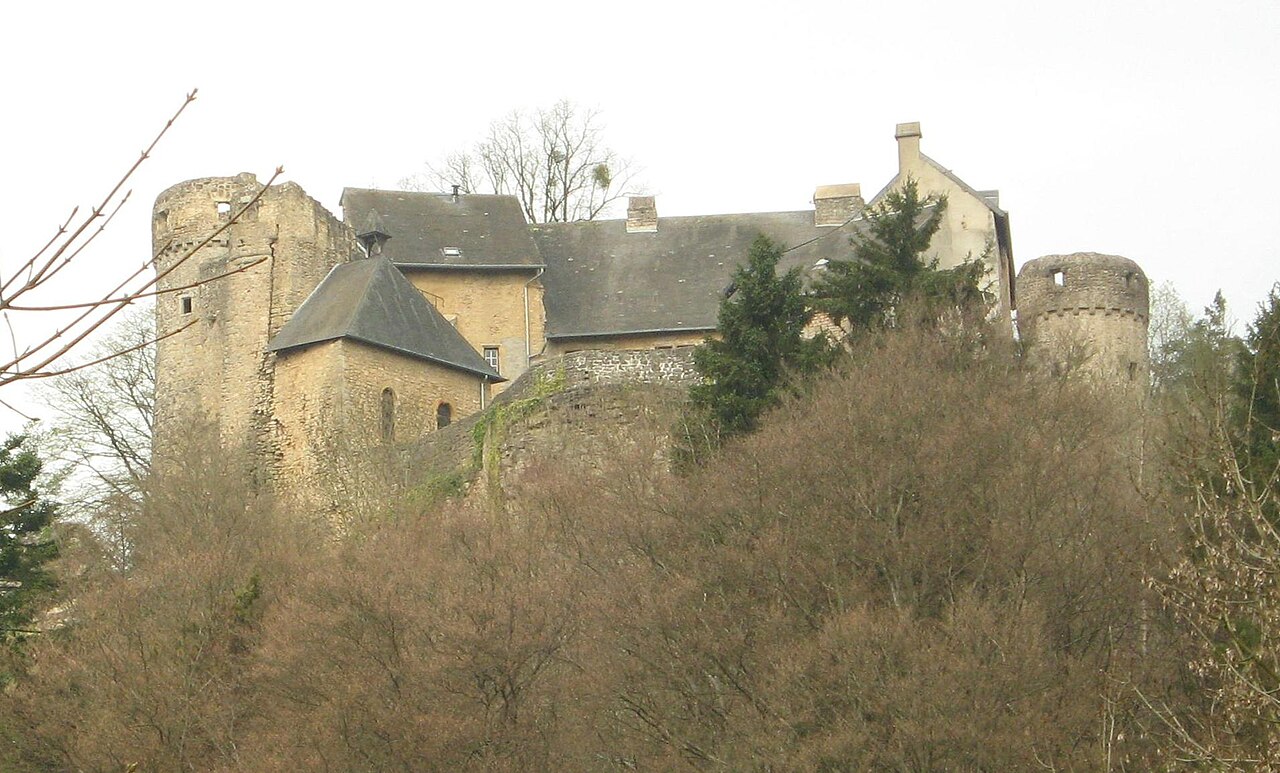
The castle's earliest known lord was Theobald von Useldingen, whose family ruled until the mid-13th century. During the High medieval period, the castle was initially constructed as a fortified residence, with a layout typical of hill castles designed for defense and lordly habitation. The castle's architecture evolved notably through the 14th century, when the curtain walls and circular towers were added, strengthening its fortifications.

Historical development and ownership

Early history and original lords

The castle's foundation is generally placed in the 11th century, coinciding with the establishment of the lordship of Useldange. The first documented lord, Theobald d'Useldange, is a key figure in the castle's early history. His family maintained control until their line ended in the mid-13th century, after which the castle changed hands through marriage alliances and political maneuvering.

Transition through marriage and imperial control

In 1415, Johann von Rodemacher acquired the castle by marrying Irmgart von Boulay, linking two noble families. However, the Rodemacher family lost control of the castle during the turbulent period of the French-Burgundian War. In 1479, Emperor Maximilian I confiscated the castle and entrusted it to Christoph von Baden. This era was marked by significant damage to both the castle and its chapel, reflecting the wider conflicts engulfing the region.

Later ownership and decline

The castle passed to Wilhelm von Nassau-Vianden in 1674, who soon sold it to Franz-Sebastian Bauer von Everlingen. Following this period, the castle gradually fell into disrepair. The chapel was demolished in 1903, symbolizing the site's decline from a noble residence to a ruin.

Architectural features and layout

Fortifications and defensive structures

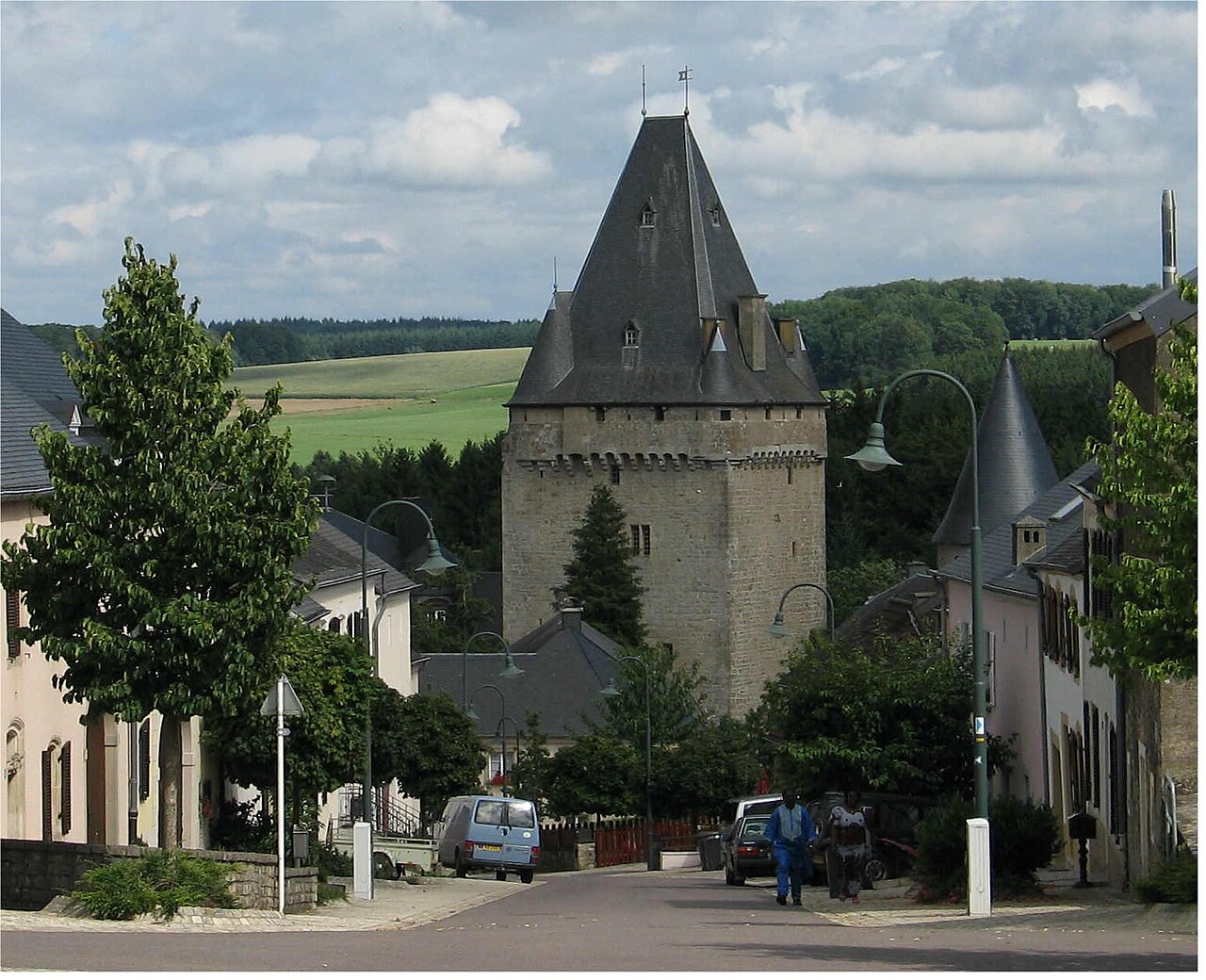
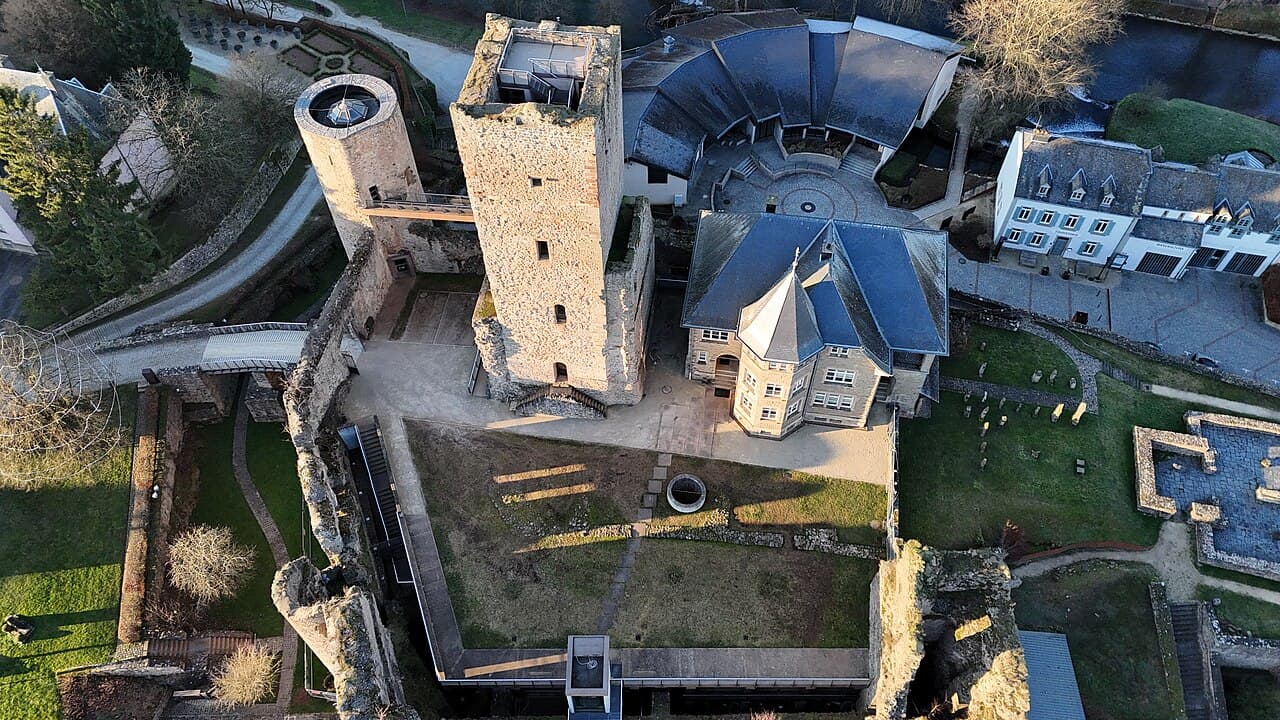
Useldange Castle exemplifies typical high medieval hill castle architecture, with a robust curtain wall enclosing the site and multiple round towers enhancing its defensive capabilities. The castle was originally protected by a wide moat, approximately 10 meters across, which is now spanned by a bridge that serves as the main entrance.

The keep and residential areas

The centerpiece of the castle is its imposing keep, standing about 25 meters tall. This tower of homage served as a last defensive refuge and the lord's residence, embodying the medieval hierarchy of castle design. The keep's height and stone construction demonstrate the strategic and symbolic importance of the structure.

Chapel and palace remains

The castle once included a chapel, which was an integral part of the complex until its destruction in 1903. The palace area, where the lord’s domestic quarters were located, was largely demolished in the 20th century to make way for a modern villa, which today functions as the Useldange town hall. This modern construction integrates with the old ruins, blending historical preservation with contemporary use.

Modern restoration and visitor experience

20th-century restoration efforts

In 1924, Emma Wolff Kuhn, an American immigrant originally from Useldange, purchased the castle ruins. She undertook significant consolidation work on the keep and curtain walls to stabilize the structure. However, some parts, such as the gate building, were removed during this period. Her family's later construction of the modern villa over the palace ruins marked a new chapter in the castle's history.

State ownership and archaeological work

The castle is currently owned and managed by the Luxembourg State, which has ongoing restoration and archaeological projects to preserve the site. These efforts aim to maintain the ruins as a cultural heritage landmark and enhance public access and understanding.

Accessibility and unique visitor features

Useldange Castle is notable for its UNESCO-sponsored discovery trail designed for partially sighted visitors. This innovative trail weaves around the castle and up into the restored tower, featuring a series of 16 tactile and audio experiences that convey the local culture and history. The castle grounds are freely accessible, although access to the keep has varied over time. The integration of modern facilities with historic ruins makes the site a unique destination for heritage tourism.

Cultural and historical significance

Useldange Castle stands as a testament to the region's medieval history and noble heritage. Its architectural evolution reflects the broader trends in castle construction during the High medieval period, while its turbulent history illustrates the impact of European conflicts on local strongholds. The castle's preservation and adaptive reuse demonstrate modern approaches to heritage management, blending conservation with community use.

Today, the castle ruins, combined with the modern town hall, form a distinctive landmark in Useldange, attracting visitors interested in medieval architecture, history, and innovative accessibility solutions. The ongoing archaeological work and state-led restorations ensure that Useldange Castle remains a vibrant part of Luxembourg's cultural landscape.

Frequently asked questions (FAQ)

How do I get to Useldange Castle?
Useldange Castle is located in the picturesque village of Useldange in Luxembourg. You can reach it by car or public transport from nearby cities, with parking available nearby for visitors. If you're traveling by train, the closest station is in the town of Mersch, from which you can take a taxi or a bus to the castle.
What is the historical significance of Useldange Castle?
Useldange Castle dates back to the 12th century and is a significant example of medieval architecture in Luxembourg. It was originally built as a defensive structure and has witnessed various historical events, including changes in ownership and renovations over the centuries. Today, it serves as a reminder of the region's rich history and heritage.
When was Useldange Castle last renovated?
Useldange Castle underwent its last major renovation in the early 21st century, aimed at preserving its historical integrity while making it accessible to the public. This renovation included restoration of the castle's towers and walls, ensuring that visitors can appreciate its architectural beauty. Ongoing maintenance efforts continue to keep the site in excellent condition.
Can I visit Useldange Castle year-round?
Yes, Useldange Castle is open to visitors year-round, though opening hours may vary by season. It’s advisable to check the official website or contact the visitor center for specific hours and any seasonal events. During the summer months, the castle may host special tours and activities for families and history enthusiasts.
Why is Useldange Castle a popular tourist attraction?
Useldange Castle is popular for its stunning architecture and scenic views of the surrounding landscape. The castle's rich history and well-preserved structures allow visitors to immerse themselves in the past. Additionally, its proximity to other attractions in Luxembourg makes it a convenient stop for tourists exploring the area.
Is it possible to take guided tours of Useldange Castle?
Yes, guided tours of Useldange Castle are available and highly recommended for a deeper understanding of its history and architecture. These tours are conducted by knowledgeable guides who provide fascinating insights into the castle's past and its significance in Luxembourg's history. Be sure to check the schedule and book in advance, especially during peak tourist seasons.
What are the ticket prices for visiting Useldange Castle?
Ticket prices for Useldange Castle are generally affordable, with discounts available for children, students, and seniors. Family packages are also offered to encourage visits from families. It's best to consult the official website for the most current pricing information and any special offers that may be available.
What is the best time to visit Useldange Castle?
The best time to visit Useldange Castle is during the spring and fall when the weather is pleasant, and the surrounding landscape is particularly beautiful. Summer is also a great option, but it can be crowded with tourists. Visiting during weekdays may offer a quieter experience, allowing you to fully enjoy the castle's ambiance.
Are there any nearby attractions to Useldange Castle?
Yes, there are several nearby attractions worth exploring, including the charming village of Useldange itself and the scenic nature trails in the surrounding countryside. Additionally, the historic town of Mersch and the beautiful Clervaux Castle are within a short drive. These nearby sites complement your visit and provide a broader experience of Luxembourg's rich history and natural beauty.

Photo gallery

Useldange Castle
Click to view

Photo by GilPe•CC BY-SA 4.0

1 photo • Click any image to view in full screen

Information

Hill Castle

Address

Rue de l'Église, Luxembourg

Sources & official resources

Verify the information above using these authoritative references.

Loading map...

Visitor reviews

No reviews yet. Been here? Write the first review and help other travelers!

Write the first review

Visited this castle? Share your experience

Your review helps other travelers and adds first-hand knowledge to our encyclopedia.
Write a review

(5/5)

0/2000 characters

Your review will be visible after admin approval

Nearby castles

7.6 km
Septfontaines Castle — Luxembourg castle

Septfontaines Castle

Schlasswee, Luxembourg

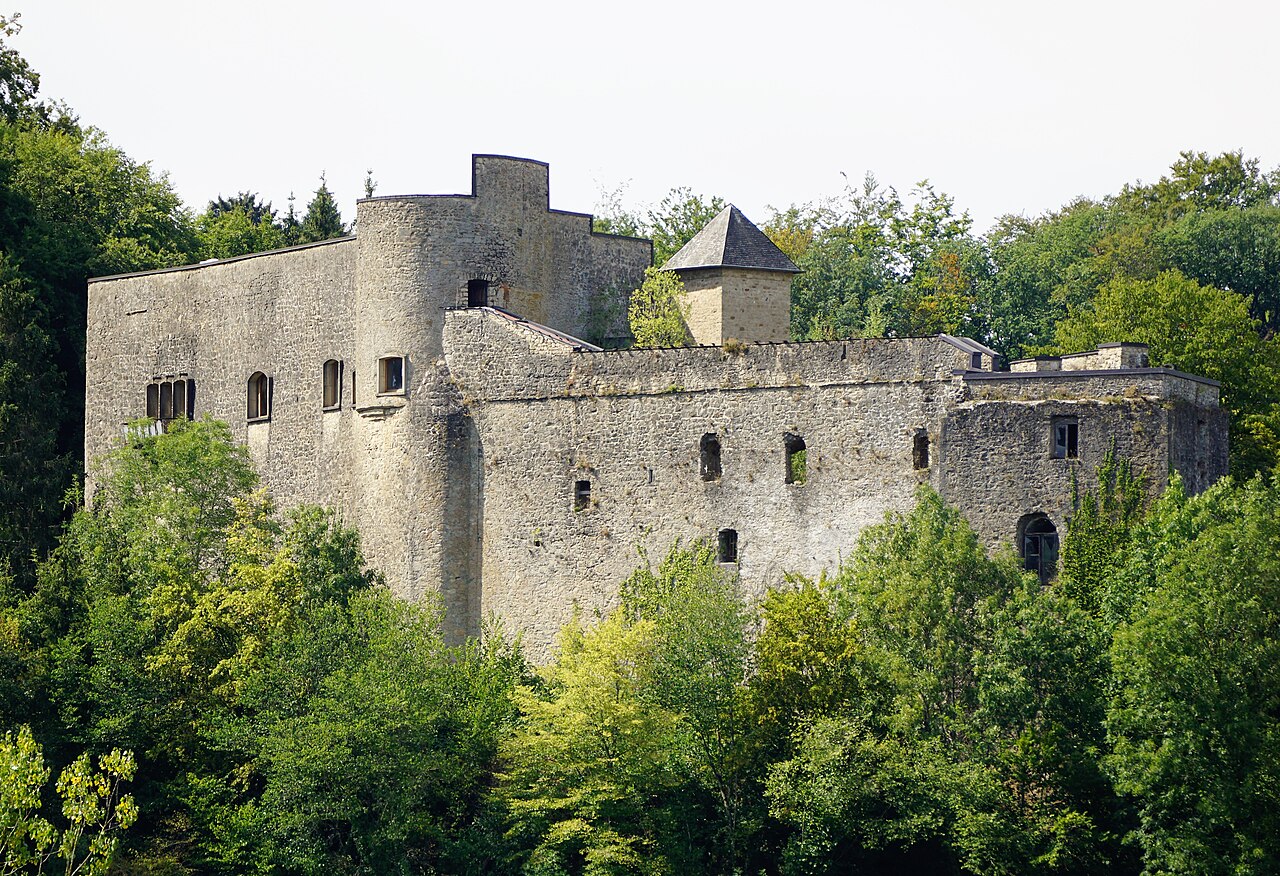
Septfontaines Castle, also known locally as Burg Simmern, is a significant medieval fortress perched above the small village of Septfontaines in Luxembourg. It occupies a strategic position in the picturesque Valley of the Seven Castles, named for the cluster of historic fortifications along the Eisch stream. This valley includes six other castles: Koerich, Ansembourg, New Ansembourg, Hollenfels, Mersch, and Schoenfels, making the region a rich repository of Luxembourg's feudal and architectural heritage. The origins of Septfontaines Castle date back to the 12th century, placing its construction firmly within the high medieval period. While the exact date of its foundation remains uncertain, documentary evidence from 1192 mentions a lord named Tider associated with Septfontaines, indicating the presence of a fortified site at that time. By 1233, the castle and its adjoining village were granted as a fief to Johann von Simmern by Ermesinde, Countess of Luxembourg, a powerful noblewoman who played a pivotal role in consolidating the Luxembourg territory. Medieval origins and early development During the 13th century, Septfontaines Castle underwent its first significant enlargement and fortification phase, adapting to the evolving military and residential needs of its lords. The castle was likely constructed with typical high medieval defensive features such as thick curtain walls, a fortified gatehouse, and a central courtyard. Its location on elevated terrain above the valley provided natural defensive advantages and commanding views of the surrounding landscape. Architectural evolution and renaissance additions In the late medieval and early modern periods, the castle experienced various modifications reflecting changing architectural styles and the reduced military role of such fortifications. Around 1600, a prominent square keep was added in the renaissance style by Christoph von Criechingen, who enhanced the castle's northern entrance with this imposing tower. This Renaissance addition contrasted with the earlier medieval structures, featuring larger windows and more ornate stonework, signaling a shift towards residential comfort and status display rather than purely defensive purposes. Structural features The castle originally featured a courtyard surrounded by defensive walls. The gatehouse and battlements were key defensive elements during the medieval period. The Renaissance keep included architectural details such as mullioned windows and decorative stone cornices. Decline, fire, and partial ruin By the 18th century, parts of Septfontaines Castle had fallen into disrepair. The decline culminated in a devastating fire in 1779 that severely damaged the structure, leaving it largely in ruins. Subsequent centuries saw the castle increasingly neglected, with sections collapsing or being dismantled. In 1919, parts of the castle were demolished, reflecting the challenges of preserving such historic sites amid changing ownership and limited resources. 20th-century restoration attempts and current status In the early 20th century, efforts were made to restore the castle, but these were often unsympathetic to the original medieval architecture, resulting in the loss of many authentic features. Modern restoration campaigns began but were halted due to financial and other difficulties, leaving the castle in a state of partial restoration and ongoing decay. Currently, Septfontaines Castle remains private property and is not open to the public. Despite its condition, it remains a striking example of Luxembourg's medieval heritage and a key landmark within the Valley of the Seven Castles. Cultural and historical significance Septfontaines Castle is emblematic of the feudal history of Luxembourg and the architectural evolution of medieval fortifications into Renaissance residences. Its association with notable figures such as Ermesinde, Countess of Luxembourg, and Thomas de Septfontaines, a companion of Emperor Henry VII, highlights its importance in regional politics and imperial connections during the Middle Ages. The castle's location within the Valley of the Seven Castles underscores its role in a broader defensive network that shaped the historical landscape of Luxembourg. The valley of the seven castles This valley is renowned for its concentration of castles built between the 10th and 17th centuries, each reflecting different periods and architectural styles. Septfontaines Castle contributes to this rich tapestry, offering insights into medieval military architecture and noble residence design. Visiting information and accessibility Currently, Septfontaines Castle is not accessible to visitors as it remains under private ownership and is undergoing limited maintenance. Visitors to the Valley of the Seven Castles can view the castle's exterior from public vantage points in the village of Septfontaines and enjoy the scenic surroundings. The castle's ongoing preservation challenges highlight the need for continued efforts to protect Luxembourg's cultural heritage.

High Medieval (11th–13th c.)
Details
8.1 km
Hollenfels Castle — Luxembourg castle

Hollenfels Castle

Rue du Château 2, Luxembourg

Hollenfels Castle stands as a prominent medieval fortress located on the south side of the village of Hollenfels in Luxembourg. Nestled within the scenic Valley of the Seven Castles, the castle overlooks the valley of the Eisch stream, sharing this historic region with six other notable castles: Koerich, Septfontaines, Ansembourg, New Ansembourg, Schoenfels, and Mersch. The castle's name, meaning "hollow cliff," derives from the natural caves and tunnels carved into the rocky foundation beneath the fortress, a unique geological feature that has influenced its defensive design and local lore. The earliest documentary mention of Hollenfels Castle dates back to 1129, marking its importance during the High Medieval period. Originally established by the von Holfels family, the castle was a key noble seat in the region. The site itself may have been occupied since the 10th or 11th century, with records from 1041 citing Isenbald von Holfels as an early lord. Over the centuries, the castle evolved both architecturally and functionally, reflecting the shifting political and military landscape of Luxembourg and the surrounding territories. Architectural evolution and key features The imposing donjon The most striking feature of Hollenfels Castle is its massive square donjon, constructed around 1380 by the von Holfels lineage. This five-story fortified tower rises to approximately 39 meters in height, with a base measuring roughly 14 by 12.5 meters. The donjon's robust stone walls, reaching 23 meters before being topped by a steep pitched roof, exemplify medieval military architecture designed for both defense and residence. Internally, the donjon is vertically arranged with vaulted chambers serving distinct purposes. The lowest level housed the kitchen and oven room, essential for sustaining the castle's inhabitants during sieges. Above this was the servants' dining hall, followed by the Gothic great hall used by the lords, which also incorporated a chapel that occasionally functioned as a private bedroom. The topmost floor served as an armory, safeguarding weapons and armor. Architectural details include large open fireplaces, windows recessed deep within thick walls for protection, and intricately carved sculptures that adorn the interiors. A spiral staircase connects all floors, providing secure and efficient movement within the tower. Defensive structures and layout The castle is perched atop a rocky ledge approximately 315 meters above sea level, commanding a steep rise of nearly 80 meters above the Eisch river valley. This elevated position afforded strategic control over the surrounding landscape. The fortress is encircled by a curtain wall and includes a corner tower that enhanced its defensive capabilities. Access to the castle is gained via a stone bridge crossing a defensive moat or ditch, a feature recently confirmed by archaeological excavations in 2024. These excavations also uncovered two previously unknown medieval watchtowers, shedding new light on the castle's comprehensive fortification system. One of the castle's most remarkable features is a secret underground passage carved into the rock beneath the fortress. This tunnel, linked to a well or fountain, was historically used during sieges to supply food and water or to facilitate covert escape, underscoring the castle's sophisticated defensive planning. Historical significance and ownership Throughout its history, Hollenfels Castle changed hands among several noble families, reflecting the complex feudal allegiances and regional power struggles. After the von Holfels family, the castle was successively owned by the lords of Elter (also known as Autel), de Raville of Ansembourg, Greifenklau, von Ippenborn, von Thynner, and de Brouckhoven families. In the early 17th century, Sebastian von Thynner acquired the castle and expanded its role beyond military defense by establishing an iron furnace nearby around 1600, fostering local industry. He also founded a school in Hollenfels after 1629, demonstrating the castle's integration into the social and educational fabric of the community. The late 17th century was marked by military conflict as the fortress was occupied by French troops in 1681 during the wars of King Louis XIV. Spanish forces briefly retook the castle in 1683 before the French regained control. Despite bombardments and damage, the castle was repaired and remained a significant stronghold. In 1729, the de Brias family, then owners, commissioned the construction of a mansion adjoining the north-eastern side of the donjon. This addition was later enhanced with a Baroque-style finish in 1921, reflecting evolving architectural tastes and the transition from purely military to residential functions. Ownership in the 19th century included JB Thorn-Suttor, governor of Luxembourg during the Belgian period (1831–1839), who also owned Schoenfels Castle. In 1840, both castles were sold to J. Engler, a Brussels senator, and later passed to Baron A. Goethals through familial ties. 20th-century restoration and modern use By the early 20th century, Hollenfels Castle had fallen into disrepair after being largely unoccupied for about a century. Restoration efforts began in the 1920s under architect J. Schoenberg, commissioned by Charles van den Poll, successfully reviving much of the castle's historic character and structural integrity. During World War II, the castle served as a training center for the Nazi Bund Deutscher Mädel, the female branch of the Hitler Youth from 1940 to 1945. Following the war, from 1945 to 1948, the castle was repurposed as a camp for Russian prisoners of war and forced laborers. In 1948, the Luxembourg State acquired the castle, transforming it into a youth hostel and educational facility focused on youth development. The adjacent 18th-century bailey now houses the hostel, providing accommodation that allows visitors to experience the historic site intimately while enjoying the natural surroundings. The castle is open year-round and hosts exhibitions on local ecology and history, blending cultural heritage with environmental education. The youth hostel and state facilities enhance the castle's role as a living monument, connecting past and present. Archaeological discoveries and ongoing preservation Recent archaeological excavations in 2024 revealed significant medieval defensive structures previously unknown, including the stone bridge at the castle's entrance and two watchtowers. These findings have enriched understanding of the castle's fortifications and its strategic importance in regional defense. Preservation efforts continue to maintain the castle's structural soundness and historical authenticity. The installation of a new roof on the donjon in 1973 and ongoing maintenance ensure that Hollenfels Castle remains a well-preserved example of High Medieval hill castle architecture. Visitors today can explore parts of the castle's underground tunnels and enjoy the impressive views from the donjon and surrounding walls. Though the interior of the main keep is not generally open to the public, the youth hostel and educational programs provide meaningful access to the castle's legacy.

High Medieval (11th–13th c.)
Details
8.4 km
Ansembourg Castle — Luxembourg castle

Ansembourg Castle

Vieux Château, Luxembourg

Ansembourg Castle, also known as the Old Castle of Ansembourg, is a prominent medieval fortress perched high above the village of Ansembourg in Luxembourg. Nestled in the picturesque Valley of the Seven Castles, it stands as a remarkable example of high medieval fortification architecture and noble residence development. The castle's strategic location on a sandstone spur overlooking the Eisch stream provided natural defensive advantages and commanding views of the surrounding valley. The castle's origins trace back to the early 12th century, with the first documented mention of a lord, Hubert d'Ansembourg, in 1135. This situates the castle firmly within the high medieval period, a time when feudal lords constructed fortified strongholds to assert territorial control and defend against regional conflicts. The initial fortifications were likely modest but robust, built to withstand siege warfare typical of the era. Architectural evolution and medieval fortifications During the early 14th century, significant enhancements were made under Jofroit d'Ansembourg, who expanded the castle's defenses by adding the distinctive south-western tower gate and the northern main keep. These structures exemplify the transition from simple fortresses to more complex castles with multiple defensive layers. The shield wall, approximately 6 meters thick, was constructed to protect the core residential tower and gatehouse from artillery and battering attacks. The castle's core features a square residential tower measuring about 10 by 10 meters, which served both as a defensive stronghold and a noble dwelling. The gate tower to the southwest, with a diameter near 5 meters, controlled access to the inner bailey and was a critical defensive element. The outer bailey, measuring roughly 40 by 80 meters, enclosed the main living quarters and ancillary buildings, forming a self-contained fortified complex. 16th-century renovations and adaptations In 1565, the castle underwent major renovations to improve residential comfort and update its defenses in line with evolving military technology. The medieval keep was demolished during this period, replaced by a more modern gate tower in the bailey. This remodeling reflects Renaissance influences and the shifting function of castles from pure fortresses to stately homes. The main entrance bears the date 1565, marking the completion of these significant modifications. These changes illustrate how the castle adapted to the needs of noble families seeking both security and domestic luxury during the late medieval to early modern transition. Historical ownership and significance The castle remained in the hands of the d'Ansembourg family for centuries, a noble lineage well-known in the Low Countries. Ownership passed through various branches and alliances, including the Rollingen and Bidart families, who contributed to the castle's history and upkeep. The Bidart family notably established an ironworks nearby in the early 17th century, reflecting the region's industrial development. In 1683, the castle suffered partial destruction during military conflicts involving French troops under Marshal de Boufflers. This event was part of the broader clashes between French and Spanish forces in the region. Subsequent repairs were carried out by the Bidart and Marchant et d'Ansembourg families, who also built the New Castle of Ansembourg in the valley below. Following the construction of the New Castle, the Old Castle was largely unoccupied for approximately three centuries. Restoration efforts began in the 20th century under Gaston Amaury de Marchant, the father of the current owner, Count Gaston-Gaëtan de Marchant d'Ansembourg. Cultural heritage and private ownership The castle remains private property and is the residence of the current Count and Countess of Ansembourg. It is not open to the public, preserving its exclusive character and the privacy of its inhabitants. Surrounding lands and access roads are also private, and visitors are urged to respect this privacy. In 2008, the Luxembourg government acquired the family's extensive library of around 6,000 books and was offered the family archives. This collection includes the notable Codex Mariendalensis, a manuscript dating from the late 14th or early 15th century written in the Moselle Franconian dialect, closely related to modern Luxembourgish. The manuscript narrates the story of Yolanda of Vianden and is a significant cultural artifact linking the castle to Luxembourg's linguistic and literary heritage. Recently, the Count of Ansembourg opened an exclusive boutique hotel in one of the buildings surrounding the castle, blending heritage tourism with luxury accommodation while maintaining the castle's private status. Architectural features and landscape setting Perched approximately 80 meters above the valley floor, the castle's location on a rocky sandstone spur provided natural defenses and strategic oversight of the Eisch valley. The irregular shape of the surviving walls reflects adaptations to the terrain and the evolving defensive needs over centuries. The castle complex includes remnants of several towers, curtain walls, and the former chapel, first mentioned in 1217, though the chapel no longer exists in its original form. The fortified site is a testament to medieval military architecture, combining residential and defensive functions in a compact, elevated footprint. Today, the castle stands as a well-preserved fragment of Luxembourg's medieval heritage, embodying the architectural and historical layers accumulated over nearly a millennium. Its connection to the Valley of the Seven Castles situates it within a broader cultural landscape rich in feudal history and noble estates.

High Medieval (11th–13th c.)
Details