Ansembourg Castle
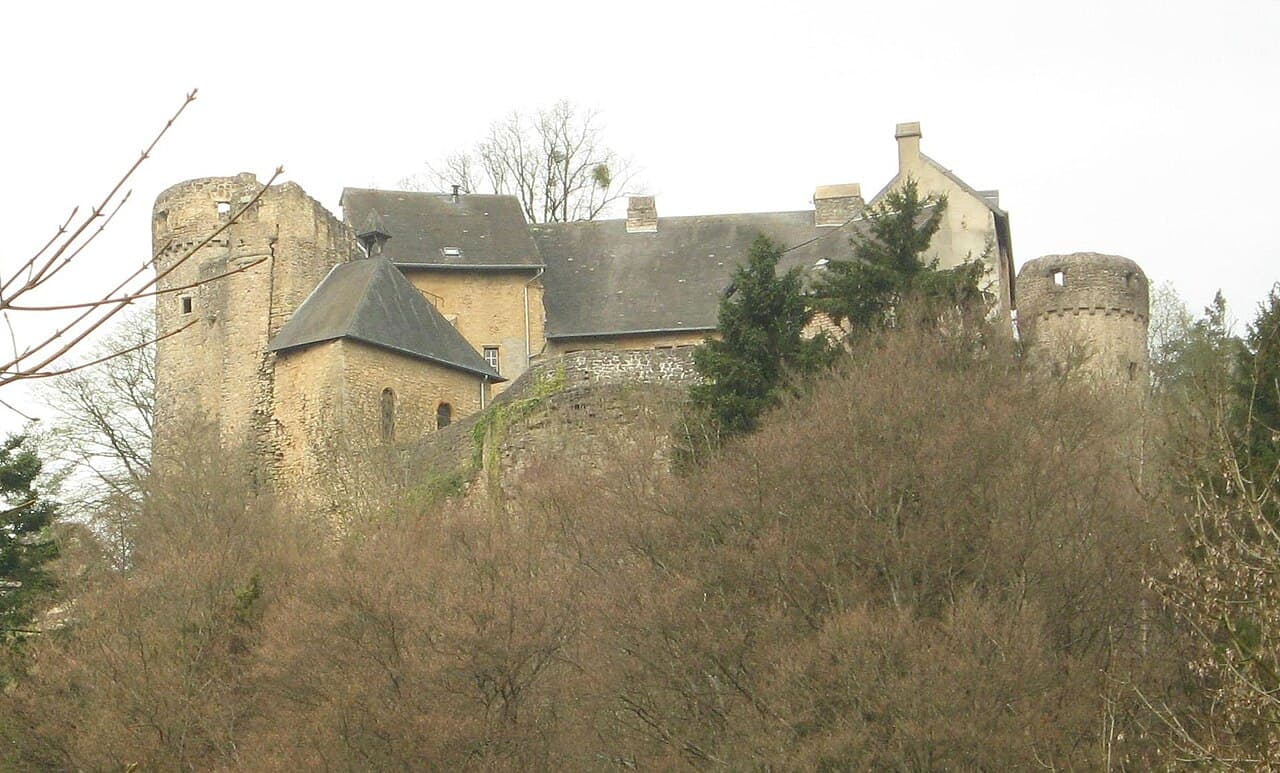
Ansembourg Castle, also known as the Old Castle of Ansembourg, is a prominent medieval fortress perched high above the village of Ansembourg in Luxembourg. Nestled in the picturesque Valley of the Seven Castles, it stands as a remarkable example of high medieval fortification architecture and noble residence development. The castle's strategic location on a sandstone spur overlooking the Eisch stream provided natural defensive advantages and commanding views of the surrounding valley.
The castle's origins trace back to the early 12th century, with the first documented mention of a lord, Hubert d'Ansembourg, in 1135. This situates the castle firmly within the high medieval period, a time when feudal lords constructed fortified strongholds to assert territorial control and defend against regional conflicts. The initial fortifications were likely modest but robust, built to withstand siege warfare typical of the era.
Architectural evolution and medieval fortifications
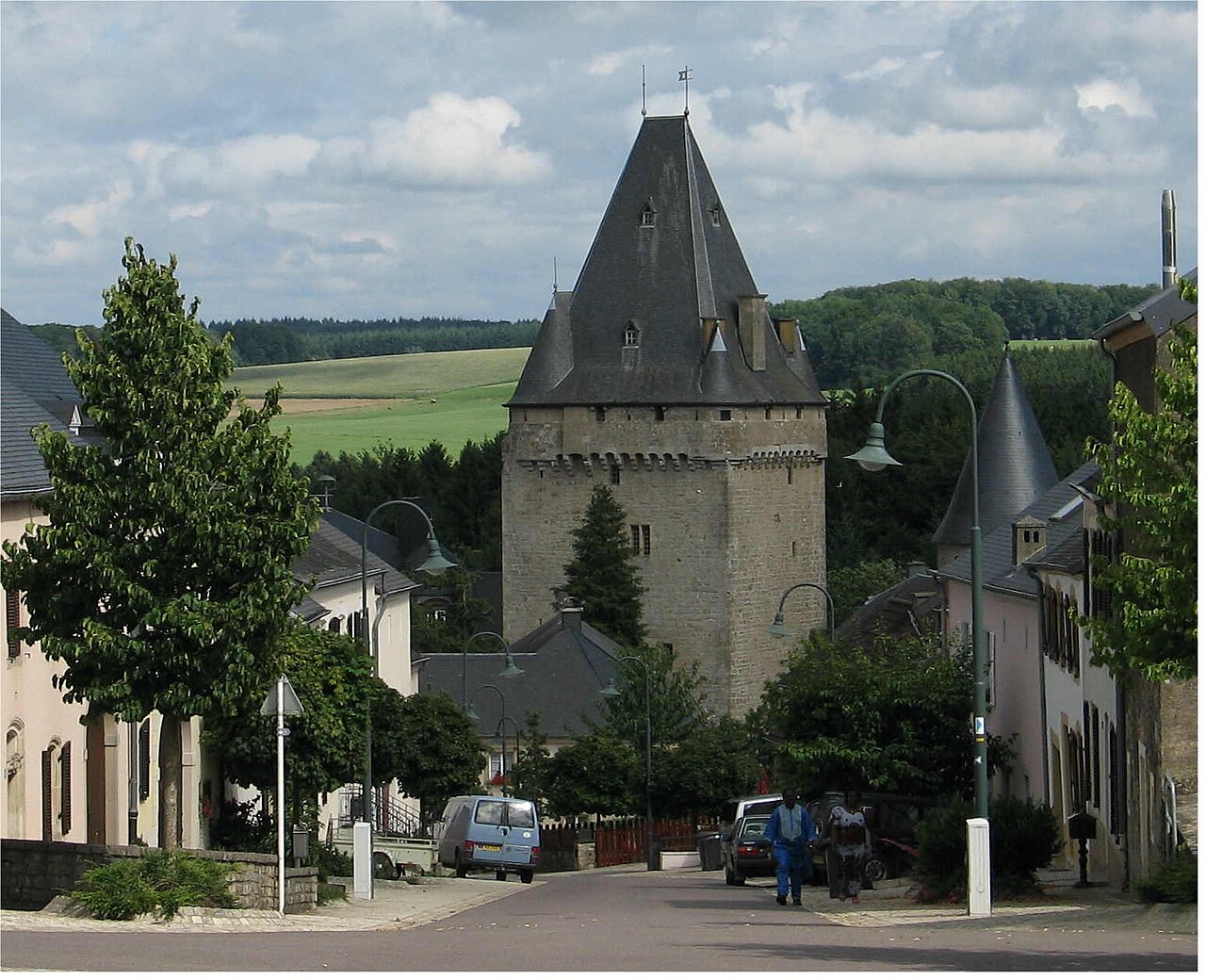
During the early 14th century, significant enhancements were made under Jofroit d'Ansembourg, who expanded the castle's defenses by adding the distinctive south-western tower gate and the northern main keep. These structures exemplify the transition from simple fortresses to more complex castles with multiple defensive layers. The shield wall, approximately 6 meters thick, was constructed to protect the core residential tower and gatehouse from artillery and battering attacks.
The castle's core features a square residential tower measuring about 10 by 10 meters, which served both as a defensive stronghold and a noble dwelling. The gate tower to the southwest, with a diameter near 5 meters, controlled access to the inner bailey and was a critical defensive element. The outer bailey, measuring roughly 40 by 80 meters, enclosed the main living quarters and ancillary buildings, forming a self-contained fortified complex.
16th-century renovations and adaptations
In 1565, the castle underwent major renovations to improve residential comfort and update its defenses in line with evolving military technology. The medieval keep was demolished during this period, replaced by a more modern gate tower in the bailey. This remodeling reflects Renaissance influences and the shifting function of castles from pure fortresses to stately homes.
The main entrance bears the date 1565, marking the completion of these significant modifications. These changes illustrate how the castle adapted to the needs of noble families seeking both security and domestic luxury during the late medieval to early modern transition.
Historical ownership and significance
The castle remained in the hands of the d'Ansembourg family for centuries, a noble lineage well-known in the Low Countries. Ownership passed through various branches and alliances, including the Rollingen and Bidart families, who contributed to the castle's history and upkeep. The Bidart family notably established an ironworks nearby in the early 17th century, reflecting the region's industrial development.
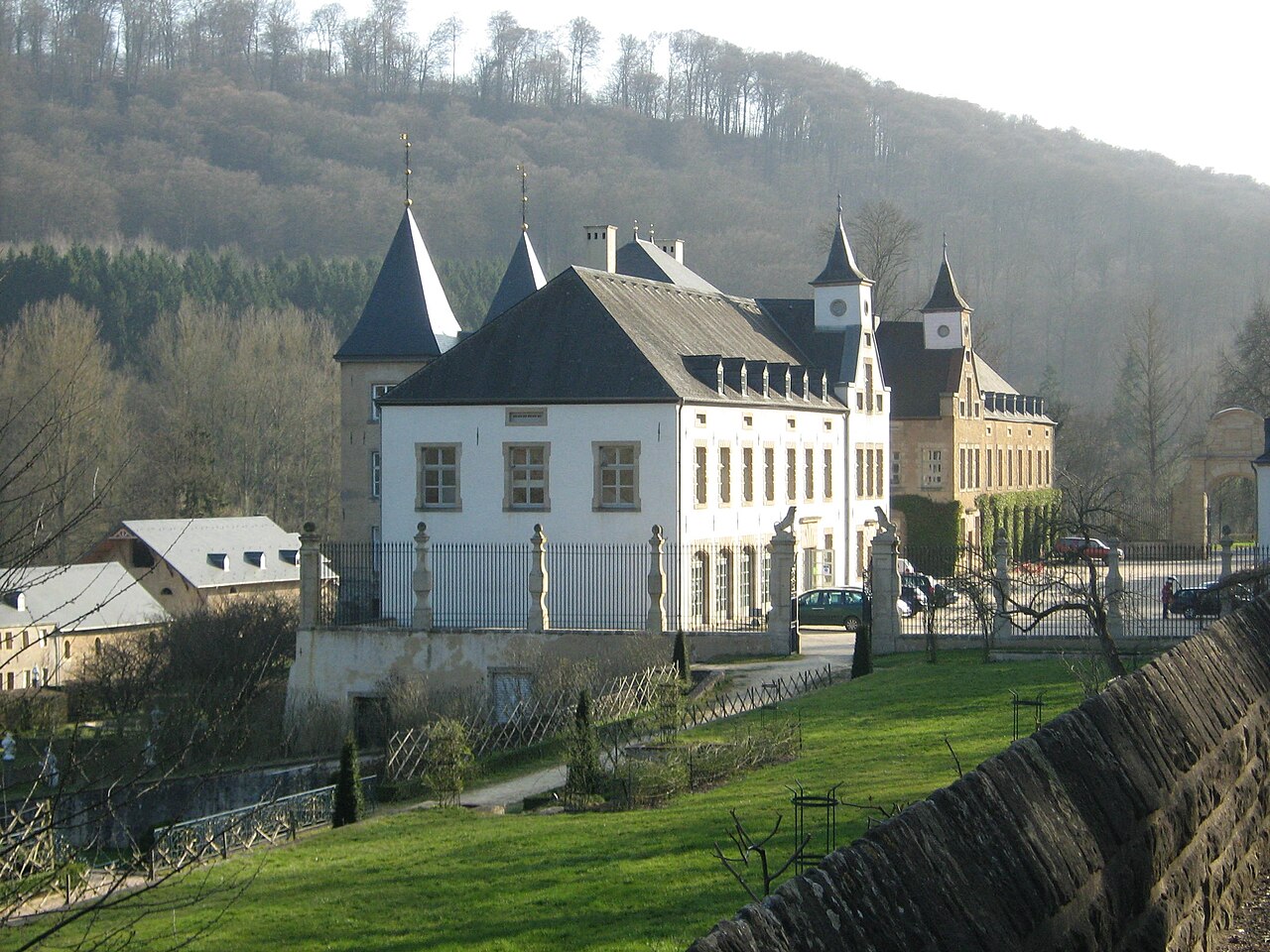
In 1683, the castle suffered partial destruction during military conflicts involving French troops under Marshal de Boufflers. This event was part of the broader clashes between French and Spanish forces in the region. Subsequent repairs were carried out by the Bidart and Marchant et d'Ansembourg families, who also built the New Castle of Ansembourg in the valley below.
Following the construction of the New Castle, the Old Castle was largely unoccupied for approximately three centuries. Restoration efforts began in the 20th century under Gaston Amaury de Marchant, the father of the current owner, Count Gaston-Gaëtan de Marchant d'Ansembourg.
Cultural heritage and private ownership
The castle remains private property and is the residence of the current Count and Countess of Ansembourg. It is not open to the public, preserving its exclusive character and the privacy of its inhabitants. Surrounding lands and access roads are also private, and visitors are urged to respect this privacy.
In 2008, the Luxembourg government acquired the family's extensive library of around 6,000 books and was offered the family archives. This collection includes the notable Codex Mariendalensis, a manuscript dating from the late 14th or early 15th century written in the Moselle Franconian dialect, closely related to modern Luxembourgish. The manuscript narrates the story of Yolanda of Vianden and is a significant cultural artifact linking the castle to Luxembourg's linguistic and literary heritage.
Recently, the Count of Ansembourg opened an exclusive boutique hotel in one of the buildings surrounding the castle, blending heritage tourism with luxury accommodation while maintaining the castle's private status.
Architectural features and landscape setting
Perched approximately 80 meters above the valley floor, the castle's location on a rocky sandstone spur provided natural defenses and strategic oversight of the Eisch valley. The irregular shape of the surviving walls reflects adaptations to the terrain and the evolving defensive needs over centuries.
The castle complex includes remnants of several towers, curtain walls, and the former chapel, first mentioned in 1217, though the chapel no longer exists in its original form. The fortified site is a testament to medieval military architecture, combining residential and defensive functions in a compact, elevated footprint.
Today, the castle stands as a well-preserved fragment of Luxembourg's medieval heritage, embodying the architectural and historical layers accumulated over nearly a millennium. Its connection to the Valley of the Seven Castles situates it within a broader cultural landscape rich in feudal history and noble estates.
Frequently asked questions (FAQ)
- Is it possible to visit Ansembourg Castle?
- Ansembourg Castle is private property and is not open to the public. Visitors are asked to respect the privacy of the owners and the surrounding lands.
- What is the historical significance of Ansembourg Castle?
- Ansembourg Castle is a high medieval fortress dating back to the 12th century, significant for its architectural evolution and association with the noble d'Ansembourg family.
- What architectural styles are represented at Ansembourg Castle?
- The castle primarily exhibits Gothic architectural features from its medieval origins, with Renaissance modifications from the 16th century.
- Where is Ansembourg Castle located within Luxembourg?
- Ansembourg Castle is located in the Eisch valley in the region of Luxembourg, high above the village of Ansembourg, part of the Valley of the Seven Castles.
- Are there any cultural artifacts associated with Ansembourg Castle?
- Yes, the castle's family library includes the Codex Mariendalensis manuscript, a significant 14th-century document in the Moselle Franconian dialect, important to Luxembourg's cultural heritage.

Information
Sources & official resources
Verify the information above using these authoritative references.
Loading map...
Visitor reviews
No reviews yet. Been here? Write the first review and help other travelers!
Write the first reviewVisited this castle? Share your experience
Your review helps other travelers and adds first-hand knowledge to our encyclopedia.