Hollenfels Castle
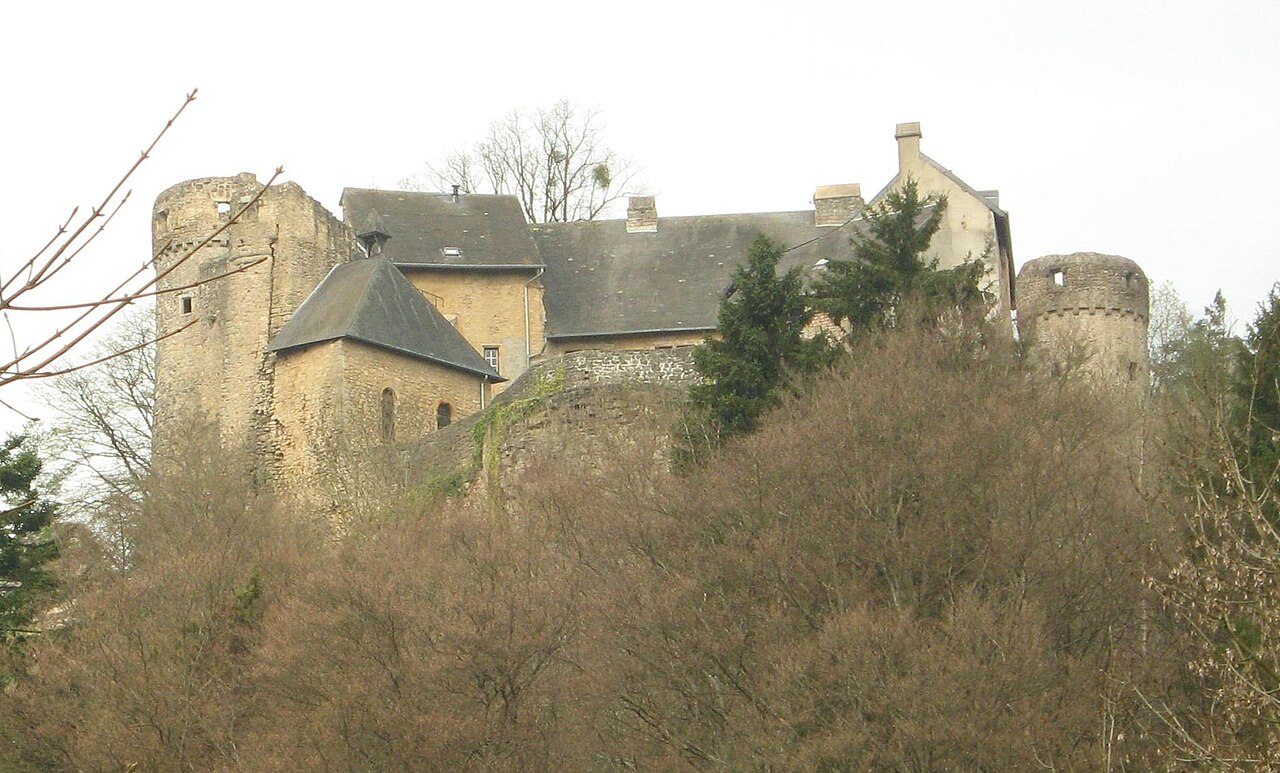
Hollenfels Castle stands as a prominent medieval fortress located on the south side of the village of Hollenfels in Luxembourg. Nestled within the scenic Valley of the Seven Castles, the castle overlooks the valley of the Eisch stream, sharing this historic region with six other notable castles: Koerich, Septfontaines, Ansembourg, New Ansembourg, Schoenfels, and Mersch. The castle's name, meaning "hollow cliff," derives from the natural caves and tunnels carved into the rocky foundation beneath the fortress, a unique geological feature that has influenced its defensive design and local lore.
The earliest documentary mention of Hollenfels Castle dates back to 1129, marking its importance during the High Medieval period. Originally established by the von Holfels family, the castle was a key noble seat in the region. The site itself may have been occupied since the 10th or 11th century, with records from 1041 citing Isenbald von Holfels as an early lord. Over the centuries, the castle evolved both architecturally and functionally, reflecting the shifting political and military landscape of Luxembourg and the surrounding territories.
Architectural evolution and key features
The imposing donjon
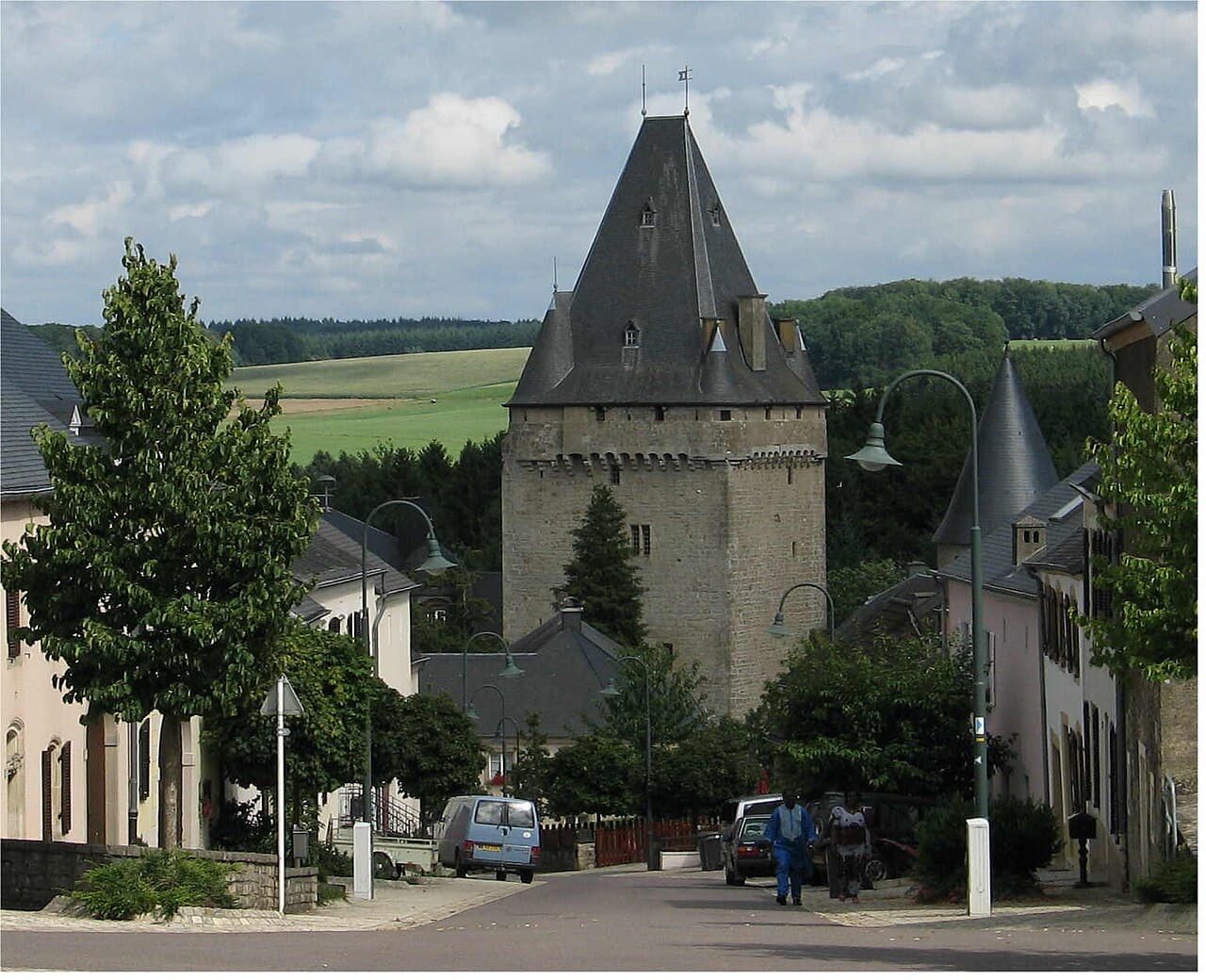
The most striking feature of Hollenfels Castle is its massive square donjon, constructed around 1380 by the von Holfels lineage. This five-story fortified tower rises to approximately 39 meters in height, with a base measuring roughly 14 by 12.5 meters. The donjon's robust stone walls, reaching 23 meters before being topped by a steep pitched roof, exemplify medieval military architecture designed for both defense and residence.
Internally, the donjon is vertically arranged with vaulted chambers serving distinct purposes. The lowest level housed the kitchen and oven room, essential for sustaining the castle's inhabitants during sieges. Above this was the servants' dining hall, followed by the Gothic great hall used by the lords, which also incorporated a chapel that occasionally functioned as a private bedroom. The topmost floor served as an armory, safeguarding weapons and armor. Architectural details include large open fireplaces, windows recessed deep within thick walls for protection, and intricately carved sculptures that adorn the interiors. A spiral staircase connects all floors, providing secure and efficient movement within the tower.
Defensive structures and layout
The castle is perched atop a rocky ledge approximately 315 meters above sea level, commanding a steep rise of nearly 80 meters above the Eisch river valley. This elevated position afforded strategic control over the surrounding landscape. The fortress is encircled by a curtain wall and includes a corner tower that enhanced its defensive capabilities.
Access to the castle is gained via a stone bridge crossing a defensive moat or ditch, a feature recently confirmed by archaeological excavations in 2024. These excavations also uncovered two previously unknown medieval watchtowers, shedding new light on the castle's comprehensive fortification system.
One of the castle's most remarkable features is a secret underground passage carved into the rock beneath the fortress. This tunnel, linked to a well or fountain, was historically used during sieges to supply food and water or to facilitate covert escape, underscoring the castle's sophisticated defensive planning.
Historical significance and ownership
Throughout its history, Hollenfels Castle changed hands among several noble families, reflecting the complex feudal allegiances and regional power struggles. After the von Holfels family, the castle was successively owned by the lords of Elter (also known as Autel), de Raville of Ansembourg, Greifenklau, von Ippenborn, von Thynner, and de Brouckhoven families.
In the early 17th century, Sebastian von Thynner acquired the castle and expanded its role beyond military defense by establishing an iron furnace nearby around 1600, fostering local industry. He also founded a school in Hollenfels after 1629, demonstrating the castle's integration into the social and educational fabric of the community.
The late 17th century was marked by military conflict as the fortress was occupied by French troops in 1681 during the wars of King Louis XIV. Spanish forces briefly retook the castle in 1683 before the French regained control. Despite bombardments and damage, the castle was repaired and remained a significant stronghold.
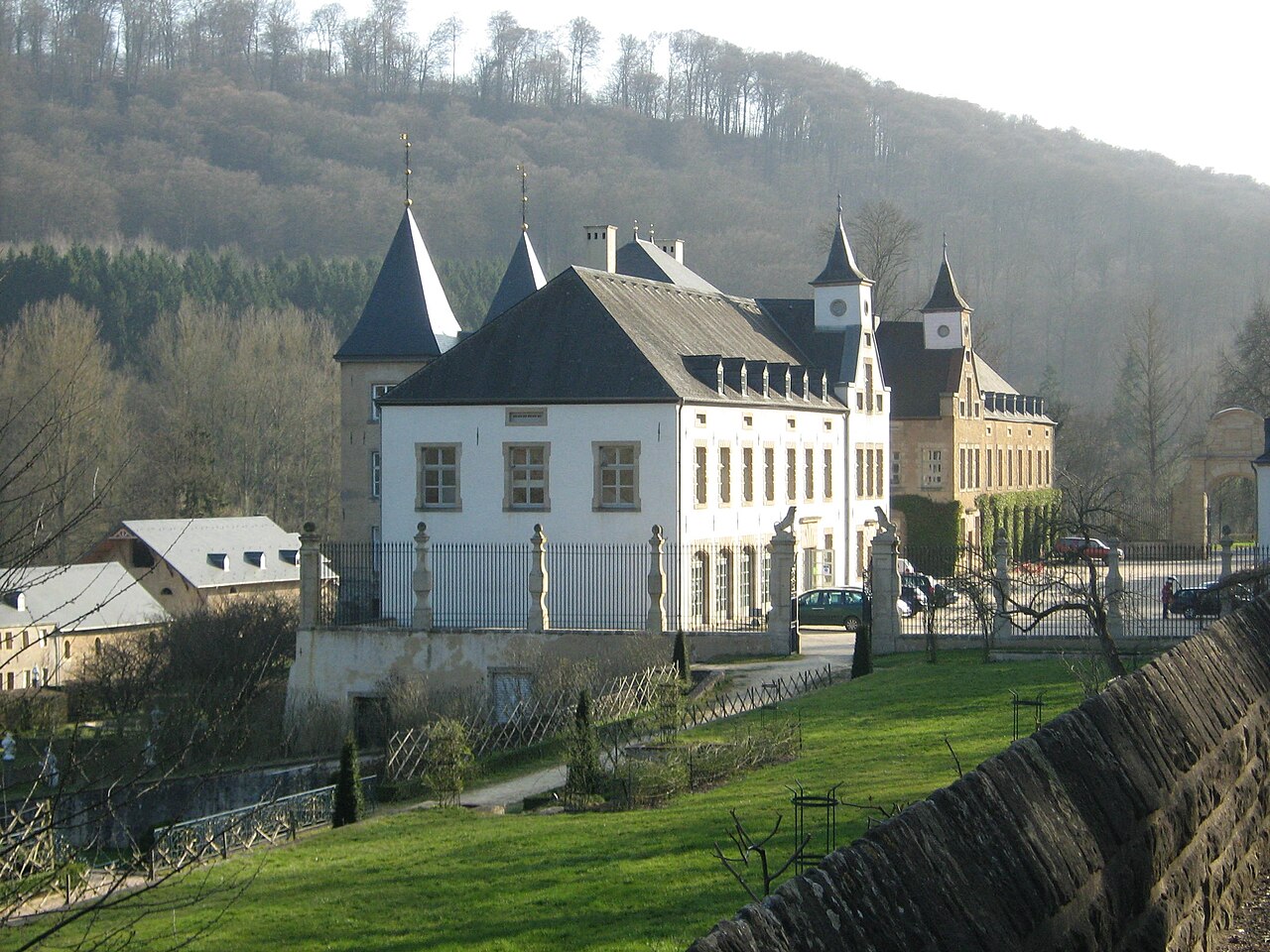
In 1729, the de Brias family, then owners, commissioned the construction of a mansion adjoining the north-eastern side of the donjon. This addition was later enhanced with a Baroque-style finish in 1921, reflecting evolving architectural tastes and the transition from purely military to residential functions.
Ownership in the 19th century included JB Thorn-Suttor, governor of Luxembourg during the Belgian period (1831–1839), who also owned Schoenfels Castle. In 1840, both castles were sold to J. Engler, a Brussels senator, and later passed to Baron A. Goethals through familial ties.
20th-century restoration and modern use
By the early 20th century, Hollenfels Castle had fallen into disrepair after being largely unoccupied for about a century. Restoration efforts began in the 1920s under architect J. Schoenberg, commissioned by Charles van den Poll, successfully reviving much of the castle's historic character and structural integrity.
During World War II, the castle served as a training center for the Nazi Bund Deutscher Mädel, the female branch of the Hitler Youth from 1940 to 1945. Following the war, from 1945 to 1948, the castle was repurposed as a camp for Russian prisoners of war and forced laborers.
In 1948, the Luxembourg State acquired the castle, transforming it into a youth hostel and educational facility focused on youth development. The adjacent 18th-century bailey now houses the hostel, providing accommodation that allows visitors to experience the historic site intimately while enjoying the natural surroundings.
The castle is open year-round and hosts exhibitions on local ecology and history, blending cultural heritage with environmental education. The youth hostel and state facilities enhance the castle's role as a living monument, connecting past and present.
Archaeological discoveries and ongoing preservation
Recent archaeological excavations in 2024 revealed significant medieval defensive structures previously unknown, including the stone bridge at the castle's entrance and two watchtowers. These findings have enriched understanding of the castle's fortifications and its strategic importance in regional defense.
Preservation efforts continue to maintain the castle's structural soundness and historical authenticity. The installation of a new roof on the donjon in 1973 and ongoing maintenance ensure that Hollenfels Castle remains a well-preserved example of High Medieval hill castle architecture.
Visitors today can explore parts of the castle's underground tunnels and enjoy the impressive views from the donjon and surrounding walls. Though the interior of the main keep is not generally open to the public, the youth hostel and educational programs provide meaningful access to the castle's legacy.
Frequently asked questions (FAQ)
- What is the best time to visit Hollenfels Castle?
- Hollenfels Castle is open throughout the year, making spring and summer ideal for enjoying the surrounding natural beauty and outdoor exploration.
- Can I stay overnight at Hollenfels Castle?
- Yes, the castle's 18th-century bailey houses a youth hostel that offers simple but comfortable accommodation for visitors.
- Is it possible to tour the interior of the donjon?
- The main keep's interior is generally not open to the public, but visitors can explore parts of the underground tunnels and enjoy educational exhibits nearby.
- How do I access Hollenfels Castle?
- Access is via a stone bridge over a defensive moat, with well-marked paths and steps leading from the village of Hollenfels to the castle entrance.
- Why is Hollenfels Castle historically significant?
- Hollenfels Castle is significant for its well-preserved High Medieval architecture, its strategic location in the Valley of the Seven Castles, and its role in regional military and social history.
Photo gallery

Information
Current owner
State museum
Address
Rue du Château 2, Luxembourg
Loading map...
Visitor reviews
No reviews yet. Been here? Write the first review and help other travelers!
Write the first reviewVisited this castle? Share your experience
Your review helps other travelers and adds first-hand knowledge to our encyclopedia.