Untere Burg
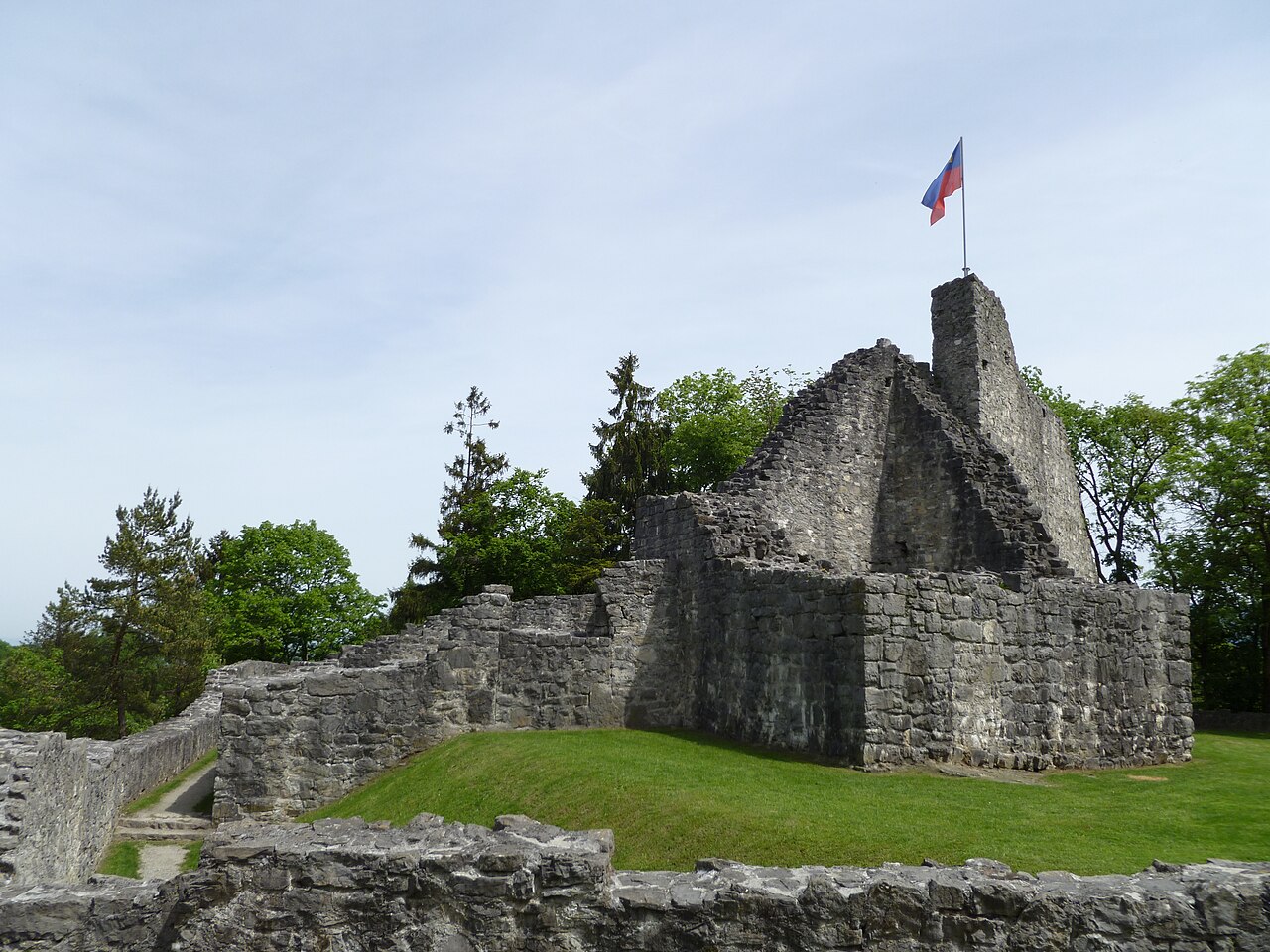
Untere Burg, also known as Burg Alt-Schellenberg or the 'Lower Castle', is a significant high medieval castle ruin located in Schellenberg, Liechtenstein. Despite being the smaller and younger of the two castles in Schellenberg, Untere Burg holds considerable historical and architectural value. Its construction was completed around 1250, and it was first documented in written records in 1317. The castle's architecture and fortifications reached their zenith around 1350, reflecting the typical defensive and residential features of the period.
Historical significance and timeline
The castle was inhabited until approximately the 16th century, after which it was abandoned as a residence and lost its military function. Over the subsequent centuries, Untere Burg fell into ruin, becoming heavily overgrown and dilapidated. In 1956, ownership was transferred by Franz Joseph II, Prince of Liechtenstein to the Historical Association of the Principality of Liechtenstein, which currently manages the site. This organization has been responsible for the castle's research, maintenance, and preservation efforts.
Architectural features and layout
The castle exemplifies high medieval defensive architecture with typical features such as curtain walls, a gatehouse, and towers designed for both defense and habitation. Although now in ruins, the remains indicate a compact layout adapted to the terrain of the hill on which it stands. The castle's elevated position provided strategic oversight of the surrounding region, essential for surveillance and defense during its active use.
Defensive structures
The surviving walls and foundations reveal the presence of battlements and arrow slits, which were integral to the castle's defense against invaders. The gatehouse would have been fortified to control access, and the castle likely included a keep or residential tower serving as the last line of defense.
Residential and functional spaces
Within the castle walls, there would have been living quarters, storage rooms, and possibly a chapel, consistent with castles of the period. The structural expansion around 1350 suggests adaptation to changing needs, perhaps including enhanced living comfort or improved military capabilities.
Access and preservation
Today, Untere Burg is one of five extant castles in Liechtenstein and among the three that are ruins. It is freely accessible to tourists and visitors, reachable by foot or mountain bike via a local footpath. The site offers insight into medieval castle construction and the historical landscape of the region.
Visitor experience
Visitors can explore the ruins and appreciate the castle's historical context and architectural remnants. The site is maintained to ensure safety while preserving the authenticity of the ruins. Interpretive signage and guides may be available to enhance understanding of the castle's history and features.
Untere Burg in the context of Liechtenstein's heritage
As part of Liechtenstein's cultural heritage, Untere Burg represents the medieval period's feudal and military history. Its preservation allows for continued study and public education about the principality's past. The castle's ruins contribute to the scenic and historic landscape of Schellenberg, attracting history enthusiasts and tourists alike.
Frequently asked questions (FAQ)
- What is the historical significance of Untere Burg?
- Untere Burg, located in Schellenberg, is one of the oldest castles in Liechtenstein, dating back to the 13th century. It served as a strategic fortification and residence for local nobility, reflecting the region's medieval history and architectural evolution.
- When was Untere Burg built?
- Untere Burg was constructed in the early 13th century, around the year 1250. This timeframe marks an important period in the development of feudal structures in the area, showcasing the power dynamics of the time.
- Can I visit Untere Burg?
- Yes, visitors are welcome to explore Untere Burg, although access may be limited to specific areas. Guided tours are often available, providing insights into the castle's rich history and architectural features.
- What are the opening hours for Untere Burg?
- Untere Burg typically opens to visitors from April to October, with specific hours varying by season. It is advisable to check the official website or local tourism information for the most current visiting hours before planning your trip.
- Is it possible to access Untere Burg with limited mobility?
- Untere Burg has some accessibility challenges due to its historical architecture, including uneven surfaces and steep paths. However, staff may provide assistance and recommend the best access points for visitors with limited mobility.
- What is the best time to visit Untere Burg?
- The best time to visit Untere Burg is during the spring and early autumn months when the weather is mild and conducive for outdoor exploration. These seasons also offer beautiful views of the surrounding landscape and ideal conditions for photography.
- Are there any nearby attractions to visit while at Untere Burg?
- Yes, visitors can explore other attractions nearby, such as the picturesque village of Schellenberg and the stunning natural scenery of the surrounding Alps. Additionally, the capital city of Vaduz, with its museums and galleries, is just a short drive away.
- What are the ticket prices for visiting Untere Burg?
- Ticket prices for Untere Burg are generally modest, with discounts available for children, students, and seniors. It is recommended to check the official website for the latest pricing information and any special offers that may be available during your visit.
Information
Current owner
Historical Association of the Principality of Liechtenstein
Loading map...
Visitor reviews
No reviews yet. Been here? Write the first review and help other travelers!
Write the first reviewVisited this castle? Share your experience
Your review helps other travelers and adds first-hand knowledge to our encyclopedia.