Forstegg Castle Ruins

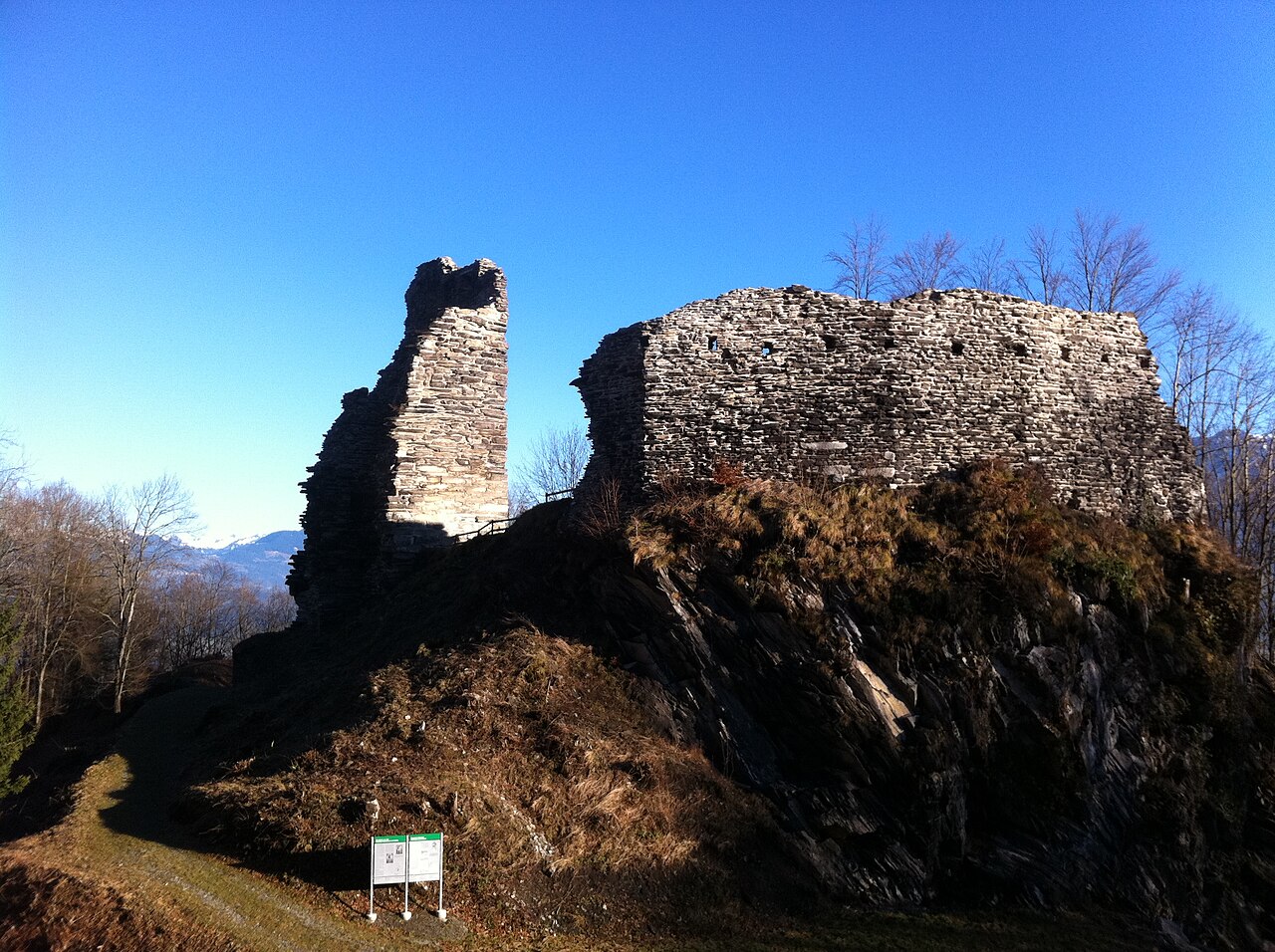
Forstegg Castle ruins in Sennwald, Switzerland
Sennwald, Switzerland
High Medieval (11th–13th c.)
Ruins

Forstegg Castle is a high medieval castle ruin located in the municipality of Sennwald, in the canton of St. Gallen, Switzerland. Constructed around 1200 AD by the Barons of Sax/Misox, it served as a fortified residence and stronghold during a period of regional power struggles and territorial defense. The castle's strategic position on a hillside provided commanding views over the surrounding valley, which was vital for monitoring trade routes and deterring potential invaders.

Historical background and ownership

The origins of Forstegg Castle trace back to the early 13th century when the Barons of Sax/Misox, a noble family influential in eastern Switzerland and northern Italy, established the fortress as part of their territorial holdings. The castle played a role in the feudal system, symbolizing the barons' authority and control over the local population and lands.

Throughout the Middle Ages, the castle witnessed various political and military events, although it was not a site of major battles. Its ownership remained with the Sax/Misox lineage until the gradual decline of feudal power and changing political landscapes in the region.

Architectural features and layout

The castle was originally constructed as a hill castle, utilizing the natural topography for defense. The ruins today indicate a compact layout typical of the period, likely consisting of a keep or main tower, surrounded by defensive walls and possibly a small courtyard. The stone masonry and remnants of defensive structures suggest a robust design intended to withstand sieges and attacks common in the high medieval era.

Although much of the structure has fallen into ruin, archaeological studies and remaining walls reveal the use of local stone materials and typical medieval construction techniques. The castle's elevated position also meant it had limited access points, enhancing its defensibility.

Decline and current condition

By the 19th century, Forstegg Castle was abandoned, reflecting broader social and military changes that rendered many medieval castles obsolete. The castle fell into disrepair and was officially recorded as a ruin by 1894. Today, it remains a protected historical site, attracting visitors interested in medieval history and castle architecture.

The ruins offer insight into the castle's original form and function, with visible fragments of walls and foundations. Preservation efforts focus on maintaining the site as an archaeological and cultural landmark within the region.

Visiting Forstegg Castle ruins

The castle ruins are accessible to the public and can be reached by hiking trails from Sennwald. Visitors can explore the remnants of the fortifications and enjoy panoramic views of the surrounding landscape. Interpretive signage provides historical context, enhancing the experience for history enthusiasts and tourists.

Due to the castle's ruinous state, visitors should exercise caution when exploring the site, as some areas may be unstable. The site is open year-round, with the best visiting conditions in spring through autumn.

Frequently asked questions (FAQ)

How do I get to Forstegg Castle Ruins?
Forstegg Castle Ruins is located in Sennwald, Switzerland, and can be accessed by car or public transportation. The nearest bus stop is within walking distance, and there are several parking options available for visitors arriving by car.
What is the historical significance of Forstegg Castle Ruins?
Forstegg Castle Ruins dates back to the 13th century and played an important role in the region's medieval history. It served as a strategic fortification and residence for local nobility, reflecting the architectural styles and social dynamics of that era.
When was Forstegg Castle Ruins built?
The construction of Forstegg Castle began in the early 1200s, with various modifications and expansions occurring over the centuries. The castle ultimately fell into disrepair and was largely abandoned by the late 16th century.
Is it possible to explore the ruins of Forstegg Castle?
Yes, visitors can explore the ruins of Forstegg Castle, which offer a glimpse into its former grandeur. While some areas may be restricted for safety reasons, the open sections allow for an immersive experience of the castle's historical architecture.
What are the opening hours for Forstegg Castle Ruins?
Forstegg Castle Ruins is open to the public year-round, but specific opening hours may vary by season. It is recommended to check local tourism websites or visitor centers for up-to-date information before planning your visit.
Can I take photographs at Forstegg Castle Ruins?
Yes, photography is encouraged at Forstegg Castle Ruins, allowing visitors to capture the stunning views and historical elements of the site. Just be mindful of other visitors and any designated no-photography areas.
What is the best time to visit Forstegg Castle Ruins?
The best time to visit Forstegg Castle Ruins is during the spring and early autumn months when the weather is mild and the surrounding landscapes are vibrant. This period offers ideal conditions for exploring the site and enjoying panoramic views of the area.
Are there any nearby attractions to Forstegg Castle Ruins?
Yes, several attractions are located near Forstegg Castle Ruins, including the picturesque village of Sennwald and hiking trails that showcase the stunning Swiss landscape. Visitors can also explore other historical sites and local wineries in the region.
What are the ticket prices for Forstegg Castle Ruins?
Entry to Forstegg Castle Ruins is typically free, making it an accessible destination for all visitors. However, special guided tours or events may have associated costs, so it's advisable to check in advance for any planned activities.

Information

Hill Castle

Loading map...

Visitor reviews

No reviews yet. Been here? Write the first review and help other travelers!

Write the first review

Visited this castle? Share your experience

Your review helps other travelers and adds first-hand knowledge to our encyclopedia.

Write a review

(5/5)

0/2000 characters

Your review will be visible after admin approval

Nearby castles

3.8 km

Untere Burg

Schellenberg, Liechtenstein

Untere Burg, also known as Burg Alt-Schellenberg or the 'Lower Castle', is a significant high medieval castle ruin located in Schellenberg, Liechtenstein. Despite being the smaller and younger of the two castles in Schellenberg, Untere Burg holds considerable historical and architectural value. Its construction was completed around 1250, and it was first documented in written records in 1317. The castle's architecture and fortifications reached their zenith around 1350, reflecting the typical defensive and residential features of the period. Historical significance and timeline The castle was inhabited until approximately the 16th century, after which it was abandoned as a residence and lost its military function. Over the subsequent centuries, Untere Burg fell into ruin, becoming heavily overgrown and dilapidated. In 1956, ownership was transferred by Franz Joseph II, Prince of Liechtenstein to the Historical Association of the Principality of Liechtenstein, which currently manages the site. This organization has been responsible for the castle's research, maintenance, and preservation efforts. Architectural features and layout The castle exemplifies high medieval defensive architecture with typical features such as curtain walls, a gatehouse, and towers designed for both defense and habitation. Although now in ruins, the remains indicate a compact layout adapted to the terrain of the hill on which it stands. The castle's elevated position provided strategic oversight of the surrounding region, essential for surveillance and defense during its active use. Defensive structures The surviving walls and foundations reveal the presence of battlements and arrow slits, which were integral to the castle's defense against invaders. The gatehouse would have been fortified to control access, and the castle likely included a keep or residential tower serving as the last line of defense. Residential and functional spaces Within the castle walls, there would have been living quarters, storage rooms, and possibly a chapel, consistent with castles of the period. The structural expansion around 1350 suggests adaptation to changing needs, perhaps including enhanced living comfort or improved military capabilities. Access and preservation Today, Untere Burg is one of five extant castles in Liechtenstein and among the three that are ruins. It is freely accessible to tourists and visitors, reachable by foot or mountain bike via a local footpath. The site offers insight into medieval castle construction and the historical landscape of the region. Visitor experience Visitors can explore the ruins and appreciate the castle's historical context and architectural remnants. The site is maintained to ensure safety while preserving the authenticity of the ruins. Interpretive signage and guides may be available to enhance understanding of the castle's history and features. Untere Burg in the context of Liechtenstein's heritage As part of Liechtenstein's cultural heritage, Untere Burg represents the medieval period's feudal and military history. Its preservation allows for continued study and public education about the principality's past. The castle's ruins contribute to the scenic and historic landscape of Schellenberg, attracting history enthusiasts and tourists alike.

High Medieval (11th–13th c.)
Details
4.3 km
Hohensax Castle Ruins — Switzerland castle

Hohensax Castle Ruins

Sennwald, Switzerland

Hohensax castle ruins stand as a significant historical site in the municipality of Sennwald within the Swiss canton of St. Gallen. Constructed around 1200 by the influential barons of Sax, this high medieval fortress played a notable role in regional power struggles and noble lineage developments during the Middle Ages. The castle's strategic location and robust construction reflect the typical defensive architecture of the period. Construction and architectural features The castle was originally built as a hill castle, utilizing the natural elevation to enhance its defensive capabilities. Its design likely included a stone keep or main tower, surrounded by curtain walls and protected by a defensive gatehouse. While much of the structure now lies in ruins, archaeological evidence suggests the presence of battlements, courtyards, and possibly a moat or natural ditch to hinder attackers. The castle's layout would have been typical of high medieval fortifications in the region, emphasizing strong walls and a compact footprint to maximize defense. The use of local stone materials contributed to its durability, although centuries of conflict and neglect have reduced the structure to its current state. Historical significance and ownership Hohensax castle was initially established by the barons of Sax, a noble family with considerable influence in the area. In 1248, the castle passed to Ulrich von Sax, who founded the Sax-Hohensax line of the family, marking an important chapter in the region's feudal history. The castle served not only as a military stronghold but also as a symbol of the family's power and territorial control. During the late 14th century, the castle became embroiled in local conflicts. In 1393, it was plundered amid a feud, demonstrating the turbulent nature of noble rivalries at the time. Subsequently, the castle and its associated villages, including Sax and Gams, were sold to the dukes of Austria, reflecting shifting political alliances and territorial exchanges common in medieval Europe. Destruction and aftermath The castle met its demise during the Old Zürich War in 1446, when forces from Appenzell captured and deliberately slighted the fortress to prevent its further military use. This act of slighting was a common practice to neutralize enemy strongholds. Following its destruction, the barons of Hohensax relocated to the nearby Forstegg castle at Salez, indicating the continued prominence of the family despite the loss of their ancestral seat. Later history and heritage status In 1640, the ruined castle passed to the barony of Sax-Forstegg, which became part of the canton of Linth during the Helvetic Republic era starting in 1798. Later, this territory was integrated into the modern canton of St. Gallen. The barony included the villages of Sax, Salez, and Gams, maintaining a degree of regional administrative importance. Today, the Hohensax castle ruins are recognized as an archaeological site of historical and cultural value. Visitors can explore the remains to gain insight into medieval fortification architecture and the feudal history of eastern Switzerland. The site offers a tangible connection to the medieval past and the noble families that shaped the region's development. Visiting the ruins The castle ruins are accessible to the public and provide a scenic viewpoint over the surrounding landscape. While the structure is in a state of ruin, efforts to preserve the site allow visitors to appreciate its historical context. Interpretive signage may be available to explain the castle's history and architectural features. The location in Sennwald makes it a worthwhile destination for those interested in medieval history and Swiss heritage.

High Medieval (11th–13th c.)
Details
4.6 km
Obere Burg — Liechtenstein castle

Obere Burg

Neu-Schellenberg, Liechtenstein

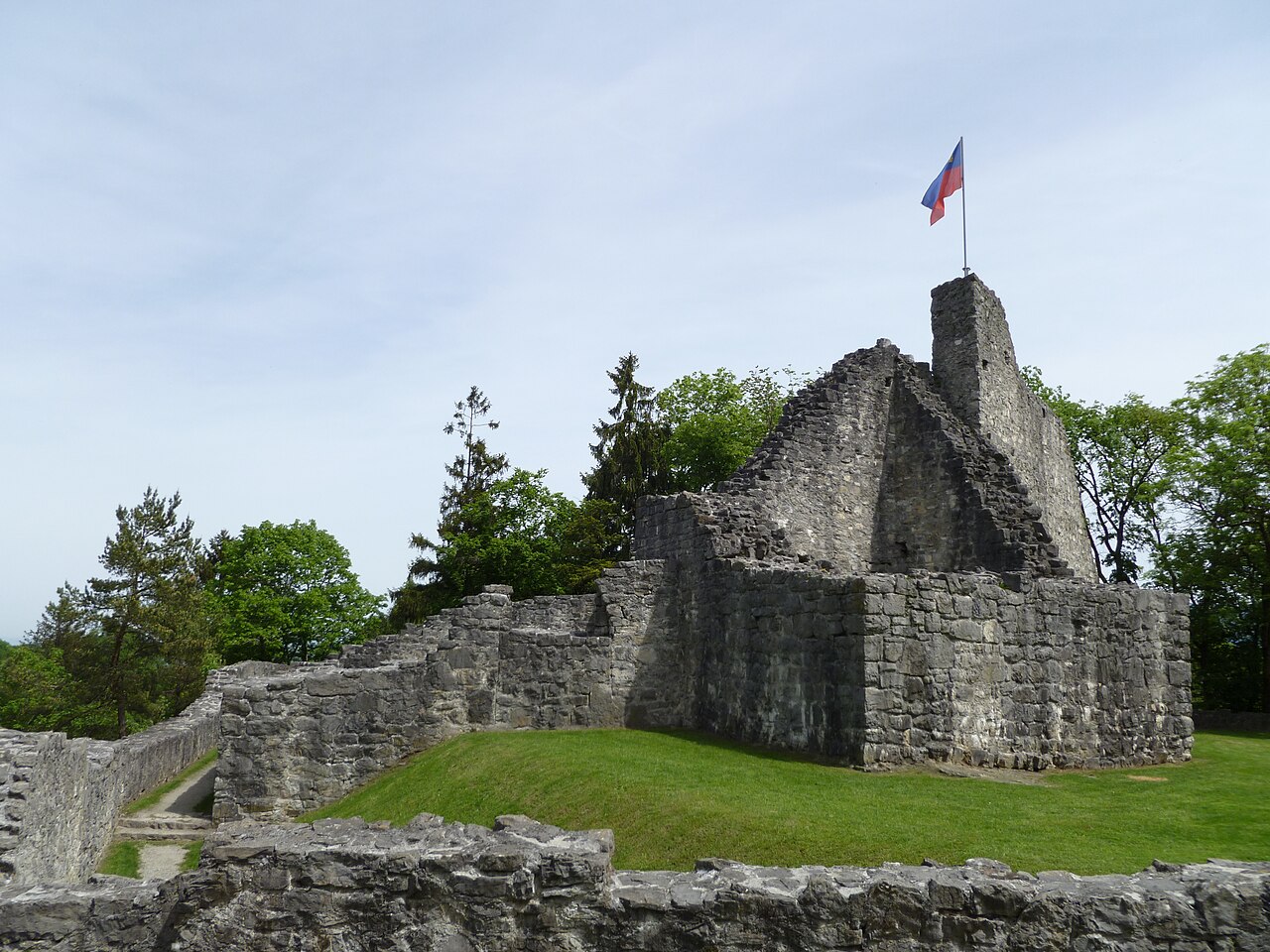
Obere Burg, also known as Burg Neu-Schellenberg, stands as the larger and older of the two medieval castle ruins in the municipality of Schellenberg, Liechtenstein. Its construction was completed around 1200, placing it firmly in the high medieval period. This imposing fortress is a significant relic of the region's medieval heritage and offers valuable insights into the defensive architecture and feudal history of the principality. The historical significance of obere burg The castle's earliest recorded mention dates back to 10 January 1348, confirming its existence and importance during the Middle Ages. It is believed that the castle served as a noble residence and a strategic military stronghold within the region. Inhabited until approximately the 16th century, Obere Burg was eventually abandoned as advances in military technology and changing political circumstances rendered such fortifications less critical. Over subsequent centuries, the castle lost its military function and gradually fell into ruin. Architectural features and layout Obere Burg exemplifies typical high medieval castle architecture with its robust stone walls and defensive structures. Although now a ruin, the remnants reveal a complex layout that likely included a keep or donjon, curtain walls, battlements, and various residential and service buildings arranged within a fortified enclosure. The castle's elevated position at the western edge of Hinterschloss provided commanding views of the surrounding landscape, enhancing its defensive capabilities. Defensive elements The castle's design prioritized defense, with thick walls and limited access points to deter attackers. While detailed records of its fortifications are sparse, typical features of castles from this period include arrow slits, a gatehouse, and possibly a moat or ditch to impede invaders. The strategic location on a hill or elevated terrain is characteristic of a hill castle, which maximizes natural defenses. Ownership and preservation In 1956, the castle ruin, then heavily overgrown, was transferred by Franz Joseph II, Prince of Liechtenstein, to the Historical Association of the Principality of Liechtenstein. This organization currently owns and manages the site, overseeing ongoing research, conservation, and maintenance efforts to preserve the castle's remains. Their stewardship ensures that Obere Burg remains accessible and informative for visitors and scholars alike. Visitor information and accessibility Located within easy reach of the village of Neu-Schellenberg, Obere Burg is the most accessible of Liechtenstein's castles due to its proximity to the burrough of Hinterschloss. The site is freely open to tourists year-round, allowing visitors to explore the ruins and appreciate the castle's historical ambiance without entry fees. Its open access encourages educational visits and cultural tourism, contributing to the local heritage appreciation. Obere Burg in the context of Liechtenstein's castles Obere Burg is one of only five castles in Liechtenstein, and among the three that are preserved as ruins. Its size and historical depth make it a key monument for understanding the medieval period in this alpine principality. The castle's ruins stand as a testament to the region's feudal past and its architectural evolution through the centuries. Nearby castles and regional heritage Alongside Obere Burg, the region hosts other castles that collectively illustrate the defensive and residential strategies of the medieval nobility in Liechtenstein. These sites contribute to a broader narrative of regional history and attract visitors interested in medieval architecture and history.

High Medieval (11th–13th c.)
Details