Schattenburg Castle
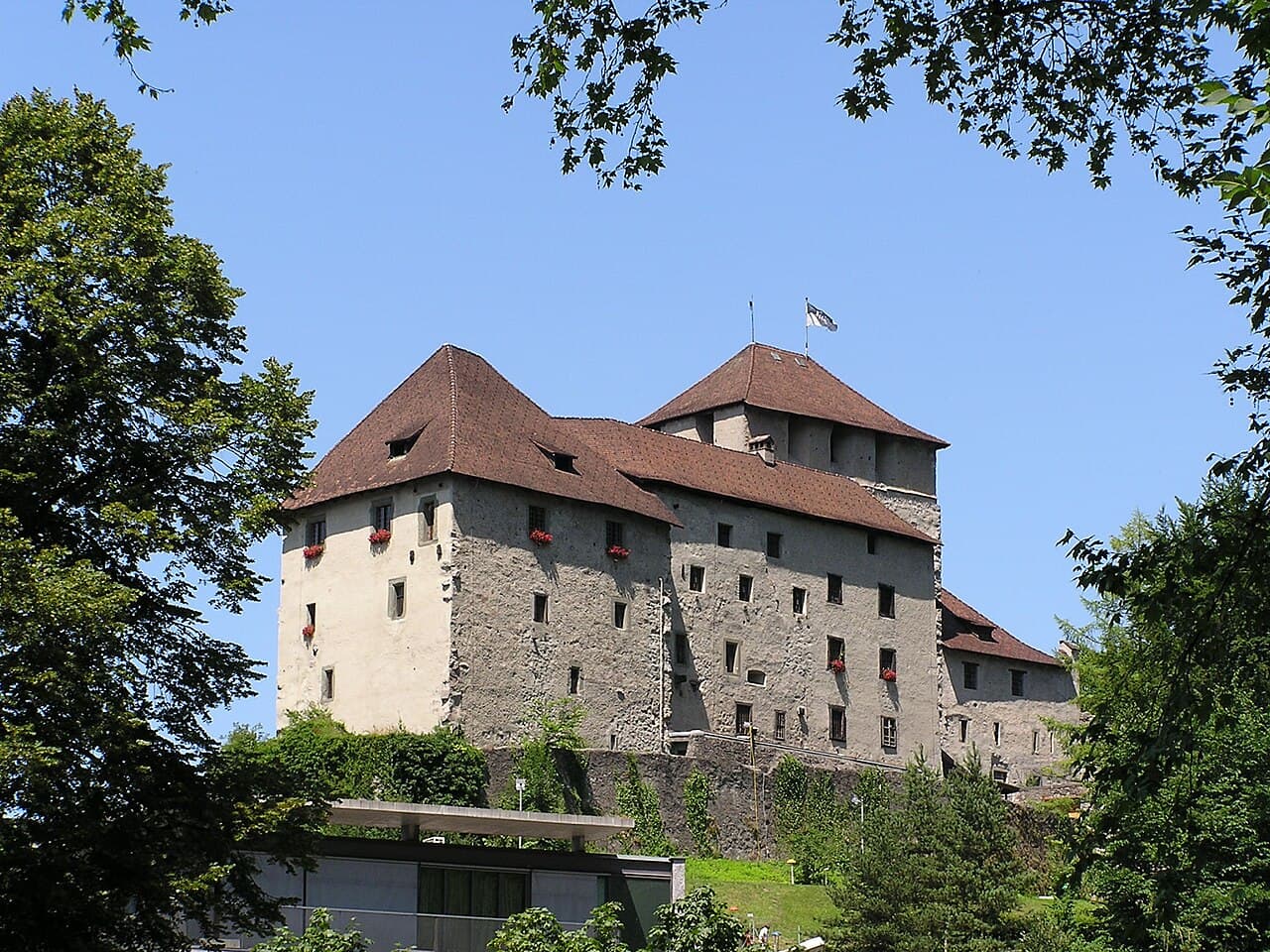
Schattenburg Castle stands prominently above the town of Feldkirch, Austria, embodying centuries of medieval military architecture and regional history. First mentioned in chronicles from 1138, this hill castle was established in the early 13th century by Count Hugo III of Tübingen, later known as Hugo of Montfort, who founded Feldkirch and relocated his seat from Bregenz. The castle became the administrative and military center for the Montfort family, who ruled the area for two centuries before the estate passed to the Habsburg dynasty in the late 14th century.
The origins and early history of schattenburg
The earliest records mention Schattenburg in 1138, with possible connections to Muntifurt Castle, which housed vassals of the Earls of Bregenz during the first half of the 12th century. The strategic relocation by Earl Hugo I in 1182 to Feldkirch Castle underscores the area's importance for controlling regional traffic and asserting political power. Schattenburg's initial construction around 1200 included a large bergfried (keep) measuring approximately 16 by 12 meters and rising 21 meters high, serving as the fortress's primary defensive tower.
Montfort family and administrative role
By the 14th century, Schattenburg had supplanted the earlier Alt-Montfort castle as the seat of the Montfort-Feldkirch county. The castle's role expanded beyond military defense to become a hub of governance and administration. In 1375, Rudolf IV von Montfort transferred ownership to Duke Leopold III of Habsburg, marking the beginning of Habsburg rule, which lasted until the late 18th century, with only brief interruptions.
Sieges, destruction, and reconstruction
The castle's military significance is highlighted by its involvement in regional conflicts. During the Appenzell Wars in 1405, Schattenburg endured an eighteen-week siege by Swiss and Feldkirch forces. Commanded by Vogt Count Friedrich von Toggenburg, the defenders ultimately surrendered after sustained artillery bombardment, and the castle was destroyed by fire. Reconstruction efforts began swiftly, restoring the fortress over the next two years.
Further damage occurred in 1415 and 1417 amid conflicts involving King Sigismund and Duke Friedrich IV. In 1417, the castle was pledged to Count Friedrich VII von Toggenburg, who undertook major expansions, including building the three main wings that define Schattenburg's present-day layout. After his death in 1436, the castle returned to Habsburg control.
Fortifications and military adaptations
Throughout the 15th and 17th centuries, Schattenburg's defenses were reinforced in response to the evolving threat of artillery warfare. Under the supervision of Vogt Johann von Königsegg, walls were strengthened and defensive features updated, enabling the castle to withstand the Swabian War of 1499. During this conflict, Schattenburg served as a strategic base for Emperor Maximilian I to resist Swiss advances.
Later history and changing functions
In the 17th century, the castle faced occupation by Swedish forces during the Thirty Years' War in 1647. Feldkirch avoided destruction by paying a war indemnity and pledging to maintain the castle on Sweden's behalf. This event marked the beginning of Schattenburg's decline as a military fortress.
By 1773, administrative functions moved from the castle to the city, and between 1778 and 1825, Schattenburg was repurposed as a prison. Attempts to dismantle the castle for building materials around 1800 and 1812 reflect its diminished status. Ownership transferred to the city of Feldkirch in 1825, after which the castle served as military barracks and later as a poorhouse until 1914.
Preservation and museum conversion
Efforts by the Feldkirch Museum and Local History Society prevented Schattenburg's ruin, leading to its transformation into a museum of local heritage during 1916–1917. Although plans during the National Socialist era aimed to convert it into an ideological training center, these were never realized. Post-World War II, the castle temporarily housed French troops before reopening as a museum in 1953.
Architectural features and present-day use
Schattenburg's medieval layout centers on the imposing bergfried and the palas, surrounded by thick defensive walls, moats, and formerly protected by a drawbridge. The three main wings built in the early 15th century define its characteristic form, combining residential and defensive functions. The castle chapel contains 16th-century frescoes, reflecting its rich cultural history.
The fortress houses one of Austria's most significant collections of historical weaponry, underscoring its martial heritage. Its inner courtyard, now home to a restaurant with panoramic views of Feldkirch's old town, remains a vibrant public space accessible without museum entry.
Two tunnels named after Schattenburg intersect the hill, with one repurposed as a shooting range, maintaining the site's defensive legacy. In 2007, a detailed scale model was created, accurately depicting architectural elements such as walkways, stairs, and roofing.
Surrounding the castle, vineyards have been reestablished on the slopes, continuing a centuries-old tradition and enhancing the cultural landscape of the region.
Frequently asked questions (FAQ)
- What is Schattenburg Castle known for?
- Schattenburg Castle is known for its rich history dating back to the 13th century, serving as a prominent fortress in the region. It offers stunning views of Feldkirch and the surrounding Alpine landscape, making it a perfect spot for both history enthusiasts and tourists.
- When was Schattenburg Castle built?
- Schattenburg Castle was built in the year 1280, strategically positioned to guard the valley and the trade routes. Its construction reflects the medieval architectural style and has undergone various renovations over the centuries.
- How do I get to Schattenburg Castle?
- You can easily reach Schattenburg Castle by walking from downtown Feldkirch, which takes approximately 15 minutes. There is also a parking area nearby for those arriving by car. Public transport options, including buses, serve the area, making it accessible for visitors.
- Is it possible to visit Schattenburg Castle year-round?
- Yes, Schattenburg Castle is open to visitors year-round, although opening hours may vary by season. It’s advisable to check the official website for the most up-to-date information on opening times and any seasonal closures.
- Can I explore the inside of Schattenburg Castle?
- Yes, visitors can explore the interior of Schattenburg Castle, which houses a museum showcasing the history of the region and the castle itself. Guided tours are also available, providing insightful information about the castle's architecture and historical significance.
- What are the ticket prices for Schattenburg Castle?
- Admission to Schattenburg Castle is quite affordable, with reduced prices for children, seniors, and families. Special discounts may be available for groups, so it's worth checking in advance to make the most of your visit.
- What is the best time to visit Schattenburg Castle?
- The best time to visit Schattenburg Castle is during the spring and early autumn months when the weather is pleasant, and the surrounding scenery is particularly beautiful. Additionally, visiting during weekdays may help you avoid larger crowds and enjoy a more tranquil experience.
- Are there any nearby attractions to see while visiting Schattenburg Castle?
- Yes, nearby attractions include the charming old town of Feldkirch, the Wildpark Feldkirch, and the stunning views from the surrounding hills. These sites complement your visit to Schattenburg Castle and provide a fuller experience of the region's culture and natural beauty.
Photo gallery

Information
Website
Visit websiteSources & official resources
Verify the information above using these authoritative references.
Loading map...
Visitor reviews
No reviews yet. Been here? Write the first review and help other travelers!
Write the first reviewVisited this castle? Share your experience
Your review helps other travelers and adds first-hand knowledge to our encyclopedia.