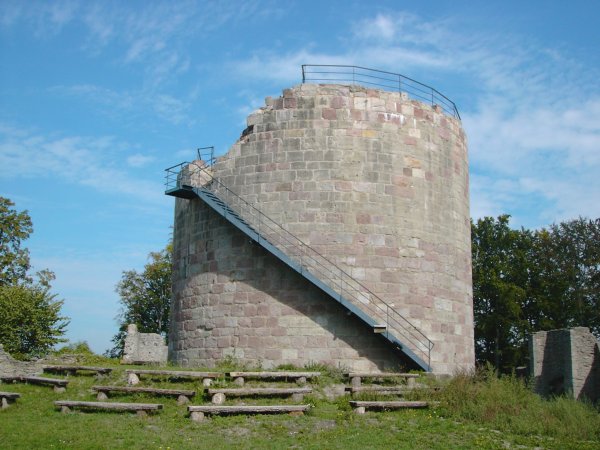
Unsleben Castle

Unsleben Castle: medieval fortress in Bavaria
Unsleben, Germany
High Medieval (11th–13th c.)

Unsleben Castle is a medieval fortress located in the village of Unsleben in Bavaria, Germany. The castle's origins trace back to the 12th century, with the earliest documentary mention of the site dating to 1162. It was originally established as the residence of a local noble family, reflecting the typical feudal structure of the High Medieval period.

Historical background and significance

The castle's first recorded mention in 1162 confirms its role as a noble habitation during a time when castles served both as defensive strongholds and symbols of feudal authority. The High Medieval era was marked by the construction of many such castles across Germany, often situated to control important routes or local territories.

Unsleben Castle suffered significant damage during the Peasants' War of 1525, a widespread uprising across German-speaking territories driven by social and economic grievances. The castle was destroyed in this conflict, reflecting the intensity of the rebellion and the targeting of noble properties.

Despite the destruction, the castle was rebuilt just two years later, around 1527, demonstrating its continued strategic and residential importance to the local nobility. The reconstruction likely incorporated architectural elements and defensive features characteristic of the transition from medieval fortifications to early modern adaptations.

Architectural features and layout

While detailed architectural records of Unsleben Castle are limited, typical 12th-century High Medieval castles in this region combined residential buildings with defensive structures such as a keep or donjon, curtain walls, and possibly a moat or ditches for protection. The rebuilding after 1525 may have introduced Renaissance influences, although the core medieval layout probably remained dominant.

The castle's design would have included a central courtyard surrounded by living quarters, service buildings, and defensive walls. Towers and battlements would have provided vantage points for surveillance and defense. The presence of a gatehouse and possibly a drawbridge would have controlled access to the castle grounds.

Role in regional history

Unsleben Castle played a role in the local power structures of medieval Bavaria, serving as a seat for the noble family that governed the surrounding lands. Its destruction and rapid rebuilding after the Peasants' War indicate its importance in maintaining feudal control and regional stability.

The castle's history reflects broader social and political changes in Germany during the late medieval and early modern periods, including the tensions between peasants and nobility, and the evolution of military architecture in response to changing warfare technology.

Current status and preservation

Today, Unsleben Castle remains a site of historical interest, although it may not be fully preserved or accessible as a major tourist attraction. The castle's condition is generally classified as partially preserved, with remnants of its medieval and post-medieval structures still visible.

Efforts to maintain and study the castle contribute to understanding the region's medieval heritage and architectural evolution. Visitors to Unsleben can appreciate the castle's historical context within the Bavarian landscape.

Visiting information and cultural significance

While specific visitor facilities and opening hours for Unsleben Castle are not widely documented, the site holds cultural significance as part of Bavaria's rich medieval history. It represents the legacy of feudal architecture and the resilience of noble estates through periods of conflict and change.

Nearby attractions in the region include other medieval castles and historic towns that together offer insight into the area's past.

Frequently asked questions (FAQ)

How do I get to Unsleben Castle?
Unsleben Castle is located in the picturesque village of Unsleben, Germany. You can reach it by car via the A71 motorway, with ample parking available nearby. Public transport options include local buses that connect to nearby towns, making it accessible for visitors.
What is the historical significance of Unsleben Castle?
Unsleben Castle dates back to the medieval period, showcasing the feudal architecture of the time. It has served various purposes throughout its history, from a noble residence to a defensive stronghold. The castle is a key part of the region's heritage and offers insights into the local history.
When was Unsleben Castle built?
Construction of Unsleben Castle began in the early 13th century, with various modifications and expansions made over the centuries. Its architecture reflects the transition from Romanesque to Gothic styles, marking important developments in medieval building techniques. The castle stands as a testament to the historical evolution of the area.
Can I take a guided tour of Unsleben Castle?
Yes, guided tours are available for visitors who wish to learn more about the castle's history and architecture. These tours are led by knowledgeable guides who provide detailed insights into the castle’s past. It is recommended to book in advance, especially during peak tourist seasons.
Why is Unsleben Castle a popular tourist destination?
Unsleben Castle is popular for its stunning architecture, rich history, and beautiful surrounding landscapes. Visitors appreciate the well-preserved structures and the chance to explore the castle grounds. Additionally, its proximity to other attractions in the region makes it an ideal stop for travelers.
Is it possible to host events at Unsleben Castle?
Yes, Unsleben Castle offers facilities for hosting various events, including weddings, corporate gatherings, and private parties. The scenic backdrop and historical ambiance provide a unique setting for any occasion. Interested parties should contact the castle management for more details on availability and arrangements.
What are the opening hours for Unsleben Castle?
Unsleben Castle is open to visitors from April to October, typically between 10 AM and 6 PM. During the off-peak season, hours may vary, so it is advisable to check the official website or contact the castle for the latest information. Special events may also affect the regular visiting hours.
What are the ticket prices to enter Unsleben Castle?
Ticket prices for Unsleben Castle vary depending on the type of tour or event. General admission is affordable, with discounts available for students and seniors. Special guided tours may have separate pricing, so it's best to review the options before your visit.
What is the best time to visit Unsleben Castle?
The best time to visit Unsleben Castle is during the spring and summer months when the weather is pleasant, and the gardens are in full bloom. This period also coincides with various cultural events and activities hosted at the castle. Fall offers beautiful foliage, while winter presents a charming, quiet atmosphere.
Are there nearby attractions to explore after visiting Unsleben Castle?
Yes, there are several attractions nearby, including scenic hiking trails and charming villages that highlight the region’s natural beauty and culture. Visitors can also explore local museums and historical sites that provide additional context about the area's history. It's a great way to enhance your experience during your trip to Unsleben Castle.

Loading map...

Visitor reviews

No reviews yet. Been here? Write the first review and help other travelers!

Write the first review

Visited this castle? Share your experience

Your review helps other travelers and adds first-hand knowledge to our encyclopedia.

Write a review

(5/5)

0/2000 characters

Your review will be visible after admin approval

Nearby castles

9.3 km

Roßrieth Castle

Mellrichstadt, Germany

Roßrieth Castle stands as a remarkable example of a Renaissance water castle located in the municipality of Mellrichstadt, Germany. Its origins reach deep into the medieval period, with the site first documented in 1140, highlighting its early importance in the region. Established by local Germanic nobility during the High Middle Ages, the castle embodies centuries of architectural evolution, feudal dynamics, and regional history. Medieval origins and feudal history The castle's earliest recorded mention dates to 1140, situating it firmly within the High Medieval period. By 1345, individuals such as Conrad von Rosserieth were associated with the estate, indicating its role as a noble residence within the complex feudal landscape of medieval Germany. Ownership transitioned in 1361 to the Schenken von Stretelingen family, who engaged in typical feudal practices by transferring parts of the estate to the Abbey of Fulda, only to receive it back as a fief. This reflects the intricate relationships between secular and religious powers during the Middle Ages. In 1401, the castle was significantly damaged when local peacekeepers attacked it due to its alleged use as a base for robber barons, noble outlaws who threatened trade and local authority. Despite this destruction, the castle's core structures endured, allowing it to remain habitable and strategically important through subsequent centuries. Renaissance transformation and architectural features The 16th century marked a pivotal era for Roßrieth Castle, with the Counts of Mansfeld granting it to the Freiherren von Thüngen in 1548. A significant rebuilding phase occurred in 1563, focusing on the castle's lower sections to enhance its defenses and residential spaces. Ownership passed in 1589 to the Herren von Bibra, who undertook extensive remodeling around 1590, transforming the castle into a quintessential example of Renaissance architecture in the region. The castle's current form features a roughly square layout with two main wings, surrounded by a moat approximately 20 meters wide and 2 meters deep, characteristic of water castles designed for defense. The use of half-timbered construction in the main buildings reflects typical German Renaissance building techniques, combining wooden frameworks with infill materials. This method allowed the integration of earlier medieval fabric into the new structures, preserving the castle's historical continuity. A particularly striking element is the former bergfried or main defensive tower, which retains its medieval form up to the level where the half-timbered upper stories begin. This tower still features original arrow slits, narrow vertical openings used for defense, providing a direct link to the castle's martial past. The gate complex also reveals pre-Renaissance masonry and design, indicating its role as a fortified entrance during the castle's medieval heyday. Later ownership and preservation efforts Following the Renaissance period, Roßrieth Castle passed through several noble families, including Hilmar von Grappendorf in 1681 and the Freiherren von Stein from 1768. The latter family maintained ownership until 1835, when the castle was voluntarily transferred to the Bavarian state, reflecting broader political changes in the region. In the 20th century, the castle's function shifted dramatically. After World War II, it was repurposed for agricultural uses under private ownership, serving as grain storage and a chicken coop. This utilitarian phase marked a significant departure from its noble origins but also contributed to the preservation of the structure by maintaining its use. A major restoration between 1980 and 1985 focused on preserving the castle's exterior and Renaissance character, ensuring that its layered architectural history remains visible and accessible. Today, Roßrieth Castle stands as a well-preserved monument that illustrates the evolution from medieval fortification to Renaissance residence, embodying the cultural heritage of Mellrichstadt and the wider region. Architectural layout and defensive features The castle's design reflects its dual role as a defensive stronghold and noble residence. The surrounding moat, a defining feature of water castles, provided a formidable obstacle against attackers, while the square layout with two main wings optimized both defense and domestic functionality. The corner towers served as key defensive and observation points, enhancing the castle's ability to monitor and repel threats. The integration of medieval basement structures within the castle's core underscores the continuity of fortification strategies from the Middle Ages through the Renaissance. The half-timbered upper structures, typical of 16th-century German architecture, not only contributed to aesthetic appeal but also allowed for flexible interior layouts suited to the needs of the noble families who resided there. The presence of the alliance coat of arms of the Bibra and Gebsattel families on the stair tower symbolizes the social and political alliances that shaped the castle's history. Cultural significance and visitor experience Roßrieth Castle is a valuable cultural landmark, representing the architectural and historical transitions of German noble estates over several centuries. Its preservation and restoration efforts have made it accessible to those interested in medieval and Renaissance architecture, feudal history, and the complex social dynamics of the region. Visitors can appreciate the castle's unique combination of medieval defensive elements and Renaissance residential features, gaining insight into the lifestyle and strategic concerns of its former inhabitants. The castle's setting within the scenic landscape of Mellrichstadt further enhances its appeal as a heritage site.

High Medieval (11th–13th c.)
Details
11.1 km

Ruine Lichtenburg

Ostheim, Germany

Ruine Lichtenburg is a remarkable example of a medieval hill castle strategically perched on the Schlossberg hill overlooking the town of Ostheim in the Rhön region of Germany. Constructed originally in the 12th century, this fortress was built by a branch of the Counts of Henneberg, a prominent noble family influential in the region during the High Middle Ages. The castle's earliest documented mention dates to 1161, marking it as a significant military and administrative site for centuries. The castle initially served as a fortified noble residence, described as a "Castrum" in 1230, indicating its role as a military stronghold. Its importance grew in the early 14th century when Abbot Heinrich VI of Fulda enhanced its defenses by constructing the imposing bergfried, a tall, tower-like keep typical of German castles. This bergfried, rising to over 31 meters including a modern viewing platform, remains the tallest in the Rhön area and exemplifies medieval defensive architecture. Historical significance and ownership transitions Throughout its history, Ruine Lichtenburg played a pivotal role as the administrative center of the Amt Lichtenberg, a regional district under the ecclesiastical authority of Fulda Abbey. Ownership shifted several times, returning to the Henneberg family through the Römhild line in the mid-14th century before passing to Saxon control. The castle endured significant damage during the 16th-century Peasants' War, a major uprising against feudal lords, but was swiftly repaired to continue its function. By the late 17th century, the castle's strategic and administrative importance waned, particularly after the departure of the last local overseer, Friedrich Sebastian von Stein, in 1680. Although briefly refortified during the conflicts between the Holy Roman Empire and France in the early 1670s, the castle was eventually abandoned and slated for demolition by 1719. Subsequent ownership by Carl August of Weimar and restoration attempts by Ernst August of Sachsen-Weimar-Eisenach in the mid-18th century were only partially successful, and the castle fell into ruin. Architectural features and layout The castle complex is defined by extensive defensive ramparts encircling the precinct, reflecting its military purpose. Visitors today approach via a paved path leading to a Renaissance-era gatehouse, which replaced an earlier drawbridge. This gatehouse features thick walls and a robust gate designed to withstand assaults, illustrating the evolution of castle defenses over time. The centerpiece of Ruine Lichtenburg is its bergfried, constructed under Abbot Heinrich VI in the early 14th century. This tower, originally built for defense and surveillance, stands as a testament to medieval masonry techniques with its well-preserved stonework reaching 28 meters in height. The bergfried has been adapted with a modern viewing platform and protective roof, preserving its commanding presence and offering panoramic views of the surrounding landscape. Within the castle grounds, a forecourt leads to the main castle area, which was separately fortified. This inner enclosure contains the remains of key residential and functional buildings including the palas, the great hall serving as the lord's principal living quarters, and the kemenate, or women's chamber, which provided private quarters for noblewomen. The presence of stables and a chapel further highlight the castle's dual military and domestic functions, typical of knightly residences. The chapel ruins remain visible as fragmentary walls, underscoring the spiritual dimension of the castle complex. The spatial arrangement reflects a clear hierarchy, with the bergfried positioned near the entrance for maximum defensive advantage, surrounded by interconnected buildings enclosed by walls and earthworks. This design exemplifies the integration of fortification and habitation in medieval castle architecture. Preservation and modern significance Today, Ruine Lichtenburg is recognized as a valuable cultural heritage site. The substantial survival of original stonework in the bergfried and palas provides rare insight into medieval construction methods. The castle's ruins have been carefully preserved since the 19th century, following periods of neglect and partial quarrying. A dedicated preservation society now oversees the site, ensuring ongoing maintenance and public accessibility. The castle’s location on Schlossberg hill not only offers historical context but also spectacular views of Ostheim and the surrounding Rhön landscape, making it a popular destination for visitors interested in medieval history and architecture. Ruine Lichtenburg stands as a compelling example of a hill castle that evolved through centuries of military, administrative, and domestic use. Its architectural features, from the towering bergfried to the Renaissance gatehouse, provide a tangible link to the region's High and Late Medieval periods. The castle's layered history and well-preserved ruins contribute significantly to our understanding of German medieval fortifications and noble residences.

High Medieval (11th–13th c.)
Details
14.4 km
Burg Henneberg — Germany castle

Burg Henneberg

, Germany

Burg Henneberg stands as a significant high medieval hill castle ruin located in Germany, dating back to the 11th century. As an archaeological site, it offers a valuable glimpse into the early medieval fortification architecture and the feudal history of the region. Though now in a state of ruins, the site preserves essential structural remains that allow historians and visitors to understand its original defensive and residential functions. Historical background and significance The castle was originally constructed in the 11th century during the high medieval period, a time marked by the widespread establishment of fortified structures across the Germanic territories. Burg Henneberg was likely built by local nobility to assert territorial control and to serve as a stronghold against rival factions and external threats. The castle's strategic location on a hill provided natural defensive advantages, which were further enhanced by man-made fortifications. Over the centuries, Burg Henneberg played a role in regional power dynamics, witnessing various ownership changes and possibly participating in local conflicts. Although detailed historical records are limited, its enduring presence as an archaeological ruin testifies to its importance in medieval German history. Architectural features and layout As a hill castle, Burg Henneberg was designed to maximize the defensive benefits of elevated terrain. The castle complex originally included a keep or donjon, which served as the main fortified residence and last line of defense. Surrounding the keep were curtain walls and possibly battlements that enclosed the courtyard and protected the inhabitants. Although much of the structure has deteriorated, archaeological excavations have revealed foundations and remnants of stone walls, indicating robust construction techniques typical of the high medieval period. The use of local stone materials and the castle's compact layout reflect the practical needs of defense and habitation during its time. Defensive elements The castle's position on a hilltop naturally deterred attackers, and the builders supplemented this with defensive features such as thick walls and narrow entrances. The remains suggest the presence of a gatehouse or fortified entrance, controlling access to the inner areas. Additionally, the layout likely included a moat or ditch, common in medieval fortifications, although evidence for this is limited at the site. Residential and functional spaces Within the castle, the keep would have housed the lord and his family, along with essential domestic facilities. Spaces for storage, kitchens, and possibly a chapel would have been integrated into the design, although these are now mostly lost to time. The courtyard served as an area for daily activities and gatherings. Archaeological research and preservation Today, Burg Henneberg is classified as an archaeological ruin, with ongoing efforts to study and preserve its remains. Excavations have uncovered artifacts and structural details that contribute to understanding the castle's construction phases and historical context. Preservation work focuses on stabilizing the existing walls and preventing further decay, allowing visitors to safely explore the site. The castle's ruins also provide valuable educational opportunities, illustrating medieval construction methods and feudal life. Interpretive signage and guided tours may be available to enhance visitor experience and awareness of the site's cultural heritage. Visiting Burg Henneberg While the exact location within Germany is not widely publicized, Burg Henneberg is accessible to visitors interested in medieval history and archaeology. As a ruin, the site offers a rugged and authentic glimpse into the past, appealing to enthusiasts of castle architecture and historical exploration. Visitors should prepare for uneven terrain and limited facilities, typical of archaeological sites. It is advisable to check local tourism resources for visiting hours, guided tours, and any access restrictions.

High Medieval (11th–13th c.)
Details