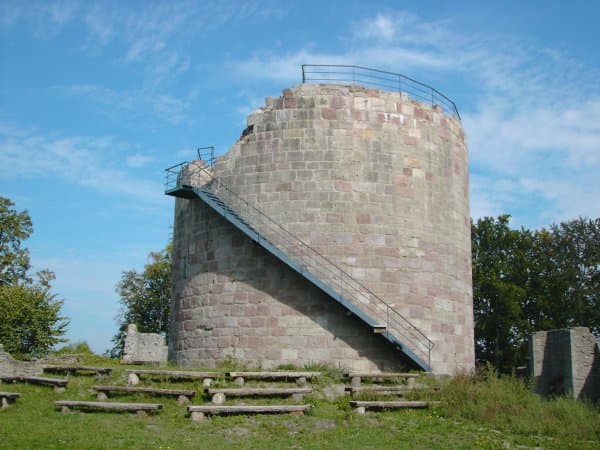
Burg Henneberg
Burg Henneberg stands as a significant high medieval hill castle ruin located in Germany, dating back to the 11th century. As an archaeological site, it offers a valuable glimpse into the early medieval fortification architecture and the feudal history of the region. Though now in a state of ruins, the site preserves essential structural remains that allow historians and visitors to understand its original defensive and residential functions.
Historical background and significance
The castle was originally constructed in the 11th century during the high medieval period, a time marked by the widespread establishment of fortified structures across the Germanic territories. Burg Henneberg was likely built by local nobility to assert territorial control and to serve as a stronghold against rival factions and external threats. The castle's strategic location on a hill provided natural defensive advantages, which were further enhanced by man-made fortifications.
Over the centuries, Burg Henneberg played a role in regional power dynamics, witnessing various ownership changes and possibly participating in local conflicts. Although detailed historical records are limited, its enduring presence as an archaeological ruin testifies to its importance in medieval German history.
Architectural features and layout
As a hill castle, Burg Henneberg was designed to maximize the defensive benefits of elevated terrain. The castle complex originally included a keep or donjon, which served as the main fortified residence and last line of defense. Surrounding the keep were curtain walls and possibly battlements that enclosed the courtyard and protected the inhabitants.
Although much of the structure has deteriorated, archaeological excavations have revealed foundations and remnants of stone walls, indicating robust construction techniques typical of the high medieval period. The use of local stone materials and the castle's compact layout reflect the practical needs of defense and habitation during its time.
Defensive elements
The castle's position on a hilltop naturally deterred attackers, and the builders supplemented this with defensive features such as thick walls and narrow entrances. The remains suggest the presence of a gatehouse or fortified entrance, controlling access to the inner areas. Additionally, the layout likely included a moat or ditch, common in medieval fortifications, although evidence for this is limited at the site.
Residential and functional spaces
Within the castle, the keep would have housed the lord and his family, along with essential domestic facilities. Spaces for storage, kitchens, and possibly a chapel would have been integrated into the design, although these are now mostly lost to time. The courtyard served as an area for daily activities and gatherings.
Archaeological research and preservation
Today, Burg Henneberg is classified as an archaeological ruin, with ongoing efforts to study and preserve its remains. Excavations have uncovered artifacts and structural details that contribute to understanding the castle's construction phases and historical context. Preservation work focuses on stabilizing the existing walls and preventing further decay, allowing visitors to safely explore the site.
The castle's ruins also provide valuable educational opportunities, illustrating medieval construction methods and feudal life. Interpretive signage and guided tours may be available to enhance visitor experience and awareness of the site's cultural heritage.
Visiting Burg Henneberg
While the exact location within Germany is not widely publicized, Burg Henneberg is accessible to visitors interested in medieval history and archaeology. As a ruin, the site offers a rugged and authentic glimpse into the past, appealing to enthusiasts of castle architecture and historical exploration.
Visitors should prepare for uneven terrain and limited facilities, typical of archaeological sites. It is advisable to check local tourism resources for visiting hours, guided tours, and any access restrictions.
Frequently asked questions (FAQ)
- How do I get to Burg Henneberg?
- Burg Henneberg is located in the picturesque region of Germany, easily accessible by car and public transport. The nearest train station is a short drive away, and local bus services also connect to the castle. A scenic drive through the countryside adds to the experience.
- What is the historical significance of Burg Henneberg?
- Burg Henneberg is a medieval castle that dates back to the 12th century, playing a crucial role in the region's history. It served as a stronghold for the Henneberg counts and witnessed many significant events over the centuries. Today, it stands as a monument to the feudal past of Germany.
- When was Burg Henneberg built?
- Construction of Burg Henneberg began in the early 12th century, making it one of the oldest castles in the area. The castle underwent several renovations and expansions over the years, reflecting the architectural styles of different eras. Its rich history is evident in its stone structures and layout.
- Can I visit Burg Henneberg year-round?
- Yes, Burg Henneberg is open to visitors throughout the year, although specific opening hours may vary by season. It’s advisable to check the official website for current visiting hours and any special events. Visiting off-peak seasons can offer a more tranquil experience.
- Why is Burg Henneberg a popular tourist attraction?
- Burg Henneberg attracts visitors due to its stunning architecture and historical significance. The castle offers breathtaking views of the surrounding countryside and features well-preserved structures that tell the story of its past. Additionally, it hosts various events and exhibitions throughout the year.
- Is it possible to take guided tours of Burg Henneberg?
- Yes, guided tours are available at Burg Henneberg, providing deeper insights into its history and architecture. These tours are led by knowledgeable guides who share fascinating anecdotes and details about the castle. It's a great way to enhance your visit and learn more about this historical site.
- What are the ticket prices for visiting Burg Henneberg?
- Ticket prices for Burg Henneberg are generally affordable, with discounts available for students and seniors. Children under a certain age may enter for free. Check the castle's official website for the most up-to-date information on pricing and any special offers.
- What are the opening hours for Burg Henneberg?
- Burg Henneberg typically opens at 10 AM and closes at 6 PM during the peak season. However, hours may vary during the off-peak season and on holidays, so it’s best to confirm the hours before your visit. Early arrival is recommended to enjoy the castle without the crowds.
- What nearby attractions can I visit while at Burg Henneberg?
- While visiting Burg Henneberg, you can explore other nearby attractions such as the charming village of Henneberg and local hiking trails. The surrounding area is rich in natural beauty and offers additional historical sites. Make a day of it by enjoying the scenic landscapes and local cuisine.
Photo gallery

Photo by Mewes at German Wikipedia•Public domain
Information
Loading map...
Visitor reviews
No reviews yet. Been here? Write the first review and help other travelers!
Write the first reviewVisited this castle? Share your experience
Your review helps other travelers and adds first-hand knowledge to our encyclopedia.


