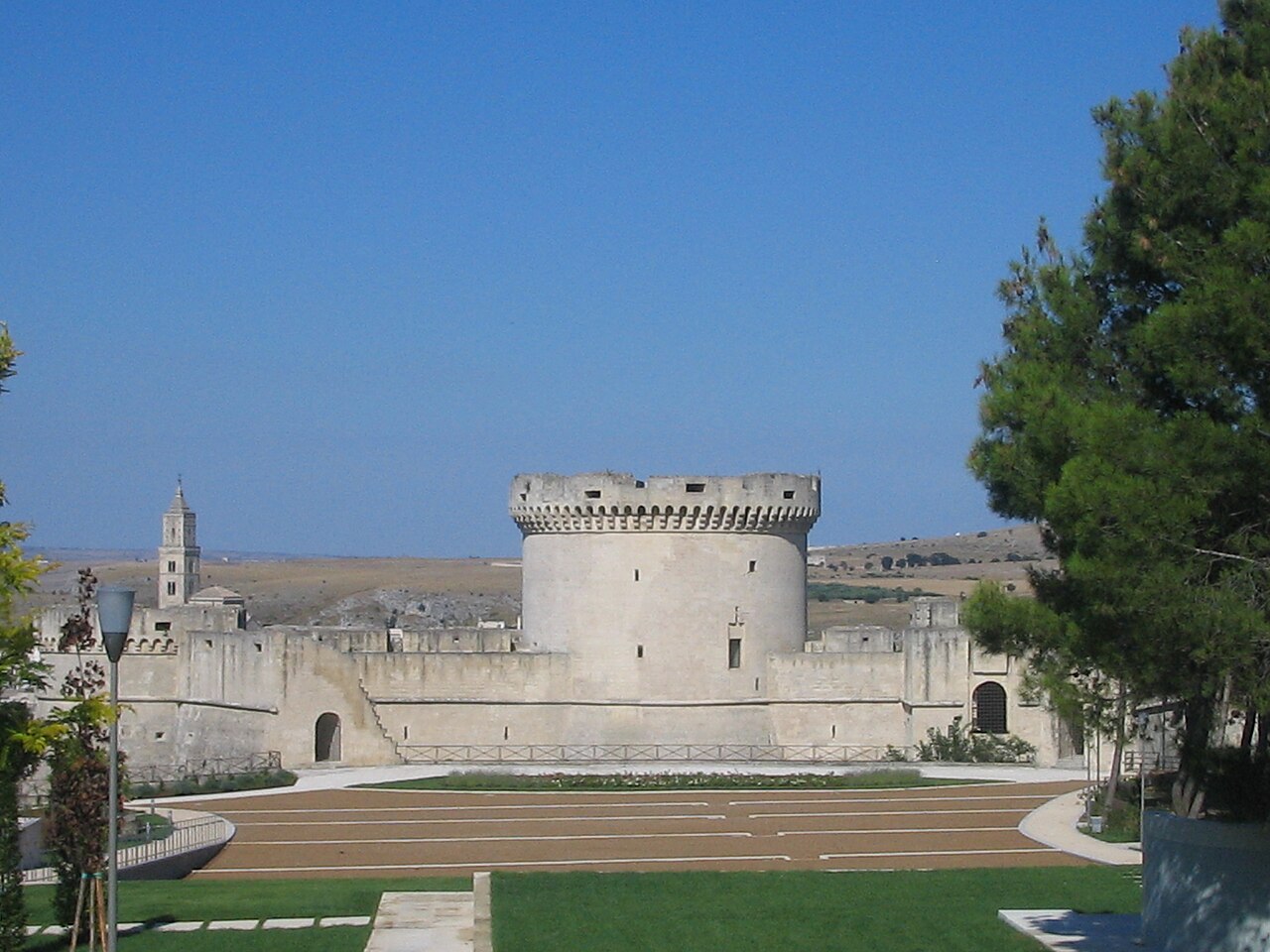
Uggiano Castle
Uggiano Castle, located near the town of Ferrandina in the Basilicata region of southern Italy, is a medieval fortress with origins tracing back to the early 11th century. The castle is historically significant as one of the defensive strongholds in the area during the High Medieval period. It was first documented in the year 1029 when it endured a siege by Muslim forces, marking its role in the turbulent military and political landscape of medieval Italy.
Early history and strategic importance
The castle's initial construction in the 11th century reflects the architectural and military needs of the time, designed to serve as a fortified refuge and a base of control over the surrounding territory. Its location near Ferrandina allowed it to oversee and protect important routes and settlements in the region. The castle’s robust defensive features would have included thick stone walls, battlements, and possibly a keep or tower to provide vantage points for surveillance and defense.
Expansion and architectural evolution
In the mid-14th century, specifically around 1350, Uggiano Castle underwent significant enlargement. This expansion likely included strengthening the existing fortifications and possibly adding new structures such as additional walls, towers, or residential quarters to accommodate the needs of its occupants. This period corresponds with broader trends in castle architecture in Italy, where fortifications were adapted to new military technologies and changing political circumstances.
The decline after the 1492 earthquake and the founding of Ferrandina
The castle’s decline began after the devastating earthquake of 1492, which affected much of the Basilicata region. Following this natural disaster, King Frederick of Aragon ordered the establishment of a new city at Ferrandina, shifting the regional focus away from the fortress. This decision led to the gradual abandonment of Uggiano Castle, as the population and administrative functions relocated to the newly founded city.
Current state and archaeological significance
Today, Uggiano Castle exists primarily as ruins. The remnants of its walls and foundational structures provide valuable insights into medieval military architecture in southern Italy. The site offers a tangible connection to the region's medieval past and the historical events that shaped the development of Ferrandina and its surroundings. Although much of the castle has deteriorated, the ruins remain a point of interest for historians, archaeologists, and visitors fascinated by medieval fortifications.
Architectural features and typical elements
While detailed architectural records are limited, typical features of a castle from the High Medieval period in this region would include a stone keep, curtain walls, and defensive towers positioned to cover approaches. The castle’s design would have emphasized defense against sieges, with narrow windows for archers and possibly a moat or natural defensive barriers. The enlargement in the 14th century might have introduced elements reflecting advances in military architecture, such as thicker walls or improved battlements.
Historical context and cultural heritage
The history of Uggiano Castle is intertwined with the broader historical dynamics of southern Italy during the Middle Ages, including conflicts involving Muslim raiders, the influence of Aragonese rulers, and the impact of natural disasters. The castle’s story reflects the shifting political and social landscape of the region, from medieval feudal control to the Renaissance period's urban development. As a heritage site, the ruins contribute to understanding the medieval defensive network and the evolution of settlements in Basilicata.
Visiting Uggiano Castle today
Visitors to the site can explore the ruins and appreciate the castle's strategic location overlooking the surrounding landscape. While the castle is not fully preserved, the site offers an evocative glimpse into medieval fortification techniques and the historical significance of the area. Nearby Ferrandina provides additional cultural and historical attractions, making the castle a worthwhile destination for those interested in medieval history and architecture.
Frequently asked questions (FAQ)
- When was Uggiano Castle first documented?
- Uggiano Castle was first documented in 1029 when it was besieged by Muslim forces, marking its earliest known historical reference.
- What caused the decline of Uggiano Castle?
- The castle declined after the 1492 earthquake and the subsequent founding of the new city of Ferrandina by King Frederick of Aragon, which shifted focus away from the fortress.
- What remains of Uggiano Castle today?
- Today, only ruins of Uggiano Castle remain, offering insight into its medieval defensive structures and historical significance.
- Is Uggiano Castle accessible to visitors?
- The castle ruins are accessible to visitors, providing an opportunity to explore the site and appreciate its historical context, though facilities may be limited.
- What architectural features did Uggiano Castle have?
- Typical features likely included thick stone walls, a keep, curtain walls, defensive towers, and battlements designed for defense during the High Medieval period.
Information
Loading map...
Visitor reviews
No reviews yet. Been here? Write the first review and help other travelers!
Write the first reviewVisited this castle? Share your experience
Your review helps other travelers and adds first-hand knowledge to our encyclopedia.