Tynemouth Priory and Castle
Tynemouth Priory and Castle stand prominently on a rocky promontory overlooking the North Sea at the mouth of the River Tyne in Tynemouth, England. This historic site combines the remains of an ancient religious community and a strategic fortress, reflecting centuries of medieval history, royal significance, and coastal defense.
The origins of the priory date back to the 7th century, when it was founded under the patronage of King Edwin of Northumbria. It quickly gained prominence as a burial site for early Northumbrian kings such as Oswine and Osred II, with Oswine later canonized as a saint. His shrine transformed the priory into a notable pilgrimage destination, cementing its spiritual importance in the region.
Throughout the early medieval period, the monastery faced significant challenges, including repeated raids and destruction by Vikings in the 9th century, culminating in its destruction in 875. Archaeological finds such as fragments of Anglo-Saxon stone crosses and timber building remains attest to the site's ancient origins. The priory was reestablished in 1083 as a Benedictine monastery affiliated with Durham Priory, marking the beginning of extensive rebuilding and expansion.
Medieval religious and royal significance
The priory's spiritual and royal stature grew during the 12th and 13th centuries. The church was rebuilt with a new choir and presbytery, and the shrine of St Oswine was richly adorned. The priory acquired extensive land holdings and special privileges known as the Liberty of Tynemouth, which included income from agriculture, rents, and coal mining. These rights were confirmed by King Richard I in 1189.
Notably, the priory became the burial place of Scottish King Malcolm III in 1093, though his remains were later moved to Dunfermline Abbey. The site also served as a place of exile within the monastic system and was associated with royal figures such as Adam FitzRoy, an illegitimate son of Edward II.
Architectural evolution of the priory church
The church underwent significant architectural development between the late 12th and mid-13th centuries, featuring early Gothic lancet windows and a redesigned chapter house. Later additions included the Lady Chapel built before 1336 and the Percy Chapel in the mid-15th century, the latter distinguished by its painted ceiling with heraldic symbols and colorful stained glass windows.
Fortifications and castle development
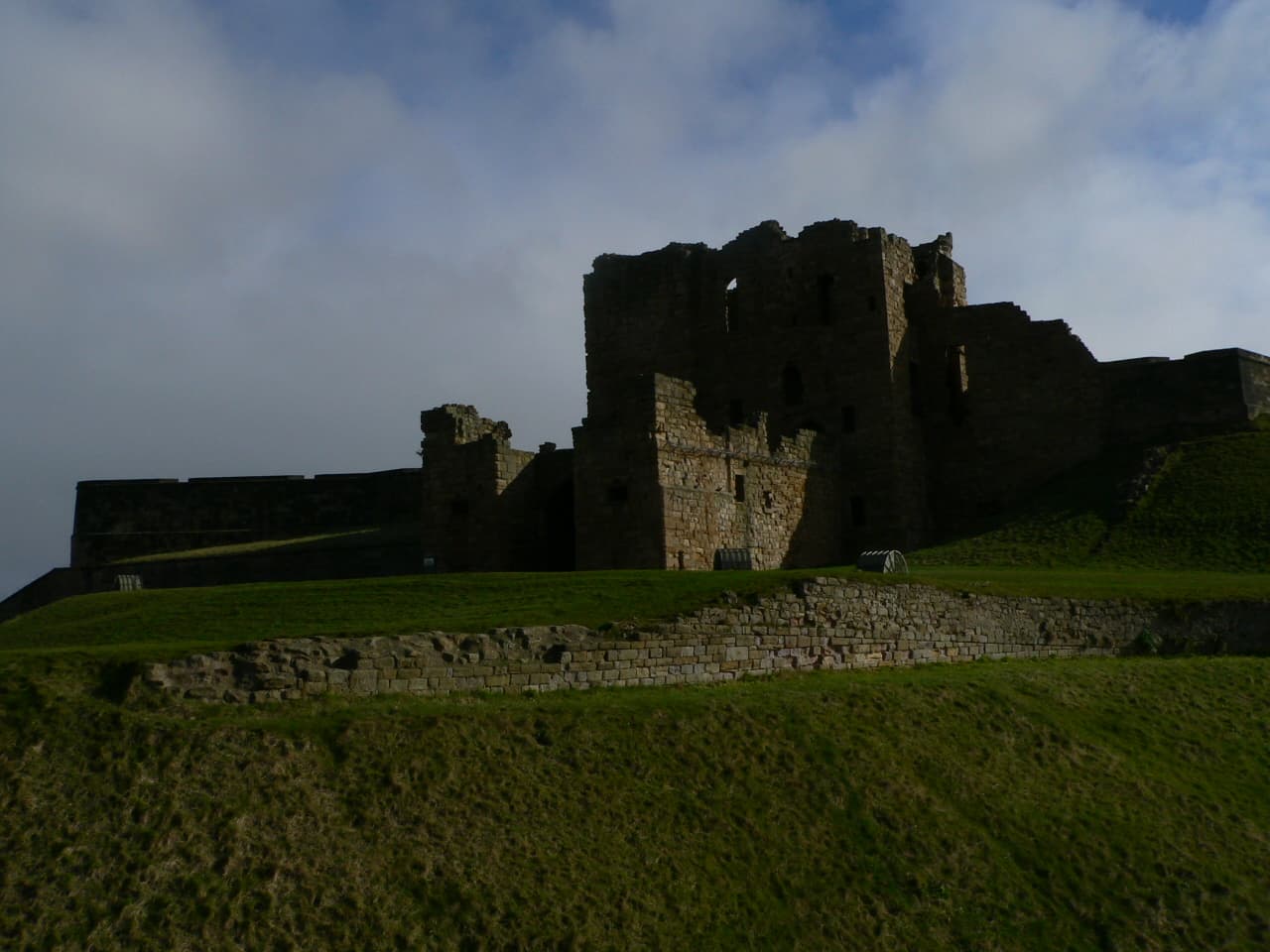
The castle likely originated as an earth and timber fortification on the promontory, possibly dating back to the Norman period or even the late Iron Age. By 1095, it served as a refuge for Robert de Mowbray during his rebellion. Stone curtain walls and towers such as Whitley Tower and East Mount Tower were constructed by 1296 under a license from King Edward I.
The large gatehouse, built between the late 14th and early 15th centuries, remains the most intact medieval defensive structure on the site. The castle played a role in royal conflicts, including sheltering Edward II in 1312 and resisting an attack by Robert the Bruce in 1314.
Artillery fortifications and later military use
From 1545, the castle's defenses were modernized to accommodate artillery, guided by military engineers such as Sir Richard Lee and Italians Gian Tommaso Scala and Antonio da Bergamo. These improvements included new gunports and thicker walls designed to withstand cannon fire.
The site also housed a navigation light from at least 1582, evolving into a lighthouse built in 1665 within the castle walls. This lighthouse was rebuilt and modernized multiple times before being decommissioned in 1898 and replaced by St Mary's Lighthouse offshore.
In the late 19th and early 20th centuries, the castle served as military barracks and a coastal defense station, enduring bombing during World War II. Post-war, it housed Her Majesty's Coastguard until 2001.
Architectural remains and visitor experience
The site today retains significant remains of the curtain walls, with well-preserved sections on the western and southern sides, including the original wall walk. The Whitley Tower and East Mount Tower offer commanding views of the coastline and harbor.
The priory's church ruins display characteristic early Gothic lancet windows, while the Percy Chapel survives fully intact, showcasing its decorative painted ceiling and stained glass. Archaeological excavations have revealed early timber monastery buildings and Anglo-Saxon stone crosses, highlighting the site's long religious heritage.
Military modifications from the 16th century onwards are visible in the artillery fortifications and gun emplacements, illustrating the castle's adaptation to evolving warfare technologies. Remnants of the 17th-century lighthouse and 20th-century coastal defense structures add layers to the site's rich historical narrative.
Visitors can explore the extensive grounds, appreciating the blend of medieval ecclesiastical architecture and military fortifications that chronicle Tynemouth's importance as a religious sanctuary, royal refuge, and strategic coastal fortress through the centuries.
Frequently asked questions (FAQ)
- How do I get to Tynemouth Priory and Castle?
- Tynemouth Priory and Castle is easily accessible by public transport, with Tynemouth Metro Station just a short walk away. If you prefer to drive, there are nearby parking options available. Additionally, the scenic coastal path offers a beautiful walk to the site.
- What is the historical significance of Tynemouth Priory and Castle?
- Tynemouth Priory and Castle has a rich history dating back to the 7th century, serving as a royal fortress and a site of significant battles. It was also an important religious center, with the priory being established in the 11th century. Its strategic coastal location made it vital for the defense of the region.
- When was Tynemouth Priory and Castle built?
- Construction of the castle began in the 12th century, although the site itself has been occupied since the 7th century. The priory was established around the same time, contributing to the area's historical importance. Over the centuries, the structures were expanded and modified, reflecting various architectural styles.
- Can I visit Tynemouth Priory and Castle year-round?
- Yes, Tynemouth Priory and Castle is open to visitors throughout the year, although hours may vary seasonally. It’s recommended to check the official website for the most current opening times before your visit. Be aware that some areas may be closed during extreme weather conditions.
- Why is Tynemouth Priory and Castle a popular tourist attraction?
- Tynemouth Priory and Castle is popular due to its stunning coastal views, rich history, and well-preserved ruins. Visitors can explore the ancient structures, learn about the site's significance, and enjoy the beautiful surrounding landscape. The combination of history and scenic beauty makes it a must-visit location.
- Is it possible to take guided tours of Tynemouth Priory and Castle?
- Yes, guided tours are available and provide an enriching experience, as knowledgeable guides share insights into the history and architecture of the site. Audio guides are also offered for those who prefer to explore at their own pace. Check the schedule for tour availability during your visit.
- What are the ticket prices for Tynemouth Priory and Castle?
- Ticket prices vary, with discounts available for children, students, and seniors. Family tickets are also offered for those visiting with children. It’s best to check the official website for the most up-to-date pricing and any special offers that may be available.
- What are the best times to visit Tynemouth Priory and Castle?
- The best times to visit are during the spring and early autumn when the weather is typically mild and the gardens are in bloom. Weekdays can be less crowded than weekends, allowing for a more relaxed experience. Early morning visits are also recommended to enjoy the site in peace.
- Are there any nearby attractions to Tynemouth Priory and Castle?
- Yes, nearby attractions include Tynemouth Castle and the beautiful Tynemouth Longsands beach, perfect for a day of exploration and relaxation. The charming village of Tynemouth offers shops, cafes, and restaurants, making it an ideal spot to enjoy local cuisine after your visit. Don't miss the Tynemouth Aquarium, which is also close by.
Photo gallery

Information
Website
Visit websiteSources & official resources
Verify the information above using these authoritative references.
Loading map...
Visitor reviews
No reviews yet. Been here? Write the first review and help other travelers!
Write the first reviewVisited this castle? Share your experience
Your review helps other travelers and adds first-hand knowledge to our encyclopedia.