Hylton Castle
Hylton Castle stands as a remarkable example of a medieval fortified manor house in Sunderland, England. Originally established shortly after the Norman Conquest, this castle embodies centuries of architectural evolution and historical significance. Its imposing stone structure, heraldic façades, and surviving medieval features make it a key heritage site within the region. The castle's story intertwines with local legends and notable historical figures, reflecting the social and military developments of northern England from the 11th century onward.
The castle's origins trace back to a wooden fortification constructed around 1072 by the Hylton family, Norman settlers granted land by William the Conqueror. This initial defensive structure marked the family's rise in status and their integration into the Norman feudal system. The stone building that visitors see today was erected in the late 14th to early 15th century, under the direction of Sir William Hylton, transforming the site into a fortified manor house with distinctive gatehouse features. This period of construction is confirmed by the heraldic shields displayed above the main entrance, including the royal banner of King Henry IV.
Architectural features and design
Fortified manor house layout
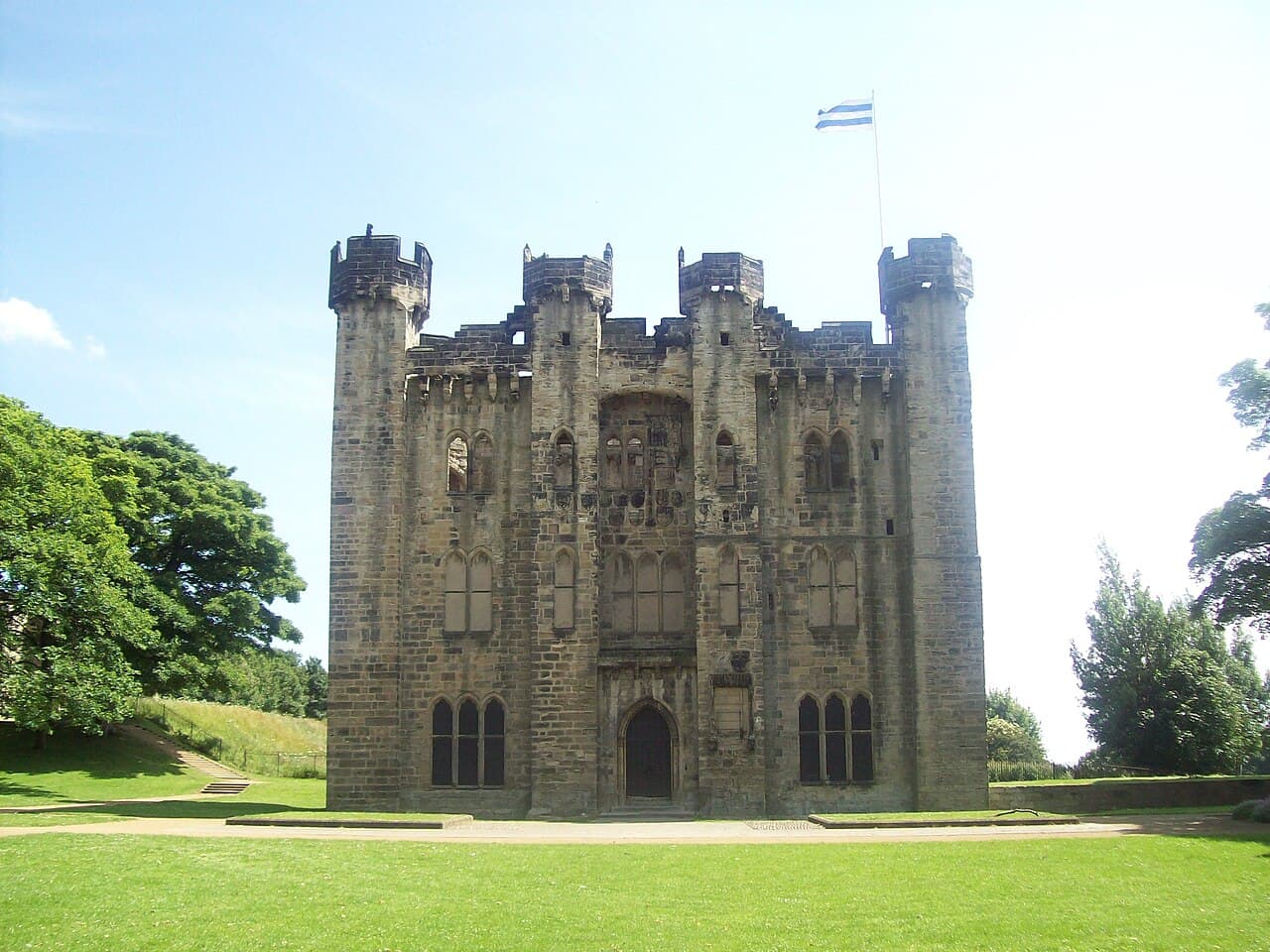
The castle is designed as a four-storey stone-built fortified manor house arranged in a gatehouse style. The western façade features a central entrance flanked by two square towers, with additional towers positioned at the southwest and northwest corners. Each tower is capped with octagonal machicolated turrets, which were defensive elements allowing defenders to attack assailants directly below the battlements. This defensive architecture reflects the turbulent border history of northern England during the late medieval period.
Heraldic façades and symbolic carvings
A notable architectural highlight is the series of twenty heraldic shields adorning the west front above the main entrance. These shields display the coats of arms of local nobility and the royal banner of Henry IV, anchoring the castle firmly in its historical context. The castle's roof was originally adorned with stone sculptures, including a now largely lost carving of a knight fighting a serpent, a motif connected to the local Lambton Worm legend. Such symbolic decorations integrate local folklore into the castle's fabric, enhancing its cultural significance.
Interior structure and medieval amenities
Before 18th-century modifications, the castle's interior comprised a vaulted ground-floor passage protected by a portcullis, flanked by functional spaces such as a guardroom with a well and an official's chamber with a garderobe. The first floor housed a great hall spanning three storeys, a kitchen with clerestory windows, and service rooms including a butlery, pantry, and a vaulted oratory with an altar. The upper floors contained private chambers, such as the baron's room, chaplain's quarters, and guest rooms, alongside servant accommodations in turret closets. A minstrels’ gallery on the second floor highlights the social and cultural functions of the castle during its peak habitation.
Historical evolution and ownership
Early history and medieval prominence
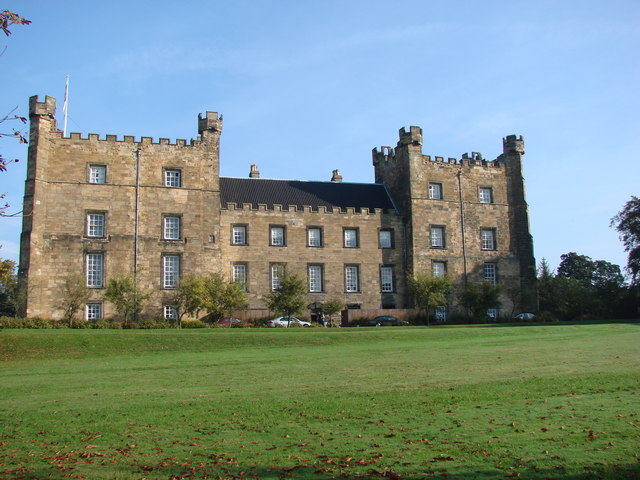
The Hylton family established their seat at the castle shortly after the Norman Conquest, with the original wooden fortification replaced by the stone manor house in the late 14th century. The castle served as the family's principal residence and a symbol of their local power. Its design shares similarities with nearby castles such as Lumley and Raby, reflecting regional architectural trends in fortified manor construction during the late medieval period.
Changes in ownership and Victorian restorations
After the death of the last Baron Hylton in 1746, the castle passed through various hands, including the City of London Corporation and the Bowes family. In the 19th century, William Briggs, a local timber merchant, acquired the castle and undertook significant Gothic revival restorations. These Victorian-era modifications included the removal of earlier Italianate wings, the addition of Gothic windows, and a new Gothic doorway with a balcony, which altered the castle's medieval appearance to suit contemporary tastes. The castle also briefly functioned as a boarding school during the 1840s.
20th-century preservation and archaeological investigations
Ownership by the Wearmouth Coal Company in the early 20th century preceded the castle's transfer to state protection in 1950 to prevent demolition. Archaeological work, notably by Channel 4's Time Team in 1994, revealed the remains of a medieval hall east of the castle, interpreted as a dining space connected to the main building. These findings have enriched understanding of the castle's original layout and social functions. Today, the castle and its chapel are protected as Grade I listed buildings and scheduled monuments, with ongoing efforts by local organizations to preserve and repurpose the site.
The chapel of st catherine of alexandria
Located northeast of the main castle, the chapel dedicated to St Catherine of Alexandria was rebuilt in stone in the early 15th century. It features Perpendicular Gothic architectural elements, including a prominent five-light east window and transepts with semi-octagonal bays. Over time, the chapel fell into disrepair, with its west façade dismantled and replaced by a built-up chancel arch framed by a Gibbs surround. A bell turret was added around 1805, and the roof was restored in the 19th century. The chapel remains an integral part of the historic ensemble, contributing to the site's ecclesiastical heritage.
Current status and cultural significance
Today, Hylton Castle and its chapel stand within parkland maintained by a community organization, surrounded by modern housing developments in Sunderland. Despite the encroachment of urbanization, the site retains its architectural and historical importance as a testament to the region's medieval past and the evolution of fortified manor houses. Its designation as a Grade I listed building underscores its national significance and ensures ongoing protection. The castle's rich heraldic decorations, defensive features, and connections to local legends continue to attract interest from historians, architects, and visitors alike.
Hylton Castle's layered history, from its Norman origins through medieval prominence, Victorian restorations, and modern conservation, offers valuable insights into England's architectural and social heritage. Its combination of military and domestic features exemplifies the dual role of fortified manor houses in the late Middle Ages, serving both as residences and defensive structures. The castle remains a vital cultural landmark within Sunderland, embodying centuries of historical narratives and architectural innovation.
Frequently asked questions (FAQ)
- What is the historical significance of Hylton Castle?
- Hylton Castle is a Grade I listed building that dates back to the 14th century, representing a rich part of Sunderland's heritage. It was originally built by the Hylton family and serves as an important example of medieval fortification architecture in the region.
- When was Hylton Castle built?
- Hylton Castle was constructed in the late 14th century, with its earliest foundations believed to have been laid around 1380. It has undergone various modifications and restorations throughout its history, reflecting the architectural styles of different periods.
- What are the opening hours of Hylton Castle?
- Hylton Castle is typically open to the public from 10 AM to 4 PM on weekends and during school holidays. However, it is advisable to check the official website for any seasonal changes or special events that may affect opening hours.
- Can I visit Hylton Castle for free?
- Access to Hylton Castle grounds is free, but guided tours may require a small fee. It is recommended to check for any special events or exhibitions that might have associated costs.
- Is Hylton Castle accessible for visitors with disabilities?
- Hylton Castle is committed to providing accessibility for all visitors. While the grounds are partially accessible, some areas of the castle may pose challenges due to their historical structure, so it’s best to contact the site beforehand to discuss specific needs.
- When is the best time to visit Hylton Castle?
- The best time to visit Hylton Castle is during late spring and early summer when the weather is pleasant and the gardens are in full bloom. Additionally, many local events and guided tours are offered during this period, enhancing the visitor experience.
- What nearby attractions can I explore after visiting Hylton Castle?
- After visiting Hylton Castle, you can explore the nearby River Wear, which offers scenic walks and beautiful views. Additionally, the city of Sunderland has various attractions, including the Sunderland Museum and Winter Gardens, providing a rich cultural experience.
- How do I get to Hylton Castle?
- Hylton Castle is easily accessible by public transport, with several bus routes serving the area. If driving, there is parking available nearby, making it convenient for visitors traveling by car.
- What are the ticket prices for guided tours at Hylton Castle?
- Guided tours at Hylton Castle typically have a nominal fee, which helps support the maintenance and preservation of the site. Prices may vary depending on the type of tour and any special events, so it's best to check the official website for the latest information.
Photo gallery

Information
Website
Visit websiteSources & official resources
Verify the information above using these authoritative references.
Loading map...
Visitor reviews
No reviews yet. Been here? Write the first review and help other travelers!
Write the first reviewVisited this castle? Share your experience
Your review helps other travelers and adds first-hand knowledge to our encyclopedia.