Tutbury Castle
Tutbury Castle stands as a remarkable example of a Norman hill castle with a rich history spanning nearly a millennium. Located in the town of Tutbury, England, this fortress was originally established shortly after the Norman Conquest around 1080 by Henry de Ferrers, a prominent Norman nobleman. From its commanding position on a slight hill approximately 86 meters above sea level, the castle overlooked the surrounding landscape, serving both as a defensive stronghold and a center of governance for the surrounding wapentake of Appletree, including the forested region of Duffield Frith.
The castle's early role was intertwined with religious institutions, functioning as a dependency of the Norman abbey of St Pierre-sur-Dives in Normandy. Henry de Ferrers and his wife Bertha were instrumental in supporting the Church locally, endowing the nearby Tutbury Priory with manorial lands. This connection highlights the dual military and ecclesiastical significance of the site during the High Medieval period.
The medieval conflicts and transformations
Throughout the 12th and 13th centuries, Tutbury Castle experienced significant turmoil. It was deliberately slighted during the rebellion against King Henry II in 1173–74, a common tactic to reduce the military threat posed by rebellious lords. Later, in the mid-13th century, the castle was nearly destroyed during the rebellion led by Robert de Ferrers. The future King Edward I (then Prince Edward) besieged the castle in 1264, resulting in the confiscation of the Ferrers estates. Subsequently, the castle and its lands were granted to Edmund Crouchback in 1269, integrating the site into the Duchy of Lancaster, a key royal holding.
Rebuilding under John of Gaunt
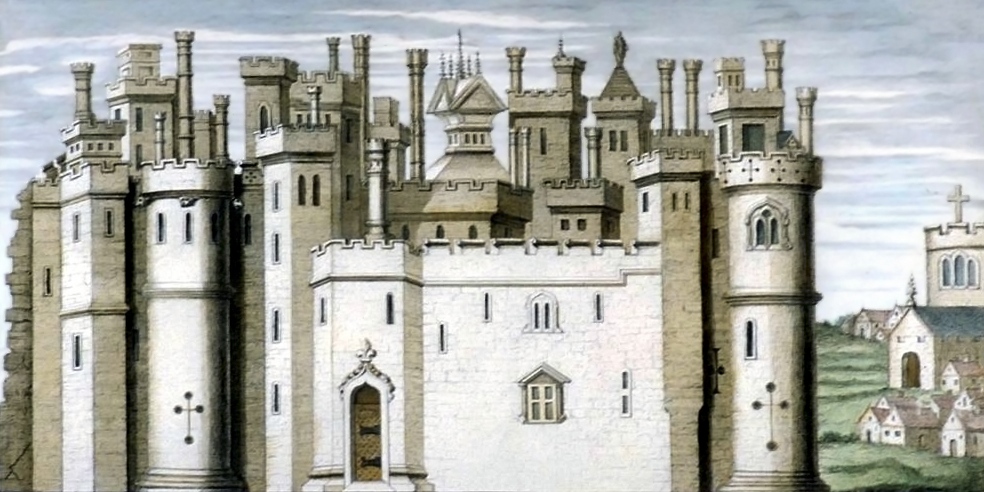
By the 14th century, the castle had been restored and adapted from a purely defensive fortress into a more comfortable noble residence. John of Gaunt, Duke of Lancaster, undertook extensive rebuilding before 1370, transforming the castle into a stately home with enhanced living quarters and artistic patronage. His wife, Constance of Castile, resided here from 1372 to 1394, and her court became noted for fostering music and the arts, marking a cultural zenith for Tutbury Castle.
Mary, queen of Scots’ imprisonment
One of the most historically significant chapters in the castle's history is its role as a prison for Mary, Queen of Scots during the 16th century. Between 1569 and 1585, Mary was held at Tutbury under strict surveillance. Her accommodations were in a timber-framed lodging attached to the castle walls, carefully arranged with furnishings from the Royal Wardrobe. Despite these efforts, Mary described her quarters as cold and damp, resorting to creating a tapestry tent over her bed to retain warmth. The design of her bedchamber, with inward-facing windows overlooking the courtyard and none facing outward, reflects the security concerns of detaining a high-profile prisoner.
Mary's outdoor garden area was enclosed with wooden palings, which she disparagingly compared to a pig run. Notably, she had access to a billiard table, indicating some allowance for leisure despite her captivity. The castle's guards included prominent figures such as George Talbot, 6th Earl of Shrewsbury, Ralph Sadler, John Somers, and Sir Amyas Paulet, underscoring the importance of her detention.
Decline and partial demolition
By the late 16th century, the castle's condition was deteriorating due to less frequent maintenance and changing military needs. It remained a royal residence intermittently, with visits from King James I between 1619 and 1624. During the English Civil War in the mid-17th century, Tutbury Castle was held by Royalist forces but was besieged by Parliamentary armies in 1646. Following its surrender, the castle was declared militarily indefensible and was deliberately demolished between 1647 and 1648.
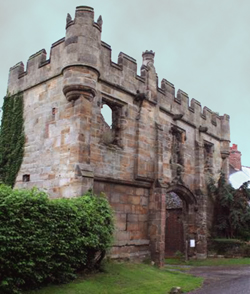
Despite this, remnants of the stone walls, earthworks, and timber lodgings remain visible. In 1780, a decorative folly was constructed atop the castle's motte, adding an 18th-century landscaping element to the historic site. Today, the ruins are protected as a scheduled monument and a Grade I listed building, under the care of the Duchy of Lancaster.
Architectural features and surviving remains
The surviving ruins of Tutbury Castle primarily date from the 14th and 15th centuries, reflecting its period as a noble residence under John of Gaunt and his successors. The castle's layout is notable for its broad enclosure, compared in scale to the Bois de Vincennes park in Paris, indicating a spacious rather than compact design. Constructed mainly from stone, the castle also incorporated timber-framed lodgings, especially evident in the buildings used during Mary, Queen of Scots' imprisonment.
A particularly significant surviving structure is the 12th-century chapel, one of the oldest parts of the castle. This chapel stands as a testament to the castle's early religious connections and has endured through centuries of conflict and rebuilding.
Mary's quarters reveal architectural adaptations for security and comfort, including inward-facing windows and an attached latrine known as the "house of office." The challenges of securing a royal prisoner are evident in these design choices. The castle's motte, originally a defensive earthwork mound, remains a prominent feature of the site, now crowned by the 18th-century folly.
Landscape and setting
Situated on a slight hill, Tutbury Castle overlooks the village and the surrounding Derbyshire countryside. The castle's elevated position afforded strategic views and defensive advantages typical of hill castles. The surrounding terrain is relatively flat, which made the castle's height and fortifications particularly important for surveillance and defense.
Legacy and cultural significance
Tutbury Castle's long history encompasses military, political, and cultural roles. From its Norman origins through medieval conflicts, noble residence, royal prison, and eventual ruin, the castle reflects the evolving nature of English castles. Its association with Mary, Queen of Scots, adds a poignant chapter to its story, attracting historians and visitors interested in Tudor history and royal intrigue.
Today, the castle ruins serve as a cultural heritage site, offering insights into medieval architecture, feudal governance, and the complexities of royal imprisonment. The site's protection as a scheduled monument and Grade I listed building ensures its preservation for future generations to study and appreciate.
Frequently asked questions (FAQ)
- How do I visit Tutbury Castle?
- Tutbury Castle is open to the public with access to the ruins and surrounding grounds. Visitors should check local tourism websites for current opening hours and any seasonal restrictions.
- What is the historical significance of Tutbury Castle?
- Tutbury Castle is significant for its Norman origins, medieval military history, and as the prison of Mary, Queen of Scots during the 16th century.
- When was Tutbury Castle built?
- The castle was originally constructed around 1080 by Henry de Ferrers shortly after the Norman Conquest.
- Can I see Mary, Queen of Scots' quarters at Tutbury Castle?
- Visitors can view the remains of the timber-framed lodgings where Mary, Queen of Scots was held, including the layout of her bedchamber and garden enclosure.
- Why was Tutbury Castle deliberately demolished?
- After the English Civil War siege in 1646, the castle was deemed militarily indefensible and was deliberately demolished between 1647 and 1648 to prevent further military use.
Information
Current owner
Duchy of Lancaster
Loading map...
Visitor reviews
No reviews yet. Been here? Write the first review and help other travelers!
Write the first reviewVisited this castle? Share your experience
Your review helps other travelers and adds first-hand knowledge to our encyclopedia.