Melbourne Castle
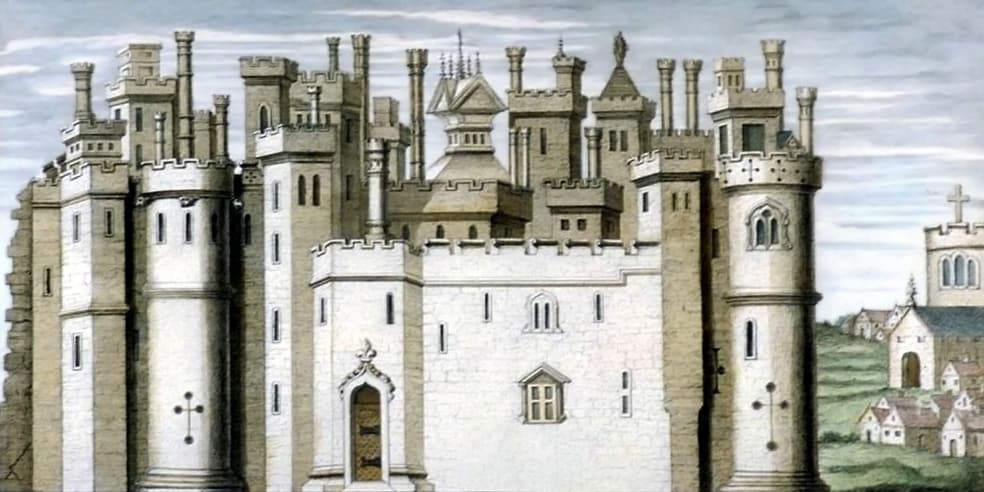
Melbourne Castle was a late medieval hill castle located in Melbourne, Derbyshire, England. Its origins trace back to an earlier royal manor house that served as accommodation for noblemen engaged in hunting within a nearby royal park during the reign of King John (1199–1216). The castle's construction began in 1311 under Thomas, 2nd Earl of Lancaster, and continued until 1322, shortly before his execution. However, the building was never fully completed, leaving some aspects of its design and internal layout unknown.
Historical background and ownership
From the early 14th century, Melbourne Castle was primarily held by the Earls and Dukes of Lancaster or directly by the crown. Significant improvements and repairs were undertaken by notable figures such as John of Gaunt, the 1st Duke of Lancaster, during the late 14th century. The castle remained in generally good condition throughout the 15th and early 16th centuries, serving various roles including as a noble residence and a place of imprisonment.
Prison for notable captives
One of the castle's most notable historical roles was as the long-term prison of John I, Duke of Bourbon, who was held captive there for 19 years following his capture at the Battle of Agincourt in 1415. Additionally, Melbourne Castle was considered as a potential prison for Mary, Queen of Scots, though she was ultimately detained at Tutbury Castle.
Architectural features and construction
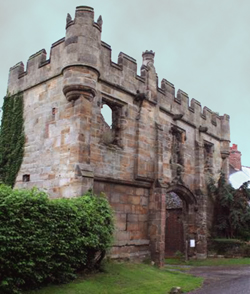
The castle was constructed as a hill castle on elevated ground, typical of defensive medieval fortifications designed to oversee the surrounding landscape. While detailed records of its internal layout have not survived, the castle likely included typical medieval features such as curtain walls, towers, and a gatehouse. The surviving remains consist primarily of a section of stone wall approximately 15 meters long and 4 meters high, along with some foundation traces. The stonework is noted to have been sound even as the castle fell into decline.
Decline and demolition
By the end of the reign of Elizabeth I in the late 16th century, Melbourne Castle had fallen into decline. Although the stonework remained structurally sound, the lack of maintenance led to deterioration in other parts of the building. In 1604, the manor was purchased by Henry Hastings, 5th Earl of Huntingdon, who owned a more prominent castle at Ashby-de-la-Zouch. Subsequently, Melbourne Castle was demolished and its stone was repurposed as building material for other constructions in the area.
Current status and heritage significance
Today, only ruins remain of Melbourne Castle. The surviving wall section and foundations are protected as a Grade II listed structure and the site is designated as a scheduled monument. There is no public access to the castle remains, and much of the original structure's details remain lost to history. The site nonetheless holds cultural and historical significance as a representation of medieval noble residences and fortifications in Derbyshire.
Archaeological potential
Despite the limited remains, the site of Melbourne Castle offers potential for archaeological study that could yield insights into the castle's construction phases and medieval life in the region. The absence of detailed internal plans leaves much to be discovered about the castle's layout and functional spaces.
Frequently asked questions (FAQ)
- What is the historical significance of Melbourne Castle?
- Melbourne Castle was built in the early 14th century as a noble residence and later served as a prison for notable captives such as John I, Duke of Bourbon. It reflects the medieval history of Derbyshire and the Lancastrian lineage.
- Can I visit the remains of Melbourne Castle?
- The remains of Melbourne Castle are not open to the public. The site is protected as a scheduled monument and Grade II listed, with no public access to preserve its condition.
- When was Melbourne Castle constructed?
- Construction of Melbourne Castle began in 1311 under Thomas, 2nd Earl of Lancaster, and continued until 1322, although it was never fully completed.
- What remains of Melbourne Castle today?
- Only a section of stone wall about 15 meters long and 4 meters high, along with some foundations, survive from Melbourne Castle. The rest was demolished and repurposed for building materials.
- Was Melbourne Castle involved in any significant historical events?
- Yes, Melbourne Castle held John I, Duke of Bourbon captive for 19 years after his capture at the Battle of Agincourt in 1415. It was also considered as a prison for Mary, Queen of Scots.
Photo gallery

Photo by Unknown authorUnknown author•Public domain
Information
Loading map...
Visitor reviews
No reviews yet. Been here? Write the first review and help other travelers!
Write the first reviewVisited this castle? Share your experience
Your review helps other travelers and adds first-hand knowledge to our encyclopedia.