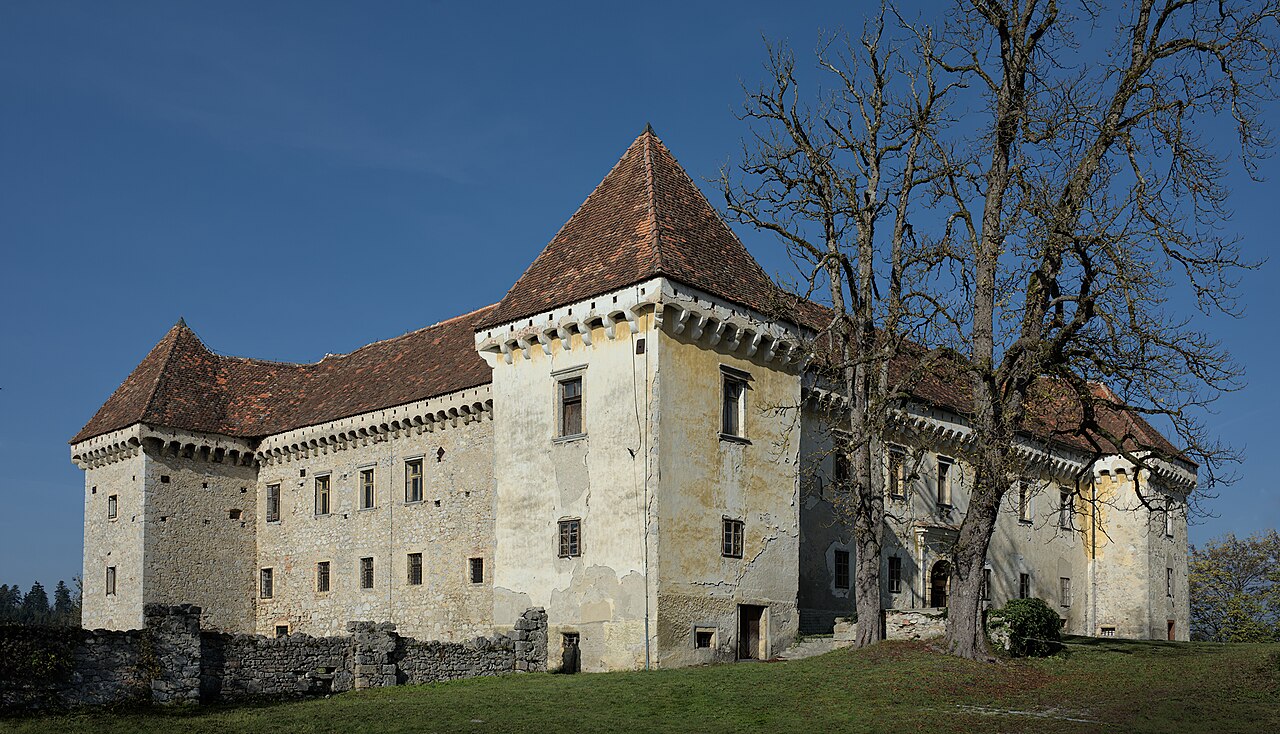
Architectural features and layout
The castle is centered around an inner courtyard that is notable for its arched portico and a fountain, which together create a serene and elegant space characteristic of Renaissance design. This courtyard serves as the heart of the castle, where various cultural events are held during the summer months, including concerts and exhibitions that celebrate the castle's heritage.
Adjacent to the castle stands the chapel of St. John of Nepomuk, built in the 17th century. This chapel is adorned with frescoes painted by Franc Jelovšek, a prominent Slovenian Baroque painter, whose work adds significant artistic value to the site. The presence of this chapel highlights the spiritual and cultural dimensions of the castle as a noble residence.
Near the entrance to the castle, visitors can find two ancient trees: a 400-year-old linden and a 300-year-old plane tree. These trees not only enhance the castle's picturesque surroundings but also serve as living witnesses to its long history.
Historical ownership and preservation
Following the Lichtenberg family, the castle was purchased in 1800 by Ignac Scarija. The Scarija family maintained ownership until the mid-19th century, with Maksimiljana Scarija being the last family member to own the castle. Her marriage in 1854 to Luka Pirnat, the castle's groundsman, marked a unique chapter in the castle's history. Since Maksimiljana and Luka had no children, the estate passed to Luka after her death. He remarried in 1874, and the castle has remained in the Pirnat family ever since.
Remarkably, Tuštanj Castle is the only castle in Slovenia that has never been nationalized. This continuous private ownership has allowed the preservation of its original furnishings and estate records, providing a rare and authentic glimpse into the life of Slovenian nobility and gentry over several centuries.
Interior and museum collection
A portion of the castle has been converted into a museum, which displays an array of original furniture, porcelain, ceramic stoves, and fief ownership records. These artifacts offer valuable insight into the domestic and administrative aspects of castle life. The preservation of these items in their original context enhances the historical authenticity of the site and enriches visitors' understanding of the castle's past.
Current use and cultural significance
Today, Tuštanj Castle functions as a cultural venue, hosting various events in its courtyard during the summer. It also features a wedding hall, where couples can choose to be married in medieval costumes, adding a unique historical ambiance to their ceremonies. This blend of heritage preservation and contemporary use ensures the castle remains a vibrant part of the local community.
Frequently asked questions (FAQ)
- How do I get to Tustanj Castle?
- Tustanj Castle is located in Moravce, Slovenia, and can be reached by car or public transportation. The nearest major city is Ljubljana, which is approximately a 30-minute drive away. Visitors can also take local buses that connect Moravce to surrounding areas.
- What is the historical significance of Tustanj Castle?
- Tustanj Castle dates back to the 15th century and has played a vital role in the region's history, serving as a noble residence and a strategic fortification. Its architecture reflects the medieval style prevalent during its construction, and it has been a witness to many historical events over the centuries. The castle is a symbol of the local heritage and is important for understanding the area's past.
- When was Tustanj Castle built?
- The construction of Tustanj Castle began in the late 15th century and was completed in the early 16th century. Its design and structure have been preserved through centuries, allowing visitors to glimpse the architectural styles of that era. The castle's enduring presence makes it an essential site for historical exploration.
- Can I visit Tustanj Castle year-round?
- Yes, Tustanj Castle is open to visitors year-round, although the hours may vary by season. It’s advisable to check the official website or contact the castle's administration for the specific opening hours during your visit. Additionally, guided tours may be available, providing a deeper understanding of its history.
- Why is Tustanj Castle considered an architectural gem?
- Tustanj Castle is renowned for its well-preserved medieval architecture, featuring stunning stone walls and intricate details that reflect the craftsmanship of the period. The castle's design includes defensive structures, such as towers and ramparts, which highlight its historical role as a fortification. Visitors are often captivated by its unique blend of functionality and beauty.
- Is it possible to take guided tours of Tustanj Castle?
- Yes, guided tours are available at Tustanj Castle, offering visitors an in-depth look at its history, architecture, and significance. These tours are led by knowledgeable guides who provide insights and anecdotes that enrich the experience. It's recommended to book in advance, especially during peak tourist seasons.
- What are the ticket prices for Tustanj Castle?
- Ticket prices for Tustanj Castle are generally affordable, with discounts available for students and seniors. Family tickets may also be offered, making it an accessible outing for all ages. For the most current pricing, it's best to check the official website before your visit.
- What is the best time to visit Tustanj Castle?
- The best time to visit Tustanj Castle is during the spring and early autumn months when the weather is mild, and the surrounding landscapes are particularly beautiful. These seasons also tend to have fewer tourists, allowing for a more intimate experience. Summer can be busy, but the castle's lush gardens provide a lovely backdrop for exploration.
- Are there nearby attractions to explore after visiting Tustanj Castle?
- Yes, there are several attractions near Tustanj Castle, including the picturesque town of Moravce and the scenic landscapes of the surrounding countryside. Visitors can also explore local hiking trails, churches, and other historical sites in the area. This makes for a well-rounded day trip filled with culture and nature.
Loading map...
Visitor reviews
No reviews yet. Been here? Write the first review and help other travelers!
Write the first reviewVisited this castle? Share your experience
Your review helps other travelers and adds first-hand knowledge to our encyclopedia.