Turn Castle

Turn Castle in Potoce, Slovenia
Potoce, Store, Slovenia
Late Medieval (14th–15th c.)
Well Preserved

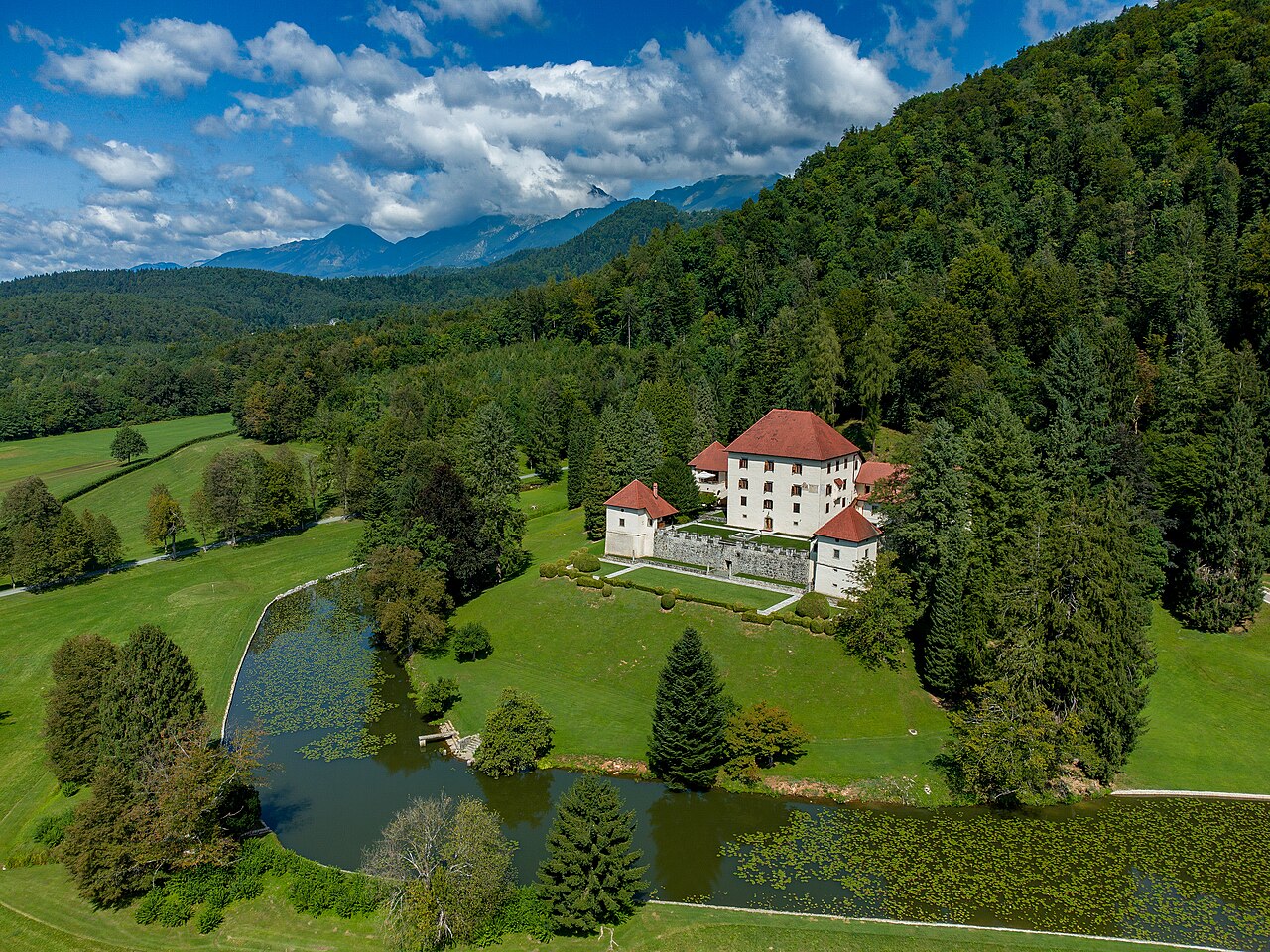
Turn Castle, located in Potoce, Slovenia, is a significant example of a late-medieval fortress with a rich history dating back to the 14th century. The castle was first documented in 1408, though its construction likely began in the mid-14th century. It stands as a testament to the turbulent history of the region, having witnessed numerous conflicts and changes in ownership over the centuries.

The early history and medieval conflicts

The castle initially came under the control of the Counts of Celje in the early 15th century, a powerful noble family in the region. During this period, Turn Castle played a strategic role in the power struggles that characterized the area. In 1439, it sustained severe damage amid the hostilities between the Habsburgs and the Counts of Celje, reflecting its military importance. The castle faced further destruction in 1473 during an incursion by the Ottoman Turks, underscoring the ongoing threat from Ottoman expansion into Central Europe.

Transition to Habsburg rule and Renaissance reconstruction

Following the extinction of the Counts of Celje, Turn Castle became a possession of the Habsburg dynasty. The castle's fortunes changed under Emperor Maximilian I, who sold it to Jurij von Egkh, a local nobleman and the general administrator of Habsburg estates in Carniola. Von Egkh was a prominent figure who owned several castles in the region and undertook significant renovations at Turn Castle. His reconstruction incorporated elements of the Renaissance architectural style, marking a transition from its purely medieval origins and reflecting broader European artistic trends of the time.

Notable owners and cultural significance

In 1793, the castle was acquired by Martin Urbančič, who also administered the nearby estate of Brdo pri Kranju. Urbančič was the grandfather of Josipina Turnograjska, a renowned Slovene poet born in the castle in 1821. This connection adds a layer of cultural and literary significance to the castle's history, highlighting its role beyond military and administrative functions.

20th century changes and modern use

In 1909, ownership passed to Oton von Detela, a member of the local Slovene gentry. The castle remained in private hands until the upheavals following World War II, when the Communist regime expropriated the property from the Detela family. Subsequently, Turn Castle was repurposed as a military barracks for the Yugoslav People's Army. Since 1962, it has served a civilian function as a retirement home, illustrating the adaptive reuse of historic buildings in the modern era.

Architectural features and preservation

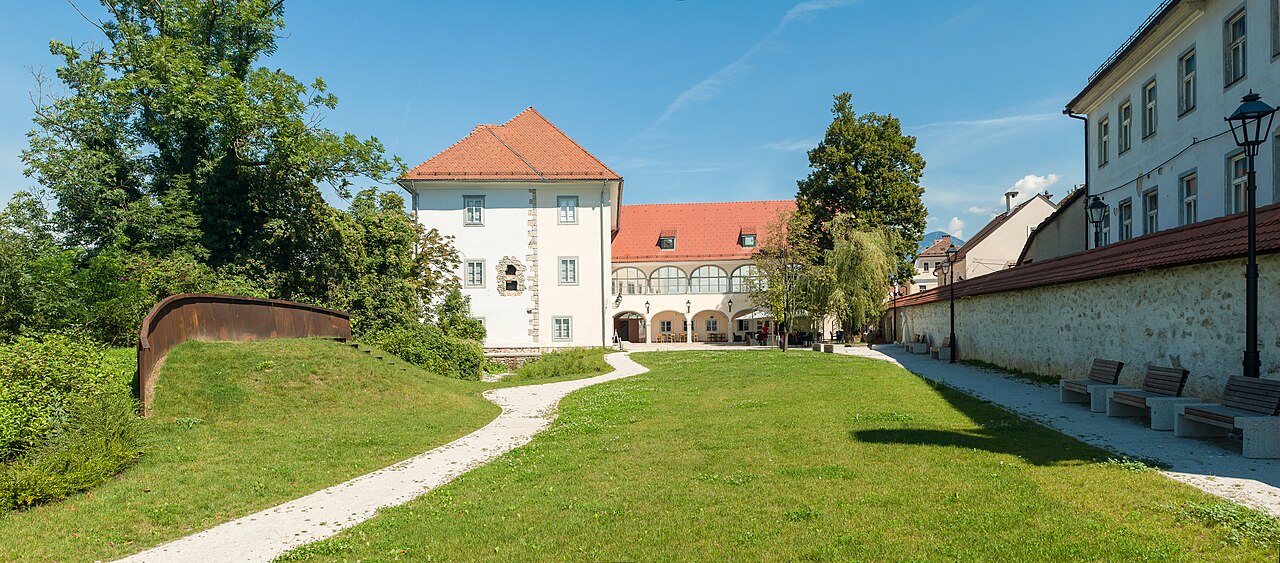
Turn Castle exhibits a blend of late-medieval defensive architecture and Renaissance stylistic elements introduced during the 16th-century renovations. While the original medieval fortifications would have included robust walls and defensive towers, the Renaissance influence is visible in the castle's more decorative aspects and structural modifications aimed at residential comfort. The castle's preservation as a well-preserved historical site allows visitors to appreciate its layered architectural history and its role in Slovenian heritage.

Visiting Turn Castle

Today, Turn Castle is accessible to the public in its capacity as a retirement home, though visitor access may be limited due to its current use. Its location in the Store region of Slovenia places it within reach of other historical sites and natural attractions, making it a point of interest for those exploring the cultural landscape of the area.

Frequently asked questions (FAQ)

How do I get to Turn Castle?
Turn Castle is located in Potoce, Slovenia, easily accessible by car or public transportation. If you are driving, you can follow the main roads leading to Potoce, and there is parking available near the castle.
What is the historical significance of Turn Castle?
Turn Castle dates back to the 12th century and is a remarkable example of medieval architecture in Slovenia. It has served various purposes throughout its history, including as a fortress and noble residence, reflecting the region's rich cultural heritage.
When was Turn Castle last renovated?
Turn Castle underwent significant renovations in the early 2000s to restore its historical features and improve visitor access. These renovations have helped preserve the castle's architectural integrity while enhancing the overall visitor experience.
Can I take a guided tour of Turn Castle?
Yes, guided tours of Turn Castle are available and provide an in-depth look at its history, architecture, and surrounding landscapes. Tours typically last about an hour and are conducted by knowledgeable guides who can answer any questions you may have.
Is Turn Castle accessible for visitors with disabilities?
Turn Castle is committed to making its facilities accessible to all visitors. While some areas may be challenging due to their historical nature, efforts have been made to provide accessible pathways and services wherever possible.
What are the opening hours for Turn Castle?
Turn Castle is open to visitors daily, with varying hours depending on the season. Typically, the castle opens at 9 AM and closes at 5 PM, so it's best to check the official website for any seasonal changes.
What are the ticket prices for visiting Turn Castle?
Ticket prices for Turn Castle are quite reasonable, with discounts available for children, students, and seniors. General admission is typically around 5 euros, while guided tours may have an additional fee.
When is the best time to visit Turn Castle?
The best time to visit Turn Castle is during the spring and fall months when the weather is pleasant and the surrounding landscapes are especially beautiful. Summer can be busy with tourists, while winter may limit access due to weather conditions.
Are there any nearby attractions to visit after Turn Castle?
Yes, there are several nearby attractions, including the scenic landscapes of the Slovenian countryside and other historical sites. Consider visiting local wineries or hiking trails that showcase the region's natural beauty and heritage.

Information

Hill Castle

Loading map...

Visitor reviews

No reviews yet. Been here? Write the first review and help other travelers!

Write the first review

Visited this castle? Share your experience

Your review helps other travelers and adds first-hand knowledge to our encyclopedia.

Write a review

(5/5)

0/2000 characters

Your review will be visible after admin approval

Nearby castles

5.6 km

Brdo Castle

Kranj, Slovenia

Brdo Castle near Kranj, Slovenia, stands as a significant Renaissance-era mansion with a rich history intertwined with political and cultural developments in the region. Constructed in 1510 by the Carniolan nobleman Georg (Jurij) Egkh, who served as the general administrator of Habsburg private estates in the Duchy of Carniola, the castle originally showcased the refined Renaissance architectural style. Over the centuries, it has undergone numerous renovations and stylistic changes, reflecting the evolving tastes and functions assigned to the estate. Historical development and ownership Initially built as a noble residence, Brdo Castle was acquired in the 18th century by Michelangelo Zois, a prominent figure whose family played a vital role in the Carniolan Enlightenment. His son, Žiga Zois, was a noted patron of the arts and natural sciences, linking the castle to the intellectual currents of the time. In the 19th century, the mansion changed ownership multiple times, during which its interior was extensively renovated, adapting to contemporary tastes and needs. By the early 20th century, the castle had fallen into a state of decline until it was purchased in 1935 by Prince Paul of Yugoslavia. Under his ownership, the estate was transformed from a provincial mansion with eclectic and Biedermeier elements into a refined summer royal residence. This period saw the castle hosting distinguished guests, including Edward VIII of the United Kingdom, marking its importance as a site of high-profile social and political gatherings. Brdo castle in the yugoslav and slovenian states Following the establishment of the Communist Yugoslav state in 1945, the castle was confiscated from the Karadjordjević dynasty and became a summer retreat for Josip Broz Tito, the Yugoslav leader. Alongside Vila Bled near Lake Bled, Brdo was one of Tito’s preferred residences during spring and summer months. Notably, in spring 1980, Tito suffered a seizure at Brdo Castle and was subsequently transferred to the University Medical Centre Ljubljana, where he later died. After Tito’s death, the estate passed to the Socialist Republic of Slovenia and eventually to the Government of independent Slovenia. The castle continues its traditional role as a venue for national and international conferences. In 1990, it hosted a critical meeting of leaders from the six Yugoslav republics attempting to prevent the federation’s dissolution. It also hosted the first official meeting between George W. Bush and Vladimir Putin in 2001, and during Slovenia's EU Presidency in 2008, it was the site of multiple high-level international meetings. Architectural features and renovations The original Renaissance style of Brdo Castle is evident in its layout and structural elements, although the building has been extensively remodeled over the centuries. The 18th-century ownership introduced Baroque influences, while Prince Paul’s renovations in the 1930s refined the mansion’s appearance into a more elegant and functional royal residence. The castle features formal gardens and a park landscape that complement its architectural grandeur. The interior is richly decorated with artworks by prominent Slovene artists, including France Mihelič, Maksim Sedej, Boris and Zdenko Kalin, and Karel Putrih. These decorations include paintings, frescos, and sculptures that enhance the cultural and artistic value of the estate, linking it firmly to Slovenia’s national heritage. Current use and cultural significance Today, Brdo Castle serves as the Slovenian Government’s main venue for diplomatic meetings and official events. Its role as a site for hosting international summits and conferences underscores its continuing political importance. The castle’s blend of historical architecture and modern function makes it a unique symbol of Slovenia’s past and present. The estate’s extensive parklands and proximity to Kranj make it accessible for visitors interested in exploring Slovenia’s noble heritage and political history. While the castle itself is primarily used for official functions, its grounds occasionally open for cultural events, providing a glimpse into the grandeur of Renaissance and later architectural styles preserved through careful maintenance and restoration.

Renaissance (15th–17th c.)
Details
5.8 km
Strmol Castle — Slovenia castle

Strmol Castle

Cerklje na Gorenjskem, Slovenia

Strmol Castle (German: Burg Stermol, Slovene: grad Strmol) is a hill castle situated at the foot of Dvorjanski hrib ("Mansion Hill") near the villages of Češnjevek, Grad, and Dvorje in the Municipality of Cerklje na Gorenjskem, Slovenia. It is one of the rare castles in Slovenia to have preserved its Slovene name throughout its history, reflecting its deep-rooted local heritage. Originally built by the Strmol family, the castle has a long history that spans several centuries, witnessing various architectural and ownership changes. Historical background and ownership The earliest written records of Strmol Castle date back to the 14th century, indicating its establishment during the Late Medieval period. The castle was initially constructed as a fortified residence for the noble Strmol family, who played a significant role in the region's feudal society. Over the centuries, the castle passed through several noble families due to inheritance and political shifts, each contributing to its architectural evolution and maintenance. During the 16th and 17th centuries, the castle underwent significant renovations to adapt to changing defensive needs and residential comfort. Its strategic location near important trade routes and the proximity to the capital Ljubljana made it a valuable asset in regional power dynamics. Architectural features and design Strmol Castle exemplifies the characteristics of a hill castle, built on elevated terrain to maximize natural defense advantages. The castle complex includes a central courtyard surrounded by robust stone walls and multiple towers that served both defensive and residential purposes. The castle's architecture reflects a blend of styles due to various construction phases. The original medieval fortifications feature thick walls and narrow defensive openings, typical of the Late Medieval era. Later additions introduced elements of the Renaissance style, including larger windows and more ornate interior decorations, enhancing the castle's residential appeal. Key architectural components include a gatehouse with a fortified entrance, a keep or main tower that served as the last line of defense, and residential wings with spacious halls and chambers. The castle's layout is designed to balance defense with comfort, featuring a well-protected courtyard that facilitated daily activities and gatherings. Defensive structures The castle's battlements and curtain walls were constructed to withstand sieges and attacks. The towers provided vantage points for surveillance and archery. A moat or ditch likely surrounded parts of the castle during its early history, enhancing its defensive capabilities, although no extensive water defenses remain today. Residential and interior spaces Inside, the castle features great halls used for feasts and official functions, along with private chambers for the noble family. The interiors were periodically updated to reflect contemporary tastes and comfort, with decorative elements added during the Renaissance renovations. Modern use and preservation Today, Strmol Castle is well preserved and functions as a guesthouse and conference site for the government of the Republic of Slovenia. Its preservation allows visitors to appreciate the castle's historical and architectural significance firsthand. The castle's adaptation for modern use respects its heritage while providing functional spaces for official and cultural events. The surrounding landscape, including the nearby hills and villages, adds to the castle's scenic appeal, making it a notable destination for those interested in Slovenian history and medieval architecture. Visiting information and cultural significance While primarily used for government purposes, Strmol Castle occasionally opens its doors to the public for guided tours and cultural events. Visitors can explore the castle's historic rooms, learn about its medieval origins, and observe the architectural details that reveal its evolution over centuries. The castle holds cultural importance as a symbol of regional identity and continuity, maintaining its Slovene name and heritage through periods of foreign rule and political change.

Late Medieval (14th–15th c.)
Details
9.6 km
Kieselstein Castle — Slovenia castle

Kieselstein Castle

Kranj, Slovenia

Kieselstein Castle, also known as Khislstein, is a prominent 13th-century hill castle located in the city of Kranj, within the Upper Carniola region of Slovenia. The castle occupies a strategic position overlooking the river Sava and the historic city pier, a site that was naturally defensible and vital for controlling river crossings. Its origins trace back to an earlier 11th-century round keep, which served as a fortified lookout before the construction of the current castle structure in 1256. Medieval origins and strategic importance The castle was initially built by the Counts of Ortenburg under an agreement with Duke Ulrik III of Carinthia, the lord of Kranj at the time. This early construction reflects the typical high medieval military architecture designed to secure important trade and transport routes along the Sava River. The castle's location was crucial for the defense of the city and its pier, serving as a watchpoint and a fortification against potential invaders. From its establishment until 1420, the castle was managed by the ministeriales or vassals of the Ortenburgs, known as the knights von Chreinburch. This feudal arrangement ensured the castle's role as a local stronghold within the broader political landscape of the Holy Roman Empire. Transition to the Counts of Celje and later Habsburg rule In 1420, ownership passed to Count Herman II of Celje, a powerful noble family influential in the region during the late medieval period. The castle's significance continued as it was integrated into the city's defenses during the turbulent times of Turkish incursions in the 15th century. The Counts of Celje held the castle until their extinction in 1456, after which it became part of the Habsburg domains. Renaissance transformation and later noble ownership In the mid-16th century, the Habsburgs sold the castle to Baron Janž Khiessl, who obtained imperial permission from Emperor Ferdinand I to rename the castle after himself. Baron Khiessl undertook significant renovations, expanding the original tower into an L-shaped Renaissance castle, which largely defines the castle's present-day appearance. This transformation reflects the architectural shift from purely defensive medieval structures to more comfortable and representative noble residences during the Renaissance. Subsequent owners included members of the Moscon, Ravbar, Apfaltrer, Auersperg, and Natalis Pagliaruzzi noble families, each contributing to the castle's evolving history and preservation. 20th-century history and restoration The castle was purchased by the state in 1913. Between the two world wars, it served as government offices, reflecting its continued administrative importance. After World War II, the castle was nationalized, aligning with the broader post-war political changes in Slovenia. In 1952, the castle underwent a significant renovation led by the renowned Slovenian architect Jože Plečnik. Plečnik's work focused on preserving the castle's historical character while adapting it for modern use. Today, the castle houses the Kranj Municipal Agency for the Protection of Natural and Cultural Heritage and the Upper Carniola Museum, serving as a cultural and historical center. Architectural features and layout Kieselstein Castle's architecture showcases its evolution from a medieval defensive tower to a Renaissance noble residence. The original round keep was the focal point of the early fortification, surrounded by thick stone walls designed for defense. The later addition of the L-shaped wing by Baron Khiessl introduced residential and administrative spaces, reflecting Renaissance architectural trends emphasizing comfort and status. The castle's integration into the city walls during the period of Ottoman threats highlights its military significance. Defensive features such as battlements, arrow slits, and fortified gates were adapted to meet the challenges of the time. Renovation and preservation efforts Jože Plečnik's mid-20th century renovation was sensitive to the castle's historical fabric. He emphasized the restoration of key architectural elements while ensuring the building could accommodate modern functions. This balance of preservation and adaptation has allowed Kieselstein Castle to remain a vital part of Kranj's cultural heritage. Cultural significance and current use Today, Kieselstein Castle stands as a symbol of Kranj's medieval past and its ongoing cultural vitality. The castle's role as the seat of the Upper Carniola Museum connects visitors with the region's history, art, and traditions. Its location and preserved architecture offer insights into the defensive strategies and noble lifestyles of the past centuries. The castle is accessible to the public during museum hours and provides educational programs, exhibitions, and cultural events that highlight the heritage of Kranj and the wider region.

High Medieval (11th–13th c.)
Details