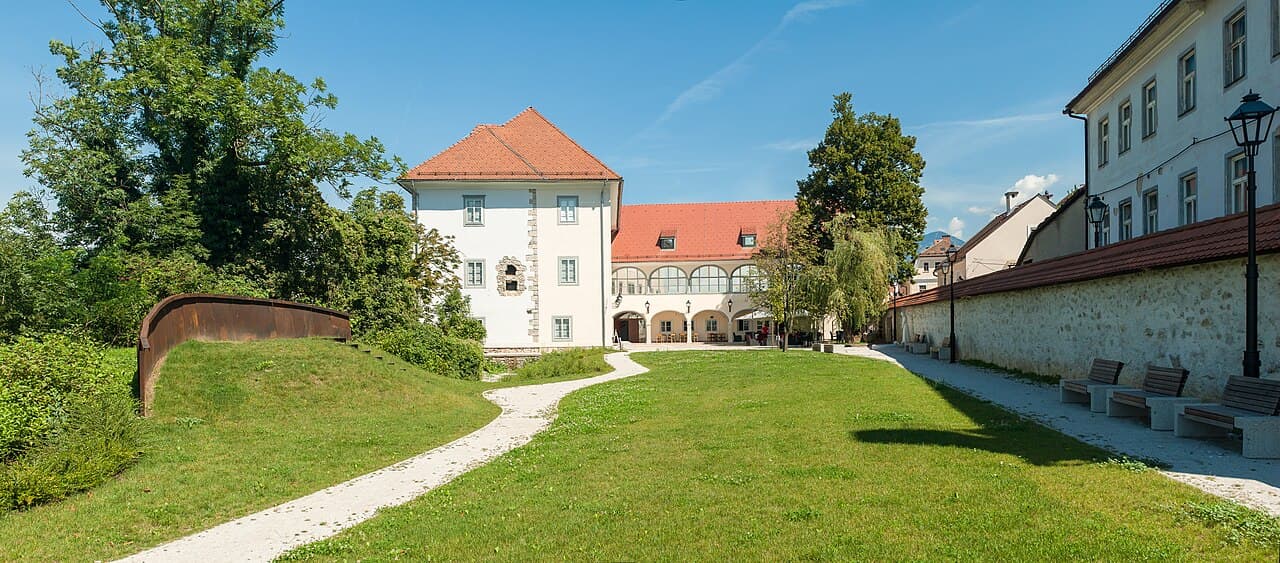
Kieselstein Castle
Kieselstein Castle, also known as Khislstein, is a prominent 13th-century hill castle located in the city of Kranj, within the Upper Carniola region of Slovenia. The castle occupies a strategic position overlooking the river Sava and the historic city pier, a site that was naturally defensible and vital for controlling river crossings. Its origins trace back to an earlier 11th-century round keep, which served as a fortified lookout before the construction of the current castle structure in 1256.
Medieval origins and strategic importance
The castle was initially built by the Counts of Ortenburg under an agreement with Duke Ulrik III of Carinthia, the lord of Kranj at the time. This early construction reflects the typical high medieval military architecture designed to secure important trade and transport routes along the Sava River. The castle's location was crucial for the defense of the city and its pier, serving as a watchpoint and a fortification against potential invaders.
From its establishment until 1420, the castle was managed by the ministeriales or vassals of the Ortenburgs, known as the knights von Chreinburch. This feudal arrangement ensured the castle's role as a local stronghold within the broader political landscape of the Holy Roman Empire.
Transition to the Counts of Celje and later Habsburg rule
In 1420, ownership passed to Count Herman II of Celje, a powerful noble family influential in the region during the late medieval period. The castle's significance continued as it was integrated into the city's defenses during the turbulent times of Turkish incursions in the 15th century. The Counts of Celje held the castle until their extinction in 1456, after which it became part of the Habsburg domains.
Renaissance transformation and later noble ownership
In the mid-16th century, the Habsburgs sold the castle to Baron Janž Khiessl, who obtained imperial permission from Emperor Ferdinand I to rename the castle after himself. Baron Khiessl undertook significant renovations, expanding the original tower into an L-shaped Renaissance castle, which largely defines the castle's present-day appearance. This transformation reflects the architectural shift from purely defensive medieval structures to more comfortable and representative noble residences during the Renaissance.
Subsequent owners included members of the Moscon, Ravbar, Apfaltrer, Auersperg, and Natalis Pagliaruzzi noble families, each contributing to the castle's evolving history and preservation.
20th-century history and restoration
The castle was purchased by the state in 1913. Between the two world wars, it served as government offices, reflecting its continued administrative importance. After World War II, the castle was nationalized, aligning with the broader post-war political changes in Slovenia.
In 1952, the castle underwent a significant renovation led by the renowned Slovenian architect Jože Plečnik. Plečnik's work focused on preserving the castle's historical character while adapting it for modern use. Today, the castle houses the Kranj Municipal Agency for the Protection of Natural and Cultural Heritage and the Upper Carniola Museum, serving as a cultural and historical center.
Architectural features and layout
Kieselstein Castle's architecture showcases its evolution from a medieval defensive tower to a Renaissance noble residence. The original round keep was the focal point of the early fortification, surrounded by thick stone walls designed for defense. The later addition of the L-shaped wing by Baron Khiessl introduced residential and administrative spaces, reflecting Renaissance architectural trends emphasizing comfort and status.
The castle's integration into the city walls during the period of Ottoman threats highlights its military significance. Defensive features such as battlements, arrow slits, and fortified gates were adapted to meet the challenges of the time.
Renovation and preservation efforts
Jože Plečnik's mid-20th century renovation was sensitive to the castle's historical fabric. He emphasized the restoration of key architectural elements while ensuring the building could accommodate modern functions. This balance of preservation and adaptation has allowed Kieselstein Castle to remain a vital part of Kranj's cultural heritage.
Cultural significance and current use
Today, Kieselstein Castle stands as a symbol of Kranj's medieval past and its ongoing cultural vitality. The castle's role as the seat of the Upper Carniola Museum connects visitors with the region's history, art, and traditions. Its location and preserved architecture offer insights into the defensive strategies and noble lifestyles of the past centuries.
The castle is accessible to the public during museum hours and provides educational programs, exhibitions, and cultural events that highlight the heritage of Kranj and the wider region.
Frequently asked questions (FAQ)
- What is the historical significance of Kieselstein Castle?
- Kieselstein Castle, located in Kranj, Slovenia, dates back to the 12th century and serves as a remarkable example of medieval architecture. It played a vital role in the region's defense and has witnessed various historical events, making it a key landmark in Slovenia's rich heritage.
- When was Kieselstein Castle built?
- Kieselstein Castle was constructed in the early 12th century, with its foundations laid around 1100 AD. Over the centuries, it has undergone several renovations, reflecting various architectural styles that emerged during its long history.
- Can I visit Kieselstein Castle year-round?
- Yes, Kieselstein Castle is open to visitors throughout the year, though some areas may be restricted during the winter months. It's advisable to check the castle's official website for specific seasonal hours and any potential closures.
- What are the opening hours for Kieselstein Castle?
- Kieselstein Castle typically opens at 10 AM and closes at 6 PM during the peak season. In the off-peak season, hours may vary, so it's best to confirm on the castle's website before planning your visit.
- Is it possible to access Kieselstein Castle with mobility challenges?
- Kieselstein Castle has made efforts to improve accessibility, but due to its historic nature, some areas may pose challenges for visitors with mobility issues. It's recommended to contact the castle administration in advance to inquire about specific accessibility options.
- What are the ticket prices for visiting Kieselstein Castle?
- Ticket prices for Kieselstein Castle are generally affordable, with discounts available for students and seniors. Children under a certain age often enter for free, making it a great family-friendly destination.
- When is the best time to visit Kieselstein Castle?
- The best time to visit Kieselstein Castle is during the spring and early fall when the weather is pleasant, and the surrounding nature is vibrant. These seasons also see fewer crowds compared to the summer months, allowing for a more enjoyable experience.
- Are there any nearby attractions to visit along with Kieselstein Castle?
- Yes, visitors to Kieselstein Castle can also explore the charming town of Kranj, known for its picturesque old town and vibrant cultural scene. Nearby attractions include the Prešeren Theater and the stunning Kranj Gorge, offering a full day of exploration and enjoyment.
Photo gallery

Information
Loading map...
Visitor reviews
No reviews yet. Been here? Write the first review and help other travelers!
Write the first reviewVisited this castle? Share your experience
Your review helps other travelers and adds first-hand knowledge to our encyclopedia.



