Turku Castle
Turku Castle (in Swedish, Åbo slott, in Finnish, Turun linna) stands as one of the most significant historical monuments in Finland. Situated in the city of Turku, this castle dates back to approximately 1280 and has evolved from a modest military fortress into one of the largest and most remarkable medieval castles in Scandinavia. Its imposing gray stone walls have witnessed centuries of Nordic history, reflecting both military and political developments in the region.
Originally constructed by Swedish conquerors as a fortified military camp at the mouth of the Aura River, Turku Castle was strategically positioned to guard the eastern borders of the Swedish realm and control vital river traffic. Over the centuries, it transformed into a multifunctional stronghold, serving as a bastion, administrative center, royal residence, and prison. Its historical importance is underscored by its role as the center of the historic province of Genuine Finland and the administrative heart of all Finland for many years.
The early history and medieval fortifications
The castle's earliest phase, beginning in the late 13th century, focused primarily on defense and governance. The initial structure was a compact keep built from gray granite and brick, surrounded by a moat linked to the Aura River, effectively isolating the fortress. This moat and the thick base walls, approximately five meters thick, provided formidable protection against sieges.
Throughout the 14th and 15th centuries, Turku Castle underwent significant expansion and fortification. Additional towers and higher walls were constructed to enhance its defensive capabilities. The castle endured several sieges during this period, notably the prolonged siege of 1364–1365 by German lord Albrecht von Mecklenburg, which lasted over eight months before relief came from Swedish forces.
Architectural features of the medieval keep
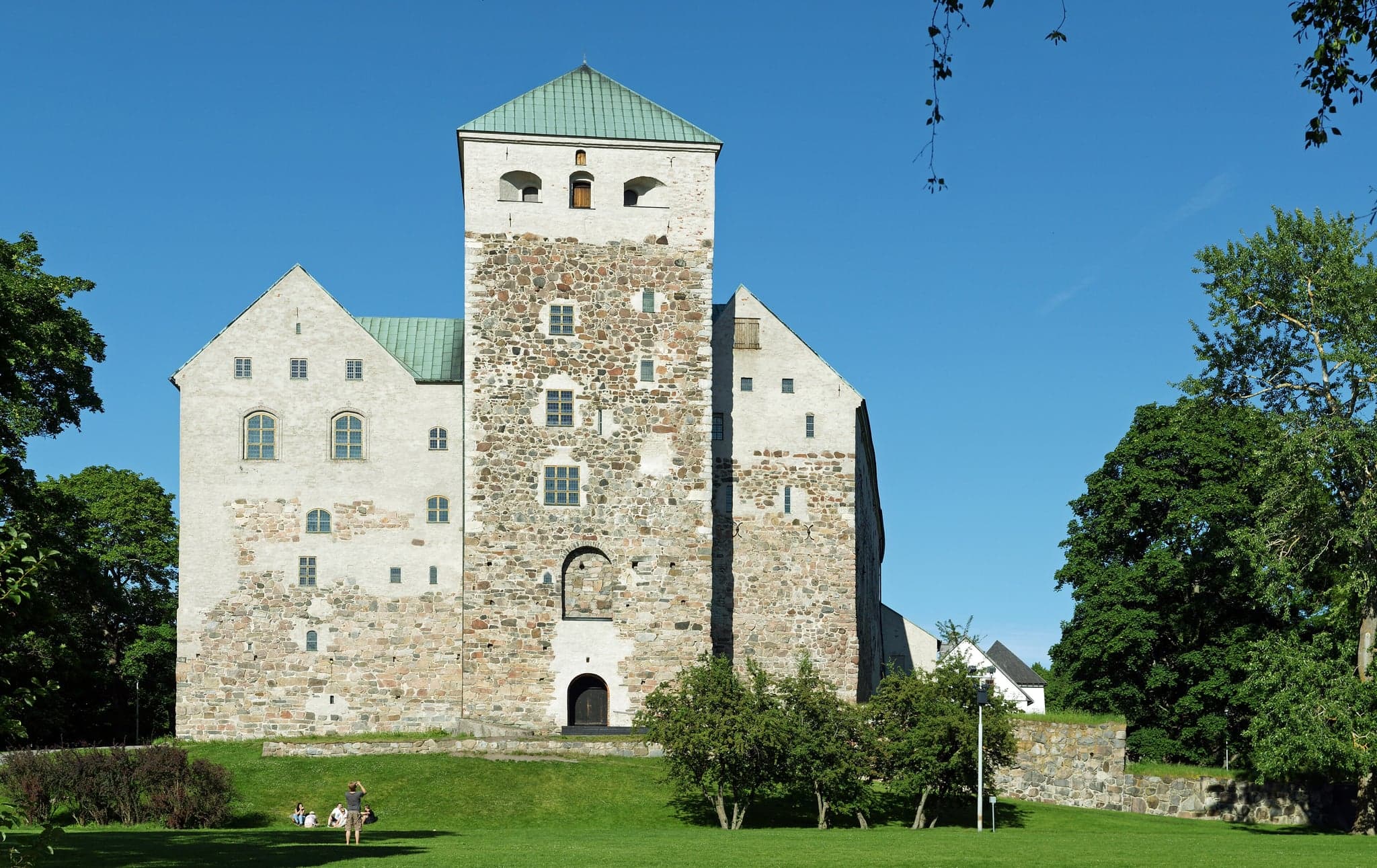
The main keep is a massive rectangular structure measuring roughly 65 meters in length and 30 meters in width. It features two prominent square gateway towers at the west and east ends. The western tower, known as the "heart tower," is a five-story stronghold with a firing gallery accessible through a single door, enhancing its defensibility. The interior courtyard is divided into upper and lower sections by a transverse partition, with residential wings on the northern and southern sides housing over 40 rooms, including the Nunn Chapel, which remains accessible to visitors today.
Defensive elements include narrow gunports and few large windows facing outward, while larger windows overlooking the courtyard allow more light inside. Decorative limestone from Gotland was used to accentuate some architectural details on the granite and brick construction, blending functionality with aesthetic touches.
Renaissance transformation under King John III
The castle's heyday occurred in the mid-16th century during the reign of King John III of Sweden, who was also Duke of Finland. Between 1556 and 1563, Turku Castle was transformed from a medieval fortress into a Renaissance-style palace and administrative center. This period saw the addition of the Renaissance Floor, the King and Queen Halls, and other enhancements that reflected the cultural richness of John III's court.
King John III married Polish princess Catherine Jagellon, who lived briefly at the castle, further emphasizing its international connections. The interior spaces were remodeled with vaulted ceilings and Renaissance-style decorations, marking a significant departure from the castle's earlier medieval austerity.
The castle’s role in Swedish-Finnish politics
During the 14th and 15th centuries, Turku Castle was a focal point in the power struggles within Sweden, enduring multiple sieges and changing hands. It served as a royal residence when Swedish kings visited Finland and functioned as a prison for notable captives, including Queen Karin Månsdotter and King Eric XIV and his family in the late 16th century.

Photo by Eteil • CC BY-SA 4.0
Decline, fire, and later uses
In 1614, a devastating fire during King Gustav II Adolf's visit destroyed much of the wooden structures of the main castle, leading to its abandonment as a royal residence. Subsequently, the castle was repurposed primarily for storage, including use as a granary, and parts of it stood empty.
During the 18th and 19th centuries, Turku Castle served various military functions, including as a prison, armory, and barracks. The prison cells in the outer bailey became notoriously overcrowded, with up to 20 inmates crammed into small cells. The last prisoners were removed in 1891, and by that time, the castle had begun its transition into a museum, with public access starting as early as 1881.
Damage and restoration in the 20th century
World War II brought significant damage to Turku Castle when Soviet air raids in 1941 destroyed roofs, floors, and the castle church, which dated to the 18th century. The restoration process began shortly after the war, led by architect Erik Bryggman and archaeologist Carl Jacob Gardberg. This extensive work aimed to restore both medieval and Renaissance elements while integrating modern facilities.
Restoration efforts included the installation of an elevator, construction of a lecture hall seating 120, and updated kitchen facilities. The castle courtyard now hosts a café and medieval-themed events, enhancing its role as a cultural venue. The surrounding public park frames the castle's silhouette within Turku's urban landscape, making it a prominent historical and tourist landmark.
Architectural layout and features
Turku Castle’s layout centers on the massive rectangular keep with thick granite and brick walls and two main gateway towers. The inner courtyard is divided into upper and lower sections, surrounded by residential wings and functional rooms such as the chapel, granaries, armory, brewery, smithy, shoemaker’s workshop, sauna, and prison cells.
The outer bailey, known as the Renaissance bailey or esilinna, was constructed between the late 15th and late 16th centuries. This fortified square complex includes several towers of varied shapes: a pentagonal tower in the north corner, a hexagonal tower in the southern wing, a quadrangular tower along the eastern wall, and a round artillery tower in the eastern corner. These additions reflect the castle's evolution to meet changing military technologies and administrative needs.
The castle church and interior spaces
The castle church, rebuilt in the great hall of the main keep in 1705–1706, was furnished with royal thrones dating from King Gustav III’s visit in 1775. It served the spiritual needs of the castle inhabitants until its destruction in 1941. Interior halls such as the King’s and Queen’s halls showcase Renaissance vaulted ceilings and decorative details, highlighting the castle’s dual military and residential functions.
Turku castle today
Today, Turku Castle is Finland's most visited museum, attracting up to 200,000 visitors annually. It serves not only as a historical monument but also as a venue for municipal functions and cultural events. Visitors can explore its extensive exhibition spaces, medieval architecture, and the surrounding park, gaining insight into Finland's medieval past and Renaissance heritage.
The castle’s preservation and adaptive reuse demonstrate a successful balance between historical authenticity and modern accessibility, making it a key destination for those interested in Nordic history, medieval architecture, and Renaissance culture.
Frequently asked questions (FAQ)
- What are the opening hours of Turku Castle?
- Turku Castle is open to visitors from 10 AM to 6 PM daily during the summer months, and from 10 AM to 4 PM during the winter season. It is advisable to check the official website for any seasonal changes or special holiday hours before planning your visit.
- What is the historical significance of Turku Castle?
- Turku Castle, built in the late 13th century, is one of the oldest surviving buildings in Finland and has served various roles throughout history, including a fortress and a royal residence. It played a crucial role in the defense of the region and is an important symbol of Finnish heritage and history.
- Can I access all areas of Turku Castle?
- While many areas of Turku Castle are open to the public, some sections may be restricted due to preservation efforts or ongoing renovations. However, the main exhibition halls and significant historical areas are fully accessible to visitors, providing a comprehensive experience of the castle's history.
- When is the best time to visit Turku Castle?
- The best time to visit Turku Castle is during the late spring and summer months, from May to August, when the weather is generally mild and pleasant. Additionally, during this period, the castle hosts various events and guided tours that enhance the visitor experience.
- Is Turku Castle accessible for visitors with disabilities?
- Yes, Turku Castle is committed to being accessible for all visitors. There are ramps and elevators in place to assist guests with mobility challenges, allowing access to the main exhibition areas and facilities.
- What are the ticket prices for Turku Castle?
- Ticket prices for Turku Castle typically range from €10 for adults, with discounts available for students and seniors. Children under the age of 7 can enter for free, making it an affordable option for families.
- Are there any nearby attractions to visit after Turku Castle?
- Yes, after visiting Turku Castle, you can explore nearby attractions such as the Turku Archipelago, the Turku Cathedral, and the Aboa Vetus & Ars Nova Museum. These sites offer a rich historical context and a glimpse into the vibrant culture of Turku.
Photo gallery


Information
Sources & official resources
Verify the information above using these authoritative references.
Loading map...
Visitor reviews
No reviews yet. Been here? Write the first review and help other travelers!
Write the first reviewVisited this castle? Share your experience
Your review helps other travelers and adds first-hand knowledge to our encyclopedia.