Stenberga Castle Ruins
Stenberga Castle Ruins are located near the town of Masku in Finland, representing a significant example of a late-medieval fortress from the 14th century. The castle's origins trace back to its probable construction by Jakob Abrahamsson, the bailiff of Turku, with the earliest written record dating to 1389. This places Stenberga among the medieval fortifications that played a role in the regional power dynamics of southwestern Finland during the Middle Ages.
The castle was strategically situated on a rocky hill near the Masku River, utilizing the natural elevation for defensive advantage. The surviving archaeological evidence suggests that the castle featured a substantial stone tower approximately 13 by 13 meters in size, which would have served as a keep or stronghold within the complex. This tower likely formed the central element of the castle's fortifications, providing both residential and defensive functions.
Historical context and ownership
Stenberga Castle was first mentioned in historical documents in 1389, indicating its established presence by the late 14th century. The castle's early history is closely linked to the administrative authority of Turku, one of Finland's most important medieval centers. Jakob Abrahamsson, credited with the castle's construction, held the position of bailiff, which was a significant role involving local governance and military responsibilities.
In 1438, the castle and its surrounding lands were donated as the site for the Naantali Bridgettines Abbey. This religious institution was part of the Bridgettine order, a monastic community that played an important role in medieval Finland's spiritual and cultural life. However, the abbey's presence at Stenberga was short-lived, as by 1443 it was decided to relocate the abbey to Ailos, a move that marked a shift in the castle's function and ownership.
Architectural features and layout
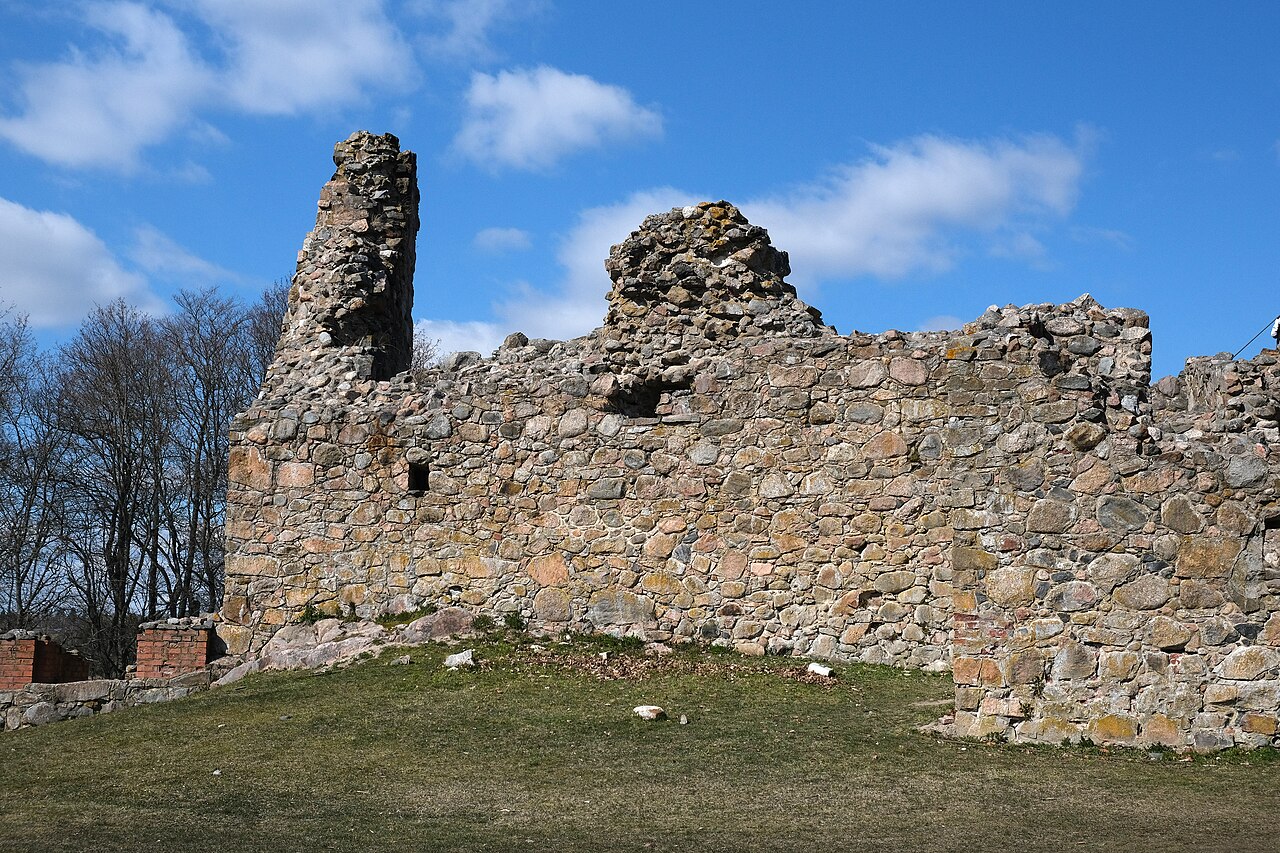
The castle's primary surviving feature is the remains of a stone tower measuring roughly 13 by 13 meters. This tower would have been a dominant structure within the castle, likely serving as a keep or donjon. Its robust stone construction reflects typical late-medieval defensive architecture in the region, designed to withstand sieges and provide a secure refuge.
While detailed plans of the entire castle complex are unavailable due to its ruined state, the location on a rocky hill near a river suggests a hill castle type, utilizing natural topography for defense. The proximity to the Masku River would have provided a natural moat-like barrier on one side, enhancing the castle's defensibility.
Given the era and regional practices, the castle likely included additional wooden or stone fortifications such as curtain walls, gatehouses, and possibly a bailey, although these have not survived or been extensively excavated.
Archaeological significance and current condition
Today, Stenberga Castle remains as archaeological ruins, with limited above-ground structures preserved. The site offers valuable insights into medieval Finnish castle construction and regional history. Archaeological studies have focused on the stone foundation of the tower and the castle's placement within the landscape.
The ruins are accessible to visitors interested in medieval history and castle architecture, though the site lacks extensive reconstruction or visitor facilities. Preservation efforts aim to maintain the remaining stonework and protect the site from further degradation.
Cultural importance and legacy
Stenberga Castle holds a notable place in Finland's medieval heritage, illustrating the intersection of military, administrative, and religious functions in the late Middle Ages. Its connection to the Naantali Bridgettines Abbey links it to broader European monastic networks and the spread of religious orders in the Nordic countries.
Although largely in ruins, the castle continues to attract historians, archaeologists, and tourists interested in the medieval period and Finnish history. The site contributes to understanding the development of fortifications in Finland and the region's historical landscape.
Frequently asked questions (FAQ)
- How do I get to Stenberga Castle Ruins?
- Stenberga Castle Ruins is located in Masku, Finland, easily accessible by car or public transport. The nearest bus stops are within a short walking distance, and parking is available nearby for those who choose to drive.
- What is the historical significance of Stenberga Castle Ruins?
- Stenberga Castle Ruins date back to the 14th century and are a testament to the medieval history of Finland. The castle played a vital role in regional defense and governance, reflecting the architectural styles and strategic importance of the time.
- When was Stenberga Castle built?
- Stenberga Castle was constructed in the late 14th century, specifically around 1370. It was built during a period of political unrest and served as a fortification for local nobility.
- Can I visit Stenberga Castle Ruins year-round?
- Yes, Stenberga Castle Ruins are open to visitors year-round. However, some areas may be less accessible during the winter months due to snow and ice, so it's best to check local conditions before planning your visit.
- Why is Stenberga Castle Ruins a popular tourist destination?
- Stenberga Castle Ruins attract visitors due to their rich history and picturesque setting. The ruins provide a glimpse into Finland's medieval past, making it a fascinating destination for history enthusiasts and photographers alike.
- Is it possible to explore the ruins on my own?
- Yes, visitors can explore Stenberga Castle Ruins at their leisure. There are no guided tours, allowing for a personal experience while taking in the historical architecture and surrounding nature.
- What are the opening hours for Stenberga Castle Ruins?
- Stenberga Castle Ruins are generally open from sunrise to sunset, providing ample time for exploration. It's advisable to check local listings for any seasonal changes in hours.
- Are there any ticket prices to visit Stenberga Castle Ruins?
- Visiting Stenberga Castle Ruins is free of charge, making it an accessible destination for all. Donations are appreciated to help maintain the site and preserve its historical significance.
- What is the best time to visit Stenberga Castle Ruins?
- The best time to visit Stenberga Castle Ruins is during the late spring to early autumn months, when the weather is mild and the surrounding landscape is lush. This period offers the best conditions for outdoor exploration and photography.
- What nearby attractions should I consider visiting?
- In addition to Stenberga Castle Ruins, nearby attractions include the Masku Church and the beautiful natural scenery of the region. Visitors can also explore local hiking trails and enjoy the tranquil Finnish countryside.
Information
Loading map...
Visitor reviews
No reviews yet. Been here? Write the first review and help other travelers!
Write the first reviewVisited this castle? Share your experience
Your review helps other travelers and adds first-hand knowledge to our encyclopedia.