Turaida
Turaida Castle stands as a prominent example of a medieval hill castle in Latvia, located in the municipality of Sigulda within the Siguldas novads region. Founded in the early 13th century, this fortress was constructed under the direction of Archbishop Albert of Riga in 1214, following the Livonian Crusades and the Christianization efforts in the Baltic region. It was built on the site of a former wooden stronghold belonging to the Livonian chieftain Kaupo of Turaida, which had been destroyed during earlier conflicts. The castle's strategic placement on a high ridge overlooking the Gauja River provided natural defenses, complemented by man-made fortifications such as moats and thick curtain walls.
The origins and historical significance of Turaida castle
The castle was originally intended as a stronghold for the Archbishopric of Riga to assert control over the right bank of the Gauja River, counterbalancing the nearby Sigulda Castle held by the Livonian Order on the left bank. Its construction marked a significant phase in the High Medieval period of Baltic history, reflecting the military and religious tensions between the Archbishopric and the Livonian Order, successors of the Sword Brothers. Throughout the 13th to 16th centuries, Turaida Castle was a focal point in numerous military engagements, including the notable Battle of Treiden in 1298, when the castle was besieged and captured by the Teutonic Knights after an eight-day siege.
Despite frequent conflicts, the castle was never seriously damaged, with repairs and expansions undertaken regularly to maintain its defensive capabilities. Over time, it evolved from a simple brick fortress into a complex with multiple towers, residential buildings, and outer baileys, adapting to changes in military technology such as the introduction of firearms in the 15th and 16th centuries.
Architectural evolution and features
Initial construction and defensive design
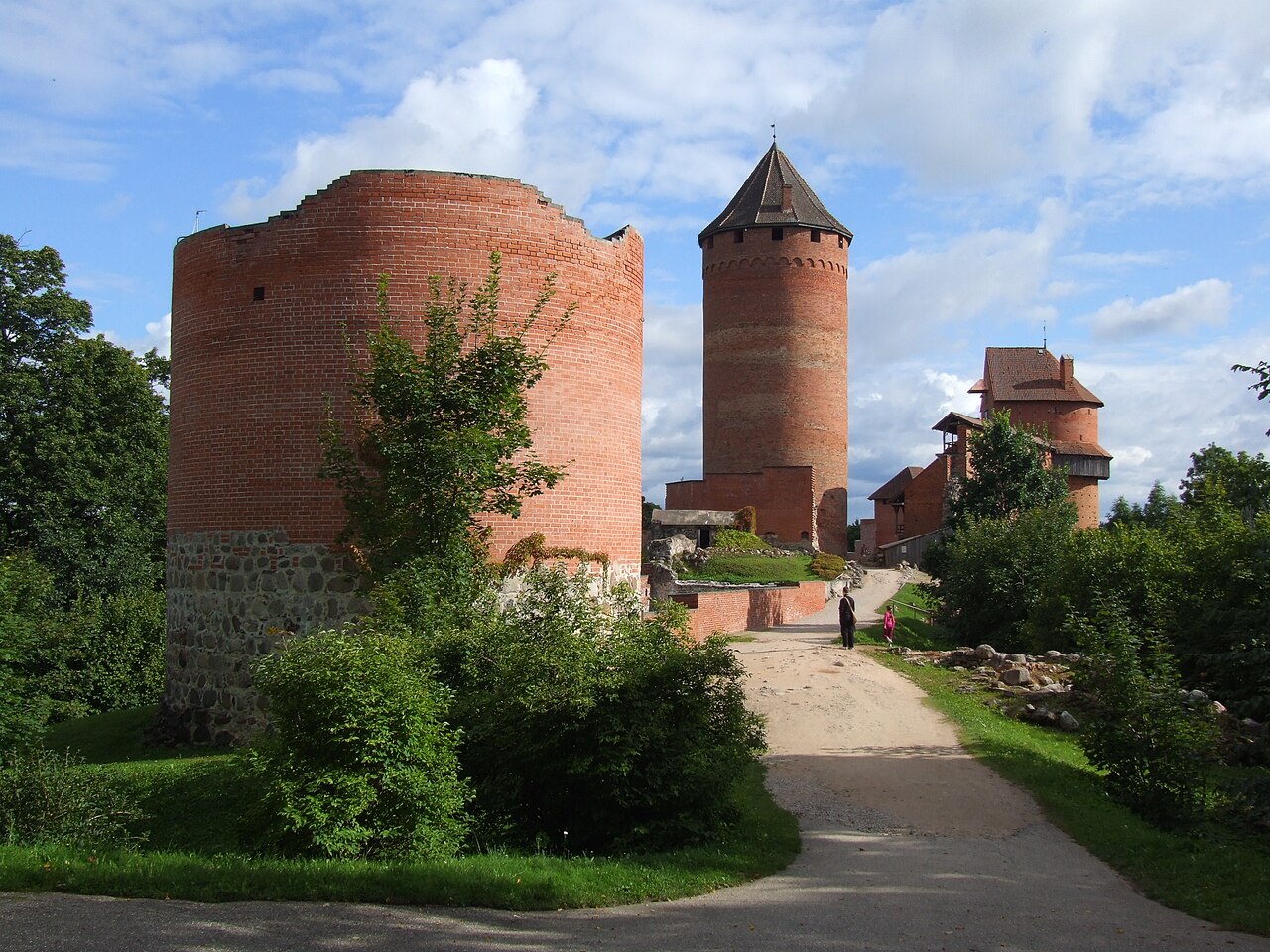
The earliest phase of Turaida Castle featured brick curtain walls forming an irregular polygon that conformed to the natural shape of the ridge. The castle's main defensive structure was a massive round bergfried tower, approximately 13 meters in diameter and over 30 meters tall, with walls about 3 meters thick. This tower had its entrance positioned nearly 9.5 meters above ground level, a typical feature designed to hinder attackers. The top of the tower was crowned with a conical tiled roof and crenellated battlements, serving as a platform for defenders.
The castle courtyard was irregularly shaped, containing residential buildings including a residential wing with late Romanesque cross vaulting, indicative of the combined defensive and domestic functions of the fortress. The castle was built primarily of red brick, a distinctive material choice for bishop’s castles in the region, set on foundations of mortared fieldstones.
Later expansions and adaptations
Between the late 13th and early 14th centuries, additional buildings were added along the eastern and northern curtain walls, including a square residential tower in the southern courtyard and a small outer bailey to the south. The 15th century saw significant modifications to accommodate the use of gunpowder weaponry, with the addition of a five-story semi-circular tower on the western wall and a two-story residential building adjacent to it. A large round cannon tower was constructed in the early 16th century on the northwest corner, featuring thick walls designed to withstand artillery fire.
The northern entrance was reinforced with a long outer bailey featuring two cylindrical towers at its end, while the southern outer bailey was also strengthened with a small tower. Defensive walls were heightened during this period to improve protection against evolving siege tactics.
Military and administrative role through the centuries
Throughout its history, Turaida Castle served as a military fortress, administrative center, and residence for the bishops and later archbishops of Riga. Although the bishops rarely resided there permanently, their appointed governors managed the castle and its surrounding lands. The castle witnessed multiple occupations by the Livonian Order and later the Teutonic Knights, reflecting the shifting power dynamics in the region.
Following the dissolution of the Archbishopric and the incorporation of Livonia into the Polish-Lithuanian Commonwealth, the castle became the seat of a royal starost. Ownership passed to private hands in the late 16th century, and the castle's military importance declined. In 1600, it was occupied by Swedish forces during the Polish-Swedish wars, marking the end of its strategic military role.
Decline, destruction, and restoration
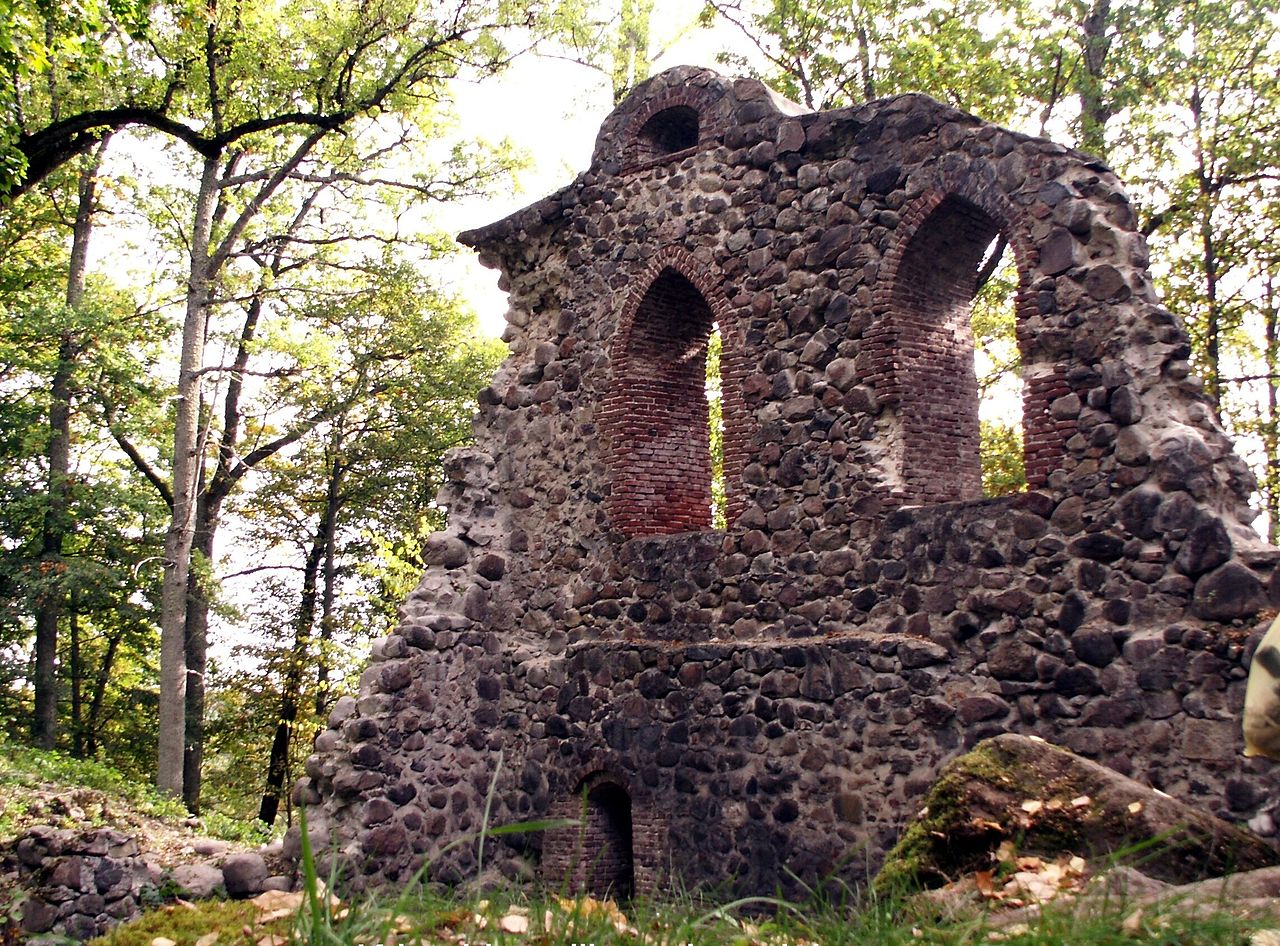
The castle remained inhabited until a devastating fire in 1776 destroyed much of the structure, leaving it in ruins. For nearly two centuries, it stood abandoned and deteriorated, with stones removed for local construction and parts of the site becoming overgrown. Archaeological excavations began in the 1950s under Soviet administration, uncovering extensive remains and informing restoration efforts.
From the 1970s onwards, careful reconstruction projects restored key elements including the main bergfried tower, the western curtain wall, the semi-circular western tower, and the southern gate tower. These restorations have made Turaida Castle a major cultural and tourist attraction within Gauja National Park. Visitors can explore the castle ruins, enjoy panoramic views from the tower, and learn about the site's rich history at the on-site museum.
Architectural highlights and visitor experience
Turaida Castle’s layout is characterized by its adaptation to the natural topography, with steep slopes on three sides and the Gauja River encircling the southern edge. The castle’s irregular polygonal plan, extensive curtain walls, and multiple defensive towers illustrate the evolution of medieval military architecture in the Baltic region.
The main bergfried tower remains the most striking feature, standing over 30 meters tall with thick walls and a high entrance, accessible by a narrow stone staircase inside. From its viewing platform, visitors can admire sweeping vistas of the river valley and surrounding forest.
The castle grounds include reconstructed residential buildings and defensive structures, as well as an outer bailey with museum exhibitions that showcase medieval life, weaponry, and the castle’s historical context. The surrounding Gauja National Park offers additional attractions such as hiking trails, a cable car, and cultural landmarks including the nearby wooden church and Livonian cemetery.
Legacy and cultural importance
Turaida Castle is a symbol of Latvia’s medieval heritage and a testament to the complex history of the Baltic region during the High Medieval period. Its preservation and restoration have made it an educational resource and a popular destination for tourists interested in history, architecture, and nature.
The castle also holds a place in Latvian folklore, notably the legend of Maija, the Rose of Turaida, whose story is commemorated nearby with a sculpture park. This cultural significance enriches the visitor experience and connects the site to national identity.
Overall, Turaida Castle exemplifies the architectural ingenuity and historical resilience of medieval fortifications in Northern Europe, offering insights into the military, religious, and social dynamics of its era.
Frequently asked questions (FAQ)
- How do I get to Turaida Castle?
- Turaida Castle is located about 50 kilometers from Riga, Latvia. You can reach it by car or take a bus from the capital to Sigulda, followed by a short walk or bike ride to the castle.
- What is the historical significance of Turaida Castle?
- Turaida Castle, built in the 13th century, is a vital part of Latvia's medieval history, serving as a stronghold for the Livonian Order. It has witnessed numerous historical events and is a symbol of the region's cultural heritage.
- When was Turaida Castle built?
- Turaida Castle was originally constructed in 1214 and has undergone several renovations over the centuries. Its current structure reflects the architectural style of the late medieval period.
- Can I take guided tours at Turaida Castle?
- Yes, guided tours are available at Turaida Castle, offering visitors insights into its history and architecture. These tours are conducted in multiple languages and provide a comprehensive understanding of the castle's significance.
- Why is Turaida Castle a popular tourist destination?
- Turaida Castle attracts visitors due to its beautiful setting in the Gauja National Park and its well-preserved medieval architecture. The castle also hosts various cultural events and exhibitions throughout the year, enhancing the visitor experience.
- Is it possible to access Turaida Castle with limited mobility?
- Turaida Castle has made efforts to improve accessibility for visitors with limited mobility. While some areas may be challenging to navigate, there are pathways and facilities designed to accommodate all guests.
- What are the opening hours for Turaida Castle?
- Turaida Castle is generally open to visitors from 10 AM to 6 PM during the summer months, with shorter hours in winter. It's advisable to check the official website for any seasonal changes or special closures.
- What are the ticket prices for Turaida Castle?
- Ticket prices for Turaida Castle vary based on age and group size, with discounts available for students and seniors. Typically, entrance fees are quite reasonable, making it accessible for families and groups.
- What are some nearby attractions to visit while at Turaida?
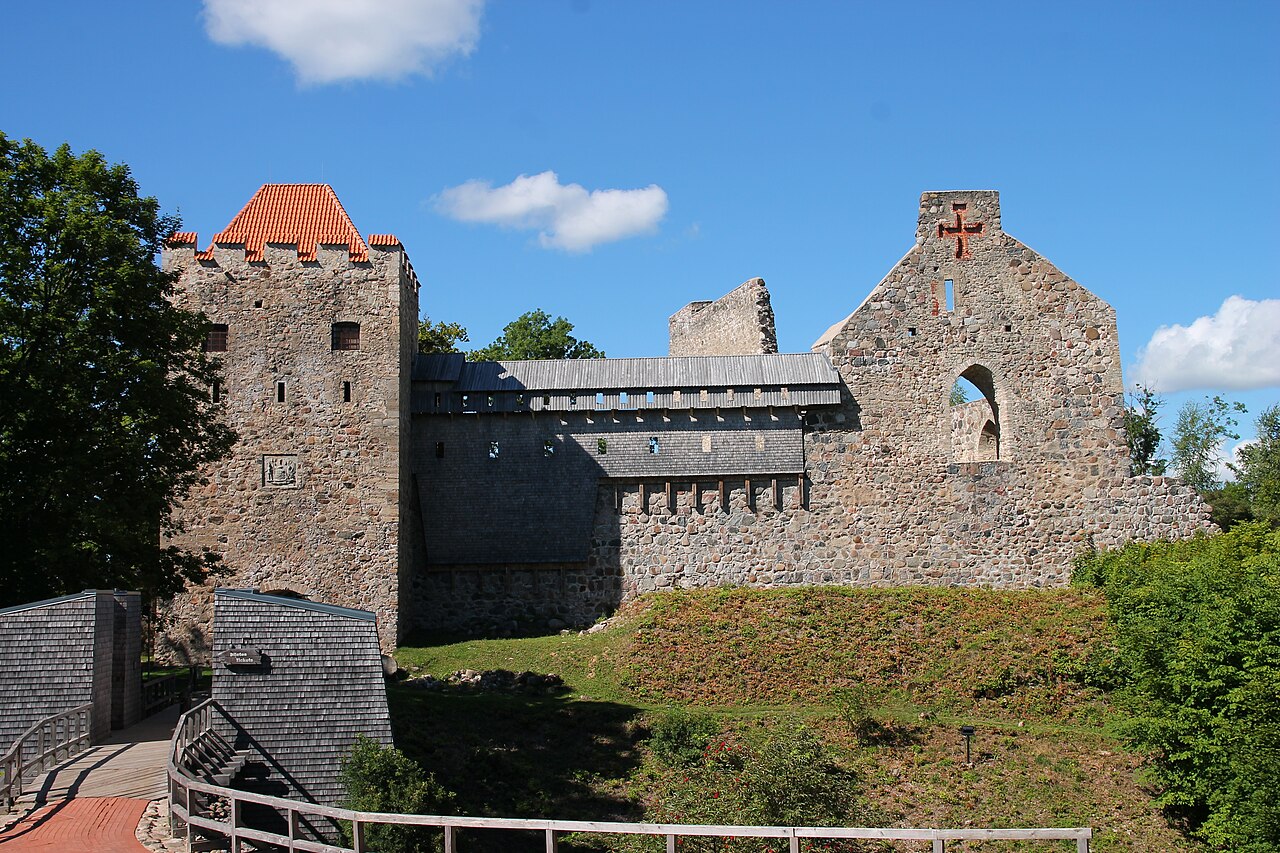
- While visiting Turaida Castle, you can also explore the nearby Gauja National Park, which offers stunning natural scenery and hiking trails. Additionally, the Sigulda Medieval Castle and the bobsled track are popular attractions nearby.
Information
Website
Visit websiteSources & official resources
Verify the information above using these authoritative references.
Loading map...
Visitor reviews
No reviews yet. Been here? Write the first review and help other travelers!
Write the first reviewVisited this castle? Share your experience
Your review helps other travelers and adds first-hand knowledge to our encyclopedia.