Sigulda
Sigulda Castle, located in the town of Sigulda, Latvia, is a significant historical and architectural monument that dates back to the early 13th century. Founded by the Livonian Brothers of the Sword beginning in 1207, this late-medieval hill castle was strategically built on a promontory formed by the Gauja River and two deep ravines, providing natural defense on three sides. The castle’s location was chosen to control river routes and to serve as a military stronghold against rivals, particularly the neighboring Turaida Castle on the opposite bank.
The castle’s initial construction was a castellum-type fortification featuring a regular rectangular courtyard surrounded by a robust perimeter wall. The earliest surviving architectural element is a vaulted basement beneath the residential building, with walls nearly three meters thick and supported by a central column, demonstrating early Romanesque masonry techniques. Over the centuries, Sigulda Castle evolved into a convent-style fortress typical of the Livonian Order, with three wings enclosing the courtyard, a chapel in the western wing, and defensive features such as machicolations and embrasures adapted for firearms.
Historical context and strategic importance
The castle’s foundation is tied to the 1207 agreement between the Livonian Brothers of the Sword and the Bishop of Riga Albert, wherein the order was granted control over the left bank of the Gauja River in exchange for military campaigns against pagan tribes. This made Sigulda the first castle built by the order outside Riga, marking the expansion of their influence in the region.
In 1236, following the defeat of the Brothers of the Sword, the castle came under the control of the Livonian Order, a branch of the Teutonic Knights. It became the seat of a komture (commander) and later the residence of the Land Marshal from 1432 to 1560, who was the second highest official after the Grand Master. Sigulda Castle was integral to controlling the Koiva corridor, an important passage in Livonia.
The castle was frequently involved in regional conflicts, including the 1316 Sigulda conspiracy against the Archbishop of Riga and raids by Lithuanian forces in 1345. It also served as a prison for high-ranking clerics amid ongoing disputes between the order and the archbishopric, notably detaining Archbishop Albert II for nearly two years until a settlement was reached in 1271.
Architectural features and defensive structures
Layout and fortifications
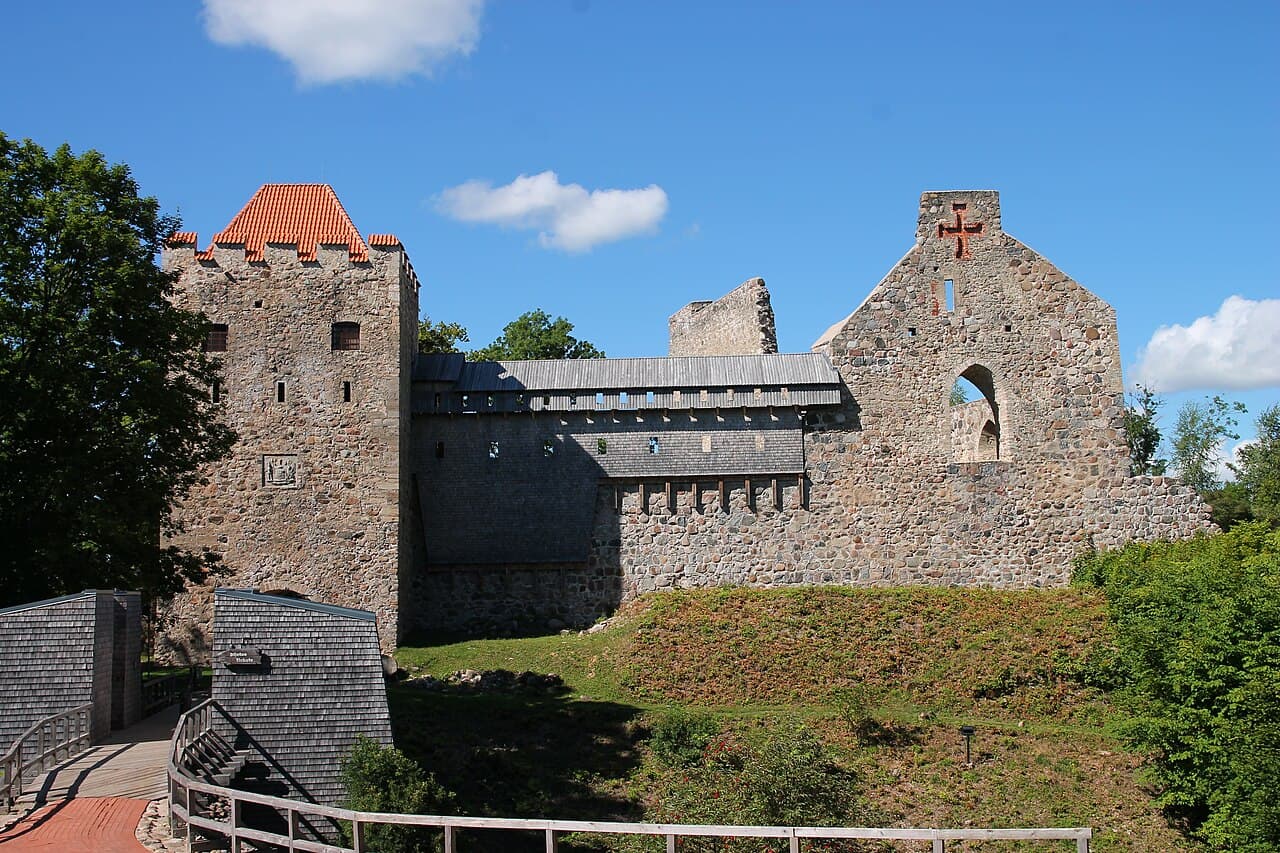
Sigulda Castle’s design took full advantage of the natural landscape. The steep slopes and the river formed a formidable barrier, complemented by an 18-meter deep moat on the fourth side. The curtain walls, approximately two meters thick, enclosed the courtyard and were reinforced by towers, including the well-preserved Koiva Tower on the northwest corner and a massive square gate tower built around 1400.
The gate tower, measuring about 10.5 meters square and over 12 meters tall, featured a wide gate opening, arrow slits, and windows for surveillance and defense. Originally connected to the fore-castle by a drawbridge over the moat, it controlled access to the inner castle. The fore-castle itself was protected by a 500-meter-long defensive wall with three bastions and included a fortified bailey with residential and service buildings.
Conventual buildings and chapel
The castle’s main residential building was rectangular with walls nearly three meters thick, constructed from carefully hewn stone blocks. It contained multiple floors: the ground floor housed utility rooms, the first floor held representative chambers, and the upper floor served as storage and defensive positions with firing slits. Communication between floors was facilitated by an external wooden gallery.
The castle chapel, located in the southern part of the western wing, featured Gothic lancet windows and a distinctive cross-shaped niche on the wall. The chapel and adjacent chapter hall were central to the spiritual and administrative life of the castle.
Later history and decline
After the secularization of the Livonian Order’s territories in 1561, Sigulda Castle became part of the Duchy of Livonia under Polish-Lithuanian rule. It suffered significant damage during the Livonian War (1558–1582), particularly from Russian forces under Tsar Ivan IV, who burned the castle twice. Subsequent occupations by Swedish troops in 1601 led to further destruction, and the castle was abandoned as a residence and military fortress.
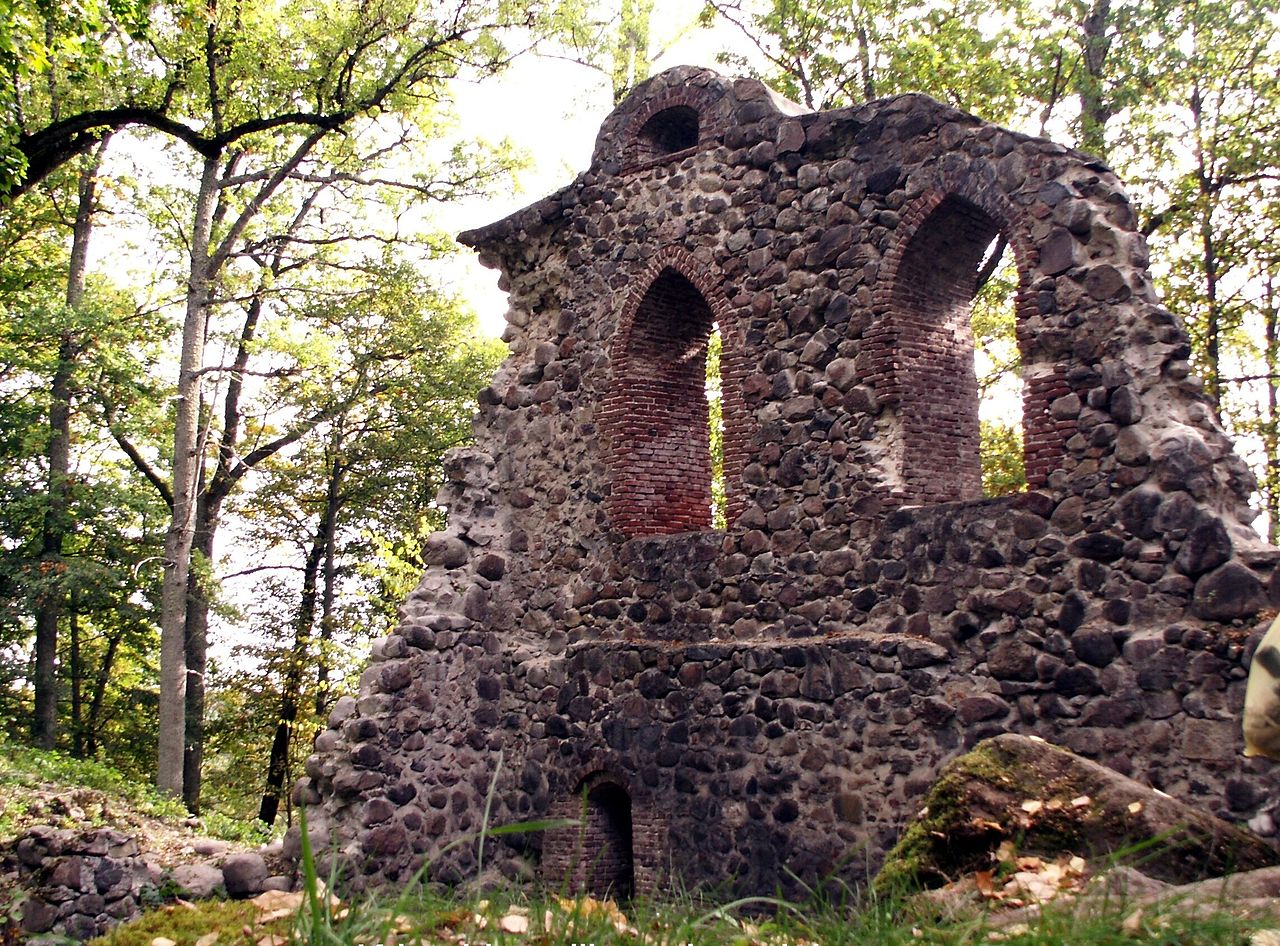
The Great Northern War in the early 18th century inflicted additional damage, leaving the castle in ruins. From the 18th century onwards, the site was incorporated into private estates, including ownership by Russian military commanders and the von der Borch family. The ruins became part of a romantic landscape park, with some building materials repurposed for nearby manor houses.
Sigulda new castle and manor complex
Adjacent to the medieval ruins lies the Sigulda New Castle, a neo-gothic manor house constructed between 1878 and 1881 by Duke Dmitry and Duchess Olga Kropotkin. Built on the site of a 17th-century fore-castle, it incorporates stones from the medieval ruins, giving the walls a distinctive textured appearance.
The New Castle features a simple, clear architectural plan designed by master builder Jānis Meņģelis from Cēsis. Its most notable feature is a viewing tower elevated during 1936–1937 renovations, providing panoramic views of the Gauja valley and nearby castle ruins such as Krimulda and Turaida. The manor’s interior was artistically redesigned in the 1930s by prominent Latvian artists, showcasing national modern style elements that made it a cultural landmark in the Baltic region.
The estate includes several preserved auxiliary buildings from the 18th and 19th centuries, such as the Summer Castle (a wooden classical style building originally used as an Orthodox church), the White Castle, the vagar’s house, servants’ quarters, and various utility structures. The entire manor complex is enclosed by chipped boulder walls with an ornate gate.
During the 20th century, the New Castle served various roles: a retreat for Latvian writers and journalists, a German army headquarters in World War II, a Soviet sanatorium, and later the seat of local government. Today, it remains an important cultural and historical site, hosting exhibitions and events.
Current condition and visitor experience
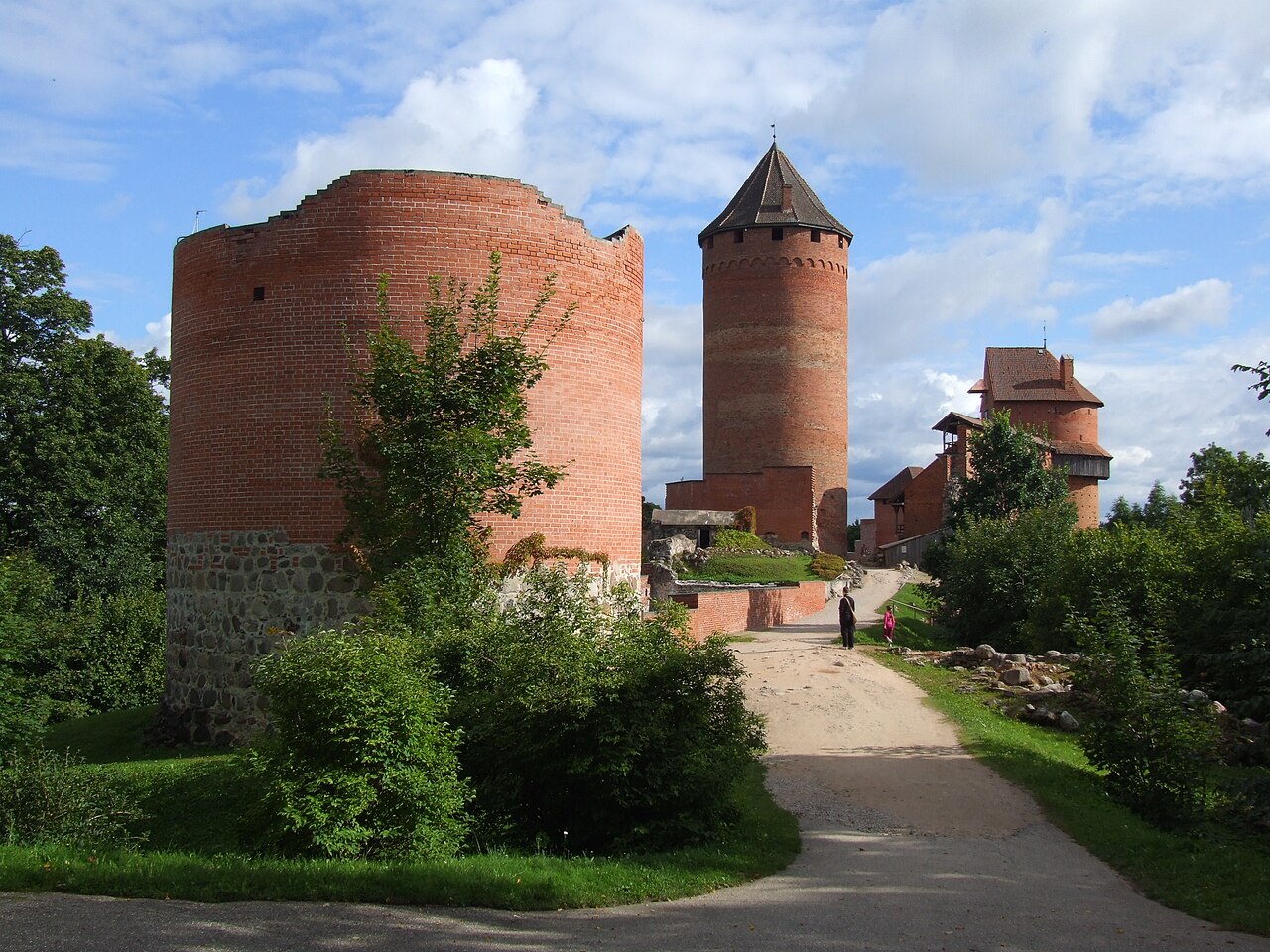
Today, Sigulda Castle stands as well-preserved ruins that reveal its medieval military architecture and historical significance. Visitors can explore the surviving gate tower, parts of the western wing with the chapel, and the fortified walls of the fore-castle with its towers. The site offers scenic views over the Gauja River valley and the nearby Turaida Castle.
The Sigulda New Castle manor complex complements the medieval ruins by providing insight into the region’s later aristocratic history and architectural evolution. Its artistic interiors and surrounding parkland create a rich cultural experience. The adjacent sand art gallery in the former brewery adds a contemporary artistic dimension to the historic estate.
Overall, Sigulda Castle and New Castle together offer a comprehensive glimpse into Latvia’s medieval military past and its 19th to 20th-century cultural heritage, making it a prominent destination for history enthusiasts and tourists alike.
Frequently asked questions (FAQ)
- How do I get to Sigulda Castle?
- Sigulda Castle is located in Sigulda town, Latvia. It is accessible by car, bus, or train from Riga, with clear signage directing visitors to the castle site.
- What is the best time to visit Sigulda Castle?
- The best time to visit Sigulda Castle is during late spring to early autumn (May to September) when the weather is mild and the surrounding Gauja valley is lush and green.
- Can I explore the ruins of Sigulda Castle?
- Yes, visitors can explore the well-preserved ruins of Sigulda Castle, including the gate tower, chapel remains, and defensive walls, with informational signs throughout the site.
- Is there an entrance fee to visit Sigulda Castle?
- Yes, there is an entrance fee of €5 for adults and €3 for children. Tickets can be purchased at the site entrance.
- Are there guided tours available at Sigulda Castle?
- Guided tours are available on request and can provide detailed historical and architectural insights into the castle’s significance and features.
- What other attractions are near Sigulda Castle?
- Nearby attractions include Turaida Castle, Krimulda Castle ruins, and the Gauja National Park, all offering rich historical and natural experiences.
Photo gallery

Information
Opening hours
9:00-18:00, daily
Ticket prices
€5 adult, €3 child
Current owner
Municipality
Website
Visit websiteSources & official resources
Verify the information above using these authoritative references.
Loading map...
Visitor reviews
No reviews yet. Been here? Write the first review and help other travelers!
Write the first reviewVisited this castle? Share your experience
Your review helps other travelers and adds first-hand knowledge to our encyclopedia.