Turaida Castle
Turaida Castle stands as a remarkable example of a medieval hill castle located in the picturesque region of Turaida, Latvia. Constructed in the early 13th century, this fortress played a crucial role in the defense and administration of the area during the High Medieval period. The castle's ruins today offer a vivid glimpse into the architectural and historical heritage of the Baltic region.
Historical background and significance
The origins of Turaida Castle date back to around 1214, when it was built by the Livonian Brothers of the Sword, a military order tasked with the Christianization and control of the Baltic territories. The castle was strategically positioned on a hill overlooking the Gauja River, providing commanding views and natural defensive advantages. Throughout the medieval era, it served as a vital stronghold for the order and later the Livonian Order, facilitating control over trade routes and local populations.
During its active use, Turaida Castle witnessed numerous conflicts, including sieges and battles related to the power struggles in the Baltic region. Its strategic importance declined after the 16th century, and it eventually fell into disrepair, leading to its current status as ruins that attract visitors and historians alike.
Architectural features and construction
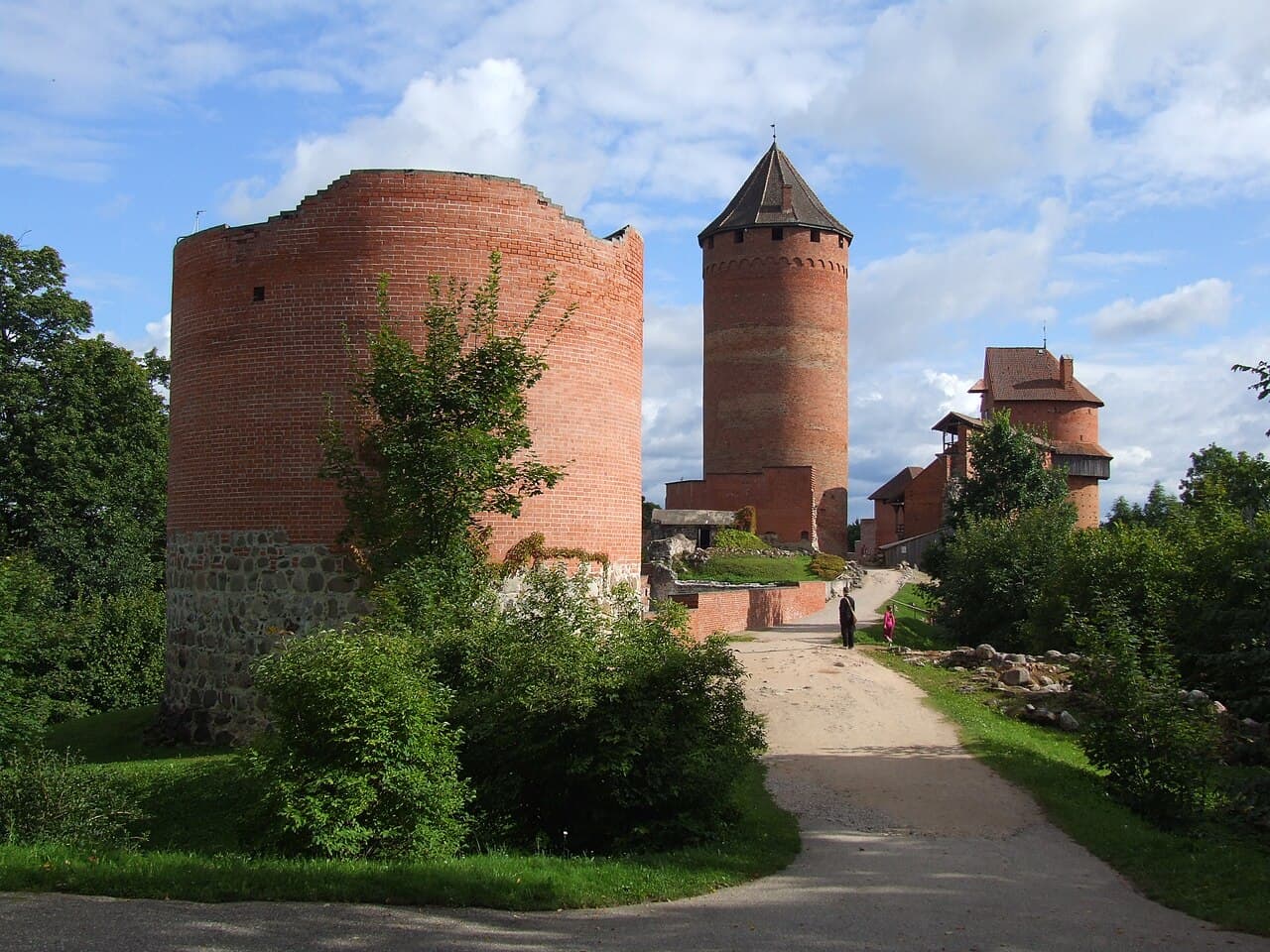
Turaida Castle is renowned for its red brick Gothic architecture, a style typical of the Baltic region during the High Medieval period. The castle was originally designed as a hill castle with a compact layout focused on defense and functionality.
Defensive structures
The castle's defensive system included a high curtain wall surrounding the complex, fortified with towers that provided vantage points for archers and lookouts. The main gatehouse was heavily fortified, controlling access to the inner courtyard. A moat and natural river barriers further enhanced its defenses.
Keep and living quarters
At the heart of the castle stood a stone keep, serving as the last refuge in case of attack and housing the lord's chambers. Adjacent buildings accommodated the garrison, administrative offices, and storage facilities. The castle's interior spaces were designed to support both military and residential functions.
Cultural and heritage importance
Today, Turaida Castle is a significant cultural monument and a symbol of Latvian medieval history. Its ruins have been partially conserved and stabilized to allow safe public access and educational tours. The site includes a museum that showcases artifacts and exhibits related to the castle's history, the Livonian Order, and medieval Baltic life.
The castle is also a focal point for various cultural events, reenactments, and festivals that celebrate Latvia's rich heritage. Its scenic location in the Gauja National Park makes it a popular destination for tourists interested in history, architecture, and nature.
Visiting Turaida Castle
Visitors to Turaida Castle can explore the extensive ruins, climb the remaining towers for panoramic views, and learn about the castle's past through informative displays. The surrounding parkland offers walking trails and picnic areas, enhancing the visitor experience.
Access is generally available throughout the year, with guided tours offered during the tourist season. Facilities include a small café and a gift shop featuring local crafts and historical souvenirs.
Architectural legacy and influence
Turaida Castle exemplifies the typical features of Gothic military architecture in the Baltic region, influencing later fortifications in Latvia and neighboring countries. Its use of red brick and stone, combined with practical defensive elements, reflects the adaptation of Western European castle-building techniques to local conditions.
The castle's preservation as ruins allows for ongoing archaeological research, providing valuable insights into medieval construction methods, daily life, and the military history of the region.
Frequently asked questions (FAQ)
- When was Turaida Castle built?
- Turaida Castle was constructed around 1214 by the Livonian Brothers of the Sword during the High Medieval period.
- What architectural style characterizes Turaida Castle?
- The castle is known for its red brick Gothic architecture, typical of the Baltic region in the High Medieval period.
- Can visitors explore the castle ruins?
- Yes, visitors can explore the well-preserved ruins, climb towers, and enjoy panoramic views of the Gauja River valley.
- Is there a museum at Turaida Castle?
- Yes, the castle site includes a museum with exhibits on medieval history, the Livonian Order, and local culture.
- What is the best time to visit Turaida Castle?
- The castle is accessible year-round, but the best time to visit is during the warmer months when guided tours and cultural events are held.
Photo gallery

Information
Current owner
State museum
Loading map...
Visitor reviews
No reviews yet. Been here? Write the first review and help other travelers!
Write the first reviewVisited this castle? Share your experience
Your review helps other travelers and adds first-hand knowledge to our encyclopedia.