Tuileries Palace
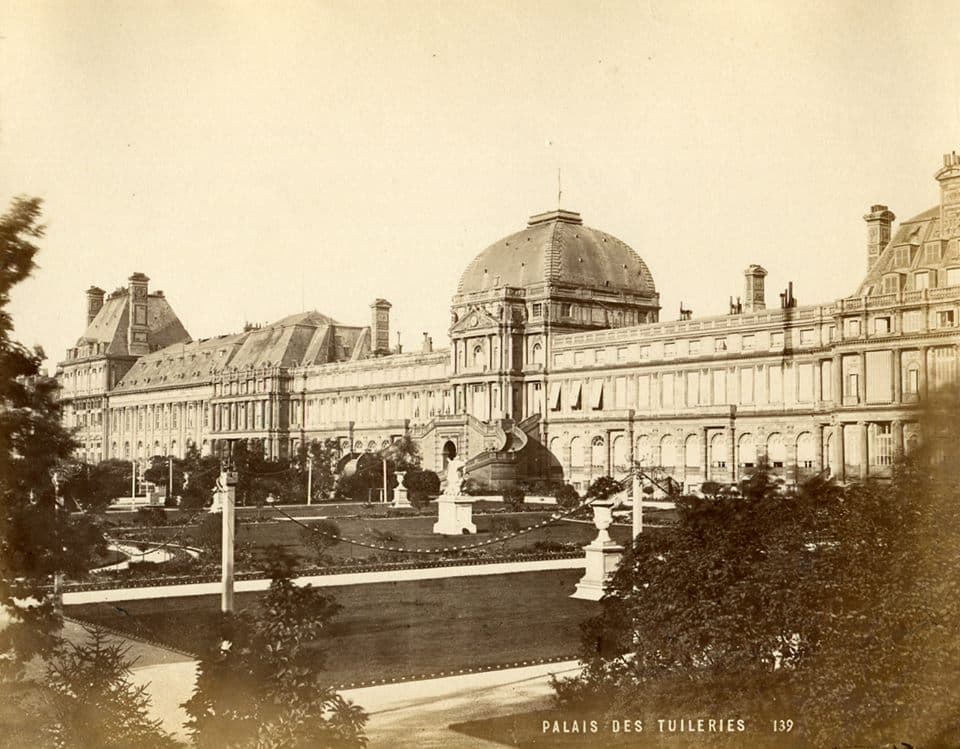
The Tuileries Palace (French: palais des Tuileries) was a prominent Renaissance palace located in Paris, France, on the right bank of the Seine River. It stood directly west of the Louvre Palace, forming a grand architectural ensemble that served as the royal residence for many French monarchs from Henri IV through to Napoleon III. The palace was a significant symbol of French monarchical power and architectural ambition during the 16th to 19th centuries.
Construction of the palace began in 1564 under the commission of Queen Catherine de' Medici, who sought a grand residence away from the Louvre. The original design was attributed to the architect Philippe Lescot, who introduced early Renaissance elements to the structure. Over the next two centuries, the palace underwent numerous expansions and renovations, reflecting evolving architectural styles and the changing needs of its royal inhabitants. By the 17th century, the palace had been extended to enclose the western end of the Louvre courtyard, featuring an impressive façade stretching approximately 266 metres.
Architectural development and style
The Tuileries Palace was a prime example of renaissance architecture in France, showcasing symmetry, classical proportions, and ornamental details inspired by Italian Renaissance models. The palace's layout included multiple wings arranged around courtyards, with richly decorated interiors, grand staircases, and expansive galleries. The façade facing the courtyard was characterized by rows of evenly spaced windows, pilasters, and sculptural elements that emphasized the palace's monumental scale.
Throughout the 17th and 18th centuries, the palace was modified to include elements of French classical architecture, with architects such as Louis Le Vau and Jules Hardouin-Mansart contributing to its design. These modifications enhanced the palace's grandeur and integrated it more closely with the adjacent Louvre complex. The Tuileries also featured extensive gardens, later developed into the Tuileries Garden, a public park that remains a significant green space in Paris today.
Historical significance and royal residence
The Tuileries Palace served as the primary Parisian residence for French monarchs for over three centuries. It was the home of Henri IV, who made significant improvements to the palace and gardens, and subsequent rulers including Louis XIII, Louis XIV, and Napoleon Bonaparte. The palace was not only a royal residence but also a political center where important decisions and events unfolded.
During the French Revolution, the palace was a focal point of political turmoil. It was stormed by revolutionaries in 1792, marking a critical moment in the fall of the monarchy. Later, under the Second Empire, Napoleon III restored the palace as an imperial residence, reinforcing its status as a symbol of power.
Destruction and current state
In 1871, during the upheaval of the Paris Commune, the Tuileries Palace was set ablaze and suffered extensive damage. The fire gutted much of the building, leaving it in ruins. The remains stood for over a decade before being demolished in 1883, as part of efforts to clear the site and reshape the urban landscape of Paris.
Today, the palace no longer exists, and the site forms an open space that connects the Place du Carrousel with the Tuileries Garden. The area serves as an elevated terrace offering views over the gardens and the Louvre. Archaeological remnants of the palace occasionally surface, reminding visitors of the site's historical importance.
Legacy and cultural impact
The Tuileries Palace remains a significant subject of study for historians and architects interested in French Renaissance and classical architecture. Its role in French history, from royal residence to revolutionary battleground, reflects the complex political and cultural shifts of France over several centuries. The palace's destruction marked the end of an era in Parisian architectural history, yet its influence endures in the surrounding urban fabric and in the collective memory of the city.
The adjacent Tuileries Garden continues to attract visitors worldwide, offering a glimpse into the grandeur that once characterized the palace grounds. The site's transformation from royal residence to public space illustrates the dynamic evolution of Paris through history.
Frequently asked questions (FAQ)
- When was the Tuileries Palace constructed?
- Construction of the Tuileries Palace began in 1564 under Queen Catherine de' Medici as a royal residence in Paris.
- What architectural styles characterize the Tuileries Palace?
- The palace primarily features Renaissance architecture with later modifications incorporating French classical elements by architects like Louis Le Vau.
- Why was the Tuileries Palace destroyed?
- The palace was set on fire during the Paris Commune in 1871 and was subsequently demolished in 1883 due to the extensive damage.
- Can I visit the remains of the Tuileries Palace today?
- While the palace itself no longer stands, visitors can explore the site which now serves as an open terrace overlooking the Tuileries Garden and the Louvre courtyard.
- What was the historical significance of the Tuileries Palace?
- It was the main Parisian residence for French monarchs from Henri IV to Napoleon III and played a key role in French political history, including the French Revolution.
Photo gallery

Photo by AnonymousUnknown author•Public domain
Information
Loading map...
Visitor reviews
No reviews yet. Been here? Write the first review and help other travelers!
Write the first reviewVisited this castle? Share your experience
Your review helps other travelers and adds first-hand knowledge to our encyclopedia.