Louvre Castle
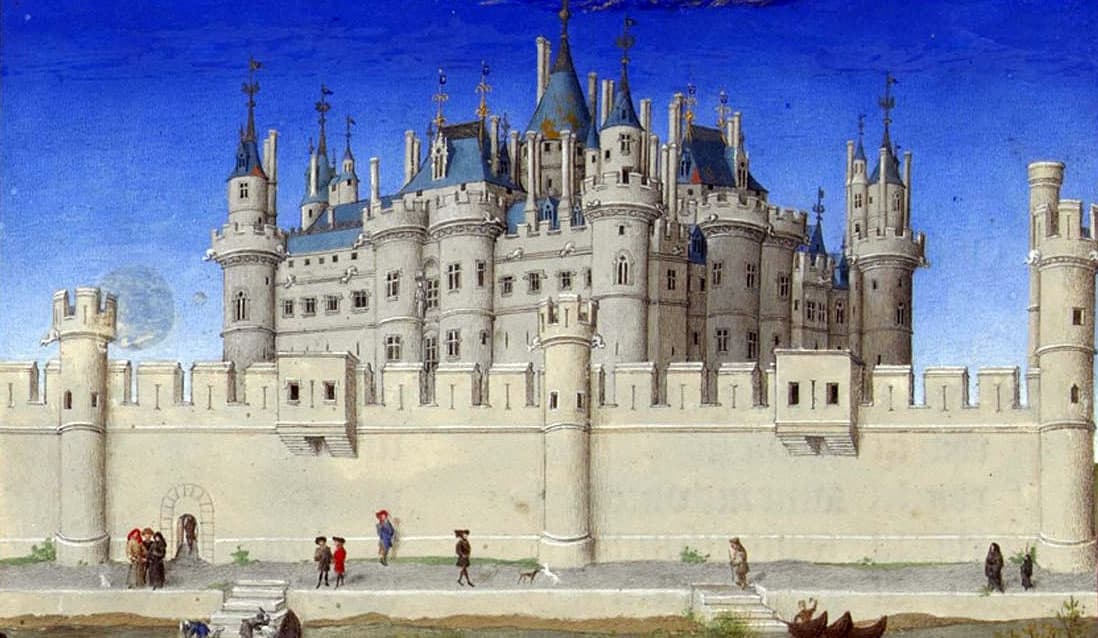
Louvre Castle (French: Château du Louvre), also known as the Medieval Louvre (Louvre médiéval), was a significant fortified castle constructed in the 12th century under the reign of King Philip II of France. Its primary purpose was to serve as a defensive stronghold on the right bank of the Seine River, reinforcing the city walls of Paris that Philip II had commissioned. This strategic location was crucial for protecting the city against potential invasions and asserting royal authority during the High Medieval period.
Construction and architectural features
The initial design of Louvre Castle featured a massive keep or donjon, which was typical of medieval military architecture. This central tower was surrounded by a fortified curtain wall with defensive towers and a moat that utilized the natural flow of the Seine. The castle's walls were built of stone, providing formidable protection against siege weaponry of the era. Over time, the castle was expanded and modified to adapt to changing military technologies and the evolving needs of the monarchy.
Strategic location and defensive role
Located on the right bank of the Seine, the castle was part of a larger system of fortifications encircling Paris. Its position allowed control over river traffic and access to the city, making it a critical point of defense. The castle's walls connected with the city ramparts, creating an integrated defensive network. This made the Louvre not only a royal residence but also a military bastion safeguarding the capital.
Transformation and partial demolition
By the 16th century, the military importance of the castle diminished as the city of Paris expanded and the nature of warfare evolved. Between 1528 and 1660, the medieval fortress was gradually demolished above ground to make way for the construction and expansion of the Louvre Palace, which transitioned from a fortress to a royal residence and cultural landmark. Despite the demolition, many of the castle's foundations and subterranean structures were preserved and incorporated into the new palace complex.
Legacy within the Louvre Palace
Today, the remains of Louvre Castle exist primarily as archaeological ruins beneath the current Louvre Palace. Excavations have revealed parts of the original walls, foundations, and the base of the donjon, providing valuable insights into medieval fortification techniques and Parisian history. These ruins are a testament to the site's transformation from a military fortress to one of the world's most famous art museums.
Historical significance and cultural impact
Louvre Castle played a vital role in the defense and development of Paris during the High Medieval period. Its construction under Philip II marked a period of consolidation of royal power and urban fortification. The castle's evolution reflects broader shifts in French history, from feudal warfare to Renaissance court life. Its ruins connect modern visitors to the medieval past of Paris, enriching the cultural heritage of the city.
Archaeological research and public access
Archaeological investigations at the site have been ongoing since the 19th century, uncovering significant elements of the castle's structure. While much of the castle lies underground, some areas are accessible to the public through guided tours and museum exhibits within the Louvre complex. These explorations provide a tangible link to Paris's medieval origins and the architectural legacy of its royal fortifications.
Architectural style and period classification
The castle is classified as a High Medieval structure, exhibiting characteristics typical of medieval military architecture such as thick stone walls, battlements, and a central keep. Its style is primarily functional, focused on defense rather than ornamental design, reflecting the priorities of castle construction in the 12th century.
Frequently asked questions (FAQ)
- What is the historical significance of Louvre Castle?
- Louvre Castle, originally built as a fortress in the late 12th century, has evolved into one of the most renowned art museums in the world. It played a pivotal role in French history, serving as a royal palace before becoming a public museum during the French Revolution.
- When was Louvre Castle opened to the public?
- Louvre Castle was officially opened to the public as a museum on August 10, 1793. Since then, it has undergone numerous renovations and expansions, making it a key cultural institution in France.
- What are the opening hours of Louvre Castle?
- Louvre Castle is typically open every day from 9 AM to 6 PM, except Tuesdays. Visitors should check the official website for any special holiday hours or temporary closures.
- How do I get to Louvre Castle?
- Louvre Castle is easily accessible via public transportation, with the Palais Royal - Musée du Louvre metro station located nearby. Additionally, several bus lines and bike-sharing options are available to help visitors reach the castle.
- Can I buy tickets in advance for Louvre Castle?
- Yes, tickets for Louvre Castle can be purchased in advance online, which is highly recommended to avoid long queues. There are various ticket options available, including guided tours and combination tickets with other attractions.
- Is it possible to visit Louvre Castle with children?
- Absolutely, Louvre Castle is family-friendly and offers various resources for children, including family tours and educational activities. Strollers are allowed, and there are facilities available for families visiting the museum.
- What is the best time to visit Louvre Castle?
- The best time to visit Louvre Castle is during the shoulder seasons of spring (April to June) and fall (September to November) when the weather is pleasant and crowds are smaller. Early mornings and late afternoons also tend to be less crowded.
- Are there any nearby attractions to Louvre Castle?
- Yes, several attractions are located near Louvre Castle, such as the Tuileries Garden, Musée de l'Orangerie, and the Palais Royal. Exploring these sites can enhance your visit and provide a deeper understanding of Paris's rich history.
- What are the ticket prices for Louvre Castle?
- As of now, standard adult tickets to Louvre Castle are priced at around €17 if purchased online and €15 for tickets bought at the museum. Discounts are available for youth under 26 and free admission is offered to visitors under 18 and EU residents under 26 on certain days.
Photo gallery

Photo by Limbourg brothers / Barthélemy d'Eyck•Public domain
Information
Loading map...
Visitor reviews
No reviews yet. Been here? Write the first review and help other travelers!
Write the first reviewVisited this castle? Share your experience
Your review helps other travelers and adds first-hand knowledge to our encyclopedia.