Tughlaqabad Fort
Tughlaqabad Fort stands as a monumental relic of the Delhi Sultanate era, located in the southern part of Delhi, India. Constructed in 1321 by Ghiyath al-Din Tughluq, the founder of the Tughlaq dynasty, the fort was part of the third historic city of Delhi established by the Sultanate. Although its active use was short-lived, with abandonment occurring around 1327, the fort remains a significant archaeological site that offers insight into medieval military architecture and urban planning of the period.
Historical context and foundation
The fort was commissioned by Ghiyath al-Din Tughluq shortly after he ascended the throne of the Delhi Sultanate. His reign marked a period of consolidation and expansion following the Khalji dynasty. The construction of Tughlaqabad Fort was intended to serve both as a defensive stronghold and as the administrative center of the new capital city he founded, which was named Tughlaqabad. This city was strategically planned to assert the power of the new dynasty and to protect Delhi from invasions.
Despite its ambitious beginnings, the fort and the city were abandoned within a few years, reportedly due to a combination of political intrigue, water scarcity, and the shifting priorities of Ghiyath al-Din Tughluq's successor, Muhammad bin Tughluq. The abandonment has left the fort in ruins but preserved many of its original architectural elements.
Architectural features and design
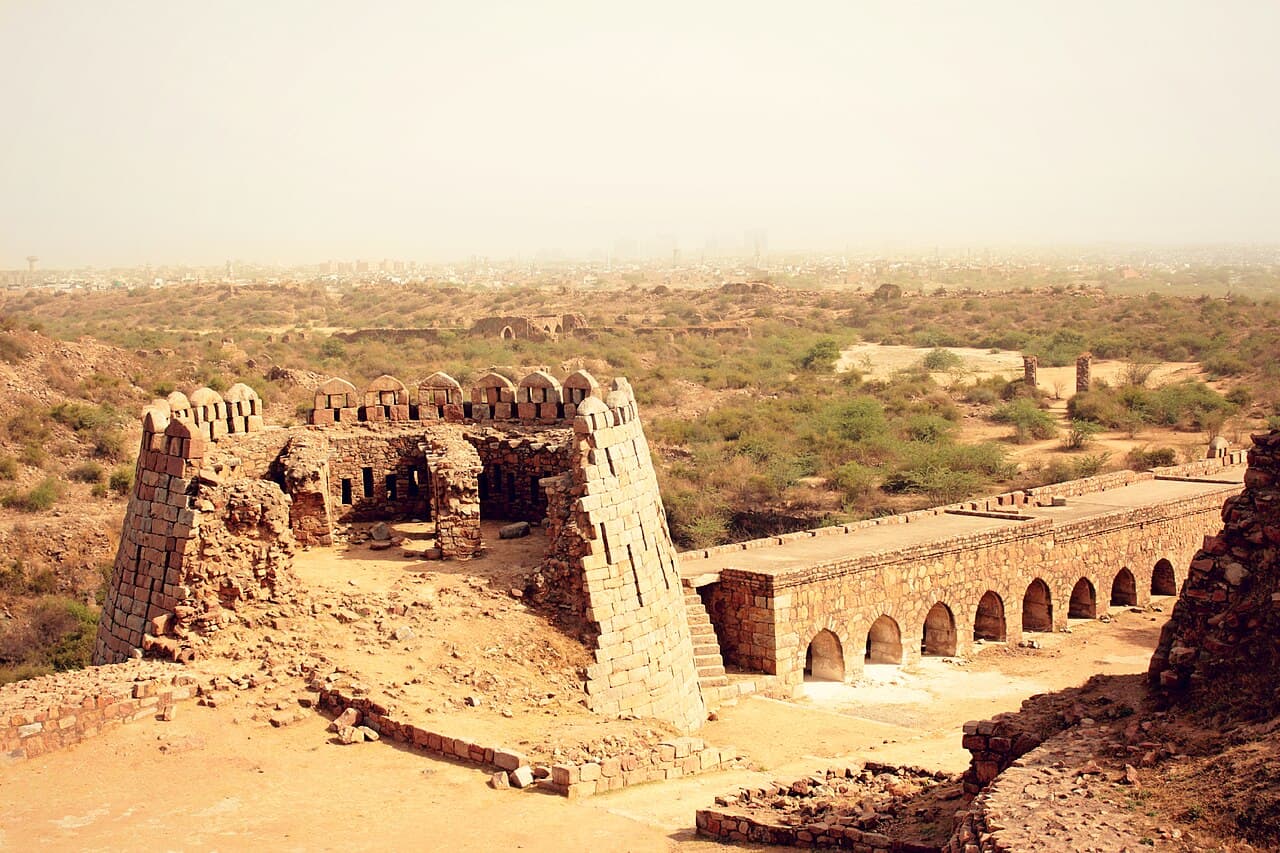
Tughlaqabad Fort is an exemplary specimen of medieval military architecture in India, showcasing the robust and austere style characteristic of the Tughlaq dynasty. The fort's walls are constructed using massive stone blocks with thick ramparts designed to withstand siege warfare. The fortification includes massive bastions, high defensive walls, and fortified gates that controlled access to the interior.
The layout of the fort is roughly rectangular, encompassing a large area with multiple layers of defense. Inside the walls, there are remains of palatial structures, mosques, and that hint at the fort's dual role as a military and administrative center. The use of and reflects the architectural influences of the period, blending functionality with Islamic architectural aesthetics.
Defensive structures
The fort's defenses are notable for their scale and engineering. The walls rise to impressive heights, with battlements and parapets providing cover for archers and soldiers. The fort includes strategically placed watchtowers and for surveillance and defense. The massive was designed to repel attackers and is flanked by imposing bastions.
Water management and urban planning
One of the challenges faced by the inhabitants was water scarcity, which contributed to the fort's abandonment. The fort included several water reservoirs and step wells designed to collect and store rainwater. However, the arid terrain and limited water sources made sustaining a large population difficult. The surrounding city was connected to important trade routes, including the road built by Ghiyasuddin Tughluq, known today as the Mehrauli-Badarpur Road, linking the fort to the Grand Trunk Road.
Ecological significance and surrounding landscape
The area around Tughlaqabad Fort is part of a significant ecological zone within the Northern Aravalli leopard wildlife corridor. This corridor extends from the Sariska Tiger Reserve in Rajasthan to Delhi, providing habitat connectivity for wildlife. The fort's vicinity includes several natural and historical landmarks such as Badkhal Lake, the ancient Surajkund reservoir, and the Anangpur Dam.
The region is also notable for its forested hills and numerous lakes formed in abandoned open-pit mines, contributing to local biodiversity. Nearby protected areas include the Asola Bhatti Wildlife Sanctuary and the sacred Mangar Bani forest, which is among the oldest forest areas in the region.
Current condition and archaeological status
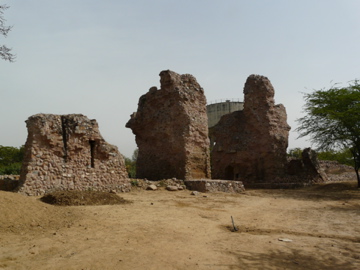
Today, Tughlaqabad Fort is classified as ruins and serves as an important archaeological site. The fort's remains are a testament to the engineering and architectural skills of the early 14th century. Conservation efforts focus on preserving the structural remnants and promoting awareness of the site's historical significance.
Visitors to the fort can explore the extensive ruins, including the defensive walls, bastions, and remnants of the palace and mosque structures. The site offers a glimpse into the urban and military planning of the Tughlaq dynasty and the challenges faced by medieval rulers in establishing new capitals.
Nearby historical and natural attractions
The fort's location provides access to several other notable historical and ecological sites. These include the Adilabad ruins in Delhi, the Damdama Lake, and the seasonal waterfalls in the Pali-Dhuaj-Kot villages of Faridabad. These sites collectively offer a rich experience of the region's cultural heritage and natural beauty.
Frequently asked questions (FAQ)
- What is the historical significance of Tughlaqabad Fort?
- Tughlaqabad Fort, built in the 14th century by Ghiyas-ud-din Tughlaq, served as the capital of the Tughlaq dynasty. It is an important example of early Indo-Islamic architecture and reflects the military strategies of the time, with its massive walls and strategic location.
- When was Tughlaqabad Fort constructed?
- Tughlaqabad Fort was constructed between 1321 and 1327 AD. The fortification was part of Ghiyas-ud-din Tughlaq's efforts to establish a stronghold in Delhi, showcasing his vision for the Tughlaq dynasty.
- Can I visit Tughlaqabad Fort year-round?
- Yes, Tughlaqabad Fort is open to visitors throughout the year. However, the best time to visit is between October and March when the weather is cooler and more pleasant for exploration.
- What are the opening hours of Tughlaqabad Fort?
- Tughlaqabad Fort is open daily from 8 AM to 6 PM. Visitors are encouraged to arrive early to fully enjoy the expansive grounds and the stunning views from the fort.
- Is there an entrance fee for Tughlaqabad Fort?
- Yes, there is a nominal entrance fee to visit Tughlaqabad Fort. As of now, the ticket price is around INR 5 for Indian citizens and INR 100 for foreign tourists, making it an affordable destination for history enthusiasts.
- How do I get to Tughlaqabad Fort from central Delhi?
- Tughlaqabad Fort is accessible via public transport, including the Delhi Metro and buses. The nearest metro station is Tughlaqabad on the Violet Line, and from there, you can take an auto-rickshaw or taxi to reach the fort.
- What nearby attractions can I visit after Tughlaqabad Fort?
- After visiting Tughlaqabad Fort, you can explore other historical sites such as the Tomb of Ghiyas-ud-din Tughlaq and the nearby Mehrauli Archaeological Park. These sites offer additional insights into Delhi's rich history and architecture.
- Is Tughlaqabad Fort accessible for people with disabilities?
- Tughlaqabad Fort has some challenging terrains due to its historical structure and natural landscape. While some areas may be accessible, it is advisable for visitors with mobility issues to check in advance and consider bringing assistance for a better experience.
Photo gallery

Information
Loading map...
Visitor reviews
No reviews yet. Been here? Write the first review and help other travelers!
Write the first reviewVisited this castle? Share your experience
Your review helps other travelers and adds first-hand knowledge to our encyclopedia.