
Tsuyama Castle
Tsuyama Castle, located in Tsuyama, Japan, stands as a remarkable example of a hill castle from the early Edo period. Constructed beginning in 1604 by Mori Tadamasa following his reward after the Battle of Sekigahara, the castle was completed in 1616. This impressive fortress served as the seat of power for the Mori clan for four generations before control passed to the Matsudaira family in 1698, who maintained stewardship until the end of the Edo period.
Architectural significance and fortifications
Tsuyama Castle is renowned for being one of the most heavily fortified castles ever constructed in Japan. Its design features stone walls terraced along the hillside, creating a layered defense system that maximizes the natural topography. The castle originally boasted an extraordinary 77 yagura (turrets), which were strategically positioned to provide overlapping fields of fire and surveillance across the castle grounds and surrounding areas.
Today, only one of these turrets, the Bitchu Yagura, remains. This turret was rebuilt in 2005 to commemorate the castle's 400th anniversary and is notable for its dual function as both a defensive structure and part of the Honmaru palace. The Bitchu Yagura uniquely combines traditional tatami mat interiors with loopholes for archers or gunners, demonstrating the blend of residential comfort and military preparedness typical of Japanese castles of this era.
Castle town and cultural heritage
Beyond the castle itself, Tsuyama retains a well-preserved castle town atmosphere that offers insight into the lifestyle and social organization of the Edo period. The town contains numerous former samurai residences, many of which are either abandoned, privately inhabited, or in various states of preservation. Although these residences are generally not open to the public, local historical sites and museums provide valuable information about their architecture and significance.
The preservation of Tsuyama's castle town is challenged by modern issues such as population decline and limited funding, yet it remains a vital cultural asset. Visitors interested in Japanese history and architecture can explore the castle grounds and nearby historical sites to gain a deeper understanding of the region's feudal past.
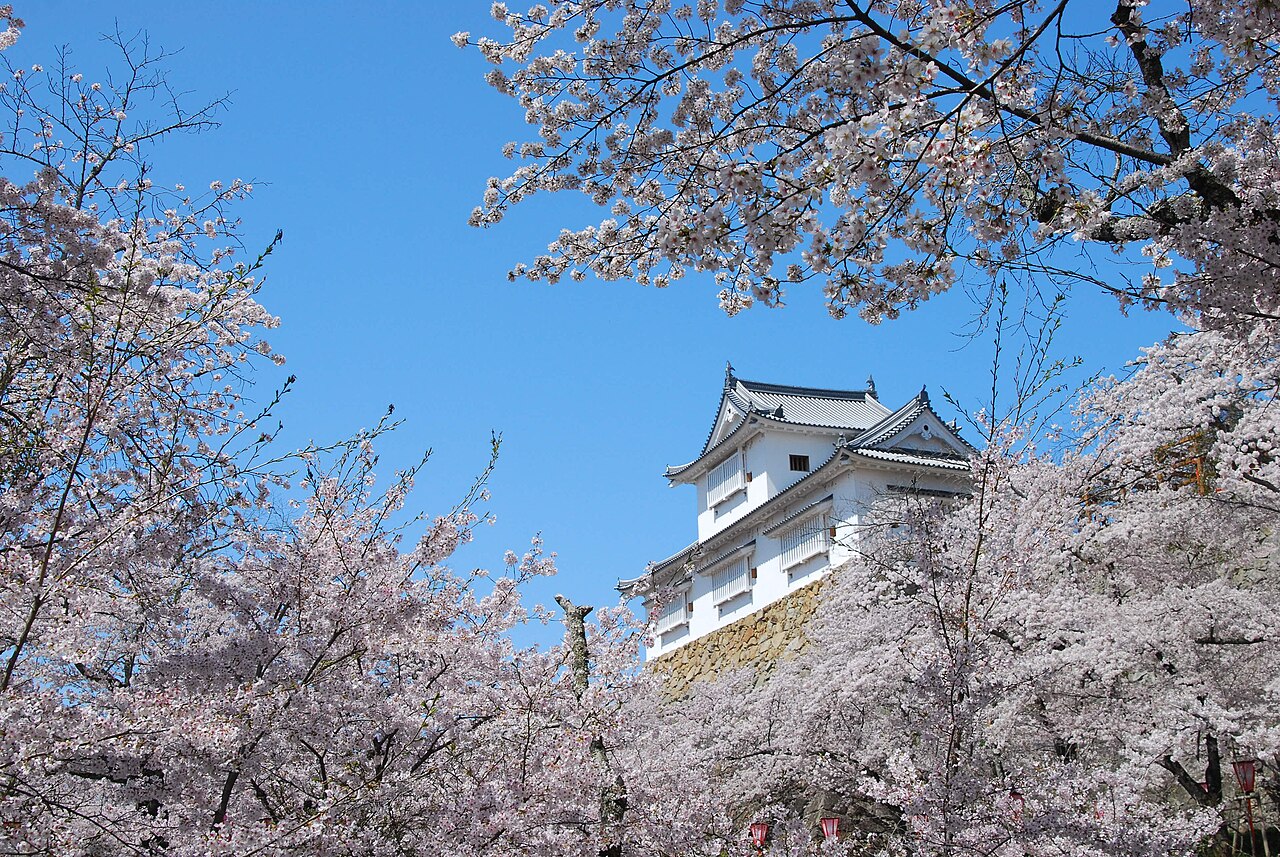
Photo by denteru • CC BY 3.0
Natural beauty and visitor experience
In addition to its historical and architectural importance, Tsuyama Castle is famous for its spectacular cherry blossom displays each spring. The castle grounds become a popular destination for hanami (flower viewing), attracting visitors who come to enjoy the vibrant pink blossoms against the backdrop of the imposing stone walls and hillside terraces.
Visitors should note practical considerations such as transportation: Tsuyama Station, while staffed, does not accept IC cards at its gates, requiring paper tickets purchased in advance. The castle is accessible by train and bus routes, including a 2.5-hour bus journey from Osaka. The local Tourist Information Center and museum offer helpful resources for planning visits and learning about the castle's history.
Historical context and legacy
The construction of Tsuyama Castle in the early 17th century reflects the political and military consolidation following the Battle of Sekigahara, a pivotal conflict that shaped Japan's Edo period. The castle's extensive fortifications and strategic location underscore its importance as a regional power center and defensive stronghold.
Throughout its history, the castle witnessed the transition of power between prominent samurai families and survived the societal changes leading up to the modern era. Although much of the original structure has been lost, the remaining elements and reconstructed features continue to communicate the grandeur and military ingenuity of this historic site.
Frequently asked questions (FAQ)
- When was Tsuyama Castle built and by whom?
- Tsuyama Castle was constructed starting in 1604 by Mori Tadamasa, who was rewarded for his role in the Battle of Sekigahara. The castle was completed in 1616.
- What makes Tsuyama Castle architecturally significant?
- Tsuyama Castle is one of Japan's most heavily fortified castles, originally featuring 77 yagura (turrets) and extensive stone walls terraced along the hillside for layered defense.
- Can I visit the samurai residences in Tsuyama castle town?
- Most former samurai residences are privately owned, abandoned, or in poor condition and are not open to the public. However, local museums and historical sites provide information and context about these buildings.
- When is the best time to visit Tsuyama Castle for cherry blossoms?
- The best time to visit Tsuyama Castle for cherry blossoms is during spring, when the castle grounds are covered in vibrant pink blossoms, attracting many visitors for hanami.
- How do I get to Tsuyama Castle from major cities?
- Tsuyama Castle is accessible by train and bus. Note that Tsuyama Station does not accept IC cards, so paper tickets should be purchased in advance. There is also a 2.5-hour bus route from Osaka.
Photo gallery

Information
Opening hours
8:40-19:00 (17:00 during winter months); 310 yen; Closed Dec 29-31
Website
Visit websiteSources & official resources
Verify the information above using these authoritative references.
Loading map...
Visitor reviews
No reviews yet. Been here? Write the first review and help other travelers!
Write the first reviewVisited this castle? Share your experience
Your review helps other travelers and adds first-hand knowledge to our encyclopedia.