Ki Castle
Ki Castle (鬼ノ城, Kino-jō) is an ancient hill castle located in Sōja, Okayama Prefecture, Japan. Constructed in the 7th century, it is a rare example of a kōgoishi-style fortress, characterized by its distinctive stone walls and strategic hilltop position. The castle's ruins have been protected as a National Historic Site since 1986, reflecting its cultural and historical importance in Japan's Early Medieval period.
Historical context and purpose
Ki Castle was built during a time of frequent military threats and political instability in Japan. The 7th century was marked by the need for defensive structures to protect against potential invasions, particularly from continental forces such as the Tang dynasty of China and the Korean kingdoms. The castle's construction reflects the Japanese government's efforts to fortify its western regions and maintain control over strategic transportation and communication routes.
Its location on a hill provided a commanding view of the surrounding plains, enabling early warning of approaching enemies. The castle likely served both military and administrative functions, acting as a regional stronghold and a symbol of central authority.
Architectural features and layout
Kōgoishi stone walls
Ki Castle is distinguished by its kōgoishi-style stone walls, a rare architectural feature in Japanese fortifications of the period. These walls are constructed from large, roughly hewn stones fitted together without mortar, forming a robust defensive barrier. The walls extend for approximately 2.8 kilometers, enclosing an area of about 30 hectares.
The stone walls are complemented by earthen ramparts and wooden palisades, which would have enhanced the castle's defensive capabilities. The walls include several gates and watchtowers strategically placed to monitor and control access.
Fortified gates and watchtowers
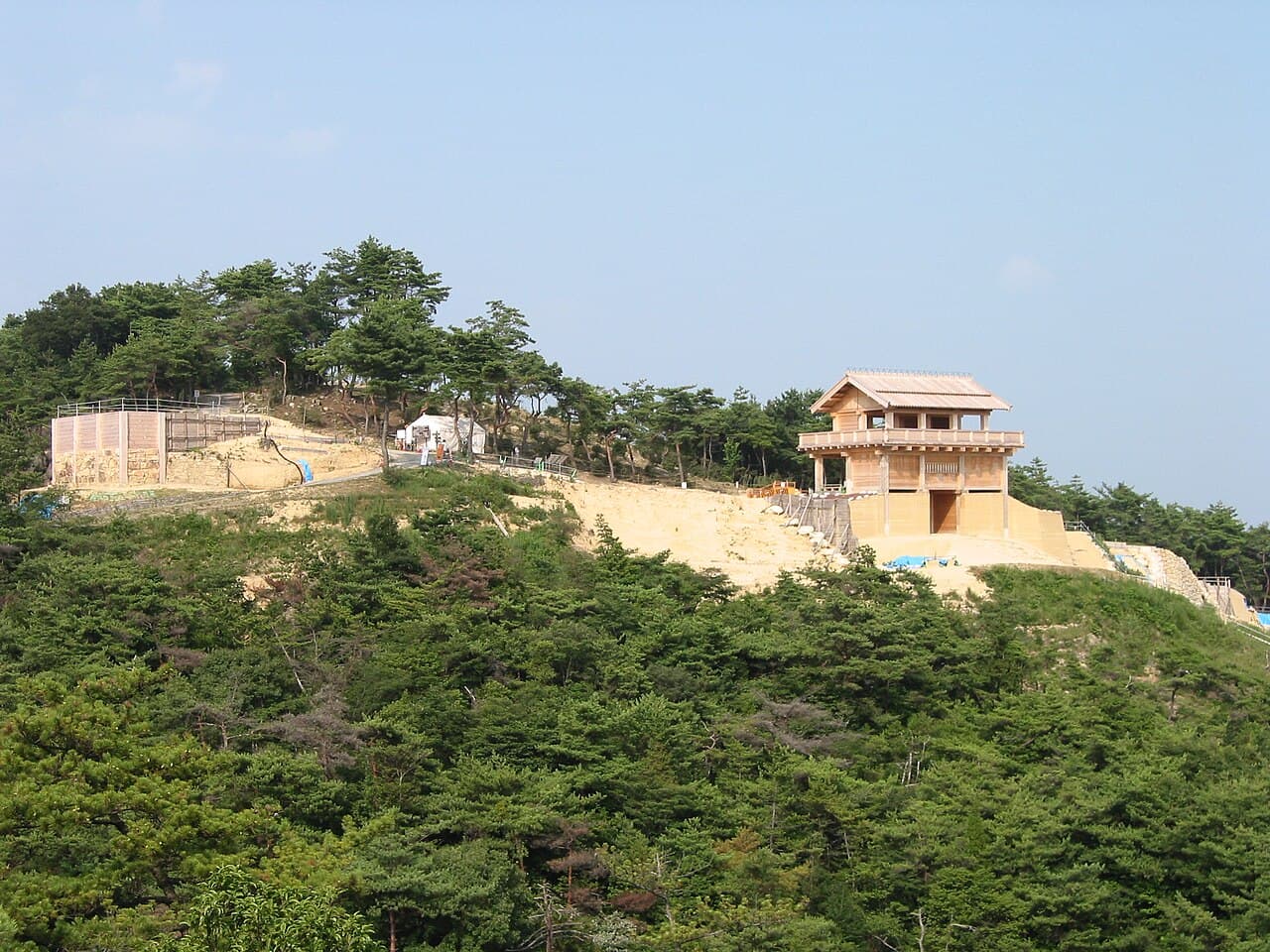
The castle featured multiple gates, including the main gate on the south side, which was heavily fortified. Watchtowers were positioned along the walls to provide vantage points for surveillance and defense. These structures allowed defenders to repel attackers and maintain control over the surrounding territory.
Archaeological discoveries and reconstruction
Excavations at Ki Castle have revealed foundations of buildings, defensive structures, and artifacts such as pottery and tools, providing insight into the daily life and military organization of the period. The site has contributed significantly to understanding Japan's Early Medieval fortification techniques.
In the early 2000s, portions of the castle walls and gates were reconstructed to give visitors a tangible sense of its original appearance. These reconstructions are based on archaeological evidence and historical records, aiming to preserve the site's authenticity while enhancing its educational value.
Ki Castle in modern times
Today, Ki Castle is a popular historical site and tourist destination, attracting visitors interested in Japan's ancient military architecture and history. The site is accessible via hiking trails that lead to the castle ruins, offering scenic views of the surrounding landscape.
Efforts continue to preserve the ruins and promote public awareness of the castle's significance. Ki Castle stands as a valuable cultural heritage site that illustrates the strategic and architectural ingenuity of Japan's early medieval period.
Frequently asked questions (FAQ)
- How do I get to Ki Castle in Okayama Prefecture?
- Ki Castle is located in Sōja, Okayama Prefecture. Visitors can reach the site by taking local buses or taxis from Okayama city, followed by a hike up the hill to the castle ruins.
- What is the historical significance of Ki Castle?
- Ki Castle is an important example of 7th-century Japanese fortifications, showcasing the kōgoishi stone wall technique and reflecting early medieval military strategies.
- Can I see reconstructed parts of Ki Castle?
- Yes, portions of the castle walls and gates were reconstructed in the early 2000s based on archaeological evidence, allowing visitors to visualize the original structure.
- When is the best time to visit Ki Castle?
- The best time to visit Ki Castle is during spring and autumn when the weather is mild and the surrounding landscape is particularly scenic.
- Is there an entrance fee to visit Ki Castle?
- Visiting the ruins of Ki Castle is generally free of charge, making it accessible to all visitors interested in Japanese history and architecture.
Photo gallery

Information
Loading map...
Visitor reviews
No reviews yet. Been here? Write the first review and help other travelers!
Write the first reviewVisited this castle? Share your experience
Your review helps other travelers and adds first-hand knowledge to our encyclopedia.