Kinojo
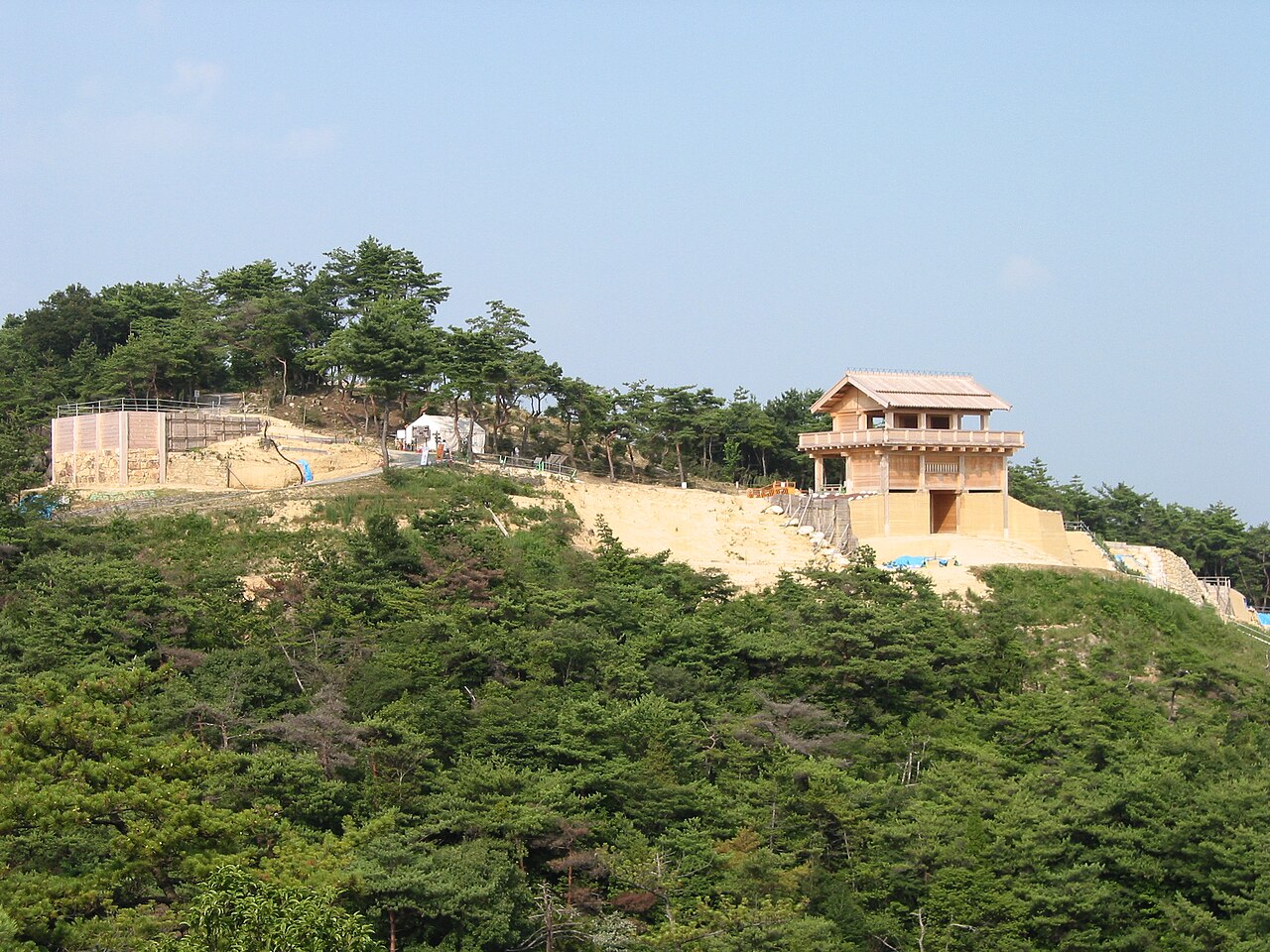
Kinojo castle stands as a remarkable relic of Japan's ancient military architecture, believed to be the oldest castle in the country. Located in Soja, Japan, this hill castle dates back to the 7th century, a period when the Yamato Court constructed a network of fortifications across western Japan to defend against foreign invasions. While historical records do not explicitly mention Kinojo, archaeological discoveries since its unearthing in 1971 have revealed its significant scale and strategic design.
Historical context and strategic importance
The construction of Kinojo is linked to the Yamato Court's efforts during the Early Medieval period to consolidate power and protect the Japanese archipelago from potential threats, including invasions from the Asian continent. At that time, approximately 30 castles were built in western Japan, of which 27 have been identified by researchers. Kinojo is considered the oldest among them, highlighting its importance in the early defensive network.
The castle's location atop a mountain provided a natural vantage point over the surrounding valleys, allowing defenders to monitor movements and prepare for any approaching forces. The relatively flat summit of the hill was ideal for erecting fortifications and accommodating troops.
Architectural features and layout
Kinojo castle's most distinctive feature is its extensive outer wall, which stretches approximately 2.8 kilometers. This formidable barrier was designed to encircle the castle grounds, providing robust protection against attackers. The wall's construction techniques reflect the engineering capabilities of the 7th century, likely utilizing locally sourced stone and earthworks.
The castle included four main gates, strategically placed to control access and facilitate defense. These gates would have been heavily fortified and possibly equipped with wooden or iron reinforcements to withstand sieges. In addition, there is a large defensive platform within the perimeter, serving as a stronghold for archers or soldiers to repel invaders.
The overall design of Kinojo emphasizes functionality and defense, with the natural topography enhancing its protective features. The flat summit allowed for the construction of barracks, storage facilities, and command posts, although specific details about these structures remain limited due to the scarcity of surviving records.
Archaeological significance and preservation
Since its discovery in 1971, Kinojo has attracted considerable interest from historians and archaeologists aiming to understand Japan's early castle-building traditions. Excavations have uncovered sections of the outer walls and gate foundations, providing insights into construction methods and defensive strategies of the period.
Today, Kinojo is classified as partially preserved. Visitors can explore the remains of the walls and gates, as well as enjoy the natural beauty of the mountain setting. The site offers a unique glimpse into Japan's formative centuries of fortification development.
Visiting Kinojo castle
The castle grounds are accessible via a hiking trail that begins near Hattori Station, approximately 5.5 kilometers from the site. The initial 2.1 kilometers of the hike are relatively flat, making for an easy start, but the remaining path ascends steeply to the summit. This hike provides visitors with an opportunity to appreciate the castle's strategic location and panoramic views of the surrounding valleys.
For those preferring not to hike, taxis can be reserved in advance from nearby stations such as Okayama or Soja, though availability may be limited and costs vary. The local Tourist Information Center at Okayama Station can assist with taxi reservations, especially for visitors unfamiliar with Japanese.
Exploring Kinojo offers not only a journey through Japan's ancient military history but also a rewarding outdoor experience amid scenic mountain landscapes.
Frequently asked questions (FAQ)
- How do I get to Kinojo Castle?
- Kinojo Castle is located in Soja, Japan, and can be accessed via public transportation or by car. The nearest train station is Soja Station, from where you can take a bus or taxi to the castle. Parking is available on-site for those traveling by car.
- What is the historical significance of Kinojo Castle?
- Kinojo Castle was built during the Muromachi period and served as a strategic fortress for the local samurai clans. Its ruins are a testament to the architectural and military advancements of the time. The castle played a key role in the regional power struggles and is a symbol of Soja's rich history.
- When was Kinojo Castle constructed?
- Kinojo Castle was constructed in the early 15th century, around 1410. It was established by the Kuroda clan and has undergone various modifications over the centuries. Although now in ruins, the castle's historical layers tell a fascinating story of its past.
- Can I visit Kinojo Castle year-round?
- Yes, Kinojo Castle is open to visitors year-round, but the best time to visit is during the cherry blossom season in spring and the colorful foliage in autumn. The picturesque views from the castle ruins enhance the experience for visitors. Be sure to check for any local events that may affect accessibility.
- Why is the architecture of Kinojo Castle unique?
- The architecture of Kinojo Castle reflects traditional Japanese castle design, featuring stone walls and strategic fortifications. The layout is designed to take advantage of the surrounding terrain, providing both defense and aesthetic appeal. The ruins offer a glimpse into the architectural techniques of the era.
- Is it possible to take guided tours of Kinojo Castle?
- Yes, guided tours are available for visitors who wish to learn more about the history and significance of Kinojo Castle. These tours are led by knowledgeable guides who provide insight into the castle's architecture and historical context. It's recommended to book in advance during peak tourist seasons.
- What are the opening hours for Kinojo Castle?
- Kinojo Castle is generally open from 9:00 AM to 5:00 PM, with extended hours during peak seasons. However, it's advisable to check the official website or contact local tourism information for any seasonal changes or special events that may affect opening hours. Admission is usually free.
- Are there any nearby attractions to visit while at Kinojo Castle?
- Yes, there are several nearby attractions worth exploring, including the Soja City Museum and several beautiful parks. The scenic landscape surrounding the castle also offers hiking trails and picnic spots. Combining your visit to Kinojo Castle with these nearby sites can make for a full day of exploration.
- What are the ticket prices for visiting Kinojo Castle?
- Admission to Kinojo Castle is typically free, allowing visitors to explore the ruins without any entry fees. However, some guided tours or special events may have associated costs. It's a great opportunity to experience Japanese history without breaking the bank.
Information
Website
Visit websiteSources & official resources
Verify the information above using these authoritative references.
Loading map...
Visitor reviews
No reviews yet. Been here? Write the first review and help other travelers!
Write the first reviewVisited this castle? Share your experience
Your review helps other travelers and adds first-hand knowledge to our encyclopedia.