Tsarevets Fortress
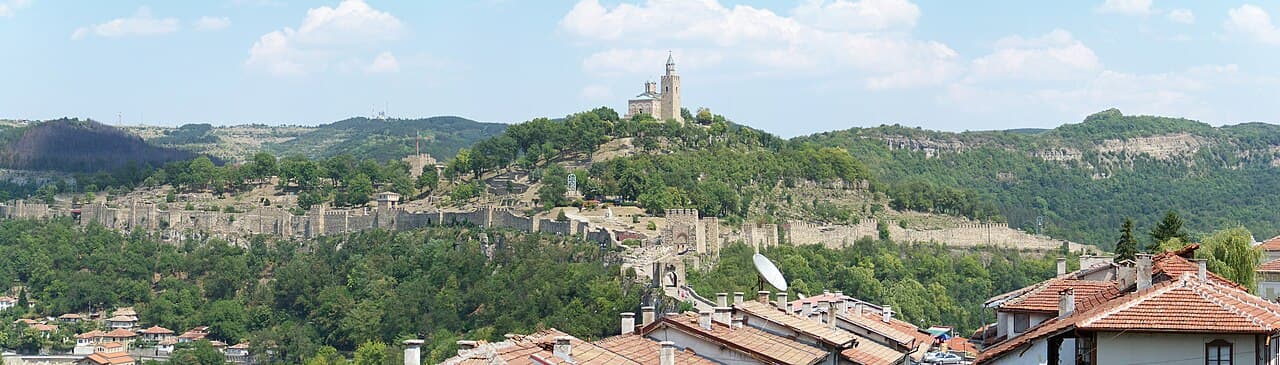
Tsarevets fortress is a prominent medieval bastioned fortress located on a hill of the same name in Veliko Tarnovo, northern Bulgaria. This fortress served as the primary defensive stronghold and royal residence of the Second Bulgarian Empire between 1185 and 1393. It housed the royal palaces, the patriarchal complex, and was the political and religious center of the empire until the Ottoman conquest. The fortress remains one of Bulgaria's most significant historical landmarks and a major tourist attraction.
The strategic location and early history
The Tsarevets hill rises to approximately 206 metres above sea level and has been a site of human settlement since at least the 2nd millennium BC. Archaeological evidence shows continuous habitation from the 4th century AD onward. Its naturally defensible position on a steep hill overlooking the Yantra River made it an ideal location for a fortress. After the successful Bulgarian rebellion of 1185, Tsarevets was developed into the empire's key fortress, symbolizing the resurgence of Bulgarian statehood. Its importance was comparable to other great medieval cities such as Rome and Constantinople.
Architectural features and fortifications
The fortress is characterized by thick defensive walls enclosing an area of approximately 3 hectares. The fortifications include three main gates, each heavily fortified to control access. The walls are reinforced with numerous towers and bastions, creating a formidable defensive perimeter. The palace complex within Tsarevets was protected by an additional fortified wall and included royal chambers, a throne hall, and administrative buildings.
The royal and patriarchal palaces
The royal palace was the residence of Bulgarian kings such as Petar, Asen, Kaloyan, and Ivan Asen II. It was a complex of buildings including living quarters, audience halls, and service areas, all enclosed within defensive walls. At the summit of the hill stood the patriarchal complex, crowned by the Cathedral of the Ascension of the Lord, which served as the religious heart of the empire. This cathedral was the seat of the Bulgarian Orthodox Church's patriarch, symbolizing the fusion of spiritual and temporal power.
Baldwin's Tower and other notable structures
One of the most famous features of Tsarevets is Baldwin's Tower, a modern reconstruction located in the southeastern part of the fortress. It commemorates the imprisonment and death of Latin Emperor Baldwin I during the siege of 1205. The fortress also contained numerous other buildings including residential houses, workshops, churches, and monasteries. Archaeological excavations have uncovered remains of approximately 400 buildings, 22 churches, and 4 monasteries within the fortress walls.
Historical significance and events
Tsarevets was the political and military center of the Second Bulgarian Empire. It witnessed many critical events, including the reigns of some of Bulgaria's most notable medieval rulers. The fortress fell to the Ottoman forces in 1393, marking the end of the empire and beginning centuries of Ottoman rule. The fall was a significant turning point in Bulgarian history.
Execution rock and notable executions
Within the fortress is the infamous Execution Rock, a cliff overlooking the Yantra River where traitors and enemies were thrown to their deaths. One of the most notable executions was that of Patriarch Joachim in 1300, reflecting the fortress's role not only as a military bastion but also as a center of justice and authority.
Restoration and modern significance
After centuries of neglect following the Ottoman conquest, restoration efforts began in 1930 and were largely completed by 1981. These efforts aimed to preserve the fortress's historical and architectural heritage. Today, Tsarevets is a well-preserved site featuring reconstructed walls, towers, and buildings that provide visitors with a vivid impression of medieval Bulgarian fortifications and royal life. It hosts cultural events and reenactments, contributing to Bulgaria's cultural tourism.
Tourism and visitor experience
Visitors to Tsarevets can explore the fortress's extensive grounds, including the palace ruins, church remains, and defensive structures. The site offers panoramic views of Veliko Tarnovo and the surrounding landscape. Interpretive signage and guided tours provide historical context, enriching the visitor experience. The fortress is accessible year-round and remains one of Bulgaria's top heritage sites.
Frequently asked questions (FAQ)
- How do I get to Tsarevets Fortress?
- You can reach Tsarevets Fortress by walking from the center of Veliko Tarnovo, which is approximately a 15-minute stroll. Public transportation, such as buses and taxis, is also available for those who prefer not to walk.
- What is the historical significance of Tsarevets Fortress?
- Tsarevets Fortress was the primary fortress of the Second Bulgarian Empire and served as a royal and administrative center during the medieval period. Its rich history and strategic location make it a symbol of Bulgarian national identity and pride.
- When was Tsarevets Fortress built?
- Tsarevets Fortress was originally constructed in the 5th century, but it was extensively rebuilt and expanded during the 12th and 13th centuries. The fortress played a crucial role throughout various historical periods, particularly during the height of the Second Bulgarian Empire.
- Can I visit Tsarevets Fortress year-round?
- Yes, Tsarevets Fortress is open to visitors year-round, although certain areas may have restricted access during winter months due to weather conditions. It's advisable to check the official website for the latest information on accessibility and any seasonal events.
- Why is the architecture of Tsarevets Fortress significant?
- The architecture of Tsarevets Fortress reflects medieval Bulgarian architecture, showcasing thick stone walls, defensive towers, and impressive gates. Its design not only served military purposes but also reflects the cultural and artistic advancements of the time.
- Is it possible to explore the fortress on my own?
- Yes, visitors can explore Tsarevets Fortress independently, as there are well-marked paths and informative signs throughout the site. Guided tours are also available for those who wish to learn more about the fortress’s history and architecture.
- What are the ticket prices for Tsarevets Fortress?
- As of the latest update, the ticket price for adults is approximately 6 BGN, while reduced tickets for students and seniors are available at about 3 BGN. It's best to check the official website for the most current pricing and potential discounts.
- What are the opening hours for Tsarevets Fortress?
- Tsarevets Fortress is typically open from 9 AM to 7 PM during the summer months and has reduced hours in the winter. Always verify the hours before your visit, as they can vary based on the season and special events.
- What nearby attractions should I visit while in Veliko Tarnovo?
- While in Veliko Tarnovo, you should also consider visiting the nearby Samovodska Charshiya, a historic market street, and the impressive Asen's Monument. The city is rich in cultural heritage and offers numerous museums and churches worth exploring.
Photo gallery

Information
Loading map...
Visitor reviews
No reviews yet. Been here? Write the first review and help other travelers!
Write the first reviewVisited this castle? Share your experience
Your review helps other travelers and adds first-hand knowledge to our encyclopedia.