Trapezitsa Fortress

Trapezitsa fortress in Veliko Tarnovo, Bulgaria
Veliko Tarnovo, Veliko Tarnovo, Bulgaria
High Medieval (11th–13th c.)
Partially Preserved

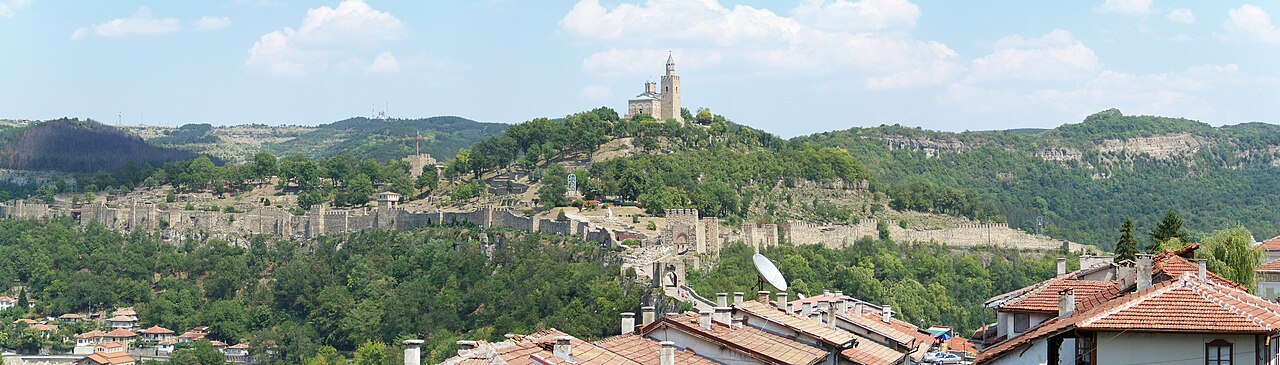
Trapezitsa fortress is a prominent medieval stronghold located on a steep hill encircled by the winding Yantra River in Veliko Tarnovo, Bulgaria. The natural topography, with its precipitous cliffs, provided formidable defense, making the site difficult to access and an ideal location for fortification. Archaeological evidence reveals that this hill was continuously inhabited from prehistoric times, with the earliest fortified settlement dating back to the late Chalcolithic Age (4200-4000 BC). Over the millennia, it evolved through the Bronze Age and Early Iron Age as a Thracian settlement before becoming a key medieval fortress.

Medieval development and strategic importance

The first traces of a medieval defense system on Trapezitsa hill date from the 12th century AD, marking the beginning of its transformation into a fortified citadel during the High Medieval period. The main fortifications were constructed in the 13th and 14th centuries, coinciding with the era of the Second Bulgarian Empire, when Veliko Tarnovo served as the empire's capital. Trapezitsa was the second most important fortress in the city after the larger Tsarevets fortress. Its role was both military and religious, housing significant churches and monasteries within its walls.

Fortifications and architectural features

The fortress is surrounded by a thick defensive wall made primarily of crushed stone, which reached up to 6 meters in height. The wall enclosed an area with steep cliffs on most sides, enhancing its natural defenses. Access to the fortress was controlled through four entrances, with the main gate situated on the southeast side. This principal entrance was strategically linked to Tsarevets fortress by a bridge crossing the Yantra River, positioned opposite the Holy Forty Martyrs Church. This connection underscored the integrated defense system of Veliko Tarnovo's citadels.

Religious significance and notable churches

Trapezitsa also held great religious importance. In 1195, Tsar Ivan Asen I transferred the relics of St. Ivan Rilski to a church built on the hill, around which a monastery was established bearing the saint's name. Additionally, Tsar Kaloyan relocated the relics of St. Gabriel of Lesnovo to the church of St. Apostles on Trapezitsa. These acts elevated the fortress's spiritual status and made it a pilgrimage site. The churches within the fortress were notable for their medieval Bulgarian architectural styles and frescoes, some of which survive in fragments today.

Archaeological discoveries and preservation

Excavations on Trapezitsa hill have uncovered remains of numerous buildings, including residential houses, churches, and fortification towers. Archaeologists have also found artifacts such as pottery, weapons, and religious items that provide insight into the daily life and defense strategies of its medieval inhabitants. The fortress's preservation is partial, with some sections of the walls and foundations visible, while other parts survive only as ruins. Restoration efforts aim to stabilize and showcase the site's historical significance.

Cultural heritage and tourism

Today, Trapezitsa fortress is a key cultural and historical landmark in Veliko Tarnovo, attracting visitors interested in Bulgaria's medieval past. Its combination of natural defenses, historical architecture, and religious heritage offers a multifaceted glimpse into the Second Bulgarian Empire's capital city. Visitors can explore the ruins, walk along the walls, and learn about the fortress's role in Bulgaria's medieval history through onsite exhibitions and guided tours.

Frequently asked questions (FAQ)

How do I get to Trapezitsa Fortress?
Trapezitsa Fortress is located in Veliko Tarnovo, Bulgaria, easily accessible by foot from the city center. You can also reach it by car or local public transport, with parking options available nearby.
What is the historical significance of Trapezitsa Fortress?
Trapezitsa Fortress is a key historical site that dates back to the 5th century and played a vital role during the Second Bulgarian Empire. It served as a stronghold and a cultural center, showcasing the architectural and artistic achievements of the period.
When was Trapezitsa Fortress built?
The fortress was initially established in the early medieval period, with significant developments occurring in the 12th and 13th centuries. It was part of the defensive system of Veliko Tarnovo during the height of the Bulgarian Empire.
Can I explore the fortress on my own?
Yes, visitors can explore Trapezitsa Fortress independently, as there are well-marked paths and information panels throughout the site. Guided tours are also available for those who prefer a more in-depth experience of its history and architecture.
Why is Trapezitsa Fortress considered an architectural gem?
The fortress features impressive fortifications, including walls, towers, and churches that reflect the medieval Byzantine architectural style. Its restoration efforts have preserved many of its original elements, making it a fascinating site for architecture enthusiasts.
Is it possible to visit Trapezitsa Fortress year-round?
Yes, Trapezitsa Fortress is open to visitors year-round, although hours may vary seasonally. It's advisable to check the official site for the most up-to-date opening hours before planning your visit.
What are the ticket prices for Trapezitsa Fortress?
Ticket prices for Trapezitsa Fortress are quite affordable, making it accessible for all visitors. Discounts may be available for students and groups, so be sure to inquire when purchasing your ticket.
What is the best time to visit Trapezitsa Fortress?
The best time to visit Trapezitsa Fortress is during the spring and early autumn months when the weather is pleasant. These seasons offer stunning views of the surrounding landscapes and a more enjoyable experience as the tourist crowds are usually smaller.
Are there any nearby attractions to visit?
Yes, Trapezitsa Fortress is close to several other attractions in Veliko Tarnovo, including Tsarevets Fortress and the Samovodska Charshiya street. Exploring these sites can provide a richer understanding of the area's history and culture.

Information

Hill Castle

Loading map...

Visitor reviews

No reviews yet. Been here? Write the first review and help other travelers!

Write the first review

Visited this castle? Share your experience

Your review helps other travelers and adds first-hand knowledge to our encyclopedia.

Write a review

(5/5)

0/2000 characters

Your review will be visible after admin approval

Nearby castles

0.4 km

Holy Forty Martyrs Church

Veliko Tarnovo, Bulgaria

The Holy Forty Martyrs Church in Veliko Tarnovo, Bulgaria, is a significant medieval Eastern Orthodox church constructed in 1230 during the reign of Tsar Ivan Asen II. This church holds a prominent place in Bulgarian history as it was built to commemorate Ivan Asen II's decisive victory over the Despotate of Epirus near Klokotnitsa on the feast day of the Holy Forty Martyrs of Sebaste. The church's name directly reflects this connection, marking a symbolic and spiritual celebration of the battle's success. Located in the former capital of the Second Bulgarian Empire, the church served as the main church of the Great Lavra monastery situated at the foot of the Tsarevets fortress on the left bank of the Yantra River. It was a royal church during Ivan Asen II's reign, reflecting the political and religious significance of Veliko Tarnovo as a medieval Bulgarian capital. Architectural features and design The Holy Forty Martyrs Church is an elongated six-columned basilica featuring three semicircular apses and a narrow narthex on its western side. The basilica layout is typical of Eastern Orthodox ecclesiastical architecture of the High Medieval period. The church's exterior includes a later addition on the west side, which also features decorative elements such as arches and colored small ceramic plates inserted into the walls, a common ornamental technique in medieval Bulgarian architecture. The interior originally was richly adorned with mural paintings, likely completed around 1230, although most of these were destroyed during the Ottoman period. Only a limited number of frescoes remain, primarily on the northern half of the narthex's west side. The presence of such murals highlights the church's role not only as a place of worship but also as a repository of religious art. Historical significance and transformations Following the Ottoman conquest, the church initially retained its Christian character, possibly until the first half of the 18th century. Subsequently, it was converted into a mosque in 1853, which led to the destruction of much of its original iconography, including the mural paintings, icons, and the iconostasis. Structural alterations were also made at this time to accommodate its new function. The church houses some of the most important historical artifacts of the Bulgarian Empire, including the columns of Khan Omurtag, Khan Krum, and Asen's Column. These columns bear inscriptions in the Greek language and were placed in the church by Ivan Asen II as a tribute to his powerful ancestors. The inscription on Omurtag's column describes the construction of a new palace on the Danube River, though its precise location remains unknown. The inscription on Krum's column mentions the "Fortress of Rodostro," with the text uniquely turned upside down. The columns and inscriptions These monumental columns are invaluable for understanding the political and cultural history of early medieval Bulgaria. They serve as tangible links to the reigns of these notable rulers and their accomplishments. The placement of these columns within the church underscores the building's role as a symbol of dynastic continuity and national pride during the Second Bulgarian Empire. Preservation and current condition Today, the Holy Forty Martyrs Church stands as a partially preserved monument reflecting Bulgaria's medieval heritage. Despite the damage sustained during the Ottoman period and the loss of much of its original decoration, the church remains an important historical and architectural site in Veliko Tarnovo. Its surviving frescoes and architectural elements provide valuable insight into medieval Bulgarian ecclesiastical art and architecture. The church's location near the Tsarevets fortress and the Yantra River situates it within a historically rich landscape that continues to attract scholars and visitors interested in Bulgaria's medieval past. Religious and cultural importance The church's dedication to the Holy Forty Martyrs of Sebaste ties it to a significant Christian feast celebrated throughout Eastern Orthodoxy. Its foundation by a Bulgarian tsar to commemorate a military victory highlights the interweaving of religious faith and political power in medieval Bulgaria. As a royal church and part of a major monastery complex, it played a central role in the spiritual life of the capital and the empire.

High Medieval (11th–13th c.)
Details
0.6 km
Tsarevets Fortress — Bulgaria castle

Tsarevets Fortress

Veliko Tarnovo, Bulgaria

Tsarevets fortress is a prominent medieval bastioned fortress located on a hill of the same name in Veliko Tarnovo, northern Bulgaria. This fortress served as the primary defensive stronghold and royal residence of the Second Bulgarian Empire between 1185 and 1393. It housed the royal palaces, the patriarchal complex, and was the political and religious center of the empire until the Ottoman conquest. The fortress remains one of Bulgaria's most significant historical landmarks and a major tourist attraction. The strategic location and early history The Tsarevets hill rises to approximately 206 metres above sea level and has been a site of human settlement since at least the 2nd millennium BC. Archaeological evidence shows continuous habitation from the 4th century AD onward. Its naturally defensible position on a steep hill overlooking the Yantra River made it an ideal location for a fortress. After the successful Bulgarian rebellion of 1185, Tsarevets was developed into the empire's key fortress, symbolizing the resurgence of Bulgarian statehood. Its importance was comparable to other great medieval cities such as Rome and Constantinople. Architectural features and fortifications The fortress is characterized by thick defensive walls enclosing an area of approximately 3 hectares. The fortifications include three main gates, each heavily fortified to control access. The walls are reinforced with numerous towers and bastions, creating a formidable defensive perimeter. The palace complex within Tsarevets was protected by an additional fortified wall and included royal chambers, a throne hall, and administrative buildings. The royal and patriarchal palaces The royal palace was the residence of Bulgarian kings such as Petar, Asen, Kaloyan, and Ivan Asen II. It was a complex of buildings including living quarters, audience halls, and service areas, all enclosed within defensive walls. At the summit of the hill stood the patriarchal complex, crowned by the Cathedral of the Ascension of the Lord, which served as the religious heart of the empire. This cathedral was the seat of the Bulgarian Orthodox Church's patriarch, symbolizing the fusion of spiritual and temporal power. Baldwin's Tower and other notable structures One of the most famous features of Tsarevets is Baldwin's Tower, a modern reconstruction located in the southeastern part of the fortress. It commemorates the imprisonment and death of Latin Emperor Baldwin I during the siege of 1205. The fortress also contained numerous other buildings including residential houses, workshops, churches, and monasteries. Archaeological excavations have uncovered remains of approximately 400 buildings, 22 churches, and 4 monasteries within the fortress walls. Historical significance and events Tsarevets was the political and military center of the Second Bulgarian Empire. It witnessed many critical events, including the reigns of some of Bulgaria's most notable medieval rulers. The fortress fell to the Ottoman forces in 1393, marking the end of the empire and beginning centuries of Ottoman rule. The fall was a significant turning point in Bulgarian history. Execution rock and notable executions Within the fortress is the infamous Execution Rock, a cliff overlooking the Yantra River where traitors and enemies were thrown to their deaths. One of the most notable executions was that of Patriarch Joachim in 1300, reflecting the fortress's role not only as a military bastion but also as a center of justice and authority. Restoration and modern significance After centuries of neglect following the Ottoman conquest, restoration efforts began in 1930 and were largely completed by 1981. These efforts aimed to preserve the fortress's historical and architectural heritage. Today, Tsarevets is a well-preserved site featuring reconstructed walls, towers, and buildings that provide visitors with a vivid impression of medieval Bulgarian fortifications and royal life. It hosts cultural events and reenactments, contributing to Bulgaria's cultural tourism. Tourism and visitor experience Visitors to Tsarevets can explore the fortress's extensive grounds, including the palace ruins, church remains, and defensive structures. The site offers panoramic views of Veliko Tarnovo and the surrounding landscape. Interpretive signage and guided tours provide historical context, enriching the visitor experience. The fortress is accessible year-round and remains one of Bulgaria's top heritage sites.

High Medieval (11th–13th c.)
Details
0.8 km
Devingrad — Bulgaria castle

Devingrad

Veliko Tarnovo, Bulgaria

Devingrad, also known as Momina krepost or Maiden's Fortress, is a significant medieval bastioned fortress located on Devingrad hill in Veliko Tarnovo, northern Bulgaria. This fortress occupies a strategic position on one of the three main hills that formed the core of Medieval Tarnovgrad, the capital of the Second Bulgarian Empire from 1185 to 1396 AD. The site is an important cultural and historical landmark reflecting the military architecture and urban development of the medieval Bulgarian state.The strategic importance of Devingrad hillThe fortress stands on Devingrad hill, one of the three prominent hills that defined the medieval cityscape of Tarnovgrad, alongside Tsarevets and Trapezitsa hills. Each hill was fortified separately, forming a complex defensive system that protected the capital. Devingrad's position provided commanding views over the surrounding terrain, controlling access routes and enhancing the city's defense network.Architectural features and fortificationsDevingrad is classified as a bastioned fortress, a type of fortification characterized by angular bastions projecting outward from the curtain walls, designed to provide overlapping fields of fire and reduce blind spots. This architectural style was advanced for its time and reflects the adaptation of military engineering principles to the needs of the Second Bulgarian Empire. The fortress walls are constructed of stone and brick, with remnants indicating the presence of towers, gates, and defensive walkways.The fortress likely included battlements and arrow slits to allow defenders to repel attackers effectively. The layout would have encompassed a protected inner courtyard and possibly living quarters for soldiers and commanders. The design emphasizes both strong defense and functional accommodation within the fortress.Historical context and significanceDuring the High and Late Medieval periods, Devingrad played a crucial role in the defense of Tarnovgrad, which was the political and cultural center of the Second Bulgarian Empire. The fortress was part of a larger network of fortifications that resisted invasions and sieges, particularly during the Ottoman expansion into the Balkans.Though detailed records of specific sieges involving Devingrad are limited, its presence alongside the more famous Tsarevets fortress underscores its importance in the medieval military strategy of Bulgaria. The fortress's endurance through centuries attests to its robust construction and strategic value.Current condition and preservationToday, Devingrad is in a state described as partially preserved, with archaeological remains that reveal the layout and construction techniques of the original fortress. Excavations and conservation efforts have aimed to stabilize the ruins and make the site accessible for visitors interested in Bulgaria's medieval heritage.The fortress is a popular destination for tourists exploring Veliko Tarnovo, offering insights into medieval fortification architecture and the historical landscape of the former Bulgarian capital.Visiting Devingrad fortressVisitors to Veliko Tarnovo can reach Devingrad hill and explore the remains of the fortress. The site provides panoramic views of the city and surrounding countryside, enhancing the experience of Bulgaria's medieval past. Information boards and guided tours help contextualize the fortress within the broader history of the Second Bulgarian Empire.

Late Medieval (14th–15th c.)
Details