Devingrad
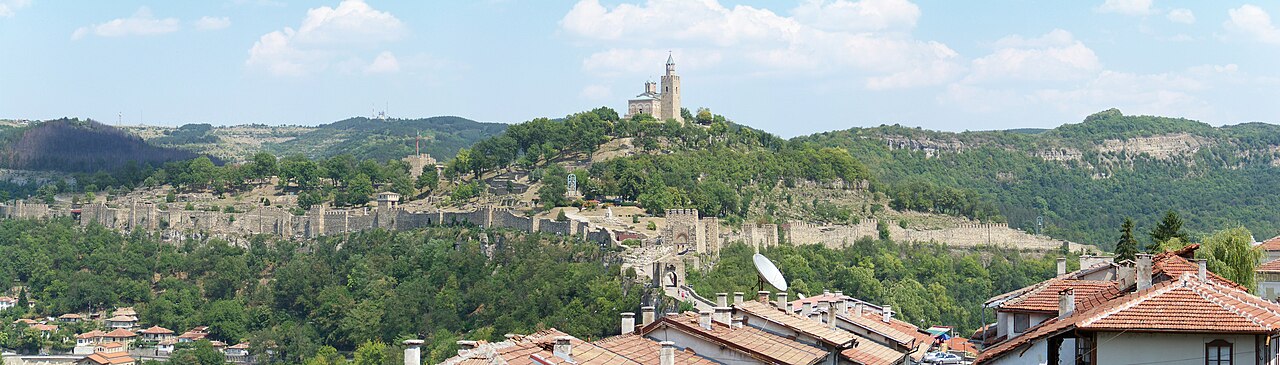
Devingrad, also known as Momina krepost or Maiden's Fortress, is a significant medieval bastioned fortress located on Devingrad hill in Veliko Tarnovo, northern Bulgaria. This fortress occupies a strategic position on one of the three main hills that formed the core of Medieval Tarnovgrad, the capital of the Second Bulgarian Empire from 1185 to 1396 AD. The site is an important cultural and historical landmark reflecting the military architecture and urban development of the medieval Bulgarian state.
The strategic importance of Devingrad hill
The fortress stands on Devingrad hill, one of the three prominent hills that defined the medieval cityscape of Tarnovgrad, alongside Tsarevets and Trapezitsa hills. Each hill was fortified separately, forming a complex defensive system that protected the capital. Devingrad's position provided commanding views over the surrounding terrain, controlling access routes and enhancing the city's defense network.
Architectural features and fortifications
Devingrad is classified as a bastioned fortress, a type of fortification characterized by angular bastions projecting outward from the curtain walls, designed to provide overlapping fields of fire and reduce blind spots. This architectural style was advanced for its time and reflects the adaptation of military engineering principles to the needs of the Second Bulgarian Empire. The fortress walls are constructed of stone and brick, with remnants indicating the presence of towers, gates, and defensive walkways.
The fortress likely included battlements and arrow slits to allow defenders to repel attackers effectively. The layout would have encompassed a protected inner courtyard and possibly living quarters for soldiers and commanders. The design emphasizes both strong defense and functional accommodation within the fortress.
Historical context and significance
During the High and Late Medieval periods, Devingrad played a crucial role in the defense of Tarnovgrad, which was the political and cultural center of the Second Bulgarian Empire. The fortress was part of a larger network of fortifications that resisted invasions and sieges, particularly during the Ottoman expansion into the Balkans.
Though detailed records of specific sieges involving Devingrad are limited, its presence alongside the more famous Tsarevets fortress underscores its importance in the medieval military strategy of Bulgaria. The fortress's endurance through centuries attests to its robust construction and strategic value.
Current condition and preservation
Today, Devingrad is in a state described as partially preserved, with archaeological remains that reveal the layout and construction techniques of the original fortress. Excavations and conservation efforts have aimed to stabilize the ruins and make the site accessible for visitors interested in Bulgaria's medieval heritage.
The fortress is a popular destination for tourists exploring Veliko Tarnovo, offering insights into medieval fortification architecture and the historical landscape of the former Bulgarian capital.
Visiting Devingrad fortress
Visitors to Veliko Tarnovo can reach Devingrad hill and explore the remains of the fortress. The site provides panoramic views of the city and surrounding countryside, enhancing the experience of Bulgaria's medieval past. Information boards and guided tours help contextualize the fortress within the broader history of the Second Bulgarian Empire.
Frequently asked questions (FAQ)
- What is the historical significance of Devingrad fortress?
- Devingrad fortress was a key part of the defensive system protecting Tarnovgrad, the capital of the Second Bulgarian Empire during the Late Medieval period. It helped defend the city against invasions and controlled strategic routes.
- How can I visit Devingrad fortress?
- Devingrad fortress is accessible to visitors in Veliko Tarnovo. You can explore the ruins on Devingrad hill, which offers panoramic views of the city. Guided tours and information boards are often available to enhance the visit.
- What architectural features are notable at Devingrad?
- The fortress features bastioned walls designed for overlapping defensive fire, stone and brick construction, battlements, arrow slits, and remnants of towers and gates typical of Late Medieval military architecture.
- Is Devingrad fortress well preserved?
- Devingrad is partially preserved, with archaeological remains that reveal the fortress's layout and construction. Conservation efforts help maintain the site for educational and tourism purposes.
- When was Devingrad fortress built?
- Devingrad fortress dates back to the Late Medieval period, corresponding with the time when Tarnovgrad served as the capital of the Second Bulgarian Empire, roughly between the 12th and 14th centuries.
Photo gallery

Information
Loading map...
Visitor reviews
No reviews yet. Been here? Write the first review and help other travelers!
Write the first reviewVisited this castle? Share your experience
Your review helps other travelers and adds first-hand knowledge to our encyclopedia.