Trolleholm Castle
Trolleholm Castle, located in Svalöv, Sweden, is a historic estate with origins dating back to the early 15th century. Originally known as Kattesnabbe and later Ericholm, the castle has been documented since 1424 and was initially a monastic estate during the late Middle Ages. Over the centuries, it evolved into a noble residence associated with prominent families such as the Thott family (1533–1680) and the Trolle family (1680–1806). The current name was bestowed by Frederik Trolle in 1755, reflecting the estate's transformation and noble lineage.
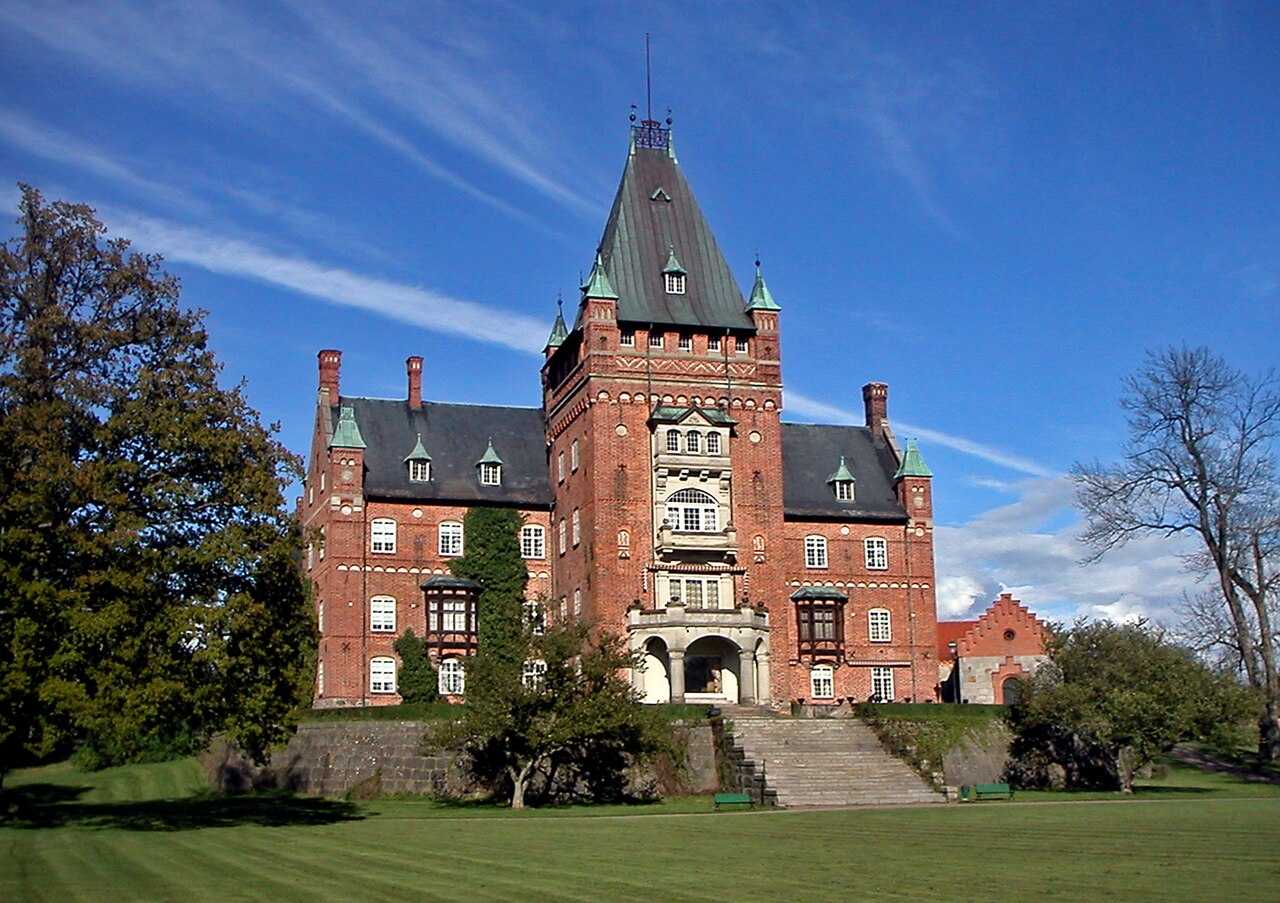
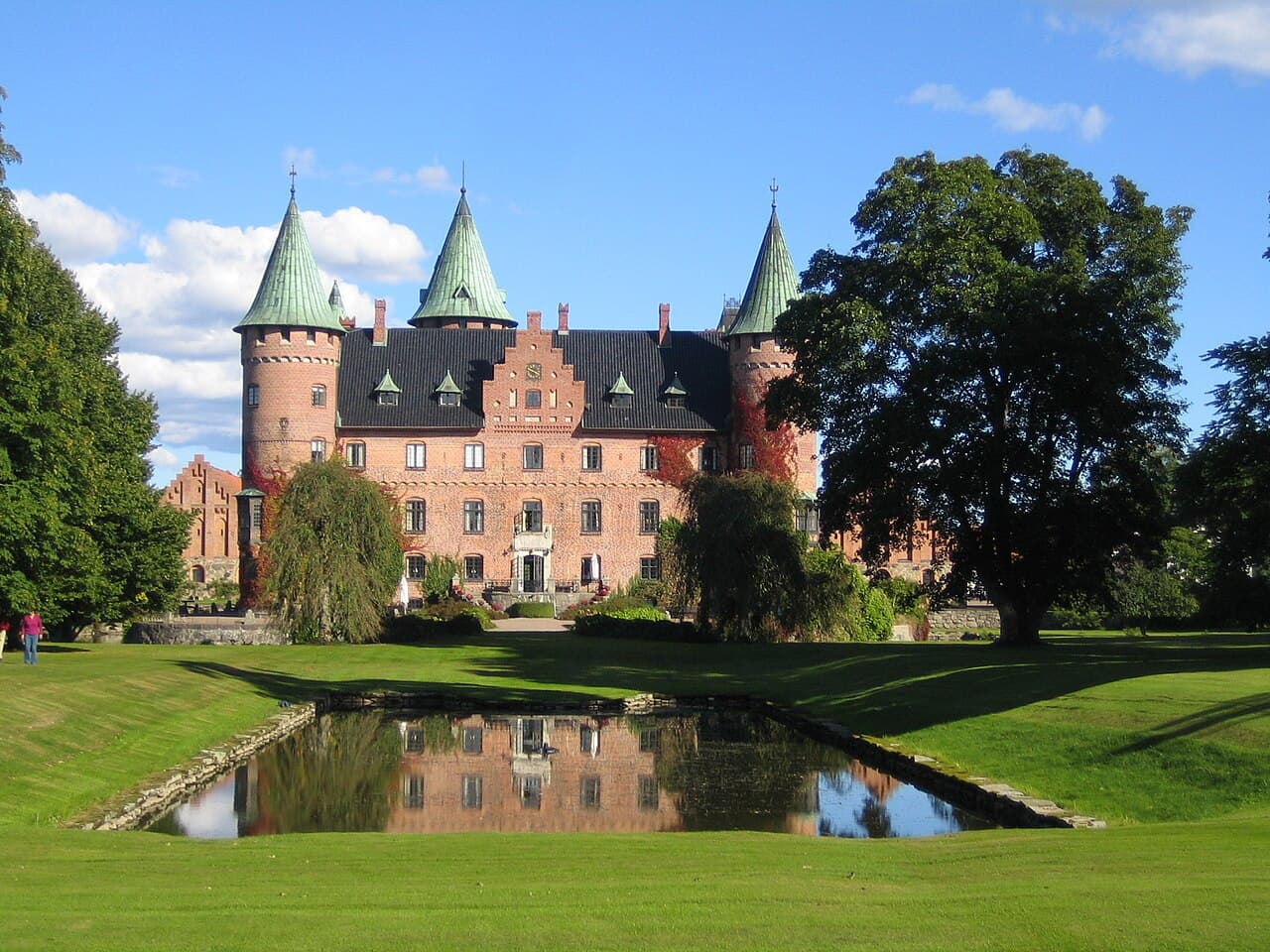
The castle's architectural history is marked by significant reconstructions. In the 1760s, it was rebuilt according to the designs of the renowned architect Carl Hårleman, resulting in a Rococo-style palace that replaced the earlier fortress structure. Later, in the late 19th century, the castle underwent a major renovation that introduced elements of the early Renaissance style, giving it much of its present-day appearance. This blend of styles reflects the castle's continuous adaptation to changing tastes and functional needs over several centuries.
Medieval origins and early history
The earliest records indicate that the site was a manor known as Katty Abbeville in the Middle Ages, with the first known resident being the squire Erik Nielsen around 1424. During the Danish rule of Scania in the 16th century, the estate was transformed into a fortress by Tage Ottesen Thott in 1538. Named Erik Holm in honor of his deceased brother, the fortress featured a three-story brick building arranged around a square courtyard, surrounded by a broad moat with a drawbridge at the east gate. This design was intended to withstand the evolving military threats of the period, particularly in a region frequently contested during the Count's Feud and other conflicts.
Following Tage Ottesen Thott's death in 1562, the estate passed to his son Otte Thott Tagesen, and subsequently to his widow Sophie Brahe, sister of the famous astronomer Tycho Brahe. The estate remained in the Thott family for several generations, with notable owners such as Tage Ottesen Thott (died 1658), a powerful Danish nobleman and feudal lord who held multiple estates and was a recipient of the prestigious Danish Order of the Elephant.
Conflicts and ownership changes in the 17th century
The political upheavals of the 17th century had a profound impact on the castle. After the Treaty of Roskilde in 1658, Scania became part of Sweden, but during the Scanian War (1674–1679), the owner Tage Ottesen Thott sided with Denmark. As a result, he was condemned as a traitor by the Swedish authorities, and the castle was burned in 1678, destroying its wooden interiors and roof. Although Thott regained ownership after the war, he chose to reside in Denmark and sold the estate in 1680 to Helle Rosenkrantz, widow of Privy Council member and Norwegian governor Niels Trolle.
The estate was then passed to Rosenkrantz's stepson, Herluf Trolle, but due to the castle's ruined condition, it was rented out rather than inhabited by the family. This period marked a decline in the castle's status as a noble residence but set the stage for its later revival.
18th-century reconstruction and rococo transformation
In the early 18th century, the estate changed hands several times before being acquired by Frederik Trolle in the 1720s. By the mid-18th century, the castle was in a dilapidated state. In 1749, an inspection revealed the poor condition of the buildings. Frederik Trolle commissioned the prominent architect Carl Hårleman to design a new castle. Hårleman's plans, completed in 1750, transformed the estate into a rococo palace with elegant facades and refined interiors, reflecting contemporary architectural trends in Sweden.
Frederik Trolle also renamed the estate to Trolleholm in 1755, solidifying its identity. After his death in 1770, the castle passed to his daughter Fredrika Vivika Trolle, who married Gustaf Bonde. She invested significantly in the estate, maintaining its status as a prominent noble residence.
19th-century developments and renaissance revival
Following Fredrika Vivika Trolle's death in 1806, the estate was inherited by her grandson Gustaf Trolle-Bonde. He implemented progressive reforms, including abolishing feudal obligations, improving agricultural practices, and investing in local infrastructure such as schools, poorhouses, and roads. Despite suffering blindness from an accident in 1831, his leadership left a lasting positive impact on the estate and surrounding community.
In 1856, a fire destroyed the castle's barn, prompting architect Carl Georg Brunius to design new agricultural buildings, completed within two years. Later, under the ownership of Carl Johan Trolle-Bonde, the castle underwent a major renovation beginning in 1887, which introduced early Renaissance style elements that define much of the castle's current appearance. This restoration was completed by 1889, blending historic styles with 19th-century tastes.
20th-century restoration and modern use
The castle saw further extensive rebuilding in 1951 and again in 1988-89 to accommodate modern functions, including conversion to a conference hotel. Despite these changes, the estate has retained its historic character and remains in the possession of the Trolle-Bonde family, who have preserved its cultural and architectural heritage.
Architectural features and estate grounds
Trolleholm Castle is notable for its combination of rococo and early Renaissance architectural styles. The castle features a grand facade, ornate interiors, and a layout reflecting its evolution from a fortified manor to a noble residence. The original fortress design with a moat and drawbridge has been replaced by landscaped gardens and parklands that are open to the public, enhancing the estate's appeal.
The estate encompasses approximately 62,800 acres (254 km²) and includes around 110 buildings, reflecting its status as a large agricultural and noble property. Among its treasures is a valuable library with around 40,000 books, underscoring the cultural significance of the estate.
Public access and cultural significance
The castle's extensive gardens are accessible to visitors, providing an opportunity to experience the historic landscape and architecture. While the castle itself functions as a private estate and conference venue, its grounds contribute to the cultural heritage of the region and attract those interested in Swedish noble history and architecture.
Trolleholm Castle stands as a testament to the layered history of Scania, reflecting the region's transition from Danish to Swedish rule, noble family legacies, and architectural trends spanning from the Middle Ages through the 19th century.
Frequently asked questions (FAQ)
- What is the historical significance of Trolleholm Castle?
- Trolleholm Castle reflects the rich noble heritage of Scania, showcasing architectural evolution from a medieval fortress to a Rococo and Renaissance-style residence.
- Can I visit the gardens of Trolleholm Castle?
- Yes, the castle's extensive gardens are open to the public, offering visitors a chance to explore the landscaped grounds and enjoy the historic ambiance.
- Who was the architect responsible for the 18th-century reconstruction of Trolleholm Castle?
- The notable Swedish architect Carl Hårleman designed the 1760s Rococo-style reconstruction of Trolleholm Castle.
- Is Trolleholm Castle still owned by the original noble family?
- Yes, the castle remains in the possession of the Trolle-Bonde family, descendants of the original noble owners.
- What architectural styles are represented at Trolleholm Castle?
- Trolleholm Castle features a blend of Rococo and early Renaissance architectural styles due to renovations in the 18th and 19th centuries.
- Are there any notable collections at Trolleholm Castle?
- The estate houses a valuable library with approximately 40,000 books, highlighting its cultural importance.
Photo gallery

Information
Opening hours
Garden open to the public; castle by appointment
Architect
Carl Hårleman
Current owner
Trolle-Bonde family
Website
Visit websiteSources & official resources
Verify the information above using these authoritative references.
Loading map...
Visitor reviews
No reviews yet. Been here? Write the first review and help other travelers!
Write the first reviewVisited this castle? Share your experience
Your review helps other travelers and adds first-hand knowledge to our encyclopedia.