Ellinge Castle
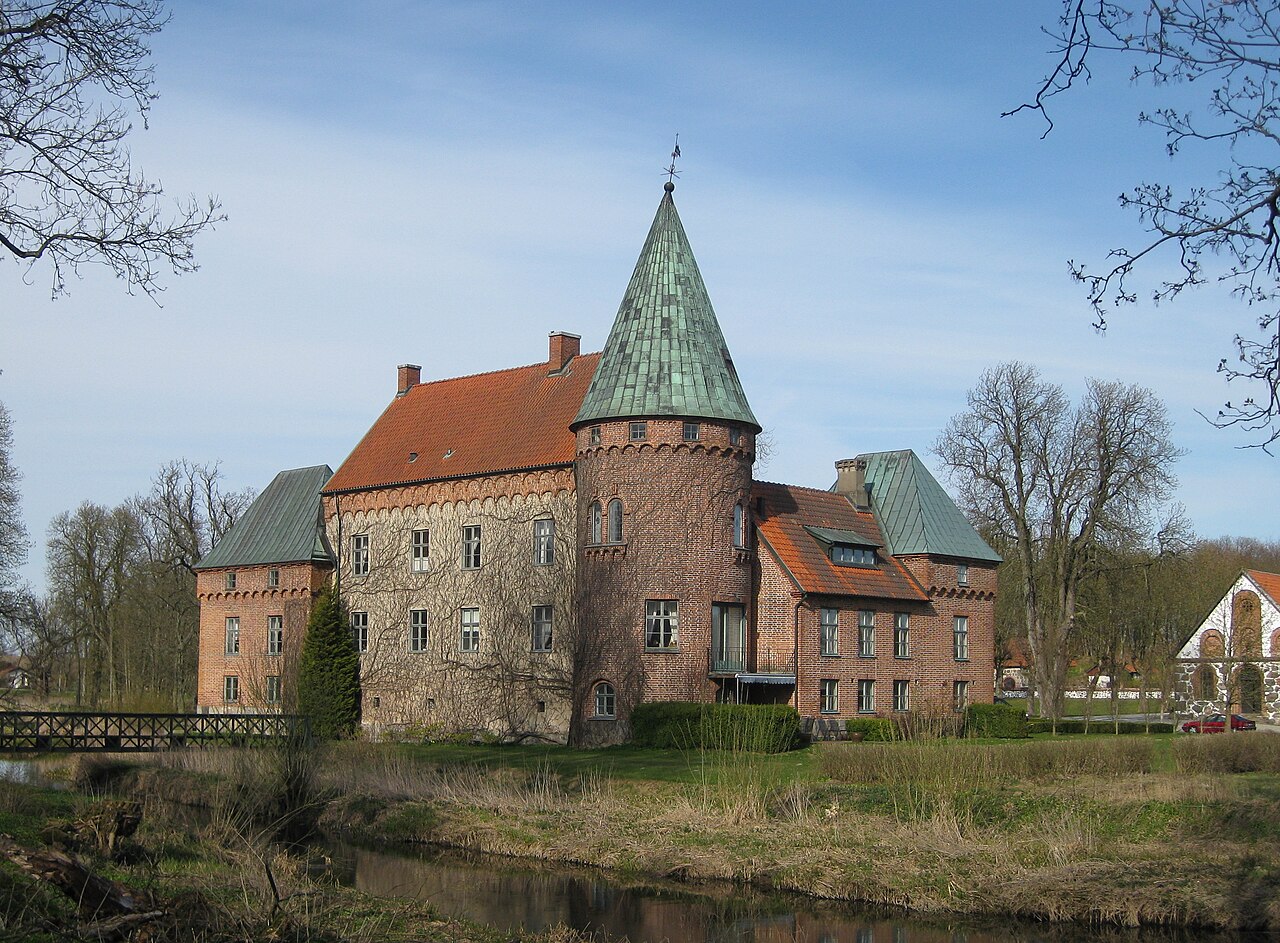
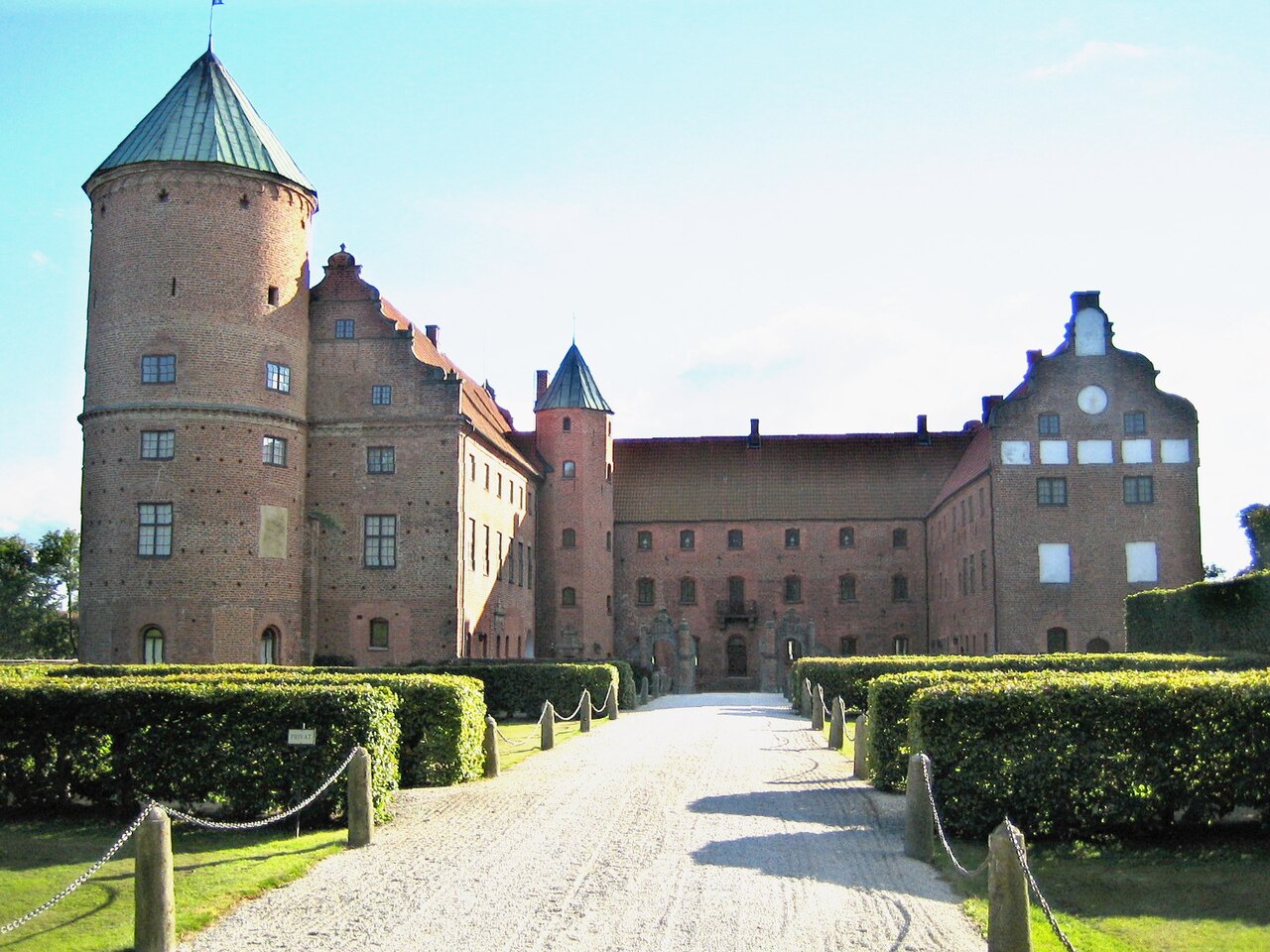
Ellinge Castle is among the oldest country seats in the historical province of Scania, located near Eslöv in southern Sweden. Its origins trace back to the 13th century, making it a site of significant medieval heritage. The current main building predominantly dates from the 15th century, placing it firmly in the late-medieval period. This period was marked by the construction of fortified manors and castles across Scandinavia, reflecting both defensive needs and noble status.
Medieval origins and architectural evolution
The earliest structure at Ellinge began as a fortified manor, strategically positioned and surrounded by medieval moats that served as defensive barriers. While the original 13th-century buildings no longer survive intact, the moat system remains a prominent feature, although now only partially preserved. The castle's defensive nature is evident in its layout, which originally included thick walls and a compact arrangement typical of Scandinavian fortifications of the time.
The main building visible today largely stems from the 15th century, showcasing architectural elements typical of late-medieval manorial residences. This includes sturdy stone construction and a somewhat austere exterior, designed more for defense and practicality than for ornate display. The castle's transformation over centuries reflects changing tastes and functions.
Transformation into a swedish manor house
In the 18th century, Ellinge Castle underwent significant remodeling when the region was under Danish rule. The fortress was converted into an open mansion reflecting traditional Swedish architectural styles of the time. This transformation involved enlarging windows, adding decorative elements, and modifying the interior to suit residential comfort rather than military defense.
The 18th-century renovation softened the castle's medieval fortress character, replacing some defensive features with more elegant and functional living spaces. The grounds were also adapted to include landscaped gardens and a park, which remain accessible to visitors today.
19th-century additions and current condition
A notable architectural addition was made in the mid-19th century with the construction of a tower-like structure that enhanced the castle's silhouette and added to its aesthetic appeal. This addition reflects the romantic historicism popular in the 19th century, when many medieval buildings were embellished or expanded with towers and other picturesque elements.
Currently, Ellinge Castle is partially preserved. While much of the original fortress and moat system survives only as remnants, the main mansion building remains intact and functional. The castle is privately owned and operates as a venue for conferences, weddings, and events. Its surrounding park is open to the public, offering a glimpse into the estate's historic landscape and providing recreational space.
Historical significance and cultural heritage
Ellinge Castle holds cultural importance as a representative example of a Scania medieval manor that evolved through centuries of political and architectural change. Its survival through Danish and Swedish rule highlights the complex history of the region. The castle's layered architecture provides insight into the transition from fortified medieval strongholds to more open, residential manors in Scandinavia.
Visitors to Ellinge can appreciate the blend of medieval defensive features alongside later stylistic adaptations, illustrating how noble residences adapted to shifting social and political contexts. The estate's continued use as an event venue ensures the preservation and appreciation of this historic site.
Frequently asked questions (FAQ)
- What is the historical significance of Ellinge Castle?
- Ellinge Castle, located in Eslöv, Sweden, dates back to the late 15th century and is an excellent example of Renaissance architecture. It has played a crucial role in the region's history, serving as a noble residence and reflecting the changing social dynamics of Sweden over the centuries.
- When was Ellinge Castle built?
- Ellinge Castle was constructed in the late 1400s, with significant renovations made during the 16th century. Its long history has allowed it to maintain much of its original charm and architectural features, making it a fascinating site for history enthusiasts.
- Can I visit Ellinge Castle?
- Yes, visitors are welcome to explore Ellinge Castle. It is advisable to check the official website for current visiting hours and any special events that may be taking place.
- What are the opening hours of Ellinge Castle?
- Ellinge Castle typically opens to visitors during the spring and summer months, with specific hours varying throughout the season. Always verify the latest opening hours on their website before planning your visit to avoid any inconvenience.
- Is it possible to access Ellinge Castle with a wheelchair?
- Ellinge Castle has made efforts to improve accessibility for all visitors, including those with mobility challenges. However, some areas may still present difficulties due to the historical architecture, so it's best to contact the castle directly for detailed information on accessibility options.
- What are the ticket prices for visiting Ellinge Castle?
- Ticket prices for Ellinge Castle can vary based on the season and any special events. Generally, there is an admission fee for adults, while children may enter at a reduced rate or for free; check the official site for the most current pricing information.
- When is the best time to visit Ellinge Castle?
- The best time to visit Ellinge Castle is during the late spring and summer months when the weather is pleasant and the gardens are in full bloom. These months also feature various events and activities that enhance the visitor experience.
- What nearby attractions can I visit when at Ellinge Castle?
- When visiting Ellinge Castle, you can explore several nearby attractions, including the scenic countryside of Skåne and other historical sites like Eslöv Church. The area also offers charming cafes and local shops for a complete day out.
Information
Website
Visit websiteSources & official resources
Verify the information above using these authoritative references.
Loading map...
Visitor reviews
No reviews yet. Been here? Write the first review and help other travelers!
Write the first reviewVisited this castle? Share your experience
Your review helps other travelers and adds first-hand knowledge to our encyclopedia.