Trollenäs Castle — Sweden castle

Trollenäs Castle

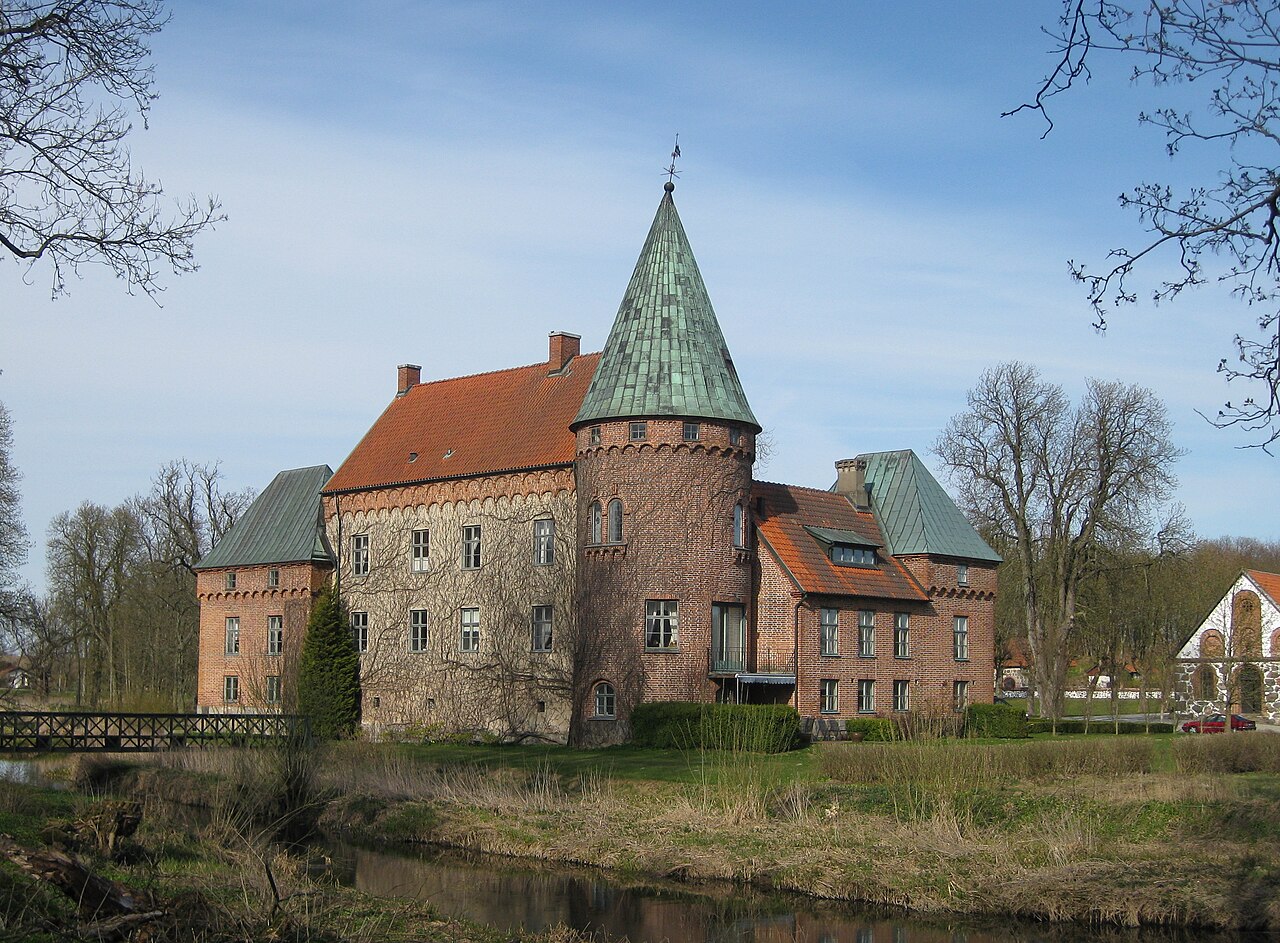
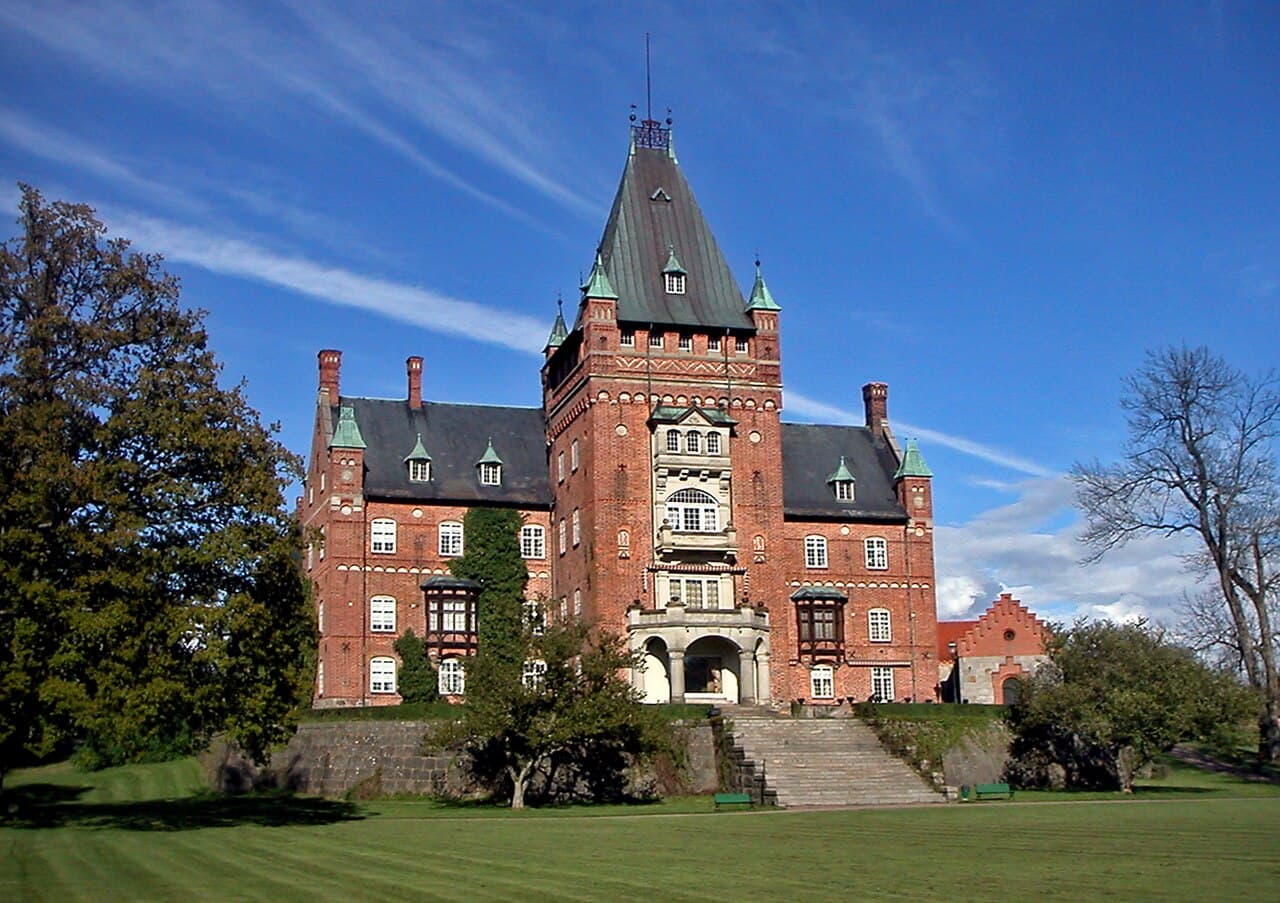
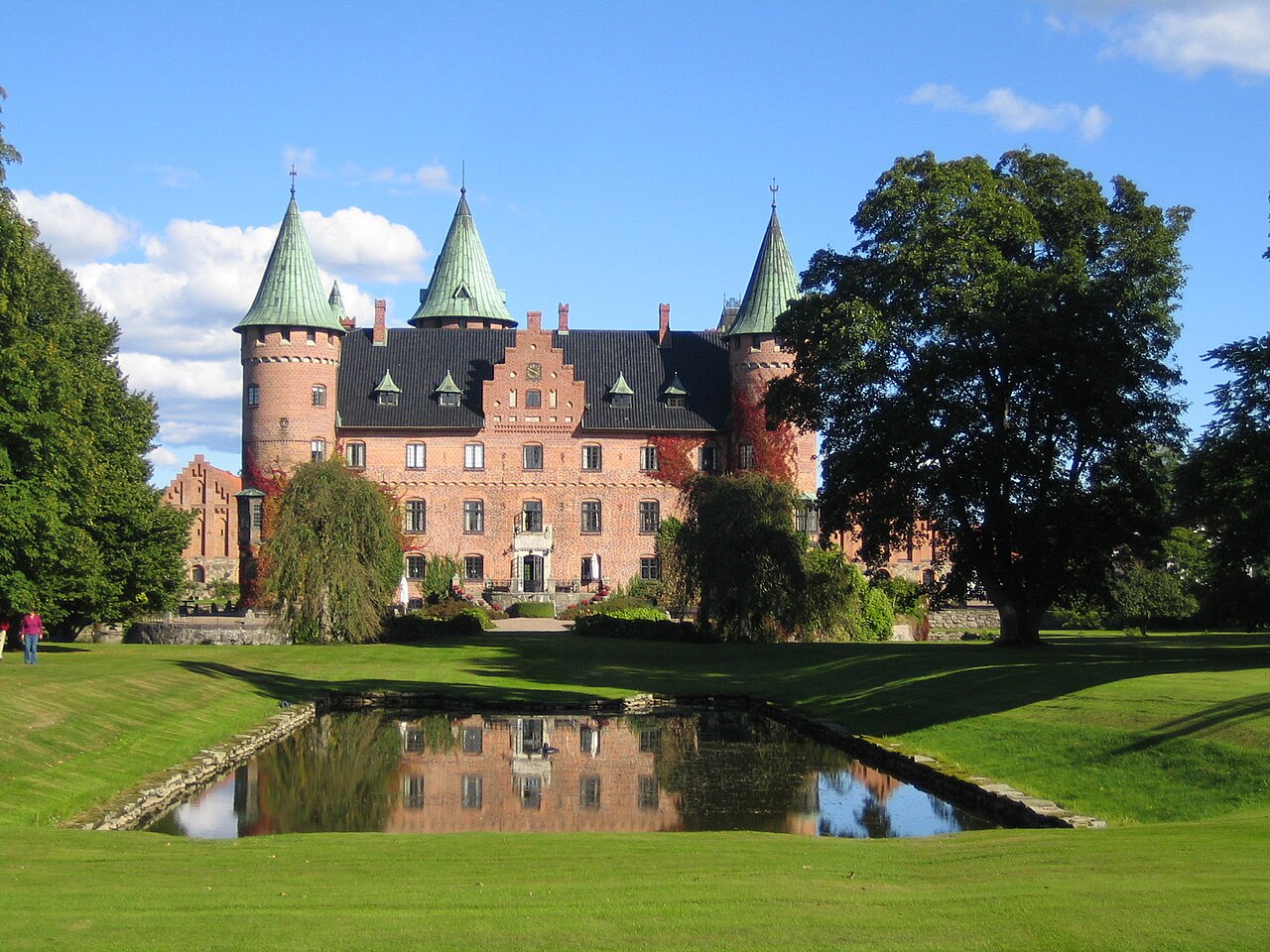
Trollenäs Castle, a renaissance hill castle in Eslöv, Sweden
Eslöv, Sweden
Renaissance (15th–17th c.)
Well Preserved

Trollenäs Castle, located in Eslöv Municipality in the region of Scania, southern Sweden, is a notable example of a Renaissance hill castle with a rich history dating back to the 14th century. The castle has been owned exclusively by two noble families, the Thott and Trolle families, reflecting a deep lineage of aristocratic heritage in the region. Originally known as Näs Castle, it was renamed in the 18th century after the Trolle family, who have maintained stewardship of the estate since then.

Historical background and lineage

The earliest records of Trollenäs Castle trace back to the 14th century, situating it firmly within the medieval period of Scandinavian history. Despite its medieval origins, the castle underwent significant transformation during the Renaissance period. The main structure that visitors see today largely dates from the year 1559, marking a period of architectural transition and refinement. Ownership by the Thott family initially, followed by the Trolle family, has ensured the castle's preservation and continuity through centuries of Swedish history.

Architectural evolution and design

The current castle building reflects the architectural style and tastes of the Renaissance era, characterized by symmetry, proportion, and the incorporation of classical elements. In the late 19th century, the castle underwent a significant renovation led by the prominent Danish architect Ferdinand Meldahl. Meldahl's work aimed to enhance the castle's appearance, giving it the look of a French Renaissance castle, which was a popular architectural revival style during that period. This renovation included refined façades, ornamental details, and possibly the addition or restoration of towers and battlements that emphasize the castle's historic grandeur.

French Renaissance influence

The French Renaissance style is evident in the castle's elegant rooflines, tall chimneys, and decorative stonework. Meldahl's renovation would have introduced elements such as steeply pitched roofs, dormer windows, and sculpted reliefs, which are characteristic of French châteaux from the 16th century. These features contrast with the castle's original medieval defensive structures, reflecting a shift from fortress to stately residence.

Castle grounds and surrounding features

The estate includes a well-maintained park that provides a picturesque setting for the castle. Within this park is a café, offering visitors a place to relax and enjoy the scenic environment. Adjacent to the castle is the medieval Näs old church, which adds to the historical ambiance of the site and highlights the castle's longstanding connection to the local community and ecclesiastical history.

Current use and public access

Trollenäs Castle is open to the public and serves as a venue for a variety of events. It offers facilities for weddings, conferences, dinners, and other festivities, making it an active part of the cultural life in the region. The castle's combination of historic charm and modern amenities attracts visitors interested in history, architecture, and social events.

Visitor experience

Guests to Trollenäs Castle can explore the historic interiors and enjoy the surrounding parkland. The café within the park enhances the visitor experience by providing refreshments in a tranquil setting. The castle's accessibility for events means it is well-equipped to accommodate groups, offering a unique blend of historical atmosphere and contemporary hospitality.

Frequently asked questions (FAQ)

What is the historical significance of Trollenäs Castle?
Trollenäs Castle, dating back to the 16th century, is one of the oldest Renaissance castles in Sweden. It has served various roles throughout history, including as a noble residence and a military stronghold, reflecting the changing tides of Swedish history.
When was Trollenäs Castle built?
Trollenäs Castle was constructed in the late 16th century, with its initial foundation laid in 1565. Over the years, it has undergone several renovations, preserving its architectural integrity while enhancing its beauty.
What are the opening hours for Trollenäs Castle?
Trollenäs Castle is open to visitors from April to October, typically from 10 AM to 5 PM. However, it's advisable to check the official website for any seasonal changes or special events that may affect opening hours.
Is it possible to tour Trollenäs Castle?
Yes, guided tours of Trollenäs Castle are available, providing visitors with insights into its rich history and architectural features. Tours are conducted in both Swedish and English, ensuring accessibility for all visitors.
Can I access Trollenäs Castle using public transportation?
Yes, Trollenäs Castle is accessible by public transportation, with regular bus services connecting it to nearby cities such as Eslöv. Visitors can easily plan their trip using local transportation schedules.
What are the ticket prices for visiting Trollenäs Castle?
Ticket prices for Trollenäs Castle are generally affordable, with discounts available for students and seniors. Children under a certain age may enter for free, making it a great family-friendly destination.
When is the best time to visit Trollenäs Castle?
The best time to visit Trollenäs Castle is during the summer months, from June to August, when the gardens are in full bloom and special events are often held. Spring and early autumn also offer pleasant weather and fewer crowds.
Are there any nearby attractions to visit while at Trollenäs Castle?
Yes, visitors to Trollenäs Castle can explore several nearby attractions, including the picturesque town of Eslöv and the scenic landscapes of Skåne. Additionally, the nearby Övedskloster and its beautiful park make for a lovely afternoon visit.

Photo gallery

Trollenäs Castle
Click to view

Photo by User Dcastor on sv.wikipedia•Public domain

1 photo • Click any image to view in full screen

Information

Hill Castle

Sources & official resources

Verify the information above using these authoritative references.

Loading map...

Visitor reviews

No reviews yet. Been here? Write the first review and help other travelers!

Write the first review

Visited this castle? Share your experience

Your review helps other travelers and adds first-hand knowledge to our encyclopedia.
Write a review

(5/5)

0/2000 characters

Your review will be visible after admin approval

Nearby castles

4.8 km
Trolleholm Castle — Sweden castle

Trolleholm Castle

Svalöv, Sweden

Trolleholm Castle, located in Svalöv, Sweden, is a historic estate with origins dating back to the early 15th century. Originally known as Kattesnabbe and later Ericholm, the castle has been documented since 1424 and was initially a monastic estate during the late Middle Ages. Over the centuries, it evolved into a noble residence associated with prominent families such as the Thott family (1533–1680) and the Trolle family (1680–1806). The current name was bestowed by Frederik Trolle in 1755, reflecting the estate's transformation and noble lineage. The castle's architectural history is marked by significant reconstructions. In the 1760s, it was rebuilt according to the designs of the renowned architect Carl Hårleman, resulting in a Rococo-style palace that replaced the earlier fortress structure. Later, in the late 19th century, the castle underwent a major renovation that introduced elements of the early Renaissance style, giving it much of its present-day appearance. This blend of styles reflects the castle's continuous adaptation to changing tastes and functional needs over several centuries. Medieval origins and early history The earliest records indicate that the site was a manor known as Katty Abbeville in the Middle Ages, with the first known resident being the squire Erik Nielsen around 1424. During the Danish rule of Scania in the 16th century, the estate was transformed into a fortress by Tage Ottesen Thott in 1538. Named Erik Holm in honor of his deceased brother, the fortress featured a three-story brick building arranged around a square courtyard, surrounded by a broad moat with a drawbridge at the east gate. This design was intended to withstand the evolving military threats of the period, particularly in a region frequently contested during the Count's Feud and other conflicts. Following Tage Ottesen Thott's death in 1562, the estate passed to his son Otte Thott Tagesen, and subsequently to his widow Sophie Brahe, sister of the famous astronomer Tycho Brahe. The estate remained in the Thott family for several generations, with notable owners such as Tage Ottesen Thott (died 1658), a powerful Danish nobleman and feudal lord who held multiple estates and was a recipient of the prestigious Danish Order of the Elephant. Conflicts and ownership changes in the 17th century The political upheavals of the 17th century had a profound impact on the castle. After the Treaty of Roskilde in 1658, Scania became part of Sweden, but during the Scanian War (1674–1679), the owner Tage Ottesen Thott sided with Denmark. As a result, he was condemned as a traitor by the Swedish authorities, and the castle was burned in 1678, destroying its wooden interiors and roof. Although Thott regained ownership after the war, he chose to reside in Denmark and sold the estate in 1680 to Helle Rosenkrantz, widow of Privy Council member and Norwegian governor Niels Trolle. The estate was then passed to Rosenkrantz's stepson, Herluf Trolle, but due to the castle's ruined condition, it was rented out rather than inhabited by the family. This period marked a decline in the castle's status as a noble residence but set the stage for its later revival. 18th-century reconstruction and rococo transformation In the early 18th century, the estate changed hands several times before being acquired by Frederik Trolle in the 1720s. By the mid-18th century, the castle was in a dilapidated state. In 1749, an inspection revealed the poor condition of the buildings. Frederik Trolle commissioned the prominent architect Carl Hårleman to design a new castle. Hårleman's plans, completed in 1750, transformed the estate into a rococo palace with elegant facades and refined interiors, reflecting contemporary architectural trends in Sweden. Frederik Trolle also renamed the estate to Trolleholm in 1755, solidifying its identity. After his death in 1770, the castle passed to his daughter Fredrika Vivika Trolle, who married Gustaf Bonde. She invested significantly in the estate, maintaining its status as a prominent noble residence. 19th-century developments and renaissance revival Following Fredrika Vivika Trolle's death in 1806, the estate was inherited by her grandson Gustaf Trolle-Bonde. He implemented progressive reforms, including abolishing feudal obligations, improving agricultural practices, and investing in local infrastructure such as schools, poorhouses, and roads. Despite suffering blindness from an accident in 1831, his leadership left a lasting positive impact on the estate and surrounding community. In 1856, a fire destroyed the castle's barn, prompting architect Carl Georg Brunius to design new agricultural buildings, completed within two years. Later, under the ownership of Carl Johan Trolle-Bonde, the castle underwent a major renovation beginning in 1887, which introduced early Renaissance style elements that define much of the castle's current appearance. This restoration was completed by 1889, blending historic styles with 19th-century tastes. 20th-century restoration and modern use The castle saw further extensive rebuilding in 1951 and again in 1988-89 to accommodate modern functions, including conversion to a conference hotel. Despite these changes, the estate has retained its historic character and remains in the possession of the Trolle-Bonde family, who have preserved its cultural and architectural heritage. Architectural features and estate grounds Trolleholm Castle is notable for its combination of rococo and early Renaissance architectural styles. The castle features a grand facade, ornate interiors, and a layout reflecting its evolution from a fortified manor to a noble residence. The original fortress design with a moat and drawbridge has been replaced by landscaped gardens and parklands that are open to the public, enhancing the estate's appeal. The estate encompasses approximately 62,800 acres (254 km²) and includes around 110 buildings, reflecting its status as a large agricultural and noble property. Among its treasures is a valuable library with around 40,000 books, underscoring the cultural significance of the estate. Public access and cultural significance The castle's extensive gardens are accessible to visitors, providing an opportunity to experience the historic landscape and architecture. While the castle itself functions as a private estate and conference venue, its grounds contribute to the cultural heritage of the region and attract those interested in Swedish noble history and architecture. Trolleholm Castle stands as a testament to the layered history of Scania, reflecting the region's transition from Danish to Swedish rule, noble family legacies, and architectural trends spanning from the Middle Ages through the 19th century.

Post-Renaissance (17th–18th c.)
Details
6.6 km

Ellinge Castle

Eslöv, Sweden

Ellinge Castle is among the oldest country seats in the historical province of Scania, located near Eslöv in southern Sweden. Its origins trace back to the 13th century, making it a site of significant medieval heritage. The current main building predominantly dates from the 15th century, placing it firmly in the late-medieval period. This period was marked by the construction of fortified manors and castles across Scandinavia, reflecting both defensive needs and noble status. Medieval origins and architectural evolution The earliest structure at Ellinge began as a fortified manor, strategically positioned and surrounded by medieval moats that served as defensive barriers. While the original 13th-century buildings no longer survive intact, the moat system remains a prominent feature, although now only partially preserved. The castle's defensive nature is evident in its layout, which originally included thick walls and a compact arrangement typical of Scandinavian fortifications of the time. The main building visible today largely stems from the 15th century, showcasing architectural elements typical of late-medieval manorial residences. This includes sturdy stone construction and a somewhat austere exterior, designed more for defense and practicality than for ornate display. The castle's transformation over centuries reflects changing tastes and functions. Transformation into a swedish manor house In the 18th century, Ellinge Castle underwent significant remodeling when the region was under Danish rule. The fortress was converted into an open mansion reflecting traditional Swedish architectural styles of the time. This transformation involved enlarging windows, adding decorative elements, and modifying the interior to suit residential comfort rather than military defense. The 18th-century renovation softened the castle's medieval fortress character, replacing some defensive features with more elegant and functional living spaces. The grounds were also adapted to include landscaped gardens and a park, which remain accessible to visitors today. 19th-century additions and current condition A notable architectural addition was made in the mid-19th century with the construction of a tower-like structure that enhanced the castle's silhouette and added to its aesthetic appeal. This addition reflects the romantic historicism popular in the 19th century, when many medieval buildings were embellished or expanded with towers and other picturesque elements. Currently, Ellinge Castle is partially preserved. While much of the original fortress and moat system survives only as remnants, the main mansion building remains intact and functional. The castle is privately owned and operates as a venue for conferences, weddings, and events. Its surrounding park is open to the public, offering a glimpse into the estate's historic landscape and providing recreational space. Historical significance and cultural heritage Ellinge Castle holds cultural importance as a representative example of a Scania medieval manor that evolved through centuries of political and architectural change. Its survival through Danish and Swedish rule highlights the complex history of the region. The castle's layered architecture provides insight into the transition from fortified medieval strongholds to more open, residential manors in Scandinavia. Visitors to Ellinge can appreciate the blend of medieval defensive features alongside later stylistic adaptations, illustrating how noble residences adapted to shifting social and political contexts. The estate's continued use as an event venue ensures the preservation and appreciation of this historic site.

Late Medieval (14th–15th c.)
Details
9 km
Örtofta Castle — Sweden castle

Örtofta Castle

Eslöv, Sweden

Örtofta Castle (Swedish: Örtofta slott) is a notable hill castle located in Eslöv Municipality, within the historical province of Scania, Sweden. Its origins trace back to the late medieval period, with the earliest known mention of the estate dating to 1346. Over the centuries, the manor has been under the ownership of several prominent noble families, reflecting its importance in regional history. Medieval origins and architectural features The original castle was constructed in the 15th century, primarily using brick, a common building material in the region during that era. Although much of the medieval structure has not survived intact, parts of the original brick castle remain, offering valuable insights into the defensive and residential architecture of the time. The castle's medieval design would have included typical features such as thick walls, narrow windows for defense, and possibly a moat or other fortifications, characteristic of late medieval hill castles in Scandinavia. 19th-century reconstruction and enlargement Between 1857 and 1861, the castle underwent significant enlargement and reconstruction under the direction of Henry Dücker, a notable figure responsible for adapting the castle to contemporary tastes and needs. This renovation transformed Örtofta Castle into its current form, blending its medieval origins with 19th-century architectural styles and comforts. The reconstruction likely included the addition of new wings, modernization of interiors, and aesthetic enhancements that respected the castle's historical character while making it suitable for modern use. Current use and cultural significance Today, Örtofta Castle serves as a venue for hospitality and events, operating as a hotel and offering facilities for conferences and weddings. This adaptive reuse preserves the castle's historical essence while providing practical functions that engage the public. The castle's setting in Scania places it among a rich tapestry of Swedish castles, contributing to the cultural heritage and tourism appeal of the region. Location and surroundings Situated in the town of Eslöv, the castle benefits from its scenic surroundings typical of southern Sweden's rolling hills and fertile landscapes. Its position as a hill castle would have originally provided strategic advantages, including visibility over the surrounding area and natural defense. The castle remains a landmark within the municipality, accessible to visitors interested in Swedish history and architecture. Architectural style and preservation While the castle's original late medieval brick construction reflects the architectural practices of the time, the 19th-century renovations introduced elements that may include romantic historicism, a common trend in castle restorations during that century. The current condition of the castle is well preserved, maintaining both its historical fabric and the modifications made during the 1800s. This blend of medieval and 19th-century architecture provides a layered narrative of the castle's evolution.

Late Medieval (14th–15th c.)
Details