Trakai Peninsula Castle
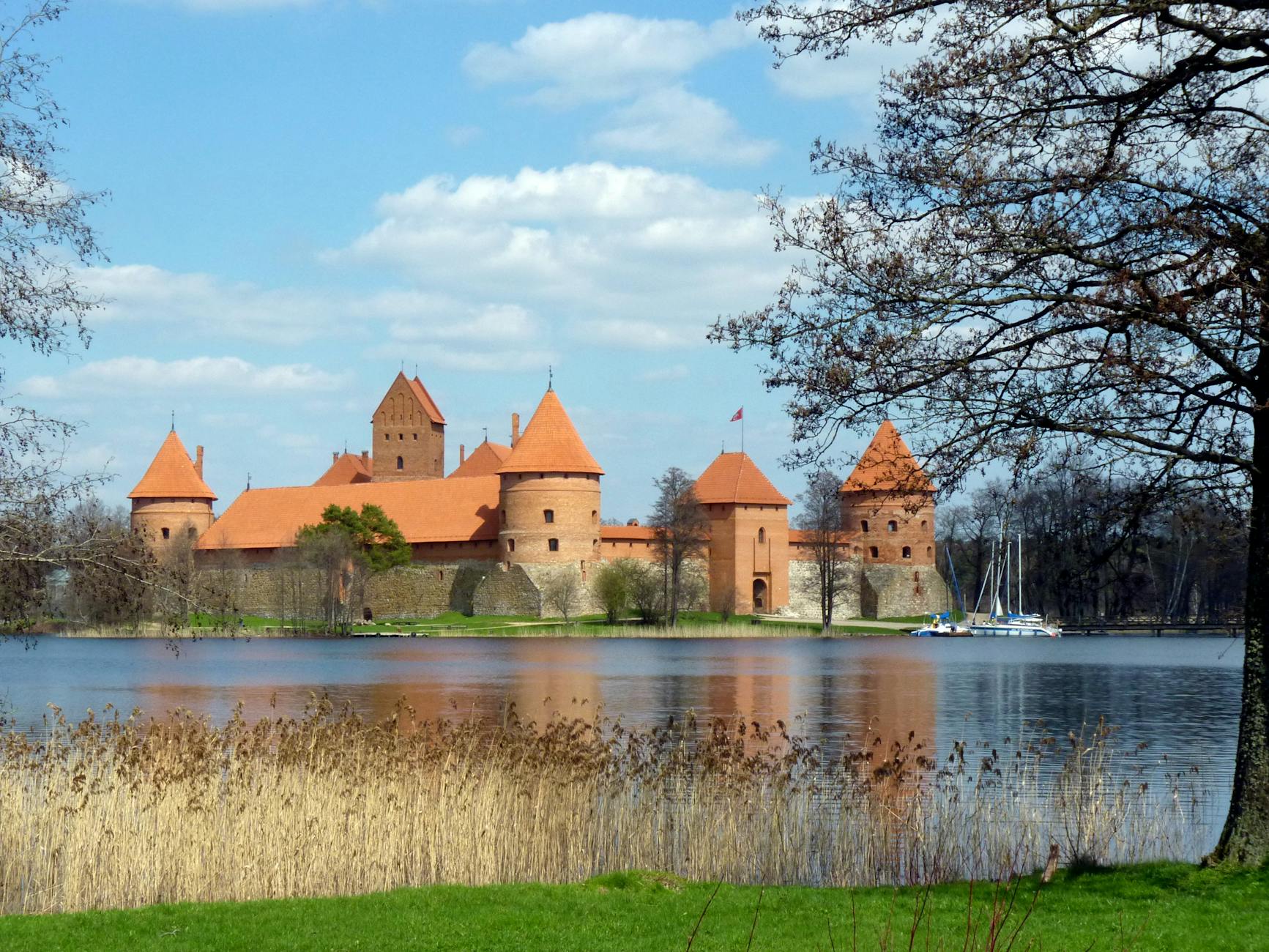
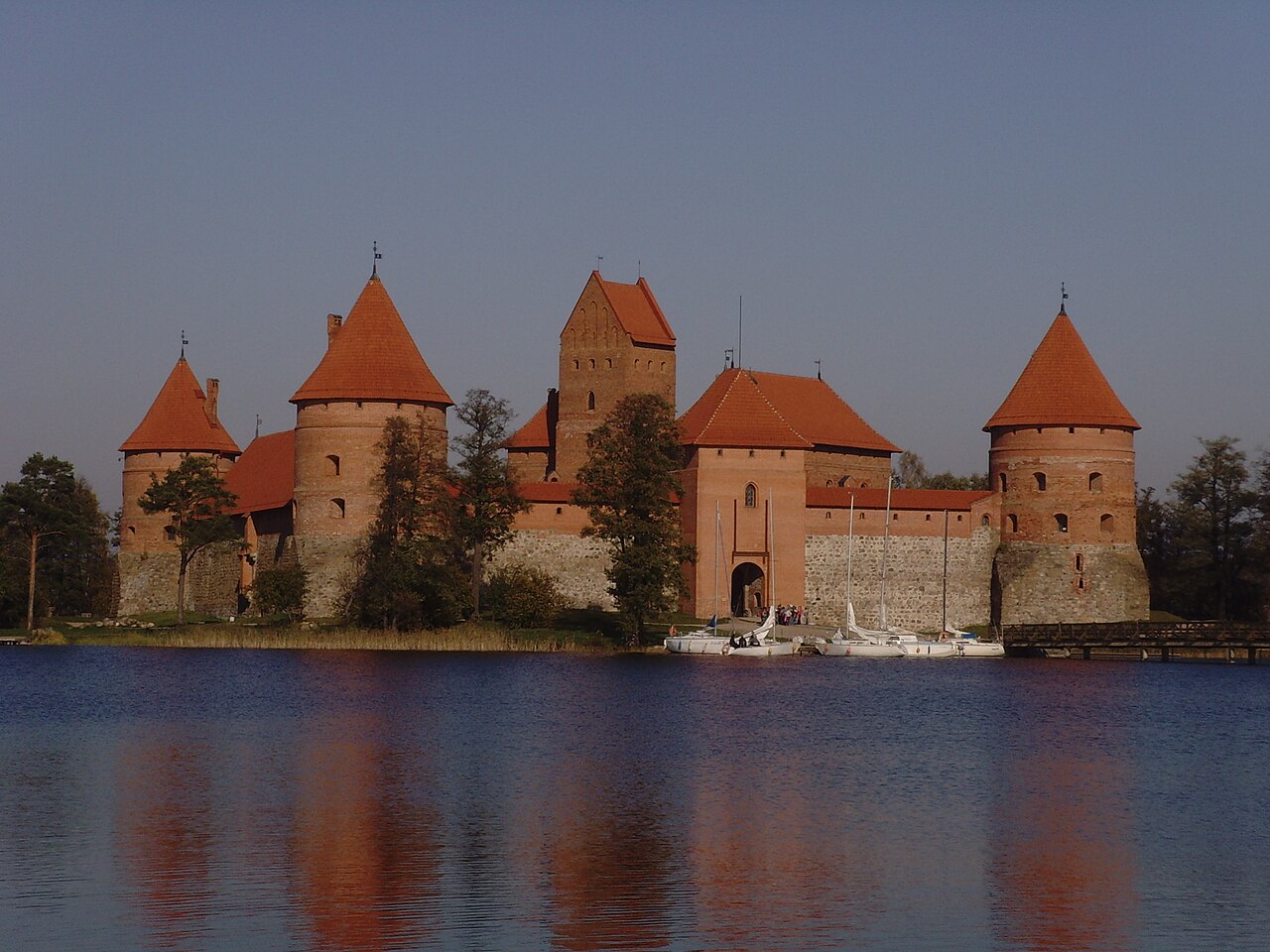
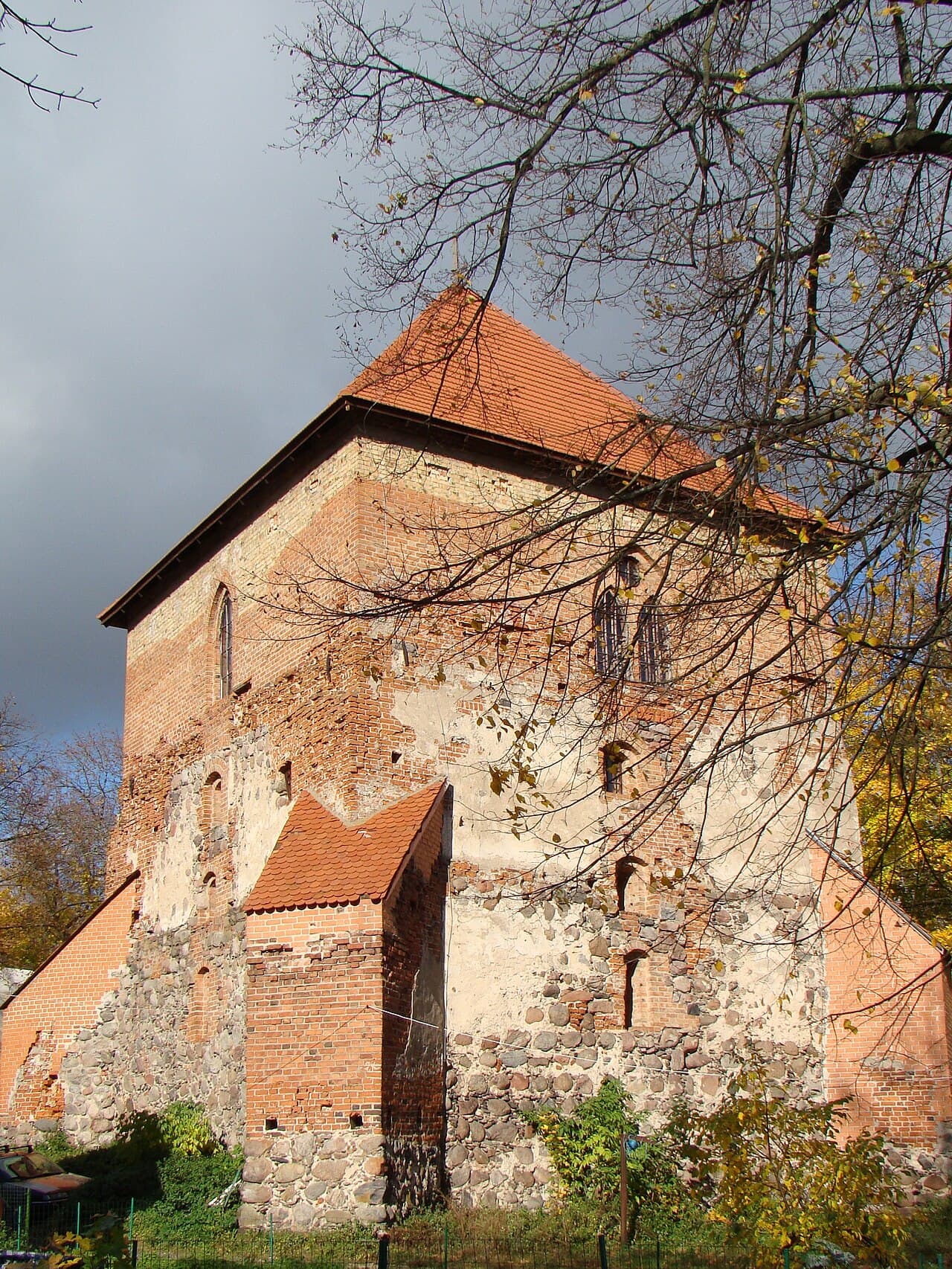
Trakai Peninsula Castle stands as a significant late medieval fortress located on a peninsula between Lake Galvė and Lake Luka in Trakai, Lithuania. Constructed between 1350 and 1377 by Kęstutis, Duke of Trakai, the castle played a crucial role in the defense of the Grand Duchy of Lithuania, particularly protecting the town of Trakai and the capital, Vilnius, from repeated attacks by the Teutonic Knights.
The castle's strategic location on a peninsula provided natural defense, complemented by a man-made moat 12 to 14 meters wide separating it from the adjacent town. Architecturally, the fortress was designed with seven towers interconnected by a formidable 10-meter-high curtain wall. The three largest towers, each measuring approximately 15 by 15 meters, guarded the most vulnerable southwestern side, showcasing advanced military architectural planning of the period.
Construction and architectural features
The castle's construction reflects typical late medieval military architecture in the Baltic region, emphasizing robust stone fortifications and defensive towers. The curtain walls, built from local materials, were thick and tall to withstand siege weaponry. The arrangement of towers allowed defenders to cover all approaches, particularly the southwestern flank, which was most exposed to enemy forces.
The moat surrounding the castle added an additional layer of defense, making direct assaults more difficult. The water barrier leveraged the natural geography of the peninsula, integrating the castle seamlessly into its landscape. Inside the walls, the castle likely contained residential quarters, storage facilities, and spaces for military garrisons, although much of this internal structure is lost due to destruction and decay.
Historical significance and military role
Trakai Peninsula Castle was a key military stronghold during the turbulent period of the 14th and 15th centuries. It was involved in several notable conflicts, including attacks during the civil wars of 1381–1384 and 1389–1392. The castle endured sieges in 1382, 1383, and 1390, reflecting its importance in regional power struggles.
Following the Treaty of Melno in 1422, which stabilized borders between the Grand Duchy of Lithuania and the Teutonic Order, the castle's military importance declined. It transitioned from a frontline fortress to a residence for Lithuanian Grand Dukes. One notable event was the assassination of Grand Duke Sigismund Kęstutaitis within the castle walls on 20 March 1440, marking a significant moment in Lithuanian history.
Later uses and decline
In the 16th century, the castle's function shifted again, serving as a prison. Its military and residential roles diminished as newer fortifications and political centers emerged. The castle suffered extensive damage during the Russo-Polish War (1654–1667), which led to its ruin. It was never rebuilt as a military fortress after this period.
In 1678, the property was granted to the Dominican order by Marcjan Aleksander Ogiński, the Voivode of Trakai. The monks eventually constructed a monastery and church on the site in the 1770s, adding to the historical ensemble of the castle grounds. These religious buildings remain part of the site’s heritage.
Preservation and current status
Today, Trakai Peninsula Castle exists as ruins protected within the Trakai Historical National Park. The surviving walls and towers provide valuable insight into medieval Lithuanian fortification techniques and the region’s historical conflicts. Archaeological efforts have helped preserve the site, which serves as a cultural landmark and tourist attraction.
The castle's ruins offer visitors a tangible connection to Lithuania’s medieval past, illustrating the evolution of military architecture and the political history of the Grand Duchy. Interpretive signage and guided tours help explain the castle’s significance, its architectural features, and the historical events that unfolded there.
Architectural legacy and cultural impact
The design of Trakai Peninsula Castle reflects the military architectural trends of the late medieval period in Eastern Europe, combining natural landscape advantages with engineered defenses. Its towers and curtain walls exemplify the strategic priorities of the time, focusing on defense against siege warfare and controlling key waterways.
The castle’s history as a residence for Grand Dukes and later as a prison illustrates its adaptability and changing role within Lithuanian society. The site’s transition to religious use in the 17th and 18th centuries further enriches its historical narrative, linking military, political, and ecclesiastical histories.
As part of the Trakai castle complex, which includes the better-preserved Trakai Island Castle, the Peninsula Castle contributes to the region’s reputation as a center of medieval Lithuanian culture and power. It remains a significant subject for historians, archaeologists, and visitors interested in the Baltic medieval heritage.
Frequently asked questions (FAQ)
- How do I get to Trakai Peninsula Castle?
- You can reach Trakai Peninsula Castle by taking a bus or train from Vilnius, which is approximately 30 kilometers away. The journey typically takes around 30 to 40 minutes. Once in Trakai, the castle is easily accessible on foot or by local transport.
- What is the historical significance of Trakai Peninsula Castle?
- Trakai Peninsula Castle, built in the 15th century, served as a defensive fortress and residence for the Grand Dukes of Lithuania. It played a crucial role in the political and military history of the region, showcasing the power and influence of the Grand Duchy during its peak.
- When was Trakai Peninsula Castle constructed?
- Construction of Trakai Peninsula Castle began in the early 15th century, around 1409, and was completed in the late 15th century. The castle's architecture reflects the transition from medieval to Renaissance styles, making it a significant example of historical architecture in Lithuania.
- Can I visit Trakai Peninsula Castle year-round?
- Yes, Trakai Peninsula Castle is open to visitors year-round, although some areas may be restricted during winter months due to weather conditions. It's advisable to check the official website for any seasonal changes in opening hours or special events.
- Why is Trakai Peninsula Castle a popular tourist destination?
- Trakai Peninsula Castle is renowned for its stunning lakeside location and picturesque views, attracting visitors for both its beauty and its historical significance. Additionally, the castle hosts various cultural events, exhibitions, and festivals throughout the year, enhancing its appeal.
- Is it possible to take guided tours of Trakai Peninsula Castle?
- Yes, guided tours are available at Trakai Peninsula Castle, providing visitors with in-depth historical insights and stories about the castle and its surroundings. These tours are typically offered in multiple languages and can be booked in advance for convenience.
- What are the ticket prices for Trakai Peninsula Castle?
- Ticket prices for Trakai Peninsula Castle vary depending on age and whether you choose a guided tour. Generally, adult tickets range from €8 to €10, while discounts are available for students and seniors, making it accessible for all visitors.
- What are the opening hours of Trakai Peninsula Castle?
- Trakai Peninsula Castle typically opens at 10 AM and closes at 6 PM during the summer months, with reduced hours in winter. It's recommended to check the official website for the most current opening hours and any holiday adjustments.
- What nearby attractions should I visit while in Trakai?
- While visiting Trakai, be sure to explore the charming town itself, as well as the nearby Lake Galvė for scenic walks and boat rentals. Additionally, the historic Trakai National Park offers beautiful landscapes and hiking opportunities, making it a perfect complement to your castle visit.
Photo gallery

Information
Loading map...
Visitor reviews
No reviews yet. Been here? Write the first review and help other travelers!
Write the first reviewVisited this castle? Share your experience
Your review helps other travelers and adds first-hand knowledge to our encyclopedia.