Trifels Castle
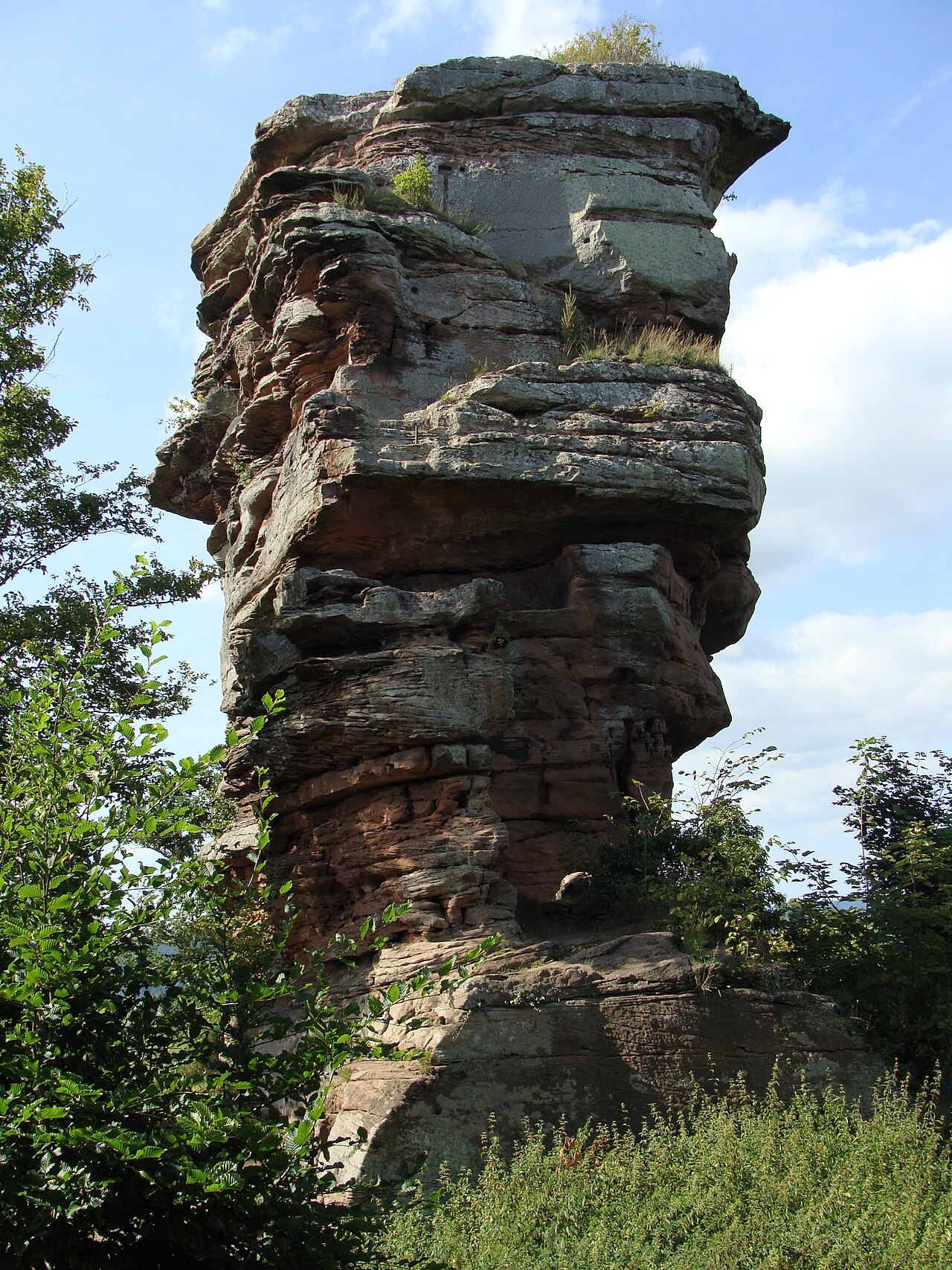
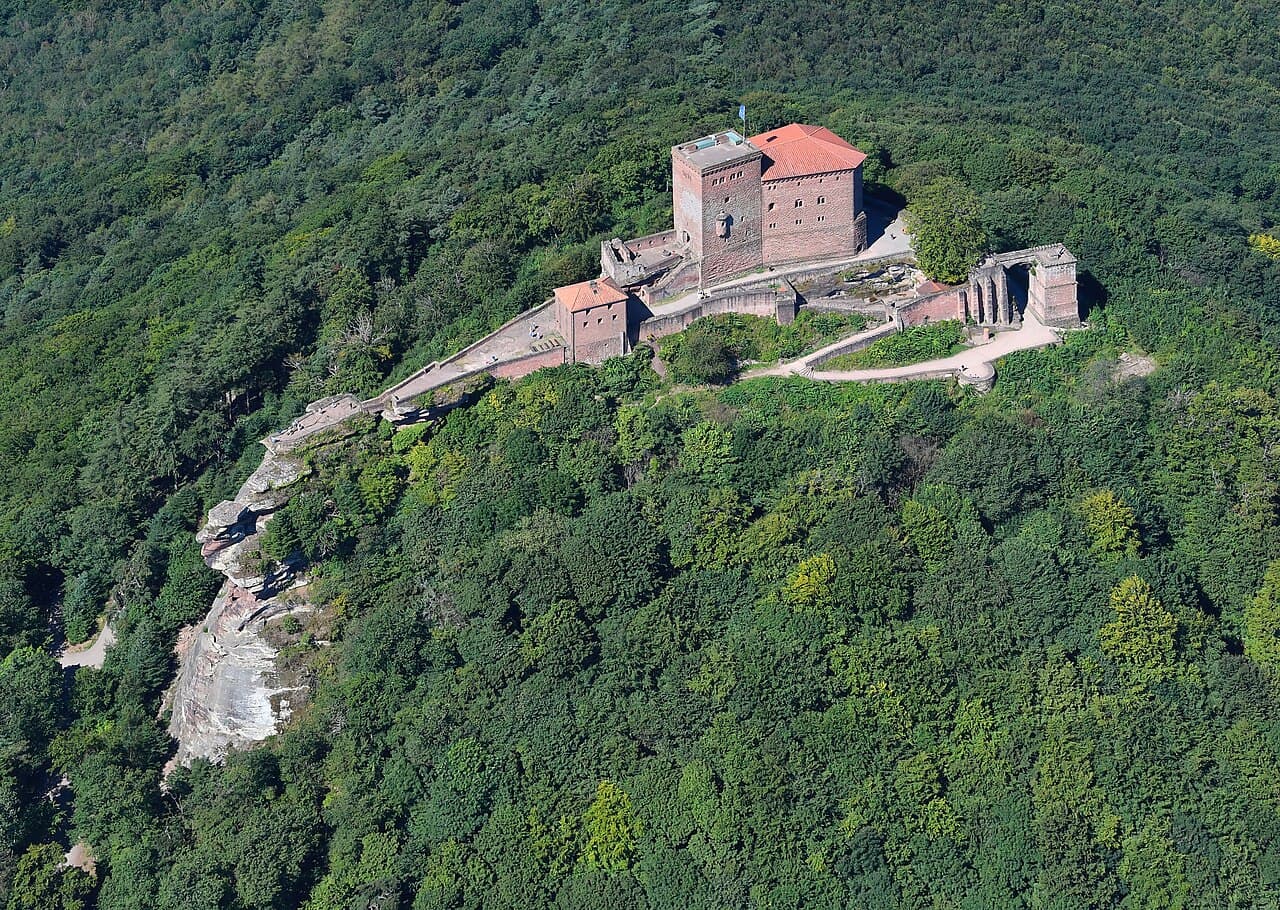
Trifels Castle stands majestically 310 meters above the small town of Annweiler in the Palatinate region of Germany. This High Medieval fortress is renowned for its dramatic location atop the Sonnenberg mountain, a red sandstone peak uniquely divided into three parts, which inspired the castle's name. The castle's commanding position overlooking the Queich valley made it a strategic stronghold in the heart of the Palatinate Forest, serving as a symbol of imperial authority and medieval power.
The origins of Trifels Castle trace back to the 10th century, evidenced by archaeological excavations in 1937 that uncovered remains of an earlier wooden fortification. However, the stone castle that defines its current form was primarily constructed in the 11th century and developed throughout the High Medieval period. It first appears in historical records in 1081, held by the noble Diemar, a relative of Archbishop Siegfried I of Mainz. Shortly thereafter, it became part of the possessions of the Imperial Salian dynasty, solidifying its status as a key imperial fortress.
Historical significance and imperial role
Trifels Castle's most notable historical role was as a secure repository for the Imperial Regalia of the Holy Roman Empire during the 12th and early 13th centuries. From 1125 to 1298, the castle housed the crown jewels, including the imperial crown, orb, and scepter, which were essential symbols of the emperor's legitimacy. This function gave rise to the medieval saying, "Whoever holds Trifels holds the empire." The castle was thus not only a military fortress but also a potent emblem of imperial sovereignty.
In addition to safeguarding the regalia, Trifels served as a state prison during the reign of the Hohenstaufen dynasty. Its most famous prisoner was Richard the Lionheart, King of England, who was held captive here for three weeks in 1193 after his capture on the return from the Third Crusade. The castle's formidable defenses and remote location made it an ideal place for detaining high-profile prisoners. The legend of the troubadour Blondel de Nesle, who supposedly found Richard by singing outside the castle, adds a romantic dimension to its history, although Richard's imprisonment was well known at the time.
Architectural features and layout
Trifels Castle is perched on a rocky outcrop with a distinctive three-part division, which directly influenced its name. The castle complex includes a large keep or donjon, which offers panoramic views of the surrounding landscape, including the town of Annweiler and the Palatinate Forest. The castle's defensive structures include thick curtain walls, battlements, and a deep well tower connected by a bridge to the main enclosure. This well tower is a notable feature, providing a vital water source during sieges.
The castle's layout reflects typical High Medieval military architecture, with a focus on defense and control of the surrounding territory. The outer bailey once housed various auxiliary buildings, though much of it was lost over time. The castle's position on the red sandstone mountain not only enhanced its defensive capabilities but also made it a striking landmark visible for miles.
Decline, decay, and restoration efforts
Following the decline of the Hohenstaufen dynasty and the turbulent period known as the Interregnum, Trifels Castle lost much of its strategic importance. It changed hands several times, including being mortgaged to the Electoral Palatinate in 1330 and eventually coming under the control of the Dukes of Palatinate-Simmern and Zweibrücken in 1410. The castle suffered significant damage during the Thirty Years' War and gradually fell into ruin.
By the 19th century, Trifels was largely deserted and used as a stone quarry, leading to the loss of many original structures, including the late-Romanesque residential buildings and much of the outer bailey. Restoration efforts began around 1840 under the auspices of the Wittelsbach kings of Bavaria. Architects such as August von Voit and Georg von Schacky contributed to early reconstruction plans, and the Trifels Association, founded in 1860, played a key role in preserving the site.
The most extensive rebuilding took place during the Nazi era from 1938 to 1942, led by architect Rudolf Esterer. This reconstruction was inspired by southern Italian Hohenstaufen castles and reflected the cultural-political ideologies of the time. While some medieval walls and archaeological findings were incorporated, much of the current castle is a 20th-century reinterpretation rather than a faithful restoration of the original medieval fortress.
Modern significance and tourism
Today, Trifels Castle is one of the most popular tourist destinations in the state of Rhineland-Palatinate, attracting over 100,000 visitors annually. The castle's elevated position offers spectacular views from the keep's viewing platform, making it a favorite spot for photographers and history enthusiasts alike. Replicas of the Imperial Regalia are displayed on site, providing visitors with a tangible connection to the castle's imperial past.
The surrounding Palatinate Forest and the neighboring ruins of Anebos Castle and Scharfenberg Castle enhance the area's appeal for hikers and mountaineers. The rocky terrain around Trifels also serves as a popular venue for rock climbing, blending natural beauty with rich historical heritage.
Trifels Castle remains a powerful symbol of the High Middle Ages and the legacy of the Hohenstaufen emperors, embodying the complex history of imperial power, medieval warfare, and cultural memory in Germany. Its blend of original medieval elements and 20th-century reconstruction offers a unique insight into the evolving interpretation of heritage and the enduring fascination with castles as monuments of the past.
Frequently asked questions (FAQ)
- How do I get to Trifels Castle?
- Trifels Castle is located in Annweiler, Germany, and can be accessed by car or public transportation. The nearest train station is Annweiler am Trifels, from where you can hike or take a bus to the castle. The hike offers scenic views and takes about 30 minutes.
- What is the historical significance of Trifels Castle?
- Trifels Castle was built in the 12th century and served as a royal castle for the Holy Roman Emperors. It is known for its role in the imprisonment of Richard the Lionheart in the late 12th century. The castle is a symbol of medieval power and has significant historical relevance in German history.
- When was Trifels Castle last renovated?
- Trifels Castle underwent significant restoration in the early 20th century, particularly between 1910 and 1914. Ongoing preservation efforts continue to maintain its structure and historical integrity. These renovations allow visitors to experience the castle in a state that reflects its original medieval architecture.
- Can I take a guided tour of Trifels Castle?
- Yes, guided tours are available at Trifels Castle, providing visitors with in-depth knowledge of its history and architecture. Tours are typically conducted in German, but English-speaking tours may be arranged upon request. It’s recommended to check the schedule in advance for availability.
- Why is Trifels Castle a popular tourist destination?
- Trifels Castle's stunning architecture, rich history, and picturesque location make it a popular destination for tourists. The panoramic views from the castle over the surrounding Pfalz region are breathtaking. Additionally, the castle hosts various cultural events throughout the year, attracting visitors of all ages.
- Is it possible to visit Trifels Castle year-round?
- Yes, Trifels Castle is open to visitors year-round, although opening hours may vary by season. It is advisable to check the castle's official website for the most current visiting hours and any seasonal events. Winter visits can be particularly enchanting with the castle's surrounding landscapes.
- What are the ticket prices for Trifels Castle?
- Tickets for Trifels Castle are generally affordable, with reduced prices available for children, students, and seniors. Family tickets are also offered, making it a budget-friendly option for visitors. It is best to purchase tickets at the site or through the official website for any special offers.
- What is the best time to visit Trifels Castle?
- The best time to visit Trifels Castle is during the spring and early autumn when the weather is mild and the surrounding landscapes are vibrant. Summer can be quite crowded, while winter offers a unique and quiet charm. Visiting during weekdays may also provide a more peaceful experience.
- Are there any nearby attractions to visit?
- Yes, several attractions are located near Trifels Castle, including the picturesque town of Annweiler and the scenic hiking trails of the Palatinate Forest. Other nearby castles, such as Burg Landstein and Burg Neukastel, are also worth exploring. These attractions make for a wonderful day trip in the region.
Photo gallery

Information
Loading map...
Visitor reviews
No reviews yet. Been here? Write the first review and help other travelers!
Write the first reviewVisited this castle? Share your experience
Your review helps other travelers and adds first-hand knowledge to our encyclopedia.