Anebos Castle Ruins
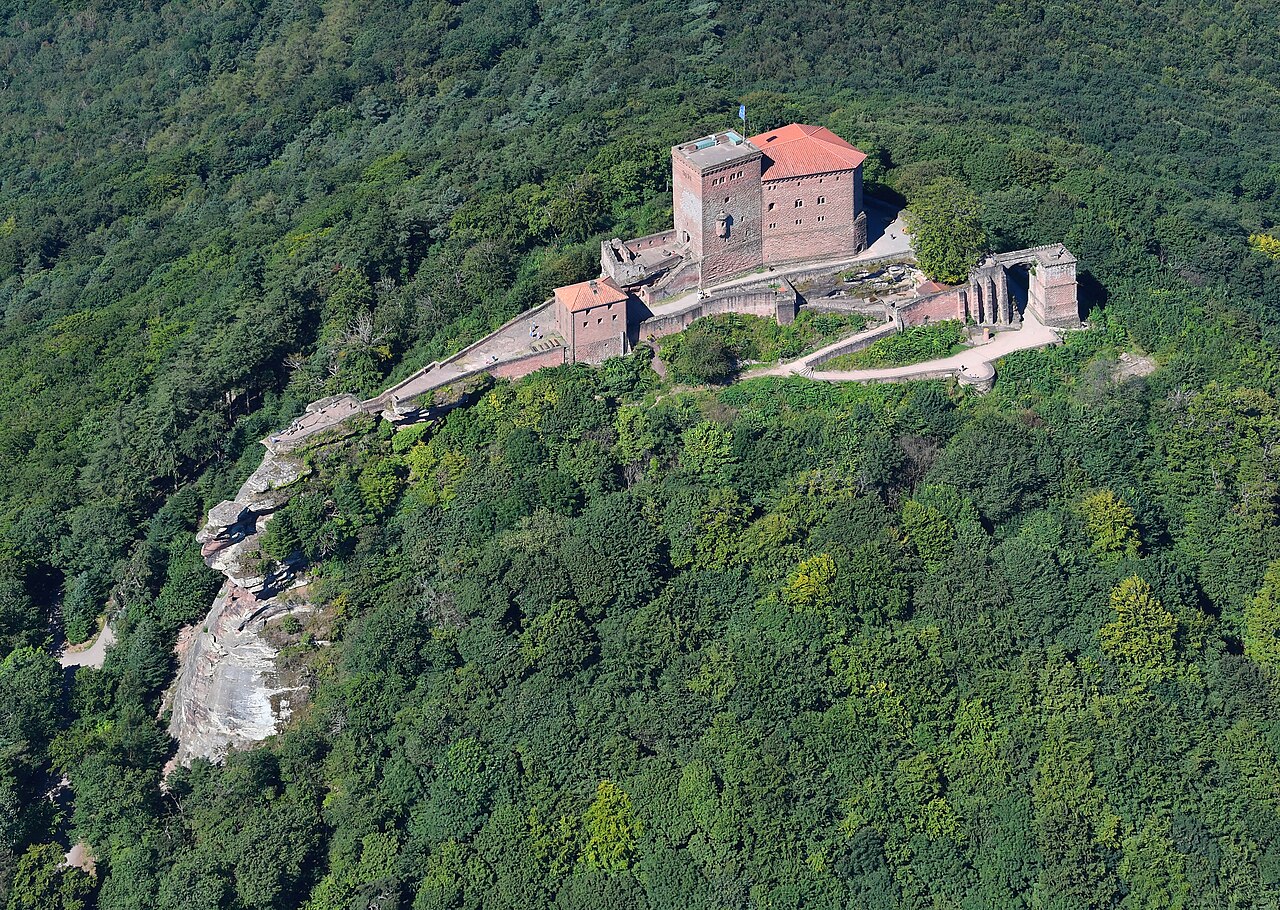
Anebos Castle is a medieval ruin located in the Palatinate Forest south of Annweiler in Rhineland-Palatinate, Germany. Perched atop a 300-metre high rocky low hill ridge, it is part of a notable cluster of hilltop castles alongside Trifels Castle and Scharfenberg Castle. This strategic position offered commanding views of the surrounding forested landscape and served defensive purposes during the High Medieval period.
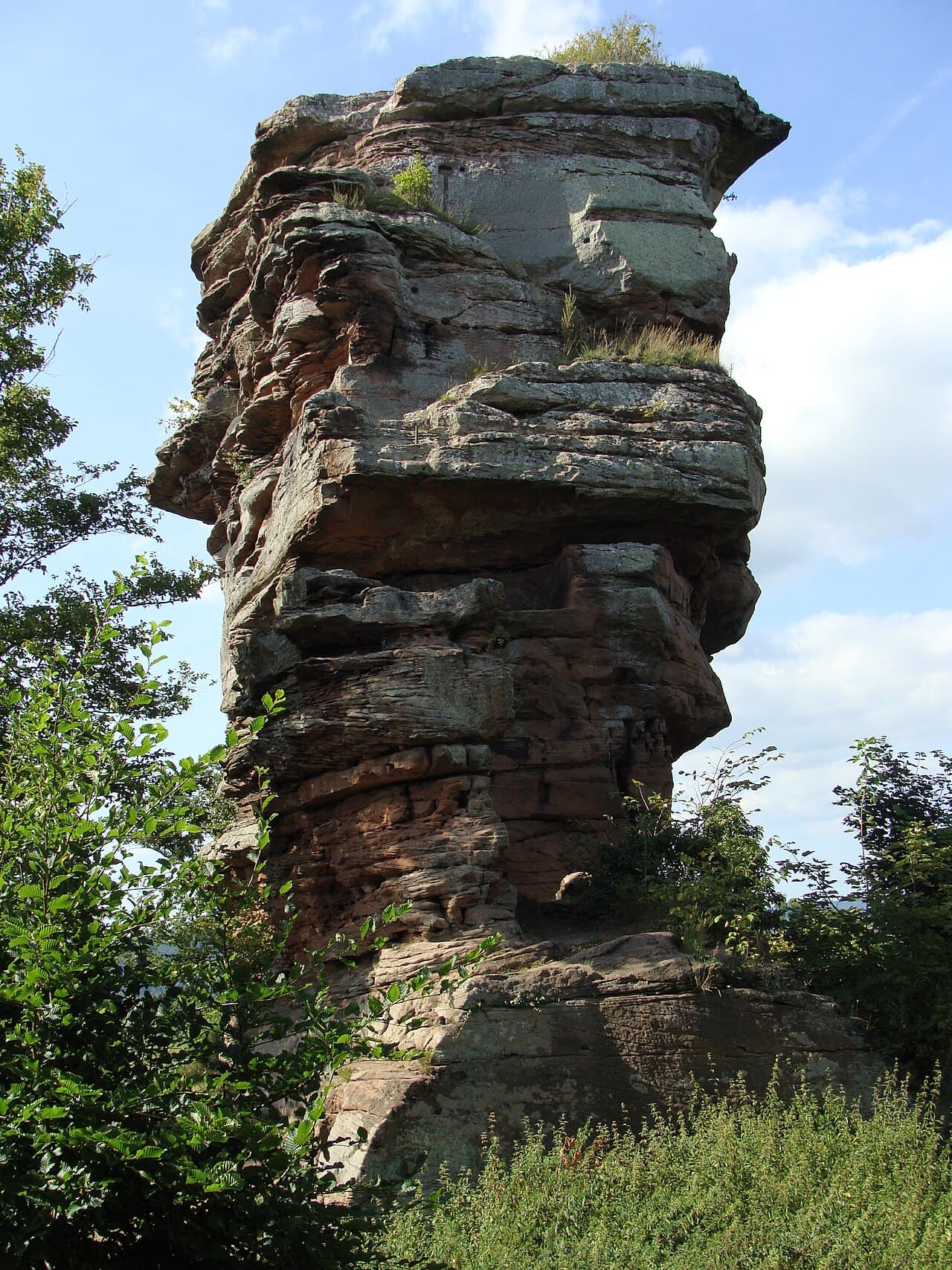
The castle's name likely derives from the German word "Amboss", meaning anvil, possibly reflecting the shape of the hill or a symbolic reference. Today, only a few remnants of the castle's structure survive, including portions of the stone walls and a cistern that was long mistaken for a cellar until recent archaeological excavations clarified its function. Additionally, traces of stonemasonry can be observed carved directly into the rock, indicative of the castle's integration with its natural rocky foundation.
Historical background and significance
Constructed in the early 12th century, Anebos Castle served as the ancestral seat of the lords of Anebos. These lords were ministeriales, a class of unfree knights or officials who held administrative and military responsibilities directly under the Holy Roman Emperor. The Anebos family held a prominent position, managing the feudal tenure system of the castle and its surrounding lands.
Historical documentation of the lords of Anebos dates from the late 12th century through the mid-13th century. Notably, in 1194, the castle's marshal, Eberhard of Anebos, accompanied Emperor Henry VI on his military campaign in Italy. Eberhard was succeeded by his brother Henry in 1196. Records also mention Eliza of Anebos, a widow of a marshal, in the years 1234, 1250, and 1252.
By the middle of the 13th century, the House of Anebos appears to have become extinct, as no further records of the family exist. It is believed that the castle's feudal tenure passed to the family of Philip I of Falkenstein, a seneschal, whose wife Isengard returned the castle to King Conrad IV of Germany. This transfer indicates the expiry of tenure due to the lack of a male heir, a common feudal practice requiring castles to revert to the crown.
The last written record mentioning Anebos Castle dates to 1266. However, archaeological excavations since 2000 have revealed that the castle was inhabited until the 14th century. The evidence suggests the castle was abandoned peacefully, as no signs of military destruction or siege were found.
Architectural features and layout
Anebos Castle was built to take advantage of its natural rocky hilltop, integrating the castle structures with the terrain. The surviving remains include portions of the defensive walls and a cistern carved into the rock, which was essential for water storage during sieges or dry periods. The rock-cut features and masonry traces indicate skilled stonemasonry adapted to the rugged environment.
The castle's layout likely included a keep or main tower, residential buildings, and defensive fortifications typical of High Medieval hill castles. Its position alongside other nearby castles like Trifels suggests it formed part of a defensive network controlling the region. The rocky ridge offered natural protection, reducing the need for extensive outer walls.
The cistern and rock-cut masonry
The cistern is one of the most significant surviving features of Anebos Castle. Initially misidentified as a cellar, recent archaeological work has clarified its function as a water reservoir, a vital feature for sustaining the castle's inhabitants. The cistern is hewn directly out of the rock, demonstrating the adaptation of the castle builders to the natural environment and their technical skill in stonework.
Additional traces of stonemasonry on the rock surfaces indicate that the castle builders modified the rocky outcrop to create foundations and defensive structures, blending natural and man-made elements seamlessly.
Historical context and feudal role
The lords of Anebos were ministeriales, a class of unfree knights serving the emperor with administrative and military duties. Their role included managing the feudal tenure system of the castle, which involved overseeing vassals and lands granted by the emperor. This status placed Anebos Castle within the imperial domain rather than under local noble control.
The castle's strategic location and the prominence of its owners reflect the political and military importance of the site during the High Medieval period. The involvement of Eberhard of Anebos in Emperor Henry VI's Italian campaign highlights the family's integration into imperial affairs.
Transition of ownership and decline
Following the extinction of the Anebos family line in the mid-13th century, the castle's tenure passed to the family of Philip I of Falkenstein. The subsequent return of the castle to King Conrad IV signifies the legal process of tenure expiry due to lack of male heirs. After this period, the castle's importance diminished, and it was eventually abandoned in the 14th century without evidence of violent conflict.
Archaeological investigations and preservation
Since 2000, archaeological excavations at Anebos Castle have provided new insights into its history and structure. These investigations clarified the function of the cistern and uncovered evidence of continued habitation into the 14th century. The absence of destruction layers suggests a peaceful decline rather than siege or battle damage.
Today, Anebos Castle remains a ruin and an archaeological site. Its preservation allows visitors to explore the remnants of a High Medieval hill castle and appreciate the craftsmanship of its builders. The site offers a tangible connection to the feudal history of the region and the role of ministeriales in the Holy Roman Empire.
Visitor experience and significance
Visitors to Anebos Castle can observe the rock-cut cistern, fragments of stone walls, and the natural rocky ridge that formed the castle's foundation. The castle's location in the Palatinate Forest provides scenic views and a sense of the strategic considerations behind its placement. Although only ruins remain, the site tells a story of medieval feudal power and architectural adaptation to the landscape.
The castle's connection with other nearby fortresses like Trifels and Scharfenberg enriches its historical context, illustrating a network of imperial strongholds in the region. This makes Anebos an important point of interest for those studying medieval German castles and feudal administration.
Frequently asked questions (FAQ)
- How do I get to Anebos Castle Ruins?
- Anebos Castle Ruins is located in Annweiler, Germany, and is accessible by car or public transportation. The nearest train station is in Annweiler, from where you can take a short hike to the castle. Signage is available along the trails to guide you to the ruins.
- What is the historical significance of Anebos Castle?
- Anebos Castle, built in the 12th century, played a vital role in the region's defense during the Middle Ages. It served as a strategic lookout point and a residence for local nobility. Today, it stands as a testament to the architectural styles and military history of the era.
- When was Anebos Castle constructed?
- Anebos Castle was constructed in the early 12th century, around the year 1113. It was one of several fortifications built to protect the area during a period of regional conflict and territorial expansion. The castle has undergone various modifications over the centuries, reflecting changes in military architecture.
- Can I visit Anebos Castle Ruins year-round?
- Yes, Anebos Castle Ruins are open to visitors year-round. However, the best time to visit is during the spring and autumn months when the weather is mild, and the surrounding nature is at its most beautiful. Always check local conditions before your visit, especially in winter.
- Is there an entry fee to visit the castle ruins?
- There is no entry fee to visit Anebos Castle Ruins, making it an affordable destination for history enthusiasts and nature lovers alike. However, consider bringing a small donation to support the preservation of this historic site. Informational brochures may also be available at the entrance.
- What are the opening hours for Anebos Castle Ruins?
- Anebos Castle Ruins are open to the public at all times, as there are no specific opening hours. Visitors can explore the ruins and surrounding hiking trails freely. It's advisable to plan your visit during daylight hours for safety and the best experience.
- Is the castle accessible for people with mobility issues?
- Anebos Castle Ruins are located on a hillside, and the path leading to the castle can be steep and uneven. While some areas may be accessible, visitors with mobility issues might find it challenging to navigate the trails. It's recommended to check local resources for accessibility options before your visit.
- Are there any nearby attractions to visit while in Annweiler?
- Yes, Annweiler is home to several attractions, including the picturesque town center, historical churches, and beautiful hiking paths. The nearby Trifels Castle offers stunning views and additional historical insights. Make sure to explore the surrounding Palatinate Forest, which is known for its natural beauty.

Information
Current owner
Municipality of Annweiler
Loading map...
Visitor reviews
No reviews yet. Been here? Write the first review and help other travelers!
Write the first reviewVisited this castle? Share your experience
Your review helps other travelers and adds first-hand knowledge to our encyclopedia.