Madenburg Castle
Madenburg Castle is one of the largest and oldest castle complexes in the German state of Rhineland-Palatinate. Situated on a steep cliff at the edge of the Palatinate Forest, it commands sweeping views over the Rhine rift valley. The castle’s strategic location highlights its historical military importance, controlling key routes and serving as a formidable defensive site during the High Medieval period.
Early history and origins
The first documented mention of Madenburg Castle dates back to 1076, placing its origins firmly in the 11th century. It was initially established by the counts of Madenburg, though detailed records of these early owners remain scarce. The castle’s early role was likely as a feudal stronghold, overseeing the surrounding territory and asserting the counts’ regional power.
Throughout its early history, the castle’s ownership shifted. At times it belonged directly to the Holy Roman Empire and later to the Hochstift of Speyer, a significant ecclesiastical principality. These changes reflect the complex political landscape of medieval Germany, where secular and ecclesiastical powers often contested control over strategic fortifications.
Architecture and fortifications
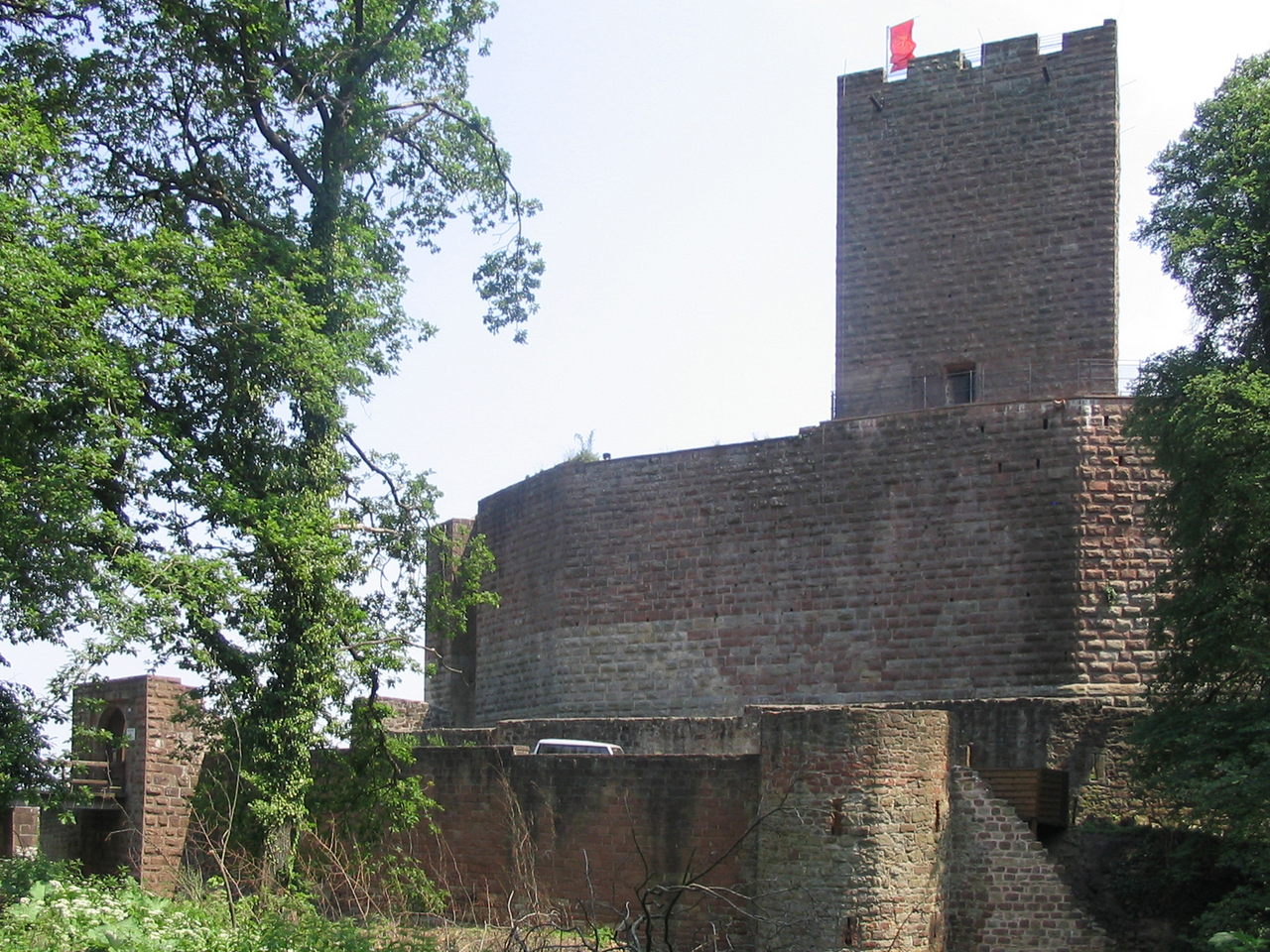
Madenburg Castle was constructed as a hill castle, utilizing the natural topography of the cliff for defense. The extensive ruins reveal a complex layout with multiple curtain walls, towers, and gatehouses. The castle’s design evolved over centuries, adapting to advances in military technology and changing ownership.
The castle’s defensive features included thick stone walls, battlements, and a series of inner courtyards. The elevated position provided both a vantage point for surveillance and a natural barrier against attackers. Remnants of residential quarters and service buildings indicate the castle was a self-sustaining fortress capable of housing a significant garrison.
Damage and reconstruction phases
In 1470, Count Palatine Friedrich I and his forces conquered the castle, marking a significant event in its history. Later, during the Peasants’ War of 1525, Madenburg Castle suffered serious damage. This widespread uprising led to the destruction of many feudal properties across the region. Despite this, the castle was rebuilt and renovated multiple times, reflecting its continued strategic and symbolic importance.
The final destruction came around 1689 when French troops demolished the castle during the wars associated with the Nine Years' War. This left Madenburg in ruins, a state in which it remains today, offering a glimpse into medieval fortification architecture and the turbulent history of the region.
Cultural and historical significance
Madenburg Castle stands as a significant monument to the medieval history of the Palatinate region. Its ruins attract historians, archaeologists, and visitors interested in the military and feudal history of Germany. The castle’s remains provide valuable insights into High Medieval castle construction and the shifting power dynamics between noble families, the empire, and ecclesiastical authorities.
Today, the site is accessible to the public and serves as a cultural heritage landmark. The dramatic setting and extensive ruins make it a popular destination for hiking and historical tourism, contributing to the preservation of regional history and identity.
Visiting madenburg castle
Visitors to Madenburg Castle can explore the extensive ruins and enjoy panoramic views of the Palatinate Forest and the Rhine valley. The site offers walking trails that lead through the remains of the castle walls, towers, and courtyards. Informational plaques provide context about the castle’s history and architecture.
Due to its ruinous condition, some areas may be restricted for safety reasons, but the castle remains a fascinating site for those interested in medieval fortifications and German history. The surrounding natural landscape also enhances the visitor experience, combining cultural heritage with outdoor recreation.
Frequently asked questions (FAQ)
- How do I get to Madenburg Castle?
- Madenburg Castle is located in Eschbach, Germany, and can be reached by car or public transport. If you're driving, take the A65 highway and follow the signs to Eschbach. Public transport options include local buses that connect to nearby towns.
- What is the historical significance of Madenburg Castle?
- Madenburg Castle dates back to the 12th century and was originally built as a fortress. It played a crucial role in the region's defense during the Middle Ages and has witnessed numerous historical events. Today, it stands as a testament to the architectural and cultural heritage of the area.
- When was Madenburg Castle last restored?
- The last major restoration of Madenburg Castle took place in the late 20th century to preserve its structure and historical features. Ongoing maintenance continues to ensure its safety and accessibility for visitors. The restoration efforts have helped maintain its charm and historical integrity.
- Can I visit Madenburg Castle year-round?
- Yes, Madenburg Castle is open to visitors year-round, although specific opening hours may vary by season. It's advisable to check the official website or contact the visitor center for the most current information. Visiting during the warmer months may provide a more enjoyable experience as the surrounding landscapes are beautiful.
- Why is Madenburg Castle a popular tourist attraction?
- Madenburg Castle is popular due to its stunning medieval architecture and panoramic views of the surrounding landscape. The castle also offers guided tours that delve into its rich history. Additionally, its location near hiking trails and vineyards makes it an excellent destination for outdoor enthusiasts.
- Is it possible to hold events at Madenburg Castle?
- Yes, Madenburg Castle can be rented for various events such as weddings, corporate meetings, and cultural gatherings. The unique setting provides a memorable backdrop for special occasions. It's recommended to contact the castle administration for details regarding availability and services offered.
- What are the ticket prices for visiting Madenburg Castle?
- Ticket prices for Madenburg Castle vary based on age and group size, with discounts available for children and seniors. As of the latest update, general admission is quite affordable, making it accessible for families and groups. Check the official website for the most accurate and up-to-date pricing information.
- What are the opening hours for Madenburg Castle?
- Madenburg Castle typically opens from 10 AM to 6 PM during the summer months and has reduced hours in the winter. It's best to verify opening hours before your visit, as they may change due to seasonal events or maintenance. The castle's website often provides the most current information on hours of operation.
- Are there any nearby attractions to visit after Madenburg Castle?
- Yes, there are several attractions near Madenburg Castle, including beautiful hiking trails and local vineyards. The picturesque town of Eschbach offers charming shops and eateries, perfect for a leisurely afternoon. Additionally, the nearby Pfälzerwald Nature Park provides ample opportunities for outdoor activities and exploration.
Information
Loading map...
Visitor reviews
No reviews yet. Been here? Write the first review and help other travelers!
Write the first reviewVisited this castle? Share your experience
Your review helps other travelers and adds first-hand knowledge to our encyclopedia.