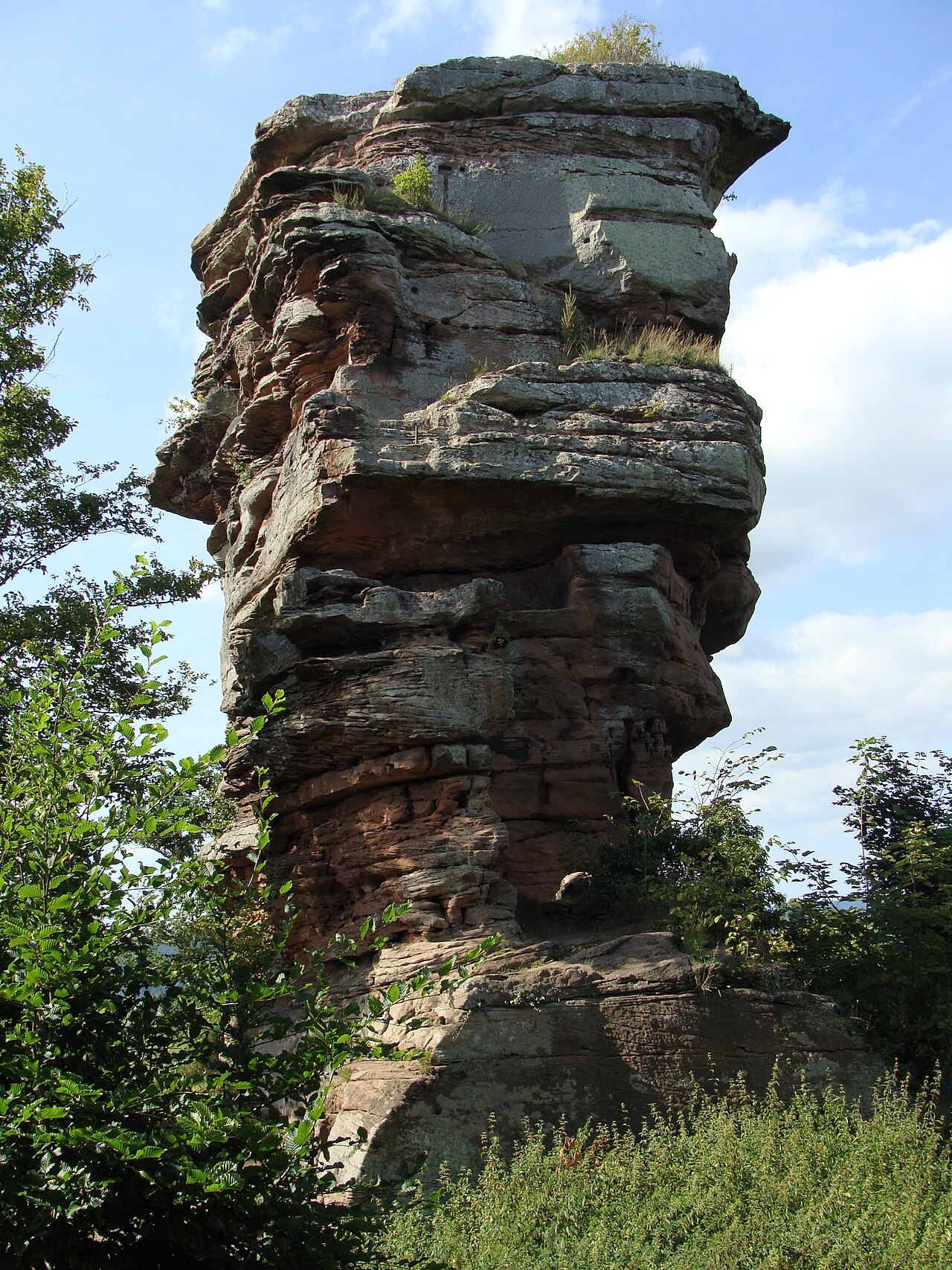
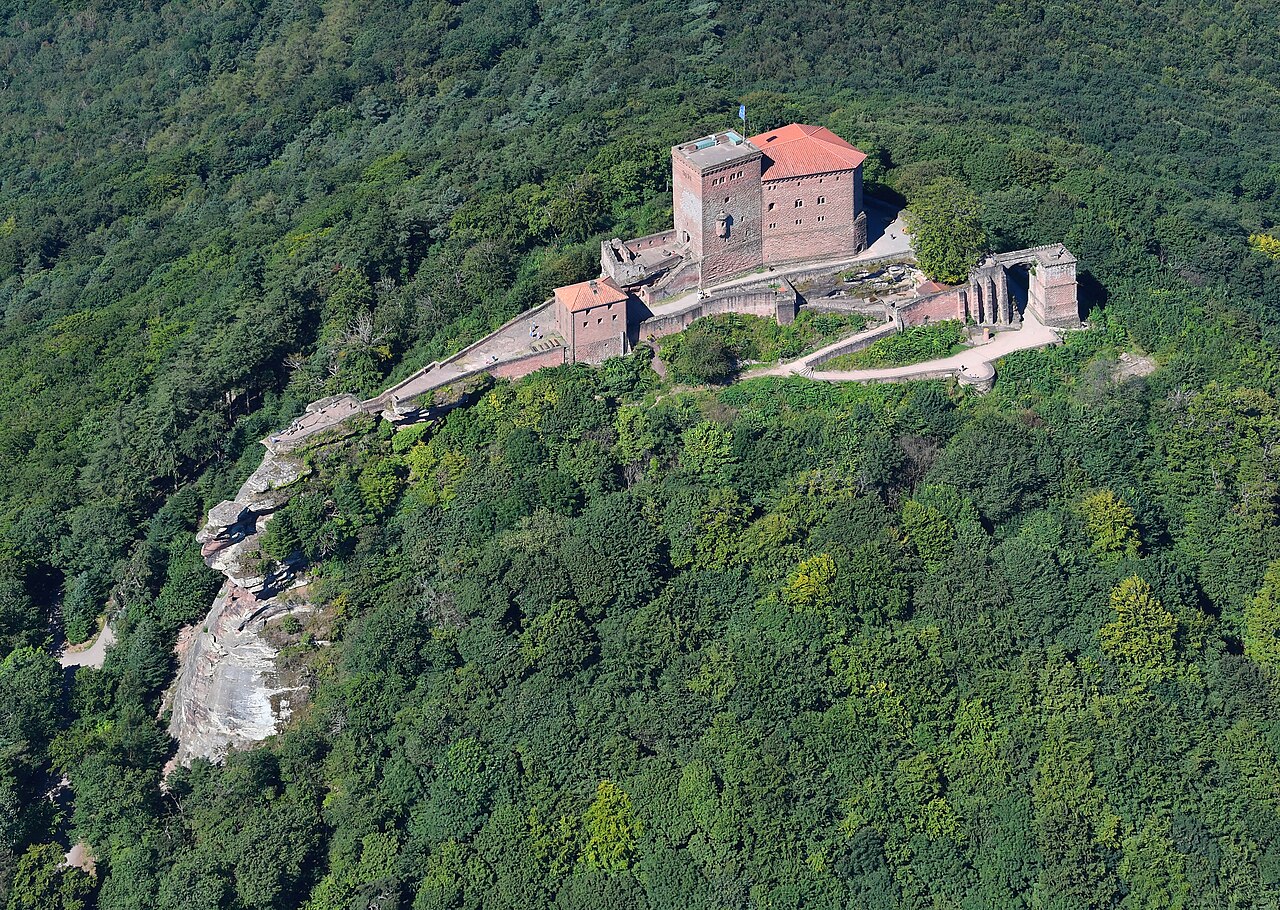
Scharfenberg Castle Ruins
Scharfenberg Castle, also known locally as Münz, stands as a significant medieval rock castle ruin perched above the South Palatine town of Annweiler in Germany. This castle is part of the renowned Trifels Group, which includes its sister castles, Trifels and Anebos. Together, they form a historic symbol of the region, dominating the valley meadows of the River Queich below. Nearby, the remnants of two other castles, Fensterfels and Has, contribute to the area's rich medieval heritage.
Historical background and significance
Scharfenberg Castle was constructed in the first half of the 12th century during the High Medieval period, under the reign of the Hohenstaufen king Conrad III, who ruled until his death in 1152. The castle likely served an important administrative and military function, initially used as a state gaol. Its strategic location on a rocky outcrop provided natural defenses and control over the surrounding territory.
Ownership of the castle passed to a ministeriales family who took the name Scharfenberg. In the early 13th century, the castle became the seat of the most prominent family member, Bishop Conrad III of Scharfenberg, who also served as the Chancellor of the Holy Roman Empire. This association highlights the castle's political and ecclesiastical importance during the High Medieval era.
The castle's decline began with its destruction during the Peasants' War of 1525, after which it was left in ruins. Since then, it has remained a partially preserved ruin, offering valuable insights into medieval castle architecture and feudal history in the region.
Architectural features and layout
The most prominent surviving feature of Scharfenberg Castle is its imposing 20-metre-high bergfried, a tall tower typical of medieval German castles used for defense and as a status symbol. The bergfried's walls are constructed from rusticated ashlars, characteristic of the Hohenstaufen architectural style, which emphasizes robust and textured stonework for both aesthetic and defensive purposes.
In addition to the bergfried, visitors can observe remnants of the well tower and parts of the enceinte—the castle's defensive outer wall. The enceinte would have enclosed the inner courtyard and living quarters, providing protection against attackers. The castle's rock castle classification reflects its integration with the natural rocky terrain, using the landscape as a defensive advantage.
Defensive elements and strategic location
Scharfenberg Castle's elevated position on a rocky hilltop allowed for extensive views over the surrounding valley and the River Queich, enabling early detection of approaching enemies. The bergfried served as a final refuge during sieges and a lookout point. The castle's walls and towers were designed to withstand assaults, with thick masonry and narrow apertures for archers.
The proximity to other castles in the Trifels Group created a network of fortifications that could support one another militarily and administratively. This cluster of castles was significant for controlling trade routes and asserting the power of the Hohenstaufen dynasty in the region.
Legacy and current status
Today, Scharfenberg Castle ruins are a cultural landmark in the Palatinate region, attracting visitors interested in medieval history and architecture. The ruins provide a tangible connection to the High Medieval period and the legacy of the Hohenstaufen dynasty. Preservation efforts focus on maintaining the structural remains, especially the bergfried and enceinte sections, to ensure their endurance for future generations.
While the castle is not fully intact, the visible ruins evoke the castle's former prominence and offer educational opportunities about medieval fortification techniques and feudal society. Its role alongside the nearby Trifels and Anebos castles underscores its importance in the historical landscape of southwestern Germany.
Visiting Scharfenberg Castle
Visitors to Annweiler can explore the ruins of Scharfenberg Castle, enjoying panoramic views of the surrounding countryside. The site is accessible via hiking trails that connect the Trifels Group castles, making it a popular destination for history enthusiasts and outdoor adventurers alike.
Frequently asked questions (FAQ)
- What is the historical significance of Scharfenberg Castle Ruins?
- Scharfenberg Castle Ruins date back to the 12th century and served as a vital defensive structure during various conflicts in the region. The castle is a prominent example of medieval architecture and holds significant cultural heritage, reflecting the strategic importance of the area during its time.
- When was Scharfenberg Castle built?
- Scharfenberg Castle was originally constructed in the early 12th century, with its first historical mention recorded in 1150. Over the centuries, it underwent various modifications, which showcase the architectural evolution of the period.
- Can I visit Scharfenberg Castle Ruins?
- Yes, visitors are welcome to explore the Scharfenberg Castle Ruins. The site is accessible to the public, allowing guests to wander through its remnants and enjoy the scenic views of the surrounding landscape.
- What are the opening hours for Scharfenberg Castle Ruins?
- Scharfenberg Castle Ruins are open to visitors year-round, with access generally available from dawn until dusk. However, it's advisable to check local resources for any seasonal changes or special events that may affect visiting hours.
- Is it possible to hike to Scharfenberg Castle Ruins?
- Absolutely, hiking to Scharfenberg Castle Ruins is a popular activity. There are marked trails that lead to the site, providing visitors with a scenic and enjoyable journey through the beautiful landscapes of Annweiler.
- What is the best time to visit Scharfenberg Castle Ruins?
- The best time to visit Scharfenberg Castle Ruins is during the spring and fall when the weather is mild and the surrounding nature is in full bloom or displaying stunning autumn colors. This period also tends to attract fewer tourists, allowing for a more peaceful experience.
- Are there any nearby attractions to visit while at Scharfenberg Castle?
- Yes, there are several nearby attractions, including the picturesque town of Annweiler and the striking Palatinate Forest. Visitors can also explore other historical sites and enjoy various hiking trails in the area.
- What are the ticket prices for visiting Scharfenberg Castle Ruins?
- There is no entrance fee to visit Scharfenberg Castle Ruins, making it an affordable destination for all visitors. Donations to help maintain the site are appreciated and can support the preservation of this historical landmark.
- How do I get to Scharfenberg Castle Ruins?
- Scharfenberg Castle Ruins can be reached by car, with parking available nearby, or by public transportation to Annweiler. From there, visitors can follow the marked trails leading to the castle, which is a short hike away from the town center.
Information
Loading map...
Visitor reviews
No reviews yet. Been here? Write the first review and help other travelers!
Write the first reviewVisited this castle? Share your experience
Your review helps other travelers and adds first-hand knowledge to our encyclopedia.