Tricule Fortress
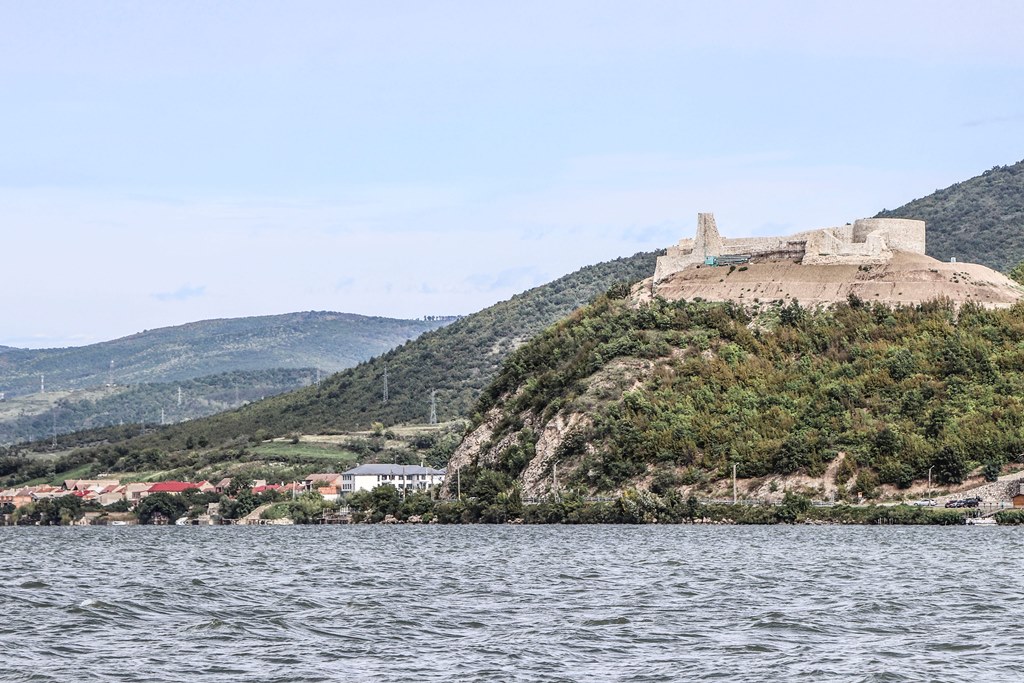
Tricule Fortress is a medieval hill castle ruin located near the village of Svinița in Romania, close to the modern border with Serbia. This fortress occupies a strategic position on a rocky promontory overlooking a sharp bend in the Danube River, a location that provided natural defensive advantages and control over river traffic. Though the exact date of its construction remains uncertain, historians generally date the fortress to the period between the late 13th century and early 15th century, placing it within the High to Late Medieval era of European castle building.
The fortress's historical significance is closely tied to the geopolitical dynamics of Central and Southeastern Europe during the Middle Ages. By 1419, King Sigismund of Luxembourg, ruler of the Kingdom of Hungary and other territories, entrusted the fortress to the Teutonic Order. This military-religious order was tasked with defending the Danube frontier against incursions by the expanding Ottoman Empire. The fortress thus formed part of a defensive network along the Danube, which was a critical frontier zone during the 15th century.
Architectural layout and construction
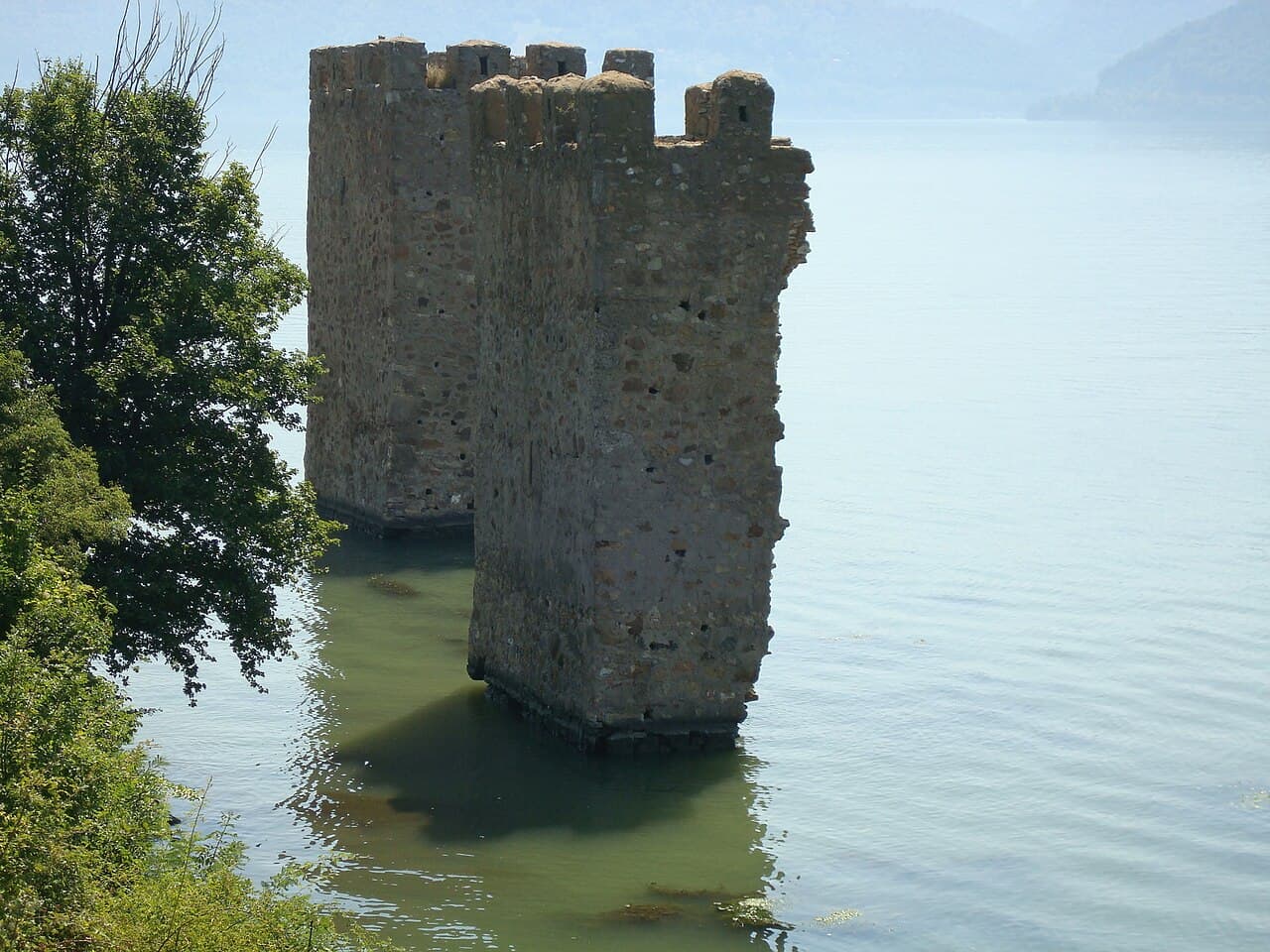
The surviving remains of Tricule Fortress center on three nearly square towers arranged in a roughly triangular formation. One tower faces directly towards the Danube River, overseeing the strategic river bend. The two towers closest to the riverbank stand about twenty meters apart, with the third tower positioned approximately forty meters away, nearer the river's center. This layout reflects a defensive design optimized for surveillance and control of the river approach.
The towers' foundations are constructed from finely cut sandstone blocks, providing a solid base. The upper parts of the towers were built using rubble and large stones sourced from the riverbed, bound with mortar and plastered for durability. The walls are double-layered, with smaller stones tying the two layers together and a rubble-filled core, a common medieval masonry technique for strength and stability.
Each tower is divided into three levels, historically serving distinct functions: storage of provisions on the lower floors, observation posts on the middle levels, and defensive positions on the battlemented upper floors. The battlements feature crenellations designed for archers and defenders to launch projectiles while remaining protected.
A distinctive architectural feature is found on the uppermost floors of the towers, where the walls facing the river include a sloped masonry surface resembling a roof rather than a vertical wall. The exact purpose of this unusual design remains unclear but may have been intended to deflect projectiles or water runoff.
Historical role and military significance
Throughout the 15th century, Tricule Fortress was an integral part of the regional defense system. In 1443, records indicate that the fortress was protected by local inhabitants from the Banat region, reflecting its role within a communal defense network against external threats, particularly from the Ottomans.
Following the shifting political landscape after the Treaty of Jassy in 1792, which adjusted borders between the Ottoman Empire and Habsburg territories, the fortress's military role diminished. Under Habsburg administration, the site was repurposed as a customs station managing border control along the Danube, illustrating its continued strategic importance in regulating trade and movement.
Decline and preservation challenges
By the late 19th century, specifically by 1872, Tricule Fortress was abandoned and left to deteriorate. Its defensive and administrative functions ceased, and the structure gradually fell into ruin. The 20th century brought further changes when the construction of the Iron Gates I hydroelectric dam in 1968 caused the Danube's water level to rise substantially, submerging much of the fortress beneath the reservoir.
Today, only parts of the original fortress remain visible above the waterline. Two of the towers stand approximately 10 to 11 meters high, with walls tapering from about 1.4 meters thick at the base to 0.8 meters near the top. One tower remains nearly intact, while the second is preserved to about half its original height. The third tower, once isolated on a rock and connected by a wooden bridge, collapsed in the 1920s, likely due to damage from treasure hunters and river ice. Its remains lie submerged and are sometimes visible during periods of low water.
The fortress's position on a rocky outcrop overlooking a steep Danube valley provides natural defense but also exposes it to ongoing erosion and water damage. Despite its status as a protected heritage monument in Romania and Serbia, the ruins face continuous threats from environmental factors.
Cultural heritage and visitor information
An informational plaque near the site offers visitors context about the fortress's historical importance and its role in the medieval defense system along the Danube. The site is accessible for viewing but remains largely in a state of ruin, with no extensive restoration undertaken.
Tricule Fortress stands as a testament to the medieval military architecture of the Danube frontier, illustrating the strategic importance of river castles in controlling trade routes and defending territories during periods of conflict. Its surviving towers provide valuable insight into construction techniques and defensive strategies employed by European medieval builders.
Frequently asked questions (FAQ)
- What is the historical significance of Tricule Fortress?
- Tricule Fortress is a medieval structure that dates back to the 13th century, serving as a strategic military outpost during various historical conflicts. Its architecture reflects the defensive needs of the time, showcasing the blend of Romanesque and Gothic styles that were prevalent in the region.
- When was Tricule Fortress built?
- Construction of Tricule Fortress began in the early 13th century, with significant developments occurring over the following centuries. It was primarily built to defend the surrounding territories from invasions and to control trade routes along the Danube River.
- What are the opening hours for visiting Tricule Fortress?
- Tricule Fortress is open to visitors from 9 AM to 5 PM every day, with extended hours during the summer months. It is advisable to check for any seasonal changes in hours or special events that may affect access.
- Can I access Tricule Fortress by public transportation?
- Yes, Tricule Fortress is accessible by public transportation. Local buses frequently operate from nearby towns, making it convenient for visitors to reach the fortress without the need for a personal vehicle.
- Is it possible to take guided tours of Tricule Fortress?
- Yes, guided tours are available and provide in-depth information about the fortress's history and architecture. These tours are led by knowledgeable guides who can enhance your experience with fascinating stories and insights.
- What is the best time to visit Tricule Fortress?
- The best time to visit Tricule Fortress is during the spring and fall when the weather is mild and the landscape is particularly beautiful. Additionally, these seasons tend to have fewer tourists, allowing for a more enjoyable experience.
- Are there any nearby attractions to visit along with Tricule Fortress?
- Yes, there are several nearby attractions, including the scenic Danube River and the charming village of Svinița, known for its traditional architecture. The surrounding area also offers hiking trails that provide stunning views of the fortress and the landscape.
- What are the ticket prices for entering Tricule Fortress?
- Ticket prices for Tricule Fortress are quite affordable, with general admission typically costing around 10 RON. Discounts are often available for students and seniors, making it accessible for all visitors.
- How do I get to Tricule Fortress from the nearest city?
- To get to Tricule Fortress from the nearest city, you can take a local bus or drive along the scenic routes that lead to Svinița. The journey offers picturesque views of the countryside, making it an enjoyable trip for travelers.
Photo gallery

Information
Loading map...
Visitor reviews
No reviews yet. Been here? Write the first review and help other travelers!
Write the first reviewVisited this castle? Share your experience
Your review helps other travelers and adds first-hand knowledge to our encyclopedia.