Golubac Fortress
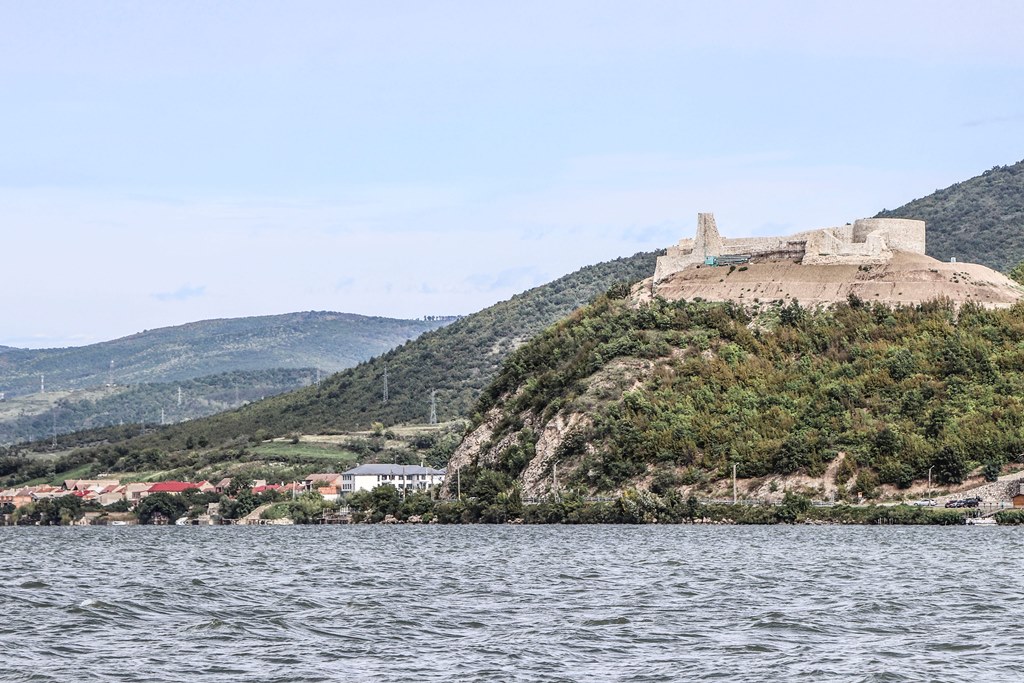
Golubac Fortress is a remarkable medieval stronghold situated near the town of Golubac in Serbia, strategically positioned on the south bank of the Danube River. This hill castle stands as a testament to centuries of military architecture, reflecting the turbulent history of the region from the early medieval period through the Ottoman era. Built primarily in the 14th century by the medieval Serbian state, the fortress occupies a commanding location overlooking the Iron Gate gorge, a vital natural passage on the Danube, which has made it a coveted military asset for various empires over the centuries.
The site of Golubac Fortress holds a rich historical legacy, constructed upon the remains of earlier Roman and Byzantine settlements. Its strategic importance is underscored by its control over river traffic and land routes, making it a focal point of contest among the First Bulgarian Empire, the Byzantine Empire, the Second Bulgarian Empire, the medieval Serbian state, and later the Ottoman Empire. The fortress is first documented in Hungarian records from 1335, described as a stone watchtower guarding the Iron Gate, emphasizing its defensive role in controlling this critical passage.
Historical context and military significance
The fortress's history is marked by numerous changes in control, reflecting the shifting political and military landscape of the Balkans. From the early 9th century to the early 11th century, the region was under the First Bulgarian Empire, followed by Byzantine rule until the late 12th century. The Second Bulgarian Empire then held sway until the mid-13th century, after which the Serbian state asserted dominance. This period saw the construction and fortification of the castle as a significant military bastion.
During the early 15th century, under the rule of Despot Stefan Lazarević, the fortress gained particular prominence. The presence of an Orthodox Christian chapel within one of its towers suggests the influence of Serbian nobility and their efforts to consolidate power in the region. In 1403, the fortress was granted as a fief to Stefan Lazarević by the Hungarian crown, highlighting its political importance. After his death in 1427, the fortress was surrendered to the Ottomans by its commander Jeremija, marking the beginning of Ottoman control.
Golubac Fortress was the site of the notable Battle of Golubac in 1428, where King Sigismund of Hungary confronted Sultan Murad II of the Ottoman Empire. This battle underscored the fortress's strategic value and its formidable defensive capabilities. Over its history, Golubac withstood more than 120 assaults, a testament to its robust construction and tactical location.
Architectural features and layout
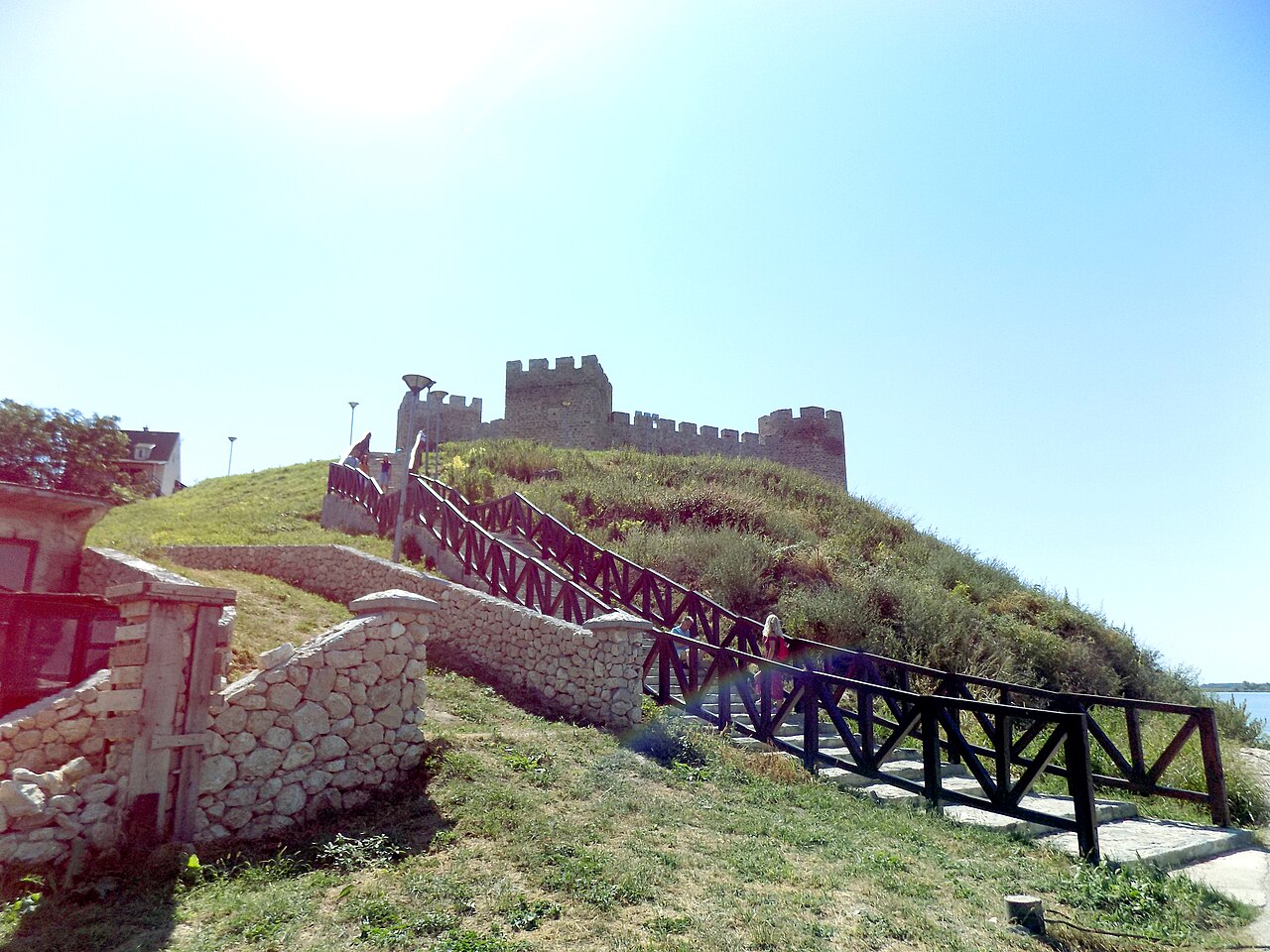
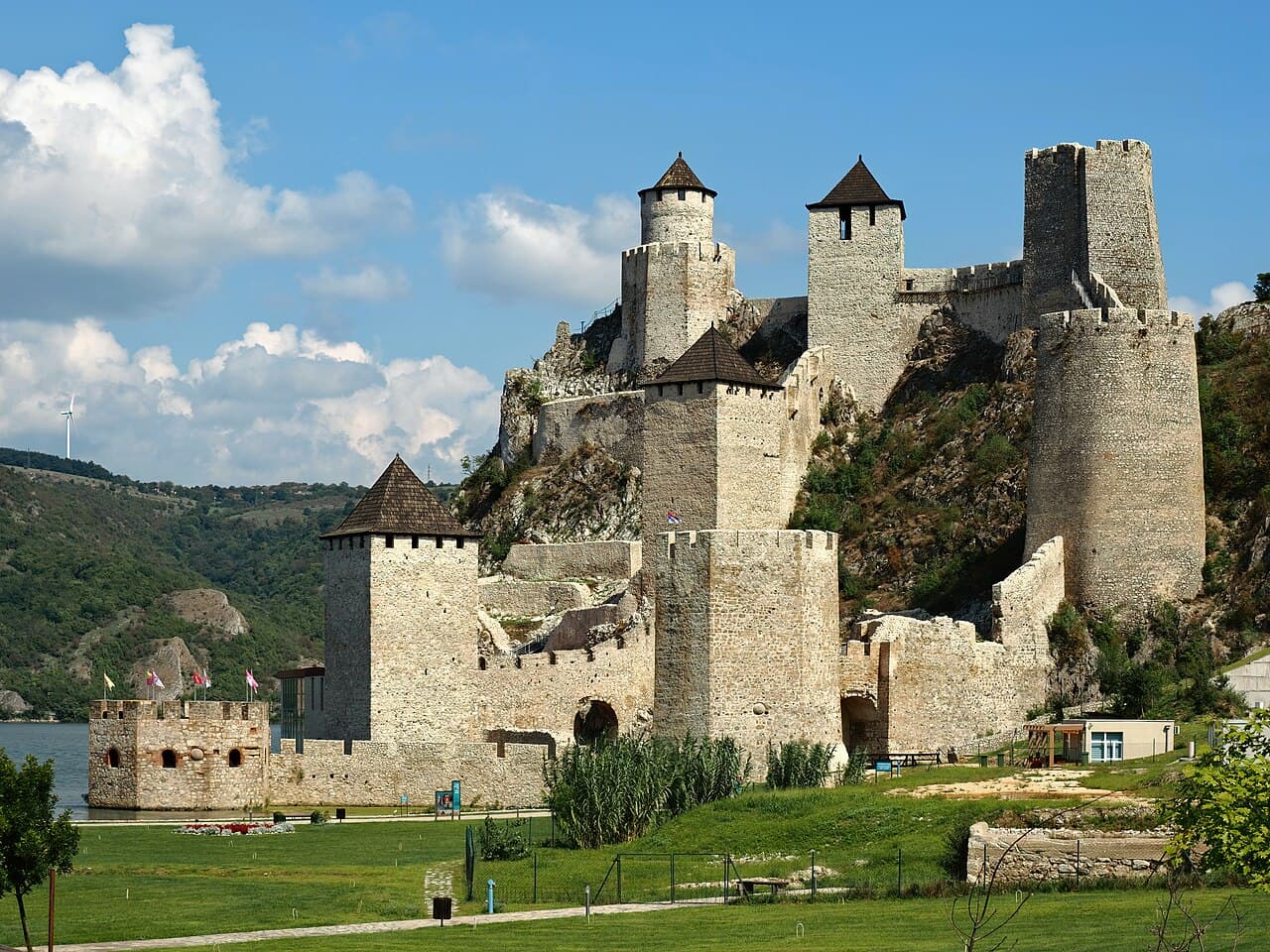
The fortress is laid out in a broad fan shape, covering approximately 23 hectares within the Đerdap National Park. It comprises three main sections: the upper (oldest) compound, the rear compound, and the forward compound. These are interconnected by strong stone walls, with thicknesses ranging from two to three meters, designed to withstand sieges and artillery attacks.
Within the fortress walls rise ten towers and two large fortified gates known as portcullises. The towers vary in shape and size, reflecting different construction phases and adaptations to evolving military technology. The earliest towers are predominantly square or rectangular, typical of medieval fortification styles relying on close-combat defense. To counter the advent of artillery, many towers were later reinforced with polygonal or cylindrical bastions featuring walls up to two meters thick.
Notable towers and defensive structures
- Tower 1 (Hat Tower or Šešir-kula): The fortress's central keep or citadel, notable for its unusual octagonal base topped by a circular spire and a square interior layout.
- Tower 2: A fully circular tower, a rare architectural feature in medieval fortresses, enhancing defense against siege engines.
- Tower 3: Square foundation with an open northern side facing a dungeon tower, offering a terrace with commanding views of the Danube and the Iron Gate gorge.
- Tower 4: Houses an Orthodox chapel embedded within its walls, featuring altar niches oriented eastward, consistent with Christian liturgical traditions.
- Tower 5: One of the few towers retaining its complete square structure without later modifications.
- Towers 6 and 7: Combine square bases with hexagonal and circular reinforcements, reflecting adaptations for artillery defense.
- Tower 8: The smallest of the first nine towers, irregularly square with a cannon port.
- Tower 9: Square base with octagonal reinforcement, further upgraded for artillery resistance.
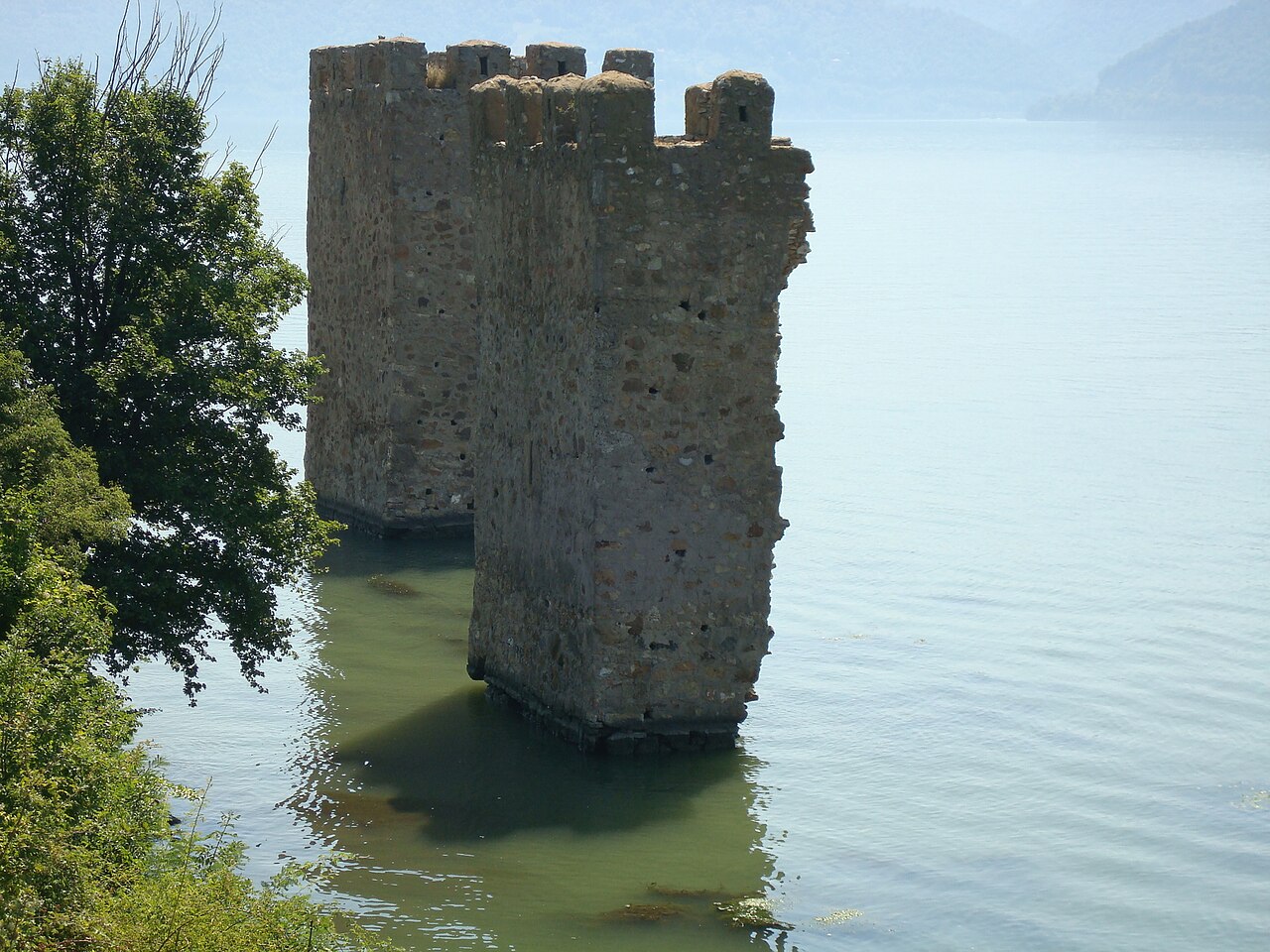
- Tower 10 (White Tower): A low, single-story Ottoman artillery tower with an octagonal base, built after 1481 to control river traffic and protect the harbor entrance; now partially submerged due to dam-induced water level rise.
The fortress gates include two major portcullises. The main entrance is located in the lower forward compound, guarded by towers 7 and 8, while a secondary gate provides access to the rear compound. Defensive features include a moat connected to the Danube and a shallow ditch preceding the gates, enhancing protection against attackers.
Impact of modern developments and restoration efforts
In the 20th century, infrastructure developments affected the fortress's integrity. A road was constructed passing through the fortress gates, subjecting the structure to traffic-related damage. Additionally, the construction of the Iron Gate hydroelectric dam between 1964 and 1972 raised the Danube's water level, flooding the fortress's lower sections and altering its original landscape.
Preservation and restoration initiatives began in 2005, with significant reconstruction funded by European Union IPA funds starting in 2011. The restoration project was led by architect Marina Jovin and archaeologist Dr. Miomir Korać, focusing on traditional stone materials and manual construction techniques to maintain historical authenticity. In 2017, a 152-meter tunnel was built to divert traffic away from the fortress gates, alleviating structural stress.
Golubac Fortress was reopened to the public in April 2019, showcasing its well-preserved walls, towers, and external staircases. Wooden floors and internal staircases, which had deteriorated over time, were reconstructed to enhance visitor experience. Since 1979, the fortress has been protected as a Monument of Culture of Exceptional Importance in Serbia, managed by a dedicated state organization.
Cultural and natural surroundings
Located within the Đerdap National Park, Golubac Fortress is surrounded by stunning natural landscapes that complement its historical significance. The Iron Gate gorge remains a dramatic backdrop, emphasizing the fortress's role in controlling this crucial river passage. Visitors can explore the fortress's extensive grounds, including the civilian settlement area outside the forward walls, and appreciate the blend of medieval military architecture with the natural environment.
Today, Golubac Fortress stands not only as a monument to Serbia's medieval and Ottoman past but also as a symbol of cultural heritage and resilience. Its extensive fortifications, diverse architectural features, and rich history make it a compelling destination for those interested in military architecture, Balkan history, and scenic river landscapes.
Frequently asked questions (FAQ)
- What is the historical significance of Golubac Fortress?
- Golubac Fortress is a medieval structure that dates back to the 14th century and is strategically located at the entrance of the Iron Gate Gorge on the Danube River. It has served as a crucial defensive stronghold throughout its history, witnessing numerous battles and changes in power between empires, making it a symbol of Serbia's rich cultural heritage.
- When was Golubac Fortress built?
- Construction of Golubac Fortress began in the early 14th century, although it underwent various modifications and expansions in the following centuries. The fortress played a significant role during the Ottoman conquests, showcasing the architectural styles of different periods in its structure.
- Can I visit Golubac Fortress, and what are the opening hours?
- Yes, Golubac Fortress is open to visitors throughout the year. The typical opening hours are from 9 AM to 5 PM, but it's advisable to check for any seasonal changes or special events that may alter these hours.
- How do I get to Golubac Fortress?
- Golubac Fortress is easily accessible by car, located about 130 kilometers from Belgrade. Public transport options, such as buses, also connect major cities to Golubac, making it convenient for visitors.
- What are the ticket prices for visiting Golubac Fortress?
- The entry fee for Golubac Fortress is quite affordable, typically around 300 dinars for adults and reduced prices for children and students. This ticket grants you access to the fortress grounds and its historical exhibits.
- Is it possible to explore the fortress on my own?
- Yes, visitors can explore Golubac Fortress independently, as there are clear pathways and informative signs throughout the site. However, guided tours are also available for those who prefer a more in-depth understanding of the fortress's history and architecture.
- What is the best time to visit Golubac Fortress?
- The best time to visit Golubac Fortress is during the spring and early autumn months when the weather is mild and pleasant for outdoor exploration. Summer can be quite hot, while winter months may bring snow, limiting accessibility.
- Are there any nearby attractions to explore after visiting Golubac Fortress?
- Yes, after visiting Golubac Fortress, you can explore the beautiful Iron Gate National Park, which offers stunning landscapes and hiking opportunities. Additionally, the nearby town of Donji Milanovac is worth a visit for its charming atmosphere and additional historical sites.
- Is Golubac Fortress accessible for individuals with mobility issues?
- While Golubac Fortress offers some accessible paths, the rugged terrain and steep steps may pose challenges for individuals with mobility issues. It is recommended to check in advance or contact the site for more information regarding accessibility options.
Photo gallery

Information
Website
Visit websiteSources & official resources
Verify the information above using these authoritative references.
Loading map...
Visitor reviews
No reviews yet. Been here? Write the first review and help other travelers!
Write the first reviewVisited this castle? Share your experience
Your review helps other travelers and adds first-hand knowledge to our encyclopedia.