Trelleborgen Viking Fortress
Trelleborgen Viking Fortress is one of the most remarkable examples of Viking Age military architecture in Scandinavia. Located near the modern city of Trelleborg, Sweden, this fortress is part of a network of six known circular forts constructed during the 10th century. These forts are collectively referred to as "Trelleborgs" and are distinguished by their unique circular layout and precise geometric design, which was advanced for the period.
Historical context and significance
The Trelleborg fortresses were built during the reign of Harald Bluetooth (died 986), the King of Denmark who is credited with uniting parts of Denmark and Norway and converting the Danes to Christianity. Archaeological evidence dates five of these forts to his rule, highlighting a period of consolidation of power and military organization in the Viking world. The fortresses likely served both defensive and administrative purposes, symbolizing royal authority and military strength.
The fortress near Trelleborg, Sweden, gives the city its name and stands as a significant cultural landmark. Its construction reflects the strategic importance of the southern Baltic region during the Viking Age, serving as a military base to control trade routes and regional power dynamics.
Architectural design and features
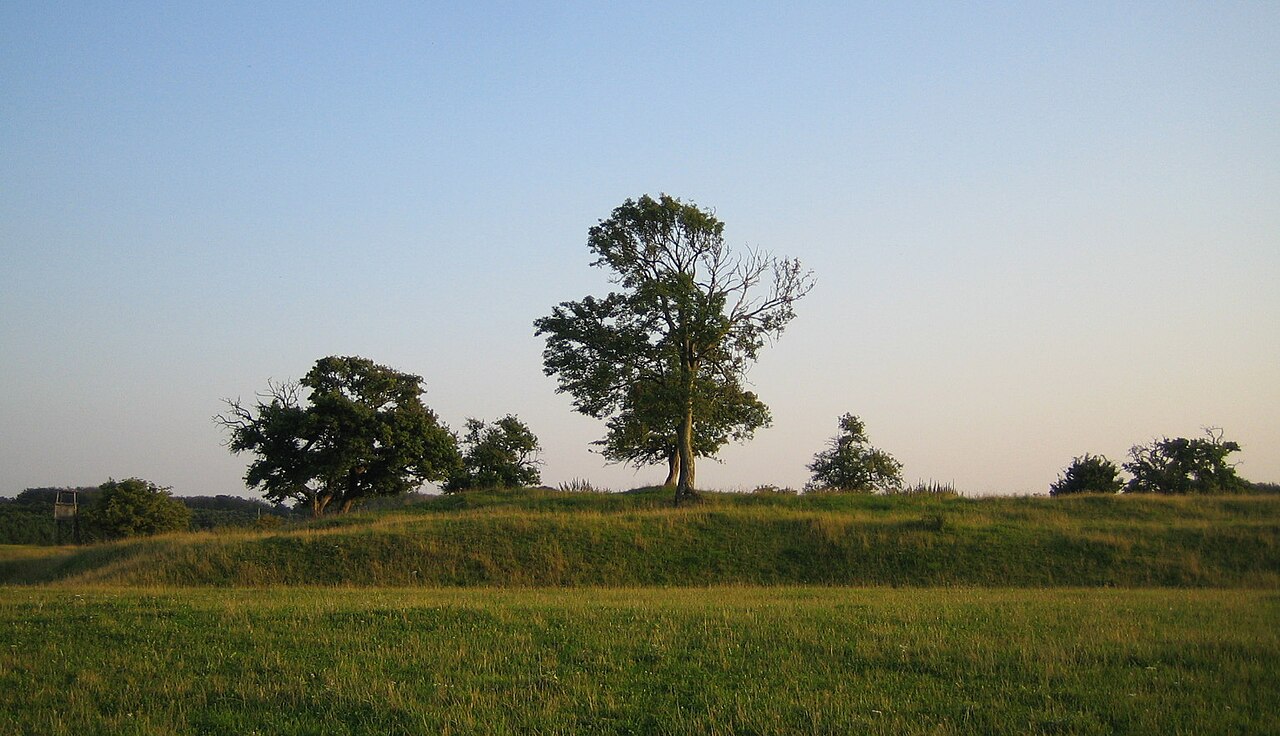
Trelleborgen is classified as a bastioned fortress due to its defensive design, although it differs from later bastioned fortresses of the Renaissance period. The fortress is a perfect circle with a diameter of approximately 136 meters, enclosed by a massive rampart and a deep ditch. The walls were constructed using earth and timber, reinforced with palisades to withstand attacks.
The fortress features four main gates positioned at the cardinal points, each aligned with the compass directions. Inside, the layout is highly organized, divided into four quadrants by two intersecting roads. Each quadrant contained longhouses arranged in a precise grid, which likely housed soldiers and craftsmen. The uniformity and symmetry of the design indicate advanced planning and engineering skills.
Excavations have revealed evidence of workshops, smithies, and storage buildings within the fortress, suggesting it was a self-sufficient military settlement capable of sustaining its occupants during sieges or campaigns.
Archaeological discoveries and reconstruction
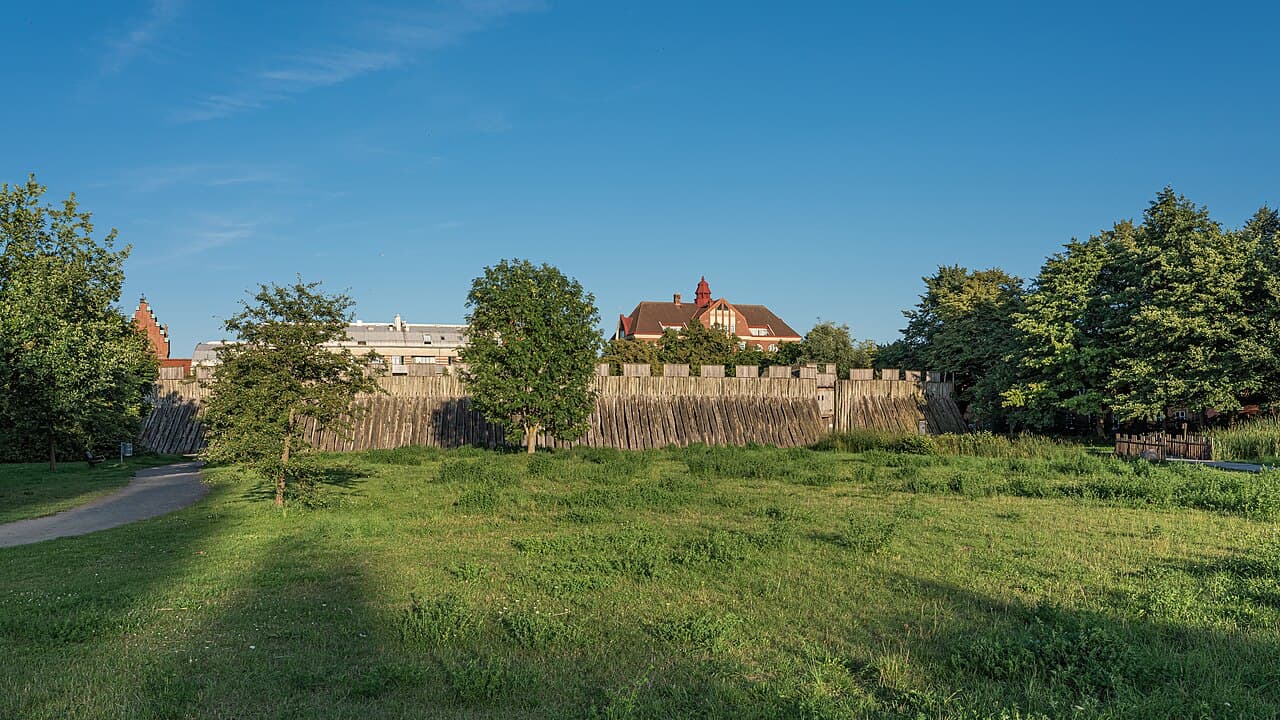
The site of Trelleborgen has been extensively excavated since the mid-20th century, uncovering the foundations of the ramparts, gates, and internal buildings. These findings have allowed archaeologists and historians to reconstruct the fortress with a high degree of accuracy. The reconstruction includes the ramparts, wooden palisades, and several longhouses, providing visitors with an immersive experience of Viking military life.
The fortress complex now hosts a dedicated Viking museum that offers exhibitions on the Viking Age, the construction of the fortress, and the lifestyle of its inhabitants. The museum features a souvenir shop and a café, enhancing the visitor experience.
Cultural events and visitor experience
During the summer months, Trelleborgen becomes a vibrant cultural site with guided tours that explain the fortress's history and architecture. The site organizes various events, including reenactments, craft demonstrations, and educational programs tailored for both children and adults. These activities aim to demonstrate daily life in the Viking Age, including combat techniques, traditional crafts, and Viking cuisine.
The fortress's location near the coast and its well-preserved structure make it a popular destination for those interested in Viking history and medieval military architecture.
Frequently asked questions (FAQ)
- What is the historical significance of Trelleborgen?
- Trelleborgen is a 10th-century Viking Age fortress built during the reign of Harald Bluetooth, serving as a military base and symbol of royal power in Scandinavia.
- How is Trelleborgen architecturally unique?
- Trelleborgen features a perfect circular design with four gates aligned to cardinal points and an internal grid layout, reflecting advanced Viking engineering.
- Can visitors explore the reconstructed fortress?
- Yes, the fortress has been reconstructed based on archaeological findings, allowing visitors to walk the ramparts and enter longhouses to experience Viking life.
- What facilities are available at the site?
- The site includes a Viking museum, souvenir shop, and café, with guided tours and educational events during the summer season.
- When is the best time to visit Trelleborgen?
- The summer months offer the best experience with longer opening hours, guided tours, and cultural events showcasing Viking Age life.

Information
Opening hours
10:00-17:00, daily during summer
Ticket prices
€8 adult, €5 child, free under 7
Current owner
Municipality of Trelleborg
Website
Visit websiteSources & official resources
Verify the information above using these authoritative references.
Loading map...
Visitor reviews
No reviews yet. Been here? Write the first review and help other travelers!
Write the first reviewVisited this castle? Share your experience
Your review helps other travelers and adds first-hand knowledge to our encyclopedia.