Lindholmen Castle Ruins
Lindholmen Castle stands as a significant medieval archaeological site located on the banks of lake Börringe in Svedala Municipality, within the historical province of Scania, Sweden. Originally constructed in the 14th century during the Late Medieval period, this castle was a crucial fortification when Scania was part of the Kingdom of Denmark. Though today only grassy mounds and scattered stones mark its location, the castle's historical and architectural importance remains noteworthy.
Strategic location and defensive features
Lindholmen Castle was strategically positioned on a natural elevation by the lake, surrounded by a small river and extensive marshlands that created natural defensive barriers. The castle was further protected by double moats and strong encircling defensive walls, making it difficult for enemies to approach. These defensive features were typical of Late Medieval fortifications in Scandinavia, designed to withstand sieges and control important waterways and land routes.
Historical significance and political role
Initially a private stronghold, the castle became royal property in 1339 when it was transferred to King Magnus Eriksson, who ruled Sweden, Norway, and Scania. This transition marked Lindholmen's rise in political importance as a royal fortress. The castle played a pivotal role during the turbulent period of Scandinavian history marked by conflicts between Denmark and Sweden.
Imprisonment of king albrecht von mecklenburg
One of the most notable episodes in Lindholmen's history was the imprisonment of King Albrecht von Mecklenburg of Sweden. Captured after his defeat at the Battle of Falköping in 1389, Albrecht was held prisoner at Lindholmen for nearly seven years. During this time, the Danish queen, Margaret I of Denmark, effectively ruled Sweden, consolidating her power over the region.
Peace negotiations of 1395
In 1395, Lindholmen Castle was the venue for significant peace negotiations between Queen Margaret I and the deposed Swedish king, Albrecht von Mecklenburg. The talks lasted for sixteen days and were attended by numerous nobles and dignitaries, so many that tents had to be erected on the castle grounds to accommodate them. These negotiations were crucial in shaping the political landscape of Scandinavia at the time, reinforcing Margaret's authority.
Decline and dismantling
Following its prominence in the 14th century, Lindholmen Castle's importance declined during the 15th century. By the 16th century, the castle was deliberately dismantled to provide building materials for the construction of Malmöhus Castle, another major fortress in the region. This practice of repurposing stone from older castles was common in the period and contributed to the loss of many medieval structures.
Later ownership and current state
After the Treaty of Roskilde in 1658, when Scania was ceded from Denmark to Sweden, the Lindholmen estate, including the adjacent Börringe Abbey, was granted by King Charles X Gustav to his son Gustaf Carlson. During the Swedish crown's reduction policies, the estate reverted to crown property and was subsequently leased out. In 1723, the estates were purchased by Erasmus Clefwe, and by 1827, the combined properties were divided and sold in smaller parcels.
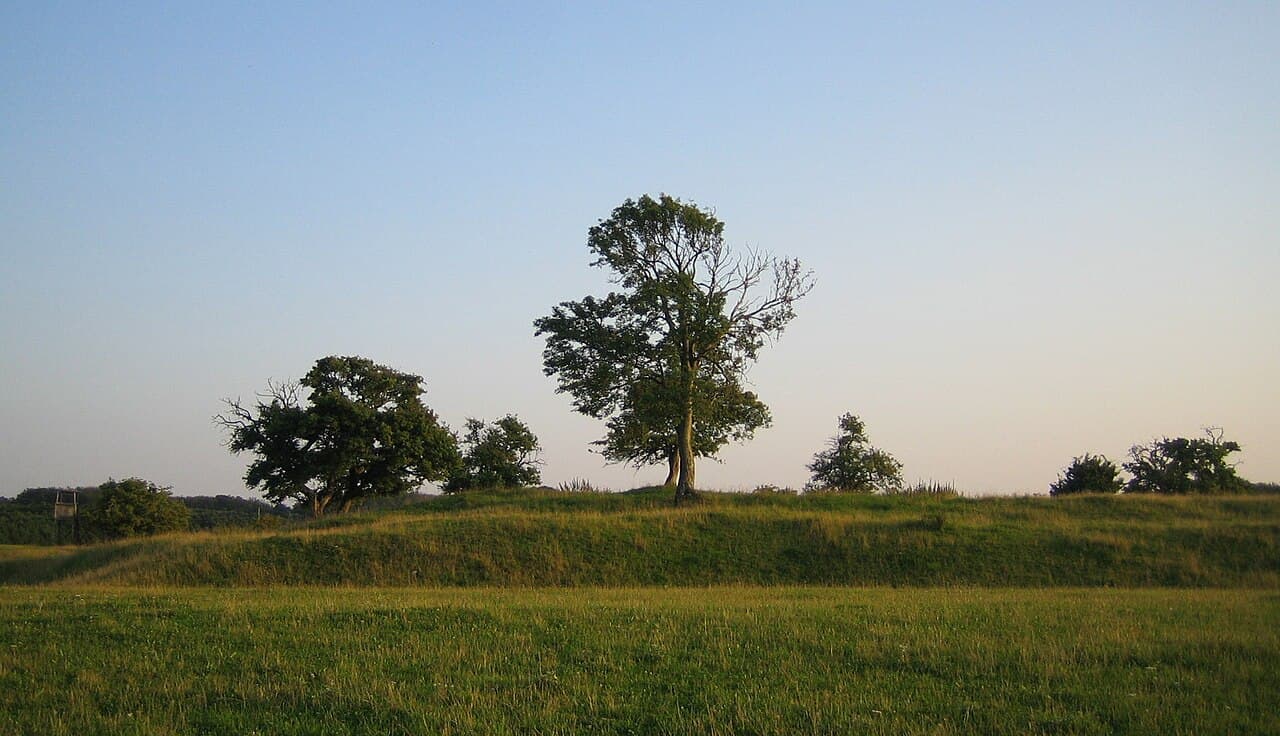
Today, Lindholmen Castle exists only as an archaeological ruin, with a grassy mound marking the site of the former castle and a few stones visible on the ground. The site offers valuable insights into medieval fortification techniques and the complex history of Danish-Swedish relations in Scania.
Architectural characteristics
While no significant structures remain standing, archaeological studies indicate that Lindholmen Castle featured typical Late Medieval defensive architecture with robust stone walls and a layout designed for both defense and residence. The presence of double moats and placement on a natural elevation highlight the strategic considerations in its design. The castle likely included a keep, curtain walls, and gatehouses, common in Scandinavian castles of the period.
Cultural and heritage importance
Lindholmen Castle is an important cultural heritage site, reflecting the medieval history of Scania and the shifting control between Denmark and Sweden. Its ruins serve as a reminder of the region's complex past and medieval military architecture. The site is accessible to visitors interested in history and archaeology, offering a tangible connection to the events that shaped Scandinavian history.
Frequently asked questions (FAQ)
- How do I get to Lindholmen Castle ruins in Svedala?
- Lindholmen Castle ruins are located near lake Börringe in Svedala Municipality, Scania, Sweden. Visitors can reach the site by car or local transport to Svedala, followed by a short walk to the castle grounds.
- What is the historical significance of Lindholmen Castle?
- Lindholmen Castle was a key medieval fortification in Scania, serving as a royal stronghold and prison. It played a central role in Scandinavian politics, especially during the imprisonment of King Albrecht von Mecklenburg and the 1395 peace negotiations.
- Can I visit the ruins of Lindholmen Castle?
- Yes, the site is open to the public as an archaeological ruin. While no standing structures remain, visitors can explore the grassy mound and surrounding area to appreciate the castle's historical location and natural defenses.
- When was Lindholmen Castle built?
- Lindholmen Castle was built in the 14th century during the Late Medieval period, reflecting typical defensive architecture of that era in Scandinavia.
- Why was Lindholmen Castle dismantled?
- The castle was dismantled in the 16th century to provide building materials for Malmöhus Castle. This was a common practice to reuse stone from older fortifications for newer constructions.
Photo gallery

Information
Loading map...
Visitor reviews
No reviews yet. Been here? Write the first review and help other travelers!
Write the first reviewVisited this castle? Share your experience
Your review helps other travelers and adds first-hand knowledge to our encyclopedia.