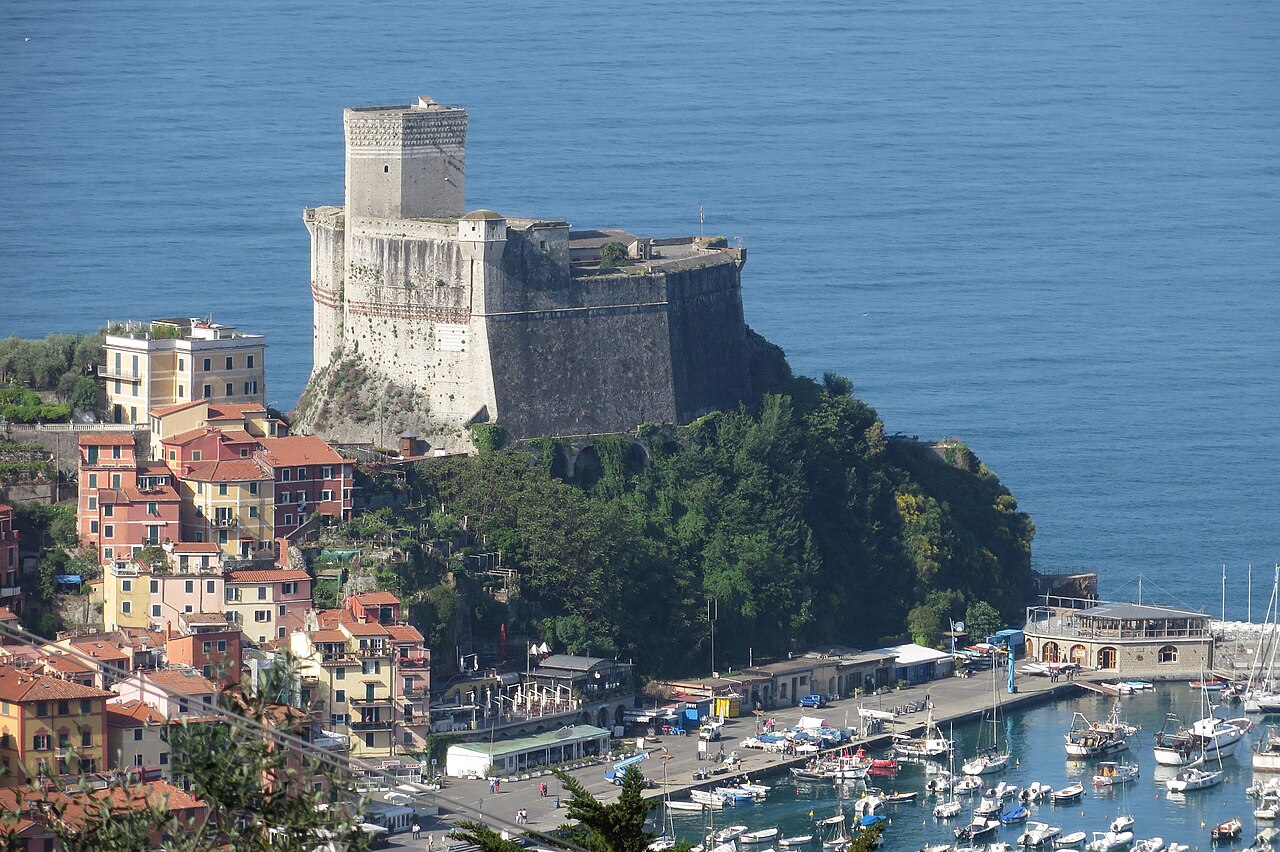
Trebiano Castle
Trebiano Castle stands as a significant example of early medieval hill castle architecture in the Liguria region of Italy. Documented first in 963 AD, this fortress was constructed primarily as a fortified residence for the bishops of the influential Diocese of Luni. Its strategic location on a hilltop overlooking the village of Trebiano Magra allowed it to control key routes between the Val di Magra valley and important coastal ports such as Lerici and San Genesio. The castle’s design reflects the military and administrative needs of the period, blending ecclesiastical authority with defensive architecture.
Historical context and origins
The origins of Trebiano Castle are closely tied to the power dynamics of the 10th century in northern Italy. The fortress was part of the feudal territories governed by the Diocese of Luni, a religious institution that held considerable secular influence across the Ligurian and Lunigiana regions. The first recorded mention of the castle appears in a diploma issued by Emperor Otto I of Saxony in 963 AD, indicating that the castle was already an established stronghold by this time.
Initially, the castle served as the residence of the bishop, symbolizing the fusion of religious authority and military power. Although the surrounding village of Trebiano came under the control of the Lords of Trebiano in 1039, the castle itself remained under the direct jurisdiction of the diocese. This arrangement highlights the close alliance between the ecclesiastical rulers and local nobility, which helped maintain stability in the region during a turbulent medieval period.
Political shifts and military significance
During the 13th century, the castle’s control shifted as the Republic of Genoa expanded its influence over Liguria and its hinterlands. Trebiano Castle became an important asset for Genoa, serving both as a defensive fortress and a symbol of Genoese authority in the area. Its position allowed the republic to oversee maritime trade routes and protect the coastal territories from rival powers.
The castle’s military significance is underscored by events in the 15th century, particularly in 1442 when Antonio Biassa, a noble from La Spezia, seized the fortress amid internal conflicts within Genoa. This incident reflects the castle’s continued strategic value in regional power struggles during the late medieval period.
Architectural features and layout
Trebiano Castle is characterized by its roughly square or sub-pentagonal layout, fortified by four massive corner towers integrated into its curtain walls. These walls rise to an impressive height of approximately 20 meters, constructed with thick stone masonry designed to repel sieges and withstand attacks.
The fortress notably lacks traditional windows; instead, it features numerous arrow slits (feritoie)—long, narrow openings that allowed defenders to shoot arrows or crossbow bolts while remaining protected. This defensive design is typical of medieval military architecture, emphasizing protection and offensive capability.
The castle’s elevated position on a hilltop not only provided commanding views of the surrounding landscape but also enhanced its defensive strength. The location enabled control over the village below and surveillance of the critical land and sea routes, reinforcing its role as a military bastion and episcopal residence.
Defensive structures
The four corner towers are key defensive elements, allowing defenders to monitor and cover all approaches to the castle. Their robust construction and height made them formidable obstacles to attackers. The curtain walls linking the towers form a strong perimeter, creating a secure courtyard within.
Interior and current condition
While detailed records of the castle’s interior spaces and decorative elements are scarce, the surviving structure reveals a focus on military functionality over residential comfort. The castle’s interior likely contained essential living quarters, storage areas, and possibly a chapel, consistent with its dual role as a bishop’s residence and fortress.
Today, the castle remains partially preserved, with its imposing external form dominating the hilltop. Photographic evidence shows the castle’s relationship with the surrounding village and landscape, though much of the interior and finer architectural details remain undocumented. The fortress’s robust construction has allowed it to endure centuries of history, standing as a testament to medieval military architecture in Liguria.
Cultural and historical significance
Trebiano Castle is an important cultural landmark within the municipality of Arcola and the broader Liguria region. Its association with the Diocese of Luni links it to the religious and feudal history of northern Italy during the early medieval period. The castle’s role in regional conflicts and governance underlines its significance beyond a mere military installation.
The fortress also offers insights into the complex relationships between ecclesiastical authorities and secular powers in medieval Italy. Its survival provides valuable information for historians and archaeologists studying the evolution of castle architecture and feudal governance in Liguria and Lunigiana.
Frequently asked questions (FAQ)
- When was Trebiano Castle first documented?
- Trebiano Castle was first documented in 963 AD in a diploma issued by Emperor Otto I of Saxony.
- What was the original purpose of Trebiano Castle?
- The castle was originally built as a fortified residence for the bishops of the Diocese of Luni, serving both military and ecclesiastical functions.
- How is the castle architecturally designed for defense?
- Trebiano Castle has thick curtain walls up to 20 meters high, four massive corner towers, and narrow arrow slits for archers to defend while protected.
- What historical powers controlled Trebiano Castle?
- Initially under the Diocese of Luni, the castle later came under the control of the Lords of Trebiano and the Republic of Genoa, reflecting shifting political alliances.
- Is Trebiano Castle open to visitors?
- Currently, there is no detailed information about public visiting hours or ticket prices for Trebiano Castle, so visitors should check local sources before planning a visit.
Information
Loading map...
Visitor reviews
No reviews yet. Been here? Write the first review and help other travelers!
Write the first reviewVisited this castle? Share your experience
Your review helps other travelers and adds first-hand knowledge to our encyclopedia.