Castle of San Terenzo

Castle of san terenzo: historic coastal fortress in liguria, italy
Lerici, Liguria, Italy
Late Medieval (14th–15th c.)
Partially Preserved

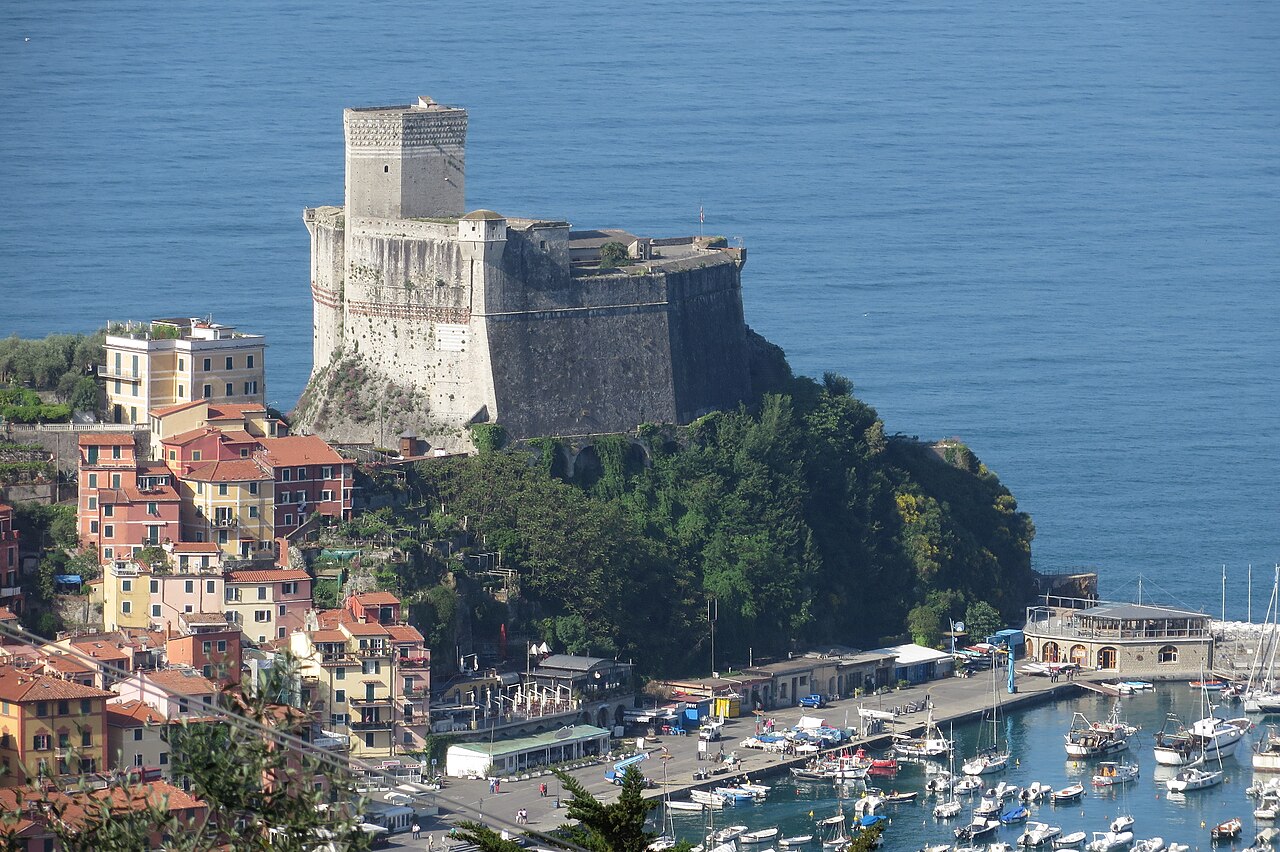
The Castle of San Terenzo stands prominently in the village of San Terenzo, within the municipality of Lerici, in the Liguria region of Italy. This hill castle was originally constructed in 1360 by the local community as a strategic defensive structure and watchtower to protect the bay and the settlement from frequent pirate raids, especially those launched by forces of the Ottoman Empire during the late medieval period. Its location on a rocky promontory provided commanding views of the surrounding coastline, allowing early detection of seaborne threats.

Early construction and purpose

The castle initially consisted of a solitary square tower approximately ten meters tall, topped with battlements. This early fortification was relatively simple and lacked many features typical of later medieval castles, such as artillery, stairs, ammunition storage, and a permanent garrison, as recorded in a 1588 document preserved in the Genoa State Archive. Despite these limitations, the tower served as a crucial lookout point and first line of defense against pirate incursions. The nearby coastal cave known as the "Tana dei Turchi" or "Turks’ Den" reflects the historical threat posed by pirates in the region.

Architectural evolution and fortification enhancements

Over the subsequent decades, the castle underwent significant expansion to improve its defensive capabilities. The original tower was incorporated into a more complex structure with an irregular pentagonal layout. This expansion included the addition of three circular turrets oriented toward the village, an inner defensive curtain wall, and a quadrangular tower featuring flat battlements and square-shaped machicolations. These machicolations allowed defenders to drop objects on attackers directly below, a common defensive feature in medieval military architecture.

The castle also gained a large barbican, an external fortification designed to protect the wall guarding the moat on the landward side. Although the moat itself has since been filled in, traces of its former presence remain visible. The castle’s entrance is accessed via a trail rising from Via Meneghetti through the village’s main square, Piazza Brusacà.

Role within the genoese republic and military significance

During the 15th century, the Castle of San Terenzo became an integral part of the Genoese Republic’s network of coastal defenses. It served as a small but strategically valuable fortress guarding the Gulf of La Spezia. Historical records mention notable castellans such as Giovanni da Mongiardino in 1401, who commanded a garrison including eight crossbowmen. Another important figure was Giacomo Rossi, a native of San Terenzo, who distinguished himself in combat against Pisan forces and received commendation from Simone Boccanegra, the first Doge of Genoa.

A late 16th-century report by Gregorio Cadamartori, the podestà or chief magistrate, addressed to Genoa’s Doge Davide Vaccari, describes the castle as a modest fortress originally built by the villagers themselves. This highlights the community-driven origins of the castle and its steady evolution within the shifting political and military landscape of the Ligurian coast.

Architectural features and defensive elements

The castle’s irregular pentagonal shape reflects adaptations made during its expansion from a simple tower to a fortified bastion capable of resisting attacks from both sea and land. The earliest surviving element is the original square tower, which still stands at about ten meters tall with battlements at the roofline, serving as a prominent lookout point.

The curtain walls form a second internal perimeter enclosing three circular corner turrets facing the village, providing flanking defense and enhancing the castle’s ability to repel landward assaults. The quadrangular tower with flat battlements and square-section machicolations is a key defensive feature, allowing defenders to target enemies directly below the walls.

The castle’s entrance is approached by a trail from the village, and although the original moat has been filled in, remnants of defensive structures such as a loophole in the northern bastion remain visible. Loopholes are narrow slits in the walls designed for archers or firearms, underscoring the castle’s fortified nature.

Preservation and modern management

Over the centuries, the castle’s masonry and key defensive components have undergone various repairs and modifications. These interventions, carried out in different periods, have preserved the castle’s harmonious overall appearance without substantially altering its historic character. Since December 2014, the site has been managed by the Italian Ministry of Culture through the Liguria Museum Network, with regional museum supervision beginning in late 2019. These efforts ensure ongoing preservation and public access to this significant historical site.

Today, the Castle of San Terenzo stands as a testament to the medieval military architecture of the Ligurian coast and the resilience of its local communities in the face of external threats. Its combination of early watchtower origins and later bastion fortifications offers valuable insight into the evolution of coastal defense systems in Italy during the late medieval period.

Frequently asked questions (FAQ)

How do I get to the Castle of San Terenzo?
The Castle of San Terenzo is located in Lerici, Italy, easily accessible by car and public transport. If you're traveling by train, you can take a train to La Spezia and then a local bus or taxi to Lerici.
What is the historical significance of the Castle of San Terenzo?
The Castle of San Terenzo dates back to the 13th century and played a crucial role in the defense of the Gulf of Poets. Its strategic location allowed it to monitor maritime traffic and protect the nearby town of Lerici from invasions.
When was the Castle of San Terenzo built?
Construction of the Castle of San Terenzo began in the early 13th century, specifically around 1250. Over the centuries, it has undergone various renovations, reflecting changes in architectural styles and military needs.
Can I visit the Castle of San Terenzo year-round?
Yes, the Castle of San Terenzo is open to visitors year-round, although specific opening hours may vary by season. It is advisable to check the official website or local tourist information for the most current visiting hours.
Why is the architecture of the Castle of San Terenzo unique?
The architecture of the Castle of San Terenzo is characterized by its robust stone walls and impressive battlements, typical of medieval military fortifications. Its design reflects the historical need for defense while also offering panoramic views of the surrounding landscape.
Is it possible to access the Castle of San Terenzo with mobility issues?
The Castle of San Terenzo has some accessibility features, but due to its historical nature and terrain, it may pose challenges for visitors with mobility issues. It is recommended to contact the castle administration in advance to inquire about specific accommodations.
What are the best times to visit the Castle of San Terenzo?
The best times to visit the Castle of San Terenzo are during the spring (April to June) and early autumn (September to October). During these periods, the weather is typically mild, and there are fewer tourists, allowing for a more enjoyable experience.
Are there any nearby attractions to the Castle of San Terenzo?
Yes, nearby attractions include the charming village of Lerici, with its beautiful beaches and vibrant promenade. Additionally, the Cinque Terre National Park and the town of Portovenere are just a short drive away, offering stunning coastal views and hiking opportunities.
What are the ticket prices for visiting the Castle of San Terenzo?
Ticket prices for the Castle of San Terenzo are generally affordable, with discounts available for children, students, and seniors. It’s best to check the official website for current pricing and any special offers that may be available.
What are the opening hours for the Castle of San Terenzo?
The opening hours for the Castle of San Terenzo typically vary by season, with longer hours during the peak tourist months. It is recommended to verify the current opening times on the castle’s official website before your visit.

Information

Hill Castle

Sources & official resources

Verify the information above using these authoritative references.

Loading map...

Visitor reviews

No reviews yet. Been here? Write the first review and help other travelers!

Write the first review

Visited this castle? Share your experience

Your review helps other travelers and adds first-hand knowledge to our encyclopedia.
Write a review

(5/5)

0/2000 characters

Your review will be visible after admin approval

Nearby castles

1.4 km
Lerici Castle — Italy castle

Lerici Castle

Lerici, Italy

Lerici Castle stands prominently on a rocky promontory overlooking the Bay of Lerici and the Gulf of La Spezia in Liguria, Italy. Established in 1152 during the High Medieval period, this hill castle has played a significant role in controlling maritime access to one of the Mediterranean's strategic naval gateways. Its commanding position allowed it to serve as a military stronghold amid centuries of naval conflicts and territorial disputes in the region.The castle's origins trace back to the Pisan domination of the area. The first known construction phase began in 1152 under the Pisans, who erected the castle's oldest surviving feature, the distinctive pentagonal tower. This tower was part of the initial defensive layout designed to secure the gulf entrance from rival maritime powers. The castle's early form was primarily focused on fortification and surveillance, reflecting the military architecture of the 12th century.Medieval construction and architectural evolutionBy 1241, the castle had undergone significant expansion while still under Pisan control. The original fortress was extended to include additional walls and defensive structures, adapting to the evolving military needs of the time. The castle's layout was designed to maximize defense, with thick stone walls, battlements, and lookout points strategically positioned to monitor naval movements.Following the decline of Pisan influence, the Genoese took control of Lerici and continued to reinforce and enlarge the castle. Their contributions included strengthening the curtain walls and adding bastions to improve resistance against artillery, which was becoming increasingly important in the late medieval period. These enhancements transformed Lerici Castle into a formidable fortress capable of withstanding sieges and naval attacks.The 16th-century fortificationsThe third major phase of construction began in 1555, marking the completion of the castle's fortifications as they are largely seen today. This period saw the addition of comprehensive defensive works, including reinforced walls, ramparts, and artillery platforms, designed to counter the threats posed by emerging gunpowder weapons. The castle's current pentagonal shape and robust bastions date from this era, reflecting Renaissance military architectural principles adapted to the rugged Ligurian coastline.Strategic importance and historical contextLerici Castle's location on the eastern border of Liguria made it a crucial defensive outpost. It guarded the maritime routes leading into the Gulf of La Spezia, a vital naval and commercial harbor. Throughout the Middle Ages, the castle was a focal point of conflict between maritime republics, including Pisa and Genoa, whose rivalry shaped much of the region's history.The castle's walls bear inscriptions and marks left by various occupants, providing tangible evidence of its contested past. Its role as a military bastion continued into the early modern period, maintaining its significance as a coastal fortress well into the Renaissance.Architectural features and layoutThe castle's pentagonal tower remains a defining feature, symbolizing its origins and military purpose. Surrounding this tower are thick curtain walls equipped with battlements and embrasures for archers and later artillery. The fortress includes multiple bastions and ramparts designed to cover all approaches, with a layout that takes full advantage of the natural rocky outcrop.Its elevated position offers commanding views of the sea and surrounding coastline, allowing defenders to spot approaching ships from a distance. The castle's entrance is fortified and was historically protected by gates and defensive barriers to control access.Current use and cultural significanceToday, Lerici Castle is not only a historical monument but also houses a museum of palaeontology, showcasing fossils and geological specimens from the region. This cultural adaptation has made the castle an important destination for both history enthusiasts and scientific visitors.The castle remains one of the most impressive and well-preserved fortifications in Liguria, attracting tourists with its dramatic setting and rich history. Its blend of medieval and Renaissance military architecture offers valuable insights into the evolution of coastal defense systems in Italy.Visitor information and accessibilityVisitors to Lerici Castle can explore its extensive ramparts, towers, and museum exhibits. The site provides panoramic views of the Gulf of La Spezia and the Ligurian Sea. The castle is accessible from the town of Lerici, which is well connected by road and ferry services.Guided tours often highlight the castle's historical phases, architectural features, and its role in regional conflicts. The museum's palaeontological collection adds an educational dimension, making the castle a multifaceted cultural attraction.

High Medieval (11th–13th c.)
Details
3.1 km

Trebiano Castle

Trebiano Magra, Italy

Trebiano Castle stands as a significant example of early medieval hill castle architecture in the Liguria region of Italy. Documented first in 963 AD, this fortress was constructed primarily as a fortified residence for the bishops of the influential Diocese of Luni. Its strategic location on a hilltop overlooking the village of Trebiano Magra allowed it to control key routes between the Val di Magra valley and important coastal ports such as Lerici and San Genesio. The castle’s design reflects the military and administrative needs of the period, blending ecclesiastical authority with defensive architecture. Historical context and origins The origins of Trebiano Castle are closely tied to the power dynamics of the 10th century in northern Italy. The fortress was part of the feudal territories governed by the Diocese of Luni, a religious institution that held considerable secular influence across the Ligurian and Lunigiana regions. The first recorded mention of the castle appears in a diploma issued by Emperor Otto I of Saxony in 963 AD, indicating that the castle was already an established stronghold by this time. Initially, the castle served as the residence of the bishop, symbolizing the fusion of religious authority and military power. Although the surrounding village of Trebiano came under the control of the Lords of Trebiano in 1039, the castle itself remained under the direct jurisdiction of the diocese. This arrangement highlights the close alliance between the ecclesiastical rulers and local nobility, which helped maintain stability in the region during a turbulent medieval period. Political shifts and military significance During the 13th century, the castle’s control shifted as the Republic of Genoa expanded its influence over Liguria and its hinterlands. Trebiano Castle became an important asset for Genoa, serving both as a defensive fortress and a symbol of Genoese authority in the area. Its position allowed the republic to oversee maritime trade routes and protect the coastal territories from rival powers. The castle’s military significance is underscored by events in the 15th century, particularly in 1442 when Antonio Biassa, a noble from La Spezia, seized the fortress amid internal conflicts within Genoa. This incident reflects the castle’s continued strategic value in regional power struggles during the late medieval period. Architectural features and layout Trebiano Castle is characterized by its roughly square or sub-pentagonal layout, fortified by four massive corner towers integrated into its curtain walls. These walls rise to an impressive height of approximately 20 meters, constructed with thick stone masonry designed to repel sieges and withstand attacks. The fortress notably lacks traditional windows; instead, it features numerous arrow slits (feritoie)—long, narrow openings that allowed defenders to shoot arrows or crossbow bolts while remaining protected. This defensive design is typical of medieval military architecture, emphasizing protection and offensive capability. The castle’s elevated position on a hilltop not only provided commanding views of the surrounding landscape but also enhanced its defensive strength. The location enabled control over the village below and surveillance of the critical land and sea routes, reinforcing its role as a military bastion and episcopal residence. Defensive structures The four corner towers are key defensive elements, allowing defenders to monitor and cover all approaches to the castle. Their robust construction and height made them formidable obstacles to attackers. The curtain walls linking the towers form a strong perimeter, creating a secure courtyard within. Interior and current condition While detailed records of the castle’s interior spaces and decorative elements are scarce, the surviving structure reveals a focus on military functionality over residential comfort. The castle’s interior likely contained essential living quarters, storage areas, and possibly a chapel, consistent with its dual role as a bishop’s residence and fortress. Today, the castle remains partially preserved, with its imposing external form dominating the hilltop. Photographic evidence shows the castle’s relationship with the surrounding village and landscape, though much of the interior and finer architectural details remain undocumented. The fortress’s robust construction has allowed it to endure centuries of history, standing as a testament to medieval military architecture in Liguria. Cultural and historical significance Trebiano Castle is an important cultural landmark within the municipality of Arcola and the broader Liguria region. Its association with the Diocese of Luni links it to the religious and feudal history of northern Italy during the early medieval period. The castle’s role in regional conflicts and governance underlines its significance beyond a mere military installation. The fortress also offers insights into the complex relationships between ecclesiastical authorities and secular powers in medieval Italy. Its survival provides valuable information for historians and archaeologists studying the evolution of castle architecture and feudal governance in Liguria and Lunigiana.

Early Medieval (5th–10th c.)
Details
3.6 km

Arcola Castle

Arcola, Italy

Arcola Castle stands prominently atop the hills overlooking the Gulf of La Spezia and the Magra valley in Liguria, Italy. This medieval hill castle was established in the 11th century by the noble Obertenghi family, who recognized the strategic importance of its elevated position. The castle's location provided commanding views of the surrounding landscape, including the Apuane Alps, which made it an essential defensive stronghold and naval lookout in the western Marca Ligure region. The castle's original structure was centered around a tall pentagonal tower, known as the Obertenga tower, which remains the most visible remnant of the fortress today. This tower was deliberately constructed on the most vulnerable side of the castle, serving as a bastion to repel attackers. Its 25-meter height and pentagonal shape allowed defenders to cover multiple angles, with embrasures for archers and artillery to protect the two main entrances, including the critical Porta Sovrana. Early history and feudal significance During the early medieval period, the Obertenghi family, powerful feudal lords in northern Italy, established Arcola as a key defensive and administrative center. The castle was constructed amid a period of instability caused by Norman and Saracen incursions, which threatened the security of the region. By fortifying Arcola, the Obertenghi aimed to secure their holdings in the Val di Magra and control vital land and maritime routes. In 1128, the castle passed into the hands of the monastery of San Venerio del Tino, reflecting the intertwined nature of religious and feudal power during this era. This transfer also indicates the castle's importance not only as a military fortress but also as a center of ecclesiastical influence. Conflicts and changes of ownership The 13th century was marked by intense regional conflicts involving the castle. The Malaspina family, another noble dynasty, took control of Arcola and the castle during this time. Their tenure was challenged by the Republic of Genoa, a rising maritime power. In 1278, Captain Oberto Doria led a siege against the castle, successfully capturing it and integrating it into Genoese territory. Following this, the castle experienced a series of military occupations that reflected the shifting political landscape of northern Italy. In 1320, Castruccio Castracani, the lord of Lucca, seized the fortress as part of his expansionist campaigns. Later, in 1430, the condottiero Niccolò Piccinino took control of Arcola Castle on behalf of Duke Filippo Maria Visconti of Milan. However, Genoese forces regained the castle in 1436, after which it became the administrative center, or Podesteria, overseeing Arcola and the nearby town of Vezzano. Architectural features and defensive design The castle's design reflects typical high medieval military architecture, adapted to the hilltop terrain. Its most notable feature is the pentagonal tower, which functioned as the primary defensive bastion. The tower's corners were strategically angled to provide overlapping fields of fire, deterring attackers from approaching the vulnerable gate areas. The fortress included robust curtain walls and battlements that enclosed the inner courtyard and living quarters. The walls were constructed using local stone and incorporated defensive elements such as arrow slits and machicolations to protect against siege warfare. The castle's position on a hill enhanced its natural defenses, making direct assaults difficult. The wine-measuring basin Among the unique features within the castle complex is a wine-measuring basin calibrated to half a barrel according to the 1601 Genoese unit of measure. This basin underscores the castle's role beyond military functions, highlighting its involvement in regulating local commerce and taxation, particularly concerning the wine trade in the region. Damage, restoration, and modern use The castle suffered significant damage during the Napoleonic wars in the late 18th century, when Franco-Genoese and Austro-Russian forces clashed in the area. Bombardments and military actions left parts of the fortress in ruins. In 1884, a comprehensive restoration was undertaken by engineer Canini, who reinforced the structure and adapted it for civic use. Following restoration, the castle was repurposed as the town hall of Arcola, a role it continues to serve. This adaptation ensured the preservation of the castle as a vital cultural and historical landmark. Current status and visitor experience Today, Arcola Castle is recognized as a national monument and is open to visitors interested in exploring its rich history and architectural heritage. The imposing pentagonal tower dominates the town's skyline and serves as a symbol of Arcola's medieval past. Visitors can explore the tower and the surrounding castle remnants near Piazza Ugo Muccini, gaining insight into the castle's defensive mechanisms and its role in regional politics over the centuries. The site offers panoramic views of the Ligurian landscape, including the sea and mountains, making it a popular destination for history enthusiasts and tourists alike. The castle's blend of military and administrative history, combined with its preservation and adaptive reuse, provides a compelling narrative of medieval fortifications evolving into modern civic structures. Its enduring presence highlights the importance of preserving cultural heritage sites that connect contemporary communities with their historical roots.

High Medieval (11th–13th c.)
Details

