Travnik Castle
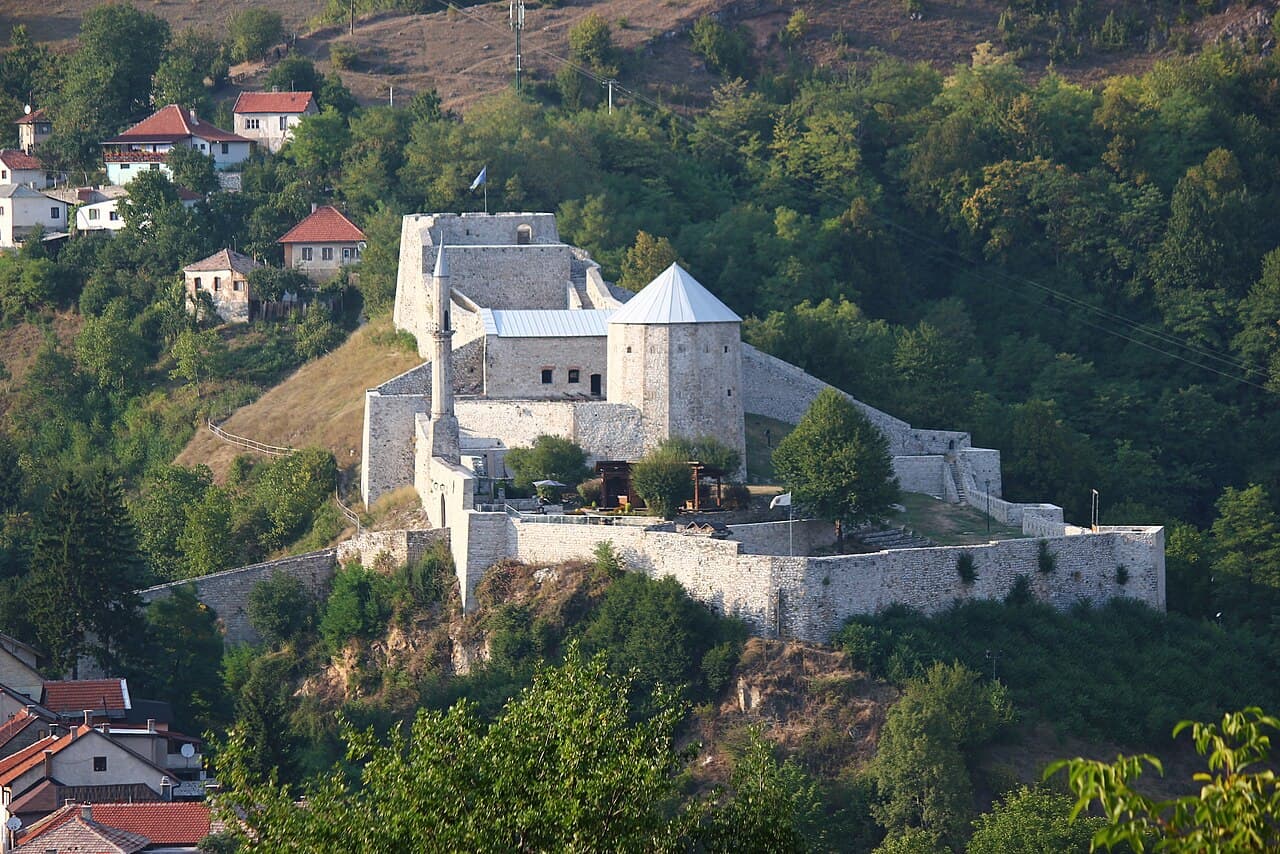
Travnik Castle, also known locally as Stari Grad Castle (Old Town Castle), is a significant medieval fortress complex situated in the town of Travnik, within the Central Bosnia Canton of Bosnia and Herzegovina. This hill castle stands prominently on a rocky outcrop overlooking the town, commanding strategic views over the surrounding landscape and serving as a crucial defensive stronghold in the region.
The origins of Travnik Castle trace back to the late medieval period, with construction estimated to have begun in the 14th century. Although no precise records document its initial building date, architectural features and construction techniques suggest it was erected during the reigns of Bosnian kings Tvrtko II or Stephen Ostoja, with significant expansions under King Stephen Thomas in the early 15th century. The fortress was originally constructed as part of the Bosnian Kingdom's defensive network to protect against advancing forces, particularly anticipating the threat posed by the Ottoman Turks.
Historical context and significance
During the turbulent 15th century, the Kingdom of Bosnia faced increasing pressure from the expanding Ottoman Empire. In 1462, King Stephen Tomašević accepted vassalage under Hungary but later refused to pay tribute to the Ottoman Porte, escalating tensions. The following year, in 1463, the Ottomans launched a major campaign into Bosnia. Sultan Mehmed II mobilized a vast army and advanced towards Travnik, which was besieged and captured, marking a pivotal moment in the fall of the Bosnian Kingdom.
Following the conquest, Travnik became part of the Sanjak of Bosnia under Ottoman rule, a status it retained until 1878. Recognizing the fortress's strategic importance, the Ottomans extensively developed and fortified the castle, adding watchtowers and strengthening the defensive walls. The current fortification walls largely reflect these Ottoman modifications, which transformed the castle into a formidable military fortress capable of controlling the surrounding territory.
Architectural features and layout
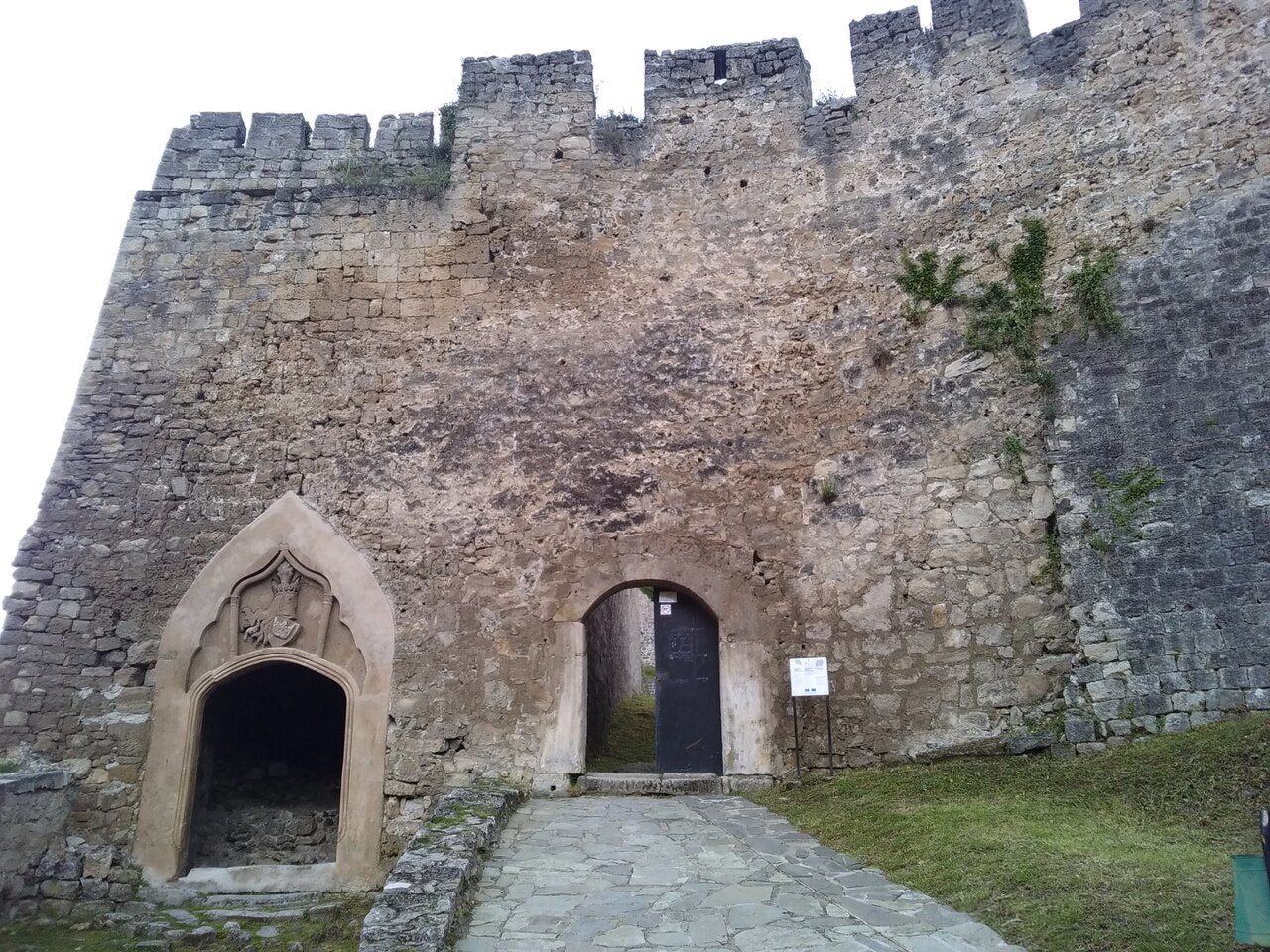
Travnik Castle exemplifies a hill castle design, adapted to its rugged terrain with natural rock formations integrated into its defensive structures. The fortress is enclosed by thick stone walls with battlements and multiple watchtowers positioned to maximize visibility and defense coverage. The castle complex includes a large inner courtyard, surrounded by residential quarters, storage buildings, and military installations.
The Ottoman-era expansions introduced characteristic elements such as round towers and reinforced bastions, enhancing the fortress's resilience against artillery and siege warfare. The walls are punctuated by narrow arrow slits and embrasures, allowing defenders to repel attackers effectively. The main gate is fortified with a robust gatehouse, designed to control access and withstand assaults.
Interior spaces and functions
Inside the castle, the spaces served both military and administrative functions. The residential quarters housed the garrison and possibly local nobility or Ottoman officials during their rule. Storage rooms preserved weapons, ammunition, and provisions necessary for prolonged sieges. The castle also contained a small mosque and other facilities reflecting the Ottoman presence.
Role during austro-hungarian period and world war i
After the Congress of Berlin in 1878, Travnik came under Austro-Hungarian administration. The fortress, while no longer at the front lines of conflict, was maintained as a military garrison due to Travnik's central location and railway connections. During World War I, the castle did not experience direct combat but was used for logistical purposes, including the transport and distribution of troops, weapons, and medical care for wounded soldiers.
Present-day status and cultural importance
Today, Travnik Castle is regarded as one of the best-preserved medieval fortresses in Bosnia and Herzegovina. It has been designated a national monument and serves as a cultural and historical landmark. The castle houses a small museum that showcases its extensive history, including exhibits on its medieval origins, Ottoman expansions, and Austro-Hungarian period. The museum also features an ethnographic section illustrating the local culture and traditions.
The fortress remains a popular destination for visitors interested in medieval architecture, military history, and Bosnian heritage. Its commanding position and well-maintained structures offer insight into the region's complex past and the evolution of fortification techniques over several centuries.
Visiting travnik castle
Travnik Castle is accessible to the public and offers an engaging experience for tourists. Visitors can explore the extensive walls, towers, and courtyards, gaining a sense of the castle's strategic importance. The museum provides informative displays and guided tours that enhance understanding of the castle's role in regional history.
The best time to visit is during the warmer months when the weather allows for comfortable exploration of the outdoor areas. Travnik itself is well connected by road and rail, making the castle an accessible destination for travelers exploring Bosnia and Herzegovina.
Frequently asked questions (FAQ)
- When was Travnik Castle built?
- Travnik Castle was constructed in the late 14th century, with expansions in the early 15th century during the reigns of Bosnian kings Tvrtko II and Stephen Ostoja.
- What architectural style characterizes Travnik Castle?
- Travnik Castle features a late medieval hill castle design with Ottoman-era expansions that include watchtowers and fortified walls typical of fortress architecture.
- Is Travnik Castle open to visitors?
- Yes, Travnik Castle is open to the public and includes a museum with historical exhibits and an ethnographic section.
- What was the role of Travnik Castle during Ottoman rule?
- Under Ottoman rule from 1463 to 1878, Travnik Castle was expanded and fortified to serve as a strategic military fortress within the Sanjak of Bosnia.
- How did Austro-Hungarian rule affect Travnik Castle?
- During Austro-Hungarian rule starting in 1878, Travnik Castle served as a military garrison and logistical center, particularly during World War I, although it saw no direct combat.
Photo gallery

Information
Current owner
State museum
Loading map...
Visitor reviews
No reviews yet. Been here? Write the first review and help other travelers!
Write the first reviewVisited this castle? Share your experience
Your review helps other travelers and adds first-hand knowledge to our encyclopedia.