Komotin Castle
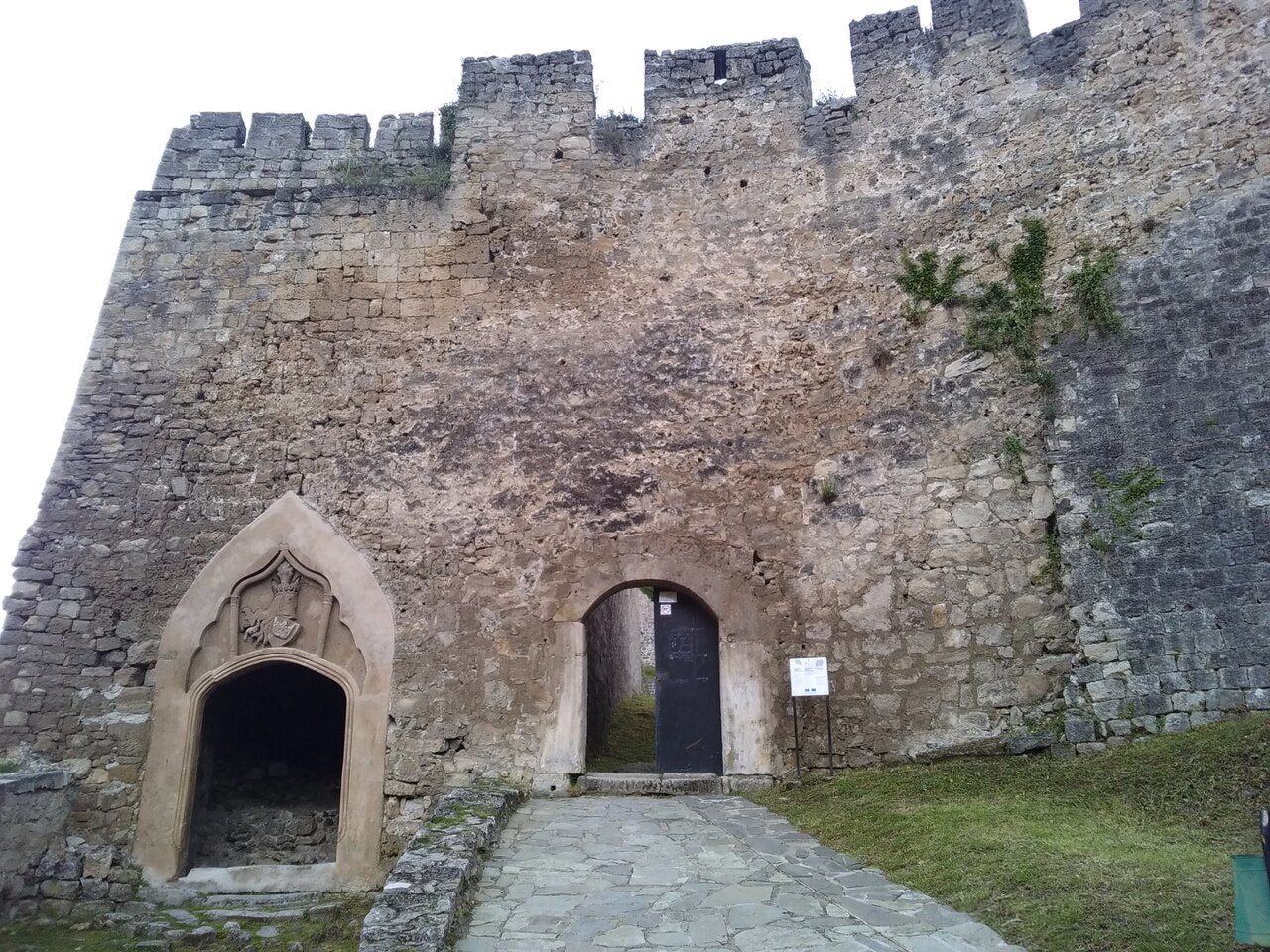
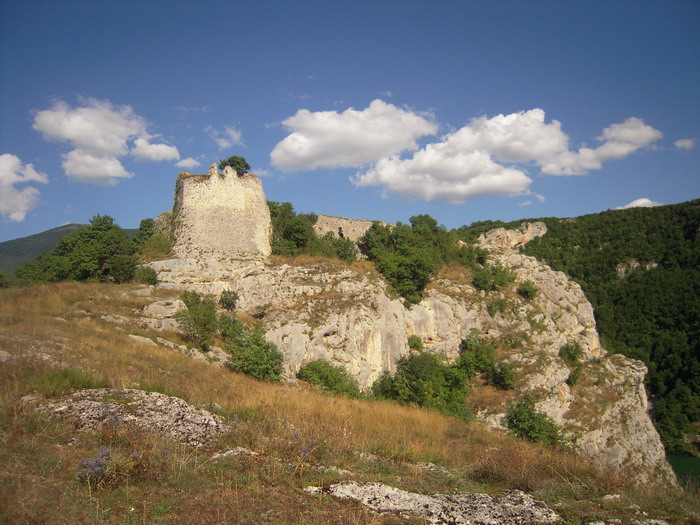
Komotin Castle is a ruined late medieval fortress located in the municipality of Jajce, Bosnia and Herzegovina. Constructed in the 14th century, this castle served as a fortified manorial court, reflecting the political and military complexities of medieval Bosnia. It was strategically positioned on a high hill, making it difficult to access except by narrow, winding paths, which enhanced its defensive capabilities.
Historical context and significance
The castle is historically linked to the last Bosnian king, Stephen Tomašević, who issued a charter granting Komotin to his uncle, Radivoj Kotromanić. This connection places Komotin Castle within the final decades of the Bosnian medieval kingdom before the Ottoman conquest. The castle's role was primarily that of a manorial court, serving as a residence and administrative center for local nobility.
Architectural features and defensive design
Location and layout
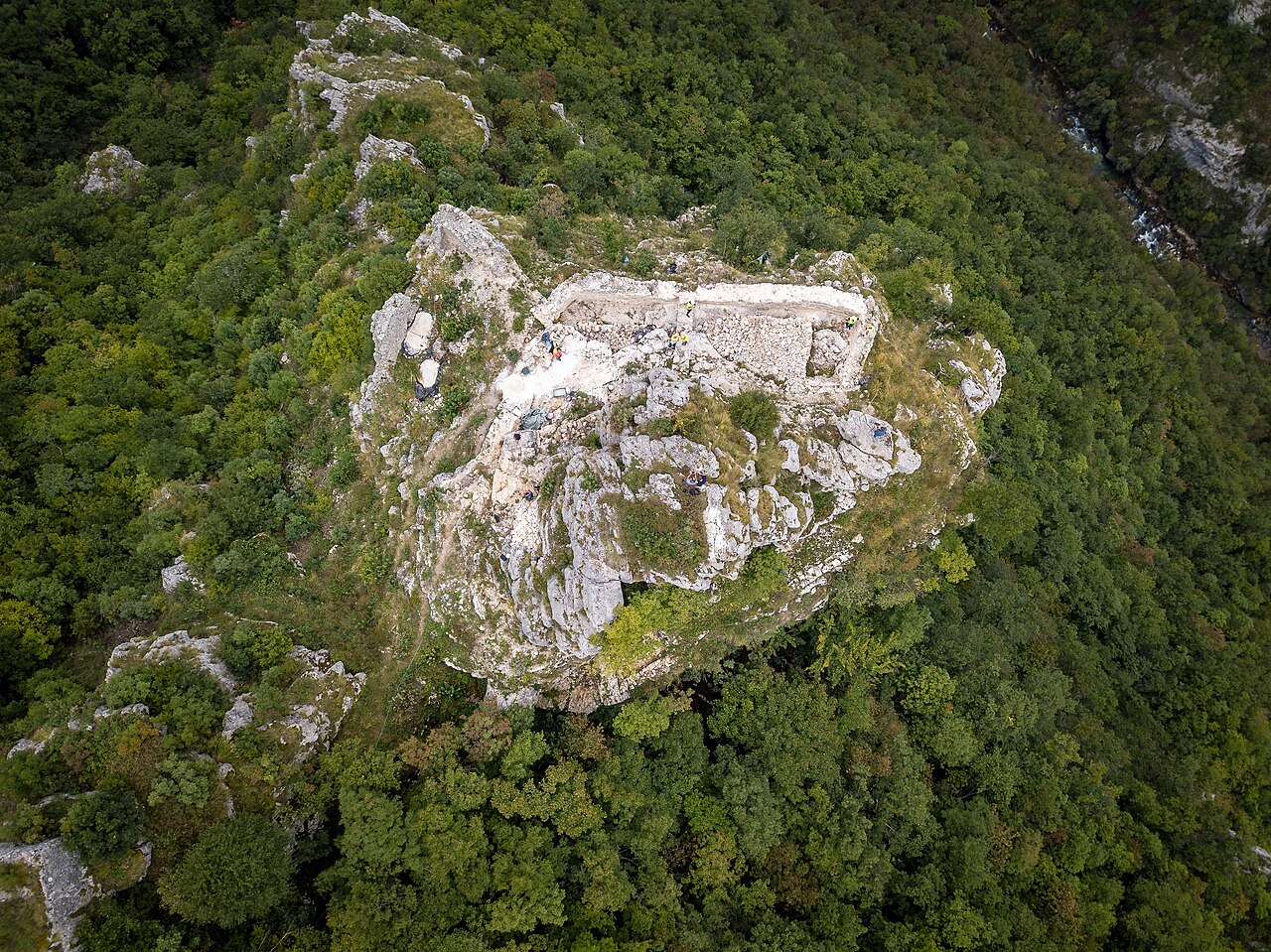
Komotin Castle's hilltop location was a deliberate choice to maximize defense. The approach to the castle was limited to narrow, winding paths that hindered large-scale assaults. Once attackers navigated these difficult paths, they faced a moat encircling the castle, which could only be crossed via a drawbridge. This layered defense system was typical of late medieval fortifications.
Structural elements
The castle walls are rectangular in shape and measure between 1.2 and 1.4 metres thick. These substantial walls were designed to withstand sieges and provide protection against projectiles and battering. Within the walls, the castle contained both a large and a small bailey, which were open courtyards used for various domestic and defensive purposes. The presence of quarters and accommodations within the castle indicates it was designed for extended habitation by the lord and his retinue.
Manorial court function and social role
As a manorial court, Komotin Castle was not only a military stronghold but also a center of local governance and economic management. The lord residing at Komotin would have exercised judicial and administrative authority over the surrounding lands and population. The castle's architecture reflects this dual role, combining residential comfort with defensive necessity.
Current condition and preservation
Today, Komotin Castle remains in a ruined state, with portions of its walls and structural elements still visible. Its location and condition make it an important site for understanding the medieval history of Bosnia and Herzegovina. Efforts to preserve and study the castle contribute to the cultural heritage of the region.
Visiting Komotin Castle
Visitors to Komotin Castle can explore the remains set amidst the natural landscape of the Jajce region. The castle's elevated position offers views of the surrounding countryside, providing insight into the strategic considerations of its builders. Access involves navigating the steep paths that once served as defensive measures, giving a tangible sense of the castle's historical function.
Frequently asked questions
- When was Komotin Castle built? Komotin Castle was constructed in the 14th century during the late medieval period.
- What was the primary function of Komotin Castle? It served as a fortified manorial court, combining residential and administrative roles with military defense.
- How is the castle defended? The castle's defenses included a high hilltop location, narrow winding access paths, a moat, and a drawbridge.
- Can visitors access the castle ruins? Yes, visitors can explore the ruins, though access involves steep and narrow paths reflecting the original defensive design.
- Who owned Komotin Castle historically? It was granted by King Stephen Tomašević to his uncle Radivoj Kotromanić in the late medieval period.
Frequently asked questions (FAQ)
- How do I get to Komotin Castle?
- Komotin Castle is located in Jajce, Bosnia and Herzegovina, easily accessible by car or public transport. If traveling by car, follow the signs leading to the historic center of Jajce, where the castle is situated on a hill overlooking the town.
- What is the historical significance of Komotin Castle?
- Komotin Castle dates back to the medieval period and served as a strategic fortress during various conflicts in the region. Its historical importance lies in its role in protecting Jajce and the surrounding areas from invasions and its connection to the rich heritage of Bosnia and Herzegovina.
- When was Komotin Castle built?
- The exact date of construction for Komotin Castle is not precisely known, but it is believed to have been built in the late 14th century. Over the centuries, it has undergone several modifications and expansions, reflecting the architectural styles of different eras.
- Can I visit Komotin Castle year-round?
- Yes, Komotin Castle is open to visitors year-round, though certain areas may be restricted during the winter months due to weather conditions. It’s advisable to check local tourism websites for any seasonal updates or closures before your visit.
- Is it possible to access the castle with limited mobility?
- Access to Komotin Castle may present challenges for visitors with limited mobility due to uneven terrain and steep pathways leading up to the castle. However, efforts have been made to improve accessibility, and visitors are encouraged to inquire about specific accommodations upon arrival.
- What are the best times to visit Komotin Castle?
- The best times to visit Komotin Castle are during the spring and fall when the weather is mild and the surrounding landscape is particularly beautiful. Summer can be quite hot, while winter may bring snow and ice, which could affect accessibility.
- Are there any nearby attractions to visit along with Komotin Castle?
- Yes, while visiting Komotin Castle, you can also explore the nearby Pliva Waterfall, one of the most beautiful natural sites in Bosnia and Herzegovina. Additionally, the charming town of Jajce itself offers various historical sites and cultural experiences worth exploring.
- What are the ticket prices for visiting Komotin Castle?
- Entrance to Komotin Castle is generally affordable, with tickets typically costing around a few euros. It's advisable to check local listings or the official tourism website for the most current pricing information and any available discounts.
- What are the opening hours for Komotin Castle?
- Komotin Castle usually opens to visitors from 9 AM to 6 PM during the peak tourist season. Opening hours may vary during the off-season, so it is recommended to check ahead before planning your visit.
Information
Loading map...
Visitor reviews
No reviews yet. Been here? Write the first review and help other travelers!
Write the first reviewVisited this castle? Share your experience
Your review helps other travelers and adds first-hand knowledge to our encyclopedia.