Trapesac Castle
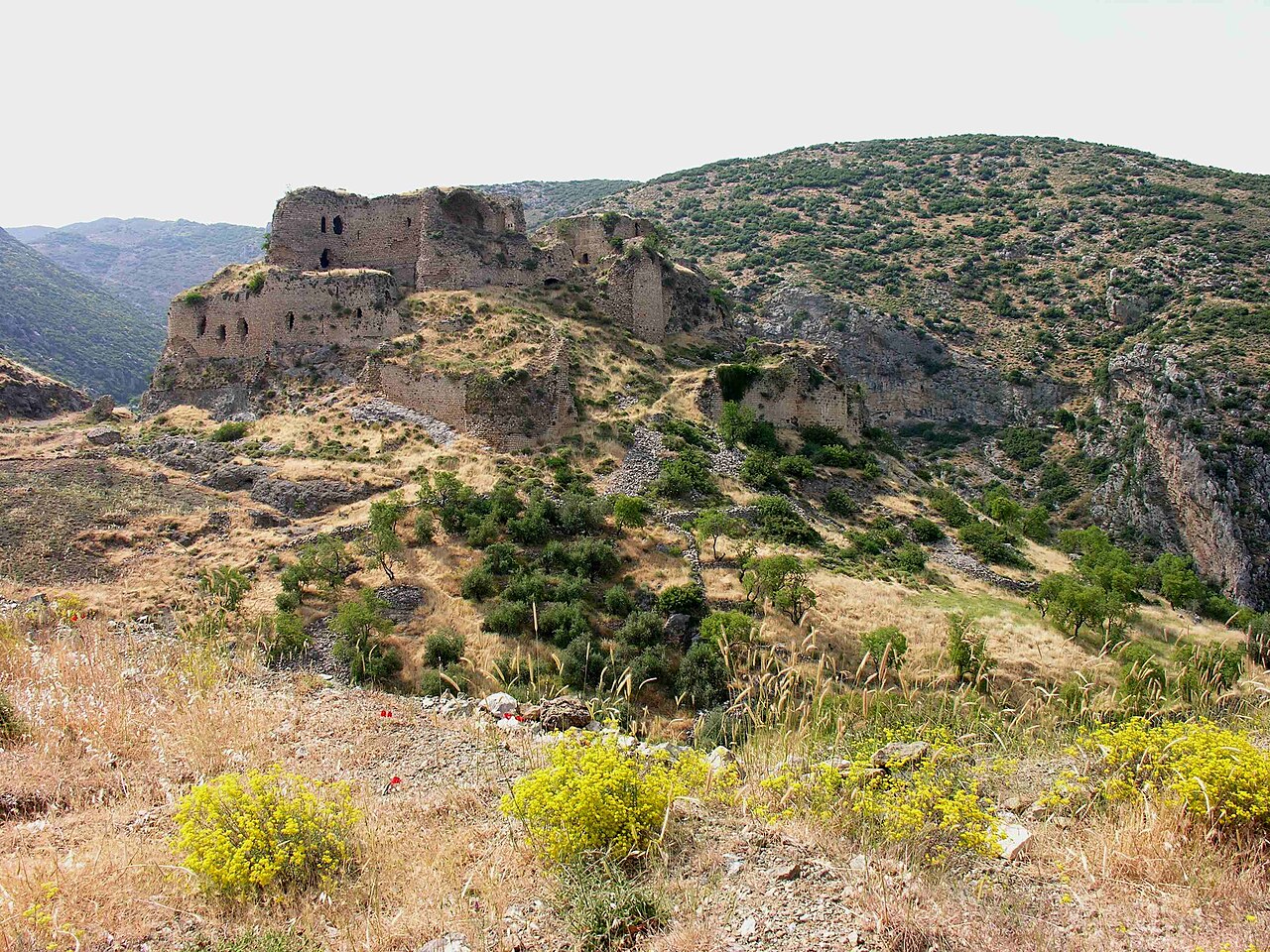
Trapesac Castle, also known locally as Darbsak or Terbezek Kalesi, is a medieval fortress situated on a small oblong limestone outcrop in the village of Alaybeyli, within the province of Hatay, Turkey. This castle occupies a commanding position overlooking the strategic road leading to Antioch and the northern approach to the Belen Pass, also known historically as the Syrian Gates, which cuts through the Nur Mountains. Its location made it a vital military stronghold controlling access between the coastal region of Cilicia and inland Syria.
The origins of Trapesac Castle trace back to the 11th century, when it was constructed by the Franks as a garrison fortification. The castle was later ceded to the Knights Templar, a military order renowned for their role in the Crusades. Alongside Baghras Castle, located about 15 kilometers to the south guarding the southern approach to the Belen Pass, Trapesac formed part of a defensive network securing this crucial mountain pass.
Architectural features and layout
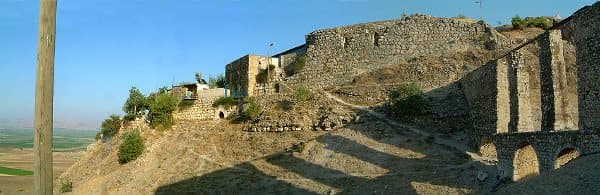
Trapesac Castle's architecture reflects its military function and the rugged terrain on which it was built. The castle occupies a narrow limestone ridge, which dictated a linear layout adapted to the natural topography. Although much of the original structure has been obscured or destroyed, remnants of the castle walls, towers, and defensive structures can still be discerned. A notable feature is a Crusader-era aqueduct on the west side of the outcrop, which supplied water to the fortress, an essential element for sustaining a garrison during sieges.
The castle's fortifications would have included curtain walls, battlements, and likely a keep or donjon, typical of Frankish military architecture of the period. The steep cliffs on several sides provided natural defense, reducing the need for extensive artificial fortifications on those faces. However, the approach from the east was modified in modern times by the construction of a terraced dead-end road, which has altered the original defensive landscape.
Historical significance and military history
Early control and crusader period
Trapesac Castle was a key military asset during the High Medieval period, particularly during the Crusades. After its initial construction by the Franks, it was handed over to the Knights Templar, who maintained control due to its strategic importance. The castle's primary role was to guard the northern entrance to the Belen Pass, a vital route for armies and trade between Cilicia and Syria.
Conflicts and sieges
In the late 12th century, the castle was the focus of numerous military confrontations. Around 1171, the fortress was seized by Mleh, a renegade Armenian baron, who also took control of Baghras Castle. Following Mleh's death in 1175, the Templars regained Trapesac. However, in 1188, the castle fell to Saladin, the Ayyubid Sultan, after a fierce siege lasting approximately two weeks.
The castle continued to be contested in the early 13th century. In 1205, Leo I, King of Cilician Armenia, attempted to capture the fortress from the prince of Aleppo but was unsuccessful. Again, in 1237, the Crusaders launched an expedition to retake the castle but suffered a significant defeat at the hands of the Saracen garrison.
Later medieval period and changing hands
From 1261, Hetoum I of Cilician Armenia controlled Trapesac after it was granted to the Armenians by the Mongol Khan Hulagu. However, the Armenians' hold was short-lived. Following the defeat of the Armenian army at the Battle of Mari in 1266, Hetoum surrendered the castle to the Mamluks to ransom his son, Leo. The fortress then passed into the hands of the Egyptian Mamluk Sultan Baybars in 1268.
In 1280, the castle briefly returned to Mongol control under Abaqa Khan during his campaign in Syria, but was abandoned when the Mongols withdrew. The castle suffered considerable damage during these conflicts, particularly from Mongol assaults.
Current condition and archaeological remains
Today, much of the original castle grounds have been overtaken by the modern village of Alaybeyli, which has obscured the fortress's full extent. A modern road has been cut into the eastern face of the limestone outcrop, further altering the site's historic topography. Despite these changes, some ruins remain visible, including portions of the defensive walls and the Crusader aqueduct.
The castle is classified as a hill castle due to its elevated position on a natural limestone outcrop. Its current condition can be described as ruins, with only fragments of the original structure surviving. The site offers valuable insights into the military architecture of the Crusader period and the complex history of control between Crusaders, Armenians, Mongols, and Mamluks in the region.
The strategic importance of trapesac castle
Trapesac Castle's location on the northern approach to the Belen Pass made it a linchpin in controlling movement through the Amanus Mountains. This pass was the main gateway between the Mediterranean coast and the inland plains of Syria, making the castle a focal point for military campaigns and trade routes.
Its control was vital for the Principality of Antioch, the Armenian Kingdom of Cilicia, and later the Mamluk Sultanate. The castle's repeated change of hands reflects the shifting political and military landscape of the region during the High Medieval period, particularly during the Crusades and the Mongol invasions.
Architectural influences and military engineering
The castle's design demonstrates typical features of Frankish military architecture adapted to the rugged terrain. The use of natural rock formations for defense, combined with constructed walls and towers, exemplifies medieval military engineering aimed at maximizing defensive capabilities while minimizing construction effort.
The presence of the Crusader aqueduct is particularly notable, as water supply was crucial for sustaining the garrison during prolonged sieges. Such infrastructure highlights the strategic planning involved in fortress design during this era.
Visiting trapesac castle today
Visitors to Trapesac Castle will find limited visible remains due to the encroachment of the modern village and alterations to the site. However, the castle's historical significance and its commanding location continue to attract interest from historians, archaeologists, and enthusiasts of medieval military architecture.
The site offers a tangible connection to the complex history of the Crusades, Armenian Cilicia, and the Mongol and Mamluk conflicts that shaped the region. While facilities and interpretive materials may be limited, the castle's ruins and surrounding landscape provide a powerful sense of the strategic importance this fortress once held.
Frequently asked questions (FAQ)
- What is the historical significance of Trapesac Castle?
- Trapesac Castle, located in Turkey, dates back to the Byzantine era and showcases the rich history of the region. It served as a strategic military fortification and has witnessed various battles and sieges throughout its existence, reflecting the architectural and cultural influences of the time.
- When is the best time to visit Trapesac Castle?
- The ideal time to visit Trapesac Castle is during the spring or fall when the weather is mild and pleasant for exploring. These seasons offer comfortable temperatures and fewer crowds, allowing visitors to fully appreciate the castle's beauty and historical context.
- Can I access Trapesac Castle easily?
- Yes, Trapesac Castle is accessible by car and public transportation from nearby cities. The path leading to the castle may include some uneven terrain, so visitors should wear comfortable shoes for a more enjoyable experience.
- What are the opening hours for Trapesac Castle?
- Trapesac Castle is open to visitors daily from 9 AM to 6 PM. However, it's recommended to check for any seasonal changes in hours or special closures before planning your visit.
- Is there an entrance fee for Trapesac Castle?
- Yes, there is a nominal entrance fee for visiting Trapesac Castle, which helps to maintain the site and its facilities. Ticket prices are generally affordable, making it accessible for all visitors interested in exploring this historical landmark.
- What nearby attractions should I visit while at Trapesac Castle?
- While visiting Trapesac Castle, you can also explore the beautiful landscapes surrounding the area, including hiking trails and local parks. Nearby, you’ll find additional historical sites and charming towns that showcase the rich culture and heritage of Turkey.
- How do I get to Trapesac Castle from the nearest city?
- To reach Trapesac Castle from the nearest city, you can take a bus or drive, as the castle is conveniently located just a short distance away. Follow the signs along Hz. Beyazıt Bestami Yolu for easy navigation to the site.
- Why is Trapesac Castle a popular tourist destination?
- Trapesac Castle attracts tourists due to its stunning architecture and panoramic views of the surrounding landscape. Its rich history and the stories behind its walls make it an intriguing site for history enthusiasts and casual visitors alike.
Photo gallery

Information
Address
Hz. Beyazıt Bestami Yolu, Turkey
Loading map...
Visitor reviews
No reviews yet. Been here? Write the first review and help other travelers!
Write the first reviewVisited this castle? Share your experience
Your review helps other travelers and adds first-hand knowledge to our encyclopedia.