Trani Svevo Castle
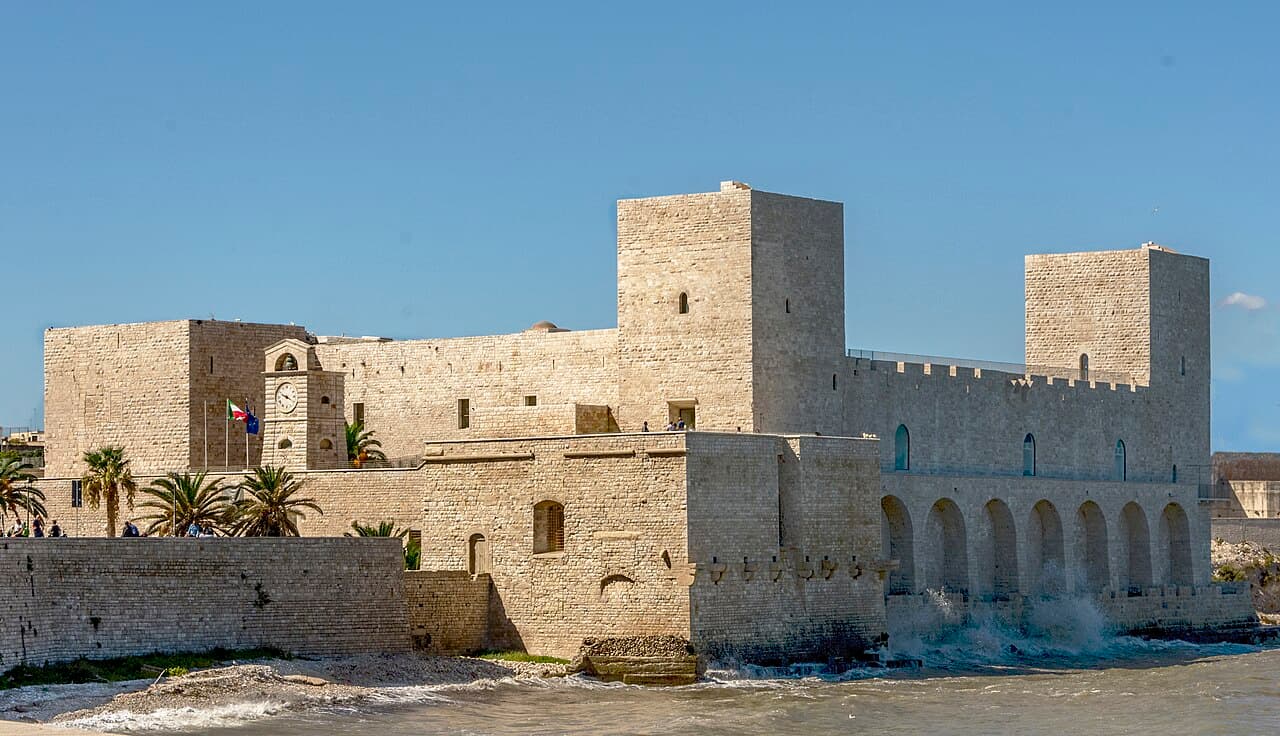
Trani Svevo Castle, located on the Adriatic coast in the city of Trani, Puglia, is one of the most remarkable examples of Swabian military architecture in southern Italy. Commissioned by Emperor Frederick II of Swabia in 1230, this fortress was strategically built on the seashore to defend the city and control maritime routes. Its imposing quadrangular layout, robust towers, and commanding position overlooking the sea underscore its military significance during the High Medieval period.
Historical significance and royal connections
The castle is historically renowned for being the venue of the wedding celebration of Manfredi of Sicily, son of Frederick II, and Helena Angelina Doukaina of Epirus. This event not only highlights the castle's role as a royal residence but also its importance as a symbol of power and prestige in the Kingdom of Sicily. The marriage linked the Swabian dynasty with the Byzantine nobility, reflecting the political alliances of the era.
Throughout its history, the castle has witnessed numerous events and legends, contributing to its cultural heritage. Today, it hosts various cultural events and medieval reenactments, especially during the summer months, which vividly recreate the atmosphere of the 13th century and celebrate its storied past.
Architectural features and fortifications
Original design and layout
The castle's original design features a quadrangular base with square towers at each corner, a hallmark of Swabian military architecture. The central courtyard was a functional space around which the castle's defensive and residential structures were arranged. The castle was directly linked to the sea, enhancing its defensive capabilities and allowing for supply and communication via water.
One of the castle’s distinctive features was a wooden drawbridge that connected it to the mainland, emphasizing its strategic defensive position over the water. This connection also allowed for controlled access, vital for both defense and trade.
Later modifications and enhancements
In the 16th century, under the rule of Charles V, the castle underwent significant modifications to adapt to the evolving nature of warfare. Two bastions equipped with firearms were added, reflecting the introduction of gunpowder weaponry and the need for enhanced artillery defenses. These additions transformed the castle’s medieval fortifications into a more modern bastioned fortress capable of withstanding cannon fire.
The external walls were also reinforced, and the overall structure was consolidated over several decades, ensuring its continued military relevance during the Renaissance period.
Preservation and current use
Although the city of Trani has lost its old city walls and bastions, the Castle of Trani remains a well-preserved monument and a testament to Swabian architectural ingenuity. Extensive restoration efforts have transformed the castle into a museum and cultural venue, open to the public and hosting a variety of events that celebrate its medieval heritage.
Visitors can explore the castle’s towers, courtyards, and halls, gaining insight into medieval military architecture and the historical context of southern Italy during the 13th century. The castle’s seaside location offers stunning views and a palpable sense of its original defensive purpose.
Architectural style and construction details
The castle exemplifies the High Medieval Swabian style, characterized by its functional yet imposing design. The use of stone masonry, square towers, and a central courtyard reflects the architectural trends of the period under Frederick II’s reign. The castle’s construction began in 1230 and was largely completed by 1233, with consolidation works continuing for approximately fifteen years, ensuring structural stability and defensive strength.
The later Renaissance-era enhancements by Charles V introduced bastioned fortifications that blended with the original medieval structure, demonstrating the castle’s adaptability over centuries.
Cultural importance and visitor experience
Today, Trani Svevo Castle is not only a historical monument but also a vibrant cultural center. The annual reenactment of Manfredi’s wedding is a highlight, attracting visitors interested in medieval history and pageantry. The castle’s role as a museum and event space helps preserve and promote the rich heritage of the region.
Visitors benefit from guided tours that explain the castle’s architectural features, historical context, and the stories of the prominent figures associated with it. The castle’s proximity to the Adriatic Sea enhances its appeal, making it a must-visit destination for those exploring the history and architecture of southern Italy.
Frequently asked questions (FAQ)
- What is the historical significance of Trani Svevo Castle?
- Trani Svevo Castle, built in the 12th century by the Holy Roman Emperor Frederick II, is an important example of medieval military architecture in Italy. It served as a fortress to protect the harbor of Trani and played a significant role in the region's history, reflecting the power dynamics of the time.
- When was Trani Svevo Castle built?
- Construction of Trani Svevo Castle began in 1233 and was completed shortly thereafter under the orders of Frederick II. The castle has undergone various renovations and restorations over the centuries, preserving its historical integrity.
- Can I visit Trani Svevo Castle?
- Yes, Trani Svevo Castle is open to visitors and offers a unique opportunity to explore its historical architecture and scenic views. Guided tours are available, providing insights into the castle's rich history and significance.
- What are the opening hours of Trani Svevo Castle?
- Trani Svevo Castle is typically open to visitors from 9:00 AM to 7:00 PM, with extended hours during the summer months. It is advisable to check the official website for any seasonal changes or special closing days before planning your visit.
- Is it possible to access Trani Svevo Castle with mobility aids?
- Yes, Trani Svevo Castle is equipped with facilities to assist visitors with mobility impairments. Ramps and designated pathways help ensure that everyone can enjoy the castle's historical features and stunning views.
- What is the best time to visit Trani Svevo Castle?
- The best time to visit Trani Svevo Castle is during the spring and fall months when the weather is mild and pleasant. These seasons also tend to attract fewer tourists, allowing for a more enjoyable experience exploring the castle.
- What are the ticket prices for Trani Svevo Castle?
- Tickets for Trani Svevo Castle are generally affordable, with discounts available for students and seniors. Check the official website for the latest pricing details and any promotional offers that may be available during your visit.
- Are there any nearby attractions to visit while at Trani Svevo Castle?
- Yes, nearby attractions include the beautiful Cathedral of Trani, the historic city center, and the picturesque harbor. Exploring these sites can enhance your visit to the castle and provide a comprehensive experience of Trani's rich history and culture.
Photo gallery

Information
Loading map...
Visitor reviews
No reviews yet. Been here? Write the first review and help other travelers!
Write the first reviewVisited this castle? Share your experience
Your review helps other travelers and adds first-hand knowledge to our encyclopedia.