Trakoscan Castle
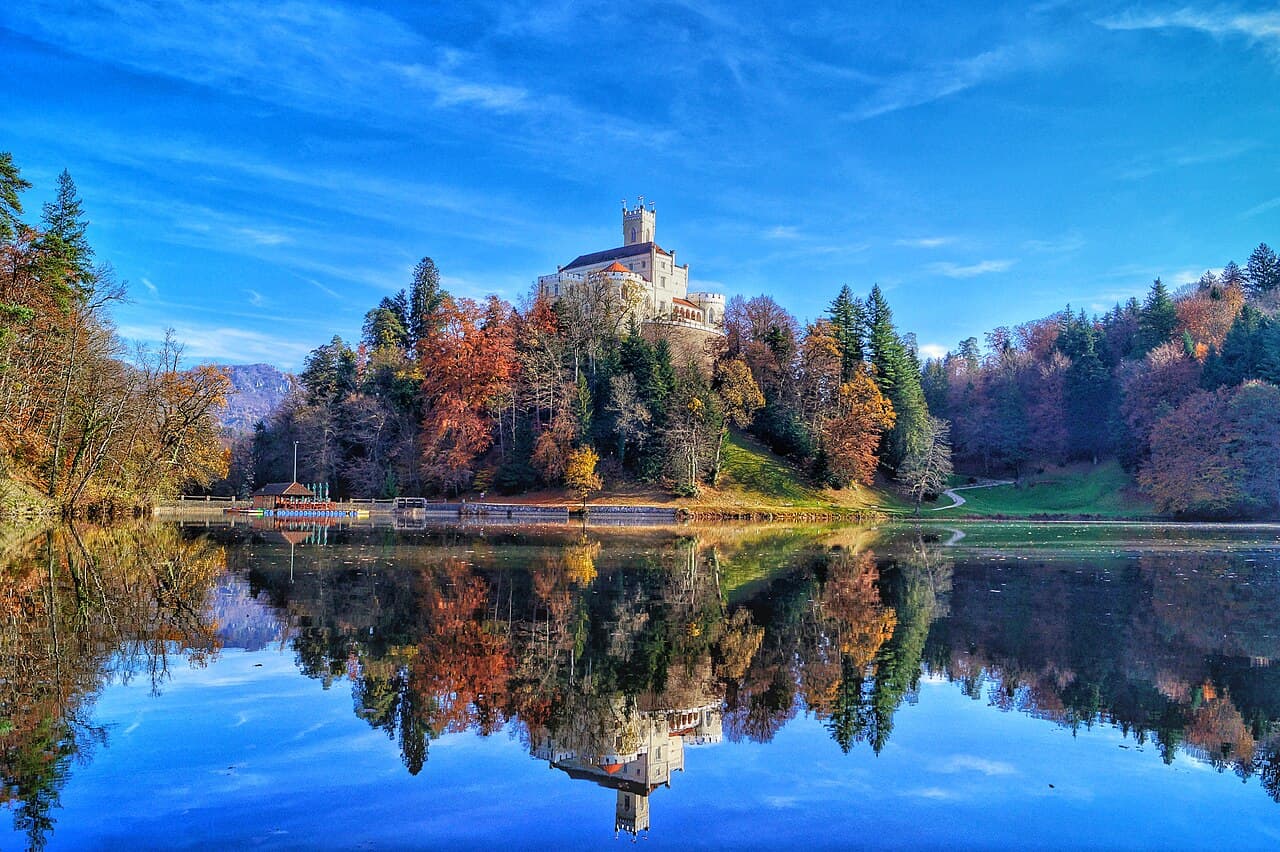
Trakošćan Castle stands as one of the most picturesque and historically significant castles in northern Croatia. Originally constructed in the 13th century as a defensive fortification, it occupies a strategic hilltop location overlooking the verdant landscape of Krapina-Zagorje County. Over the centuries, it has evolved from a martial fortress into a romantic Neo-Gothic manor house, renowned for its striking architecture and scenic surroundings including an artificial lake at the hill's base.
Early history and strategic significance
Built within Croatia's northwestern fortification system, Trakošćan Castle originally served as a small observation fortress designed to monitor the road from Ptuj to the Bednja Valley. Its earliest recorded mention dates to 1334, though the original builders remain unknown. The castle's name is believed to derive either from an ancient fortification called arx Thacorum or from the knights of Drachenstein who controlled the region during the early Middle Ages.
By the late 14th century, the castle was under the ownership of the powerful Counts of Celje, rulers of the entire Zagorje County. After the extinction of this noble line, the estate changed hands multiple times, passing through various Croatian nobles including military leaders such as Jan Vitovac and Ivaniš Korvin. Eventually, in 1584, the castle was granted to Juraj Drašković by King Maximilian as a reward for his services, beginning the long association of the Drašković family with Trakošćan.
Architectural evolution and fortifications
The castle's architecture reflects its transformation over several centuries. Originally, it comprised a Romanesque fortification with a housing unit, a small fortified courtyard, and a massive high tower designed for observation and defense. The strategic location and robust construction made it a formidable stronghold.
As the threat of firearms and Turkish incursions increased, the castle underwent significant expansions. The Drašković family, particularly Ivan II and Petar, added a western tower, enhancing its defensive capabilities. By the mid-17th century, the castle had three floors and several additional defensive structures, as depicted in genealogical records from 1668 and 1755.
During the 18th century, the castle's military importance diminished, and it was largely abandoned, falling into disrepair. Outbuildings and a stone bridge over the Bednja River were constructed at the foothills during this period, reflecting the estate's gradual shift from fortress to manor.
Romantic neo-gothic transformation
In the mid-19th century, reflecting the Romantic movement's influence, the Drašković family revived Trakošćan Castle. Between 1840 and 1862, it underwent one of Croatia's earliest restoration projects, transforming it into a Neo-Gothic manor house. This renovation not only altered the castle's exterior with characteristic Gothic revival elements such as pointed arches and decorative battlements but also marked the end of its military function.
Alongside architectural restoration, the surrounding grounds were redesigned into Romanticist pleasure gardens inspired by English landscape parks. The construction of a dam created an artificial lake beneath the castle hill, enhancing the site's picturesque quality and contributing to its fairy-tale ambiance.
The castle's interior was also richly decorated, reflecting the tastes and status of the Drašković family. Additional features added during this period include a northern tower above the entrance, a vaulted southwestern terrace, and a large shingle cap on the tower (removed in the 20th century).
20th century to present: preservation and museum status
Trakošćan Castle remained a residence of the Drašković family until 1944, when they were forced to emigrate during World War II. The castle was subsequently nationalized by the Croatian government. In 1953, it was opened to the public as a museum, showcasing extensive collections related to the castle's history, the local region, and broader Croatian heritage.
Despite periods of neglect and visible signs of wear, ongoing conservation efforts have aimed to preserve the castle's unique architectural and historical character. Recent restoration projects have focused on stabilizing the structure and maintaining its interior decorations.
Today, Trakošćan Castle is owned by the Republic of Croatia and stands as a prominent cultural landmark. Its blend of medieval fortification and romantic Neo-Gothic design, combined with its scenic setting, makes it a must-visit destination for those interested in Croatian history and castle architecture.
Architectural highlights and features
- Romanesque core: The original fortress includes a high observation tower and fortified courtyard, exemplifying medieval defensive architecture.
- Neo-Gothic renovations: 19th-century restorations introduced pointed arches, decorative battlements, and romantic stylistic elements.
- Defensive towers: Western tower added by the Drašković family enhanced the castle's military strength in the 16th century.
- Romanticist park: English-style pleasure grounds and an artificial lake contribute to the castle's picturesque landscape.
- Interior decor: Richly appointed rooms reflect the tastes of the Croatian nobility during the 19th century.
Visitor information and cultural significance
Trakošćan Castle serves as a museum open to the public, offering insights into regional history, Croatian nobility, and architectural heritage. The castle's location within the lush Zagorje region provides visitors with opportunities to explore both cultural and natural attractions.
The castle's romantic appearance and well-preserved interiors make it a popular subject for photography and cultural tourism. Its historical layers, from medieval fortress to Neo-Gothic manor, illustrate the evolution of castle architecture in Croatia.
Frequently asked questions (FAQ)
- What is the historical significance of Trakoscan Castle?
- Trakoscan Castle is one of the most picturesque castles in Croatia, built in the late 13th century. It served as a residence for various noble families and has significant cultural importance, showcasing the region's feudal history and architectural development over the centuries.
- When was Trakoscan Castle built?
- Trakoscan Castle was originally constructed in the late 13th century, with significant modifications and expansions occurring in the 16th and 19th centuries. Its design reflects various architectural styles that evolved throughout its history.
- What are the opening hours for Trakoscan Castle?
- Trakoscan Castle is typically open to visitors every day from 10 AM to 5 PM, though hours may vary seasonally. It is advisable to check the official website or contact the castle directly for the most current information before your visit.
- Can I take photographs inside Trakoscan Castle?
- Yes, visitors are generally allowed to take photographs inside Trakoscan Castle, but it is recommended to respect any restrictions in specific rooms or during guided tours. Be sure to enjoy capturing the stunning interiors and beautiful surroundings!
- Is it possible to access Trakoscan Castle with a wheelchair?
- Trakoscan Castle has made efforts to improve accessibility for visitors with mobility challenges, but some areas may still present difficulties due to the castle's historical structure. It is best to contact the castle staff in advance to inquire about specific accommodations.
- What is the best time to visit Trakoscan Castle?
- The best time to visit Trakoscan Castle is during the spring and early autumn when the weather is mild, and the surrounding nature is at its most vibrant. Visiting during weekdays may also help you avoid larger crowds and enjoy a more peaceful experience.
- What are the ticket prices for Trakoscan Castle?
- Ticket prices for Trakoscan Castle are generally affordable, with discounts available for students and seniors. For the latest pricing information, including any special exhibitions or events, it’s best to check the official website before your visit.
- Are there any nearby attractions to visit while at Trakoscan Castle?
- Yes, nearby attractions include the picturesque Lake Trakoscan, where you can enjoy walking trails and nature. Additionally, the surrounding Krapina-Zagorje County is known for its charming villages, thermal spas, and other historical sites, making it easy to fill your day with exploration.
Photo gallery

Information
Website
Visit websiteSources & official resources
Verify the information above using these authoritative references.
Loading map...
Visitor reviews
No reviews yet. Been here? Write the first review and help other travelers!
Write the first reviewVisited this castle? Share your experience
Your review helps other travelers and adds first-hand knowledge to our encyclopedia.