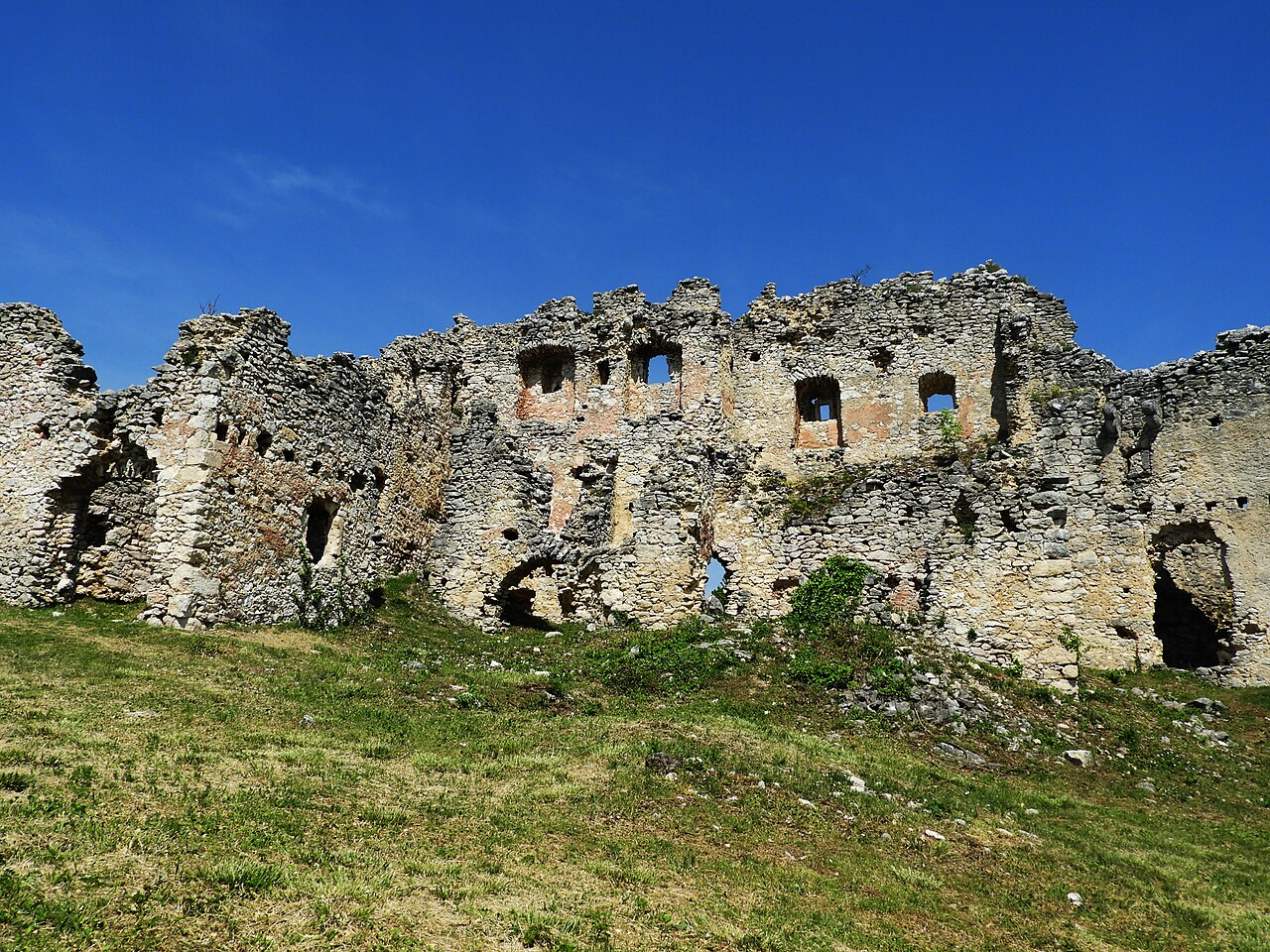
Maruševec Castle

Maruševec Castle: a renaissance lowland fortress in Varaždin County
Varaždin County, Croatia
Renaissance (15th–17th c.)
Partially Restored

Maruševec Castle stands as one of the most captivating historical landmarks in the Croatian region of Zagorje, alongside other renowned castles such as Trakošćan and Tabor. With origins dating back to the 14th century, this castle has witnessed centuries of architectural evolution and noble lineage, reflecting the turbulent history and cultural richness of the area. Its initial form was likely a wooden fortification belonging to the noble Vragovic family, whose presence in the region was documented as early as the mid-1300s.

By the 16th century, Maruševec transformed into a stone-walled castle featuring a defensive water moat, a characteristic of a Wasserburg design, which was crucial for protection against frequent Ottoman incursions into Croatian territories during that period. This defensive feature underscores the castle's strategic importance in the borderlands of the Habsburg Empire.

Architectural evolution and defensive features

From medieval fort to renaissance fortress

The castle's architectural journey began with its medieval origins, evolving significantly in the 16th century when stone construction replaced earlier wooden structures. The incorporation of a water shield moat enhanced its defensive capabilities, making it a formidable lowland fortress. By the 17th century, the castle underwent expansions, including the construction of a city wall, which further fortified the complex.

19th-century restoration and stylistic enhancements

The most notable transformation occurred in the 19th century under the ownership of Count Arthur Schlippenbach, a Prussian nobleman who acquired the castle in 1873. Schlippenbach restored and enlarged Maruševec, adding a prominent tower and refurbishing the interiors with lavish furnishings. The walls were adorned with large tapestries and paintings from the 17th and 18th centuries, many of which are now preserved in the Varaždin Museum. These artistic enhancements reflected the tastes and wealth of the aristocracy during the late Renaissance and early modern periods.

Historical significance and noble ownership

The vragovic family and early history

Maruševec Castle was originally the seat of the Vragovic noble family, who held the property from at least the early 16th century. The family was granted the right to administer capital punishment over their serfs, evidencing their significant local authority. In 1618, Baltazar Vragović undertook restoration and enlargement efforts, as commemorated by an inscription and family coat of arms on the castle's western wall.

Succession of noble families

Following the Vragovic line, ownership passed through several noble families including the Pasztory, Kanotay, and Patačić families, the latter holding the castle until 1817. The castle's ownership changed hands multiple times during the 19th century until it was purchased by Schlippenbach and later by the Pongratz family in 1883. The Pongratz family maintained possession until the upheavals of World War II and the subsequent communist nationalization of property in Yugoslavia.

Artistic heritage and garden design

Interior decorations and art collections

The castle's interiors were richly decorated with tapestries and paintings, including a significant collection of floral-themed works acquired by Oskar Pongratz, a noted art enthusiast. Some of these artworks remain in the Varaždin Museum, preserving the cultural legacy of the castle's noble residents.

The english garden and landscape features

Surrounding Maruševec Castle is a historically significant English garden originally spanning approximately 7 hectares before World War II. The garden was designed by an unnamed Dutch master gardener and featured a variety of exotic coniferous trees such as chalky peppers and Greek pines. A decorative lake and a central fountain added to the garden's aesthetic appeal. Although parts of the garden were lost to agrarian reforms and converted into meadows, the remaining park is protected as a horticultural monument, with several rare tree specimens still visible today.

Modern history and preservation efforts

Damage and repurposing in the 20th century

During World War II, Maruševec Castle suffered significant damage and loss of valuable possessions. Post-war, it was repurposed as a children's home and later rented to an Adventist religious community, which invested in its restoration. Despite these efforts, the castle has not regained its former grandeur.

Current status and future prospects

Today, the castle is under the administration of the municipality of Maruševec, which seeks investors to restore the castle fully and develop it as a key site for high tourism in the region. The property is also involved in restitution processes, with ownership claims by the descendants of the Pongratz family ongoing. Maruševec Castle remains a testament to the layered history of Croatian nobility, architecture, and landscape design.

Architectural classification and style

Maruševec Castle is classified as a lowland castle (Wasserburg) due to its location on flat terrain and its characteristic water moat defense system. Its architectural style primarily reflects Renaissance influences, with subsequent 19th-century modifications incorporating elements typical of that era's restoration and aristocratic tastes.

Frequently asked questions (FAQ)

When was Maruševec Castle originally built?
Maruševec Castle dates back to 1547, with earlier wooden fortifications likely existing on the site during the 14th century.
What architectural style characterizes Maruševec Castle?
The castle primarily exhibits Renaissance architectural features, with later 19th-century restorations adding period-specific enhancements.
Who were some of the notable owners of Maruševec Castle?
Notable owners include the Vragovic family, Count Arthur Schlippenbach, and the Pongratz noble family, each contributing to the castle's history and development.
What happened to the castle during World War II?
The castle was heavily damaged during World War II, leading to the loss of many valuables and subsequent changes in its use and ownership.
Is the castle open to visitors today?
Currently, Maruševec Castle is managed by the municipality and efforts are ongoing to find investors for restoration; visiting hours and public access may be limited.

Information

Lowland Castle

Current owner

Municipality of Maruševec

Loading map...

Visitor reviews

No reviews yet. Been here? Write the first review and help other travelers!

Write the first review

Visited this castle? Share your experience

Your review helps other travelers and adds first-hand knowledge to our encyclopedia.

Write a review

(5/5)

0/2000 characters

Your review will be visible after admin approval

Nearby castles

8.6 km

Klenovnik Castle

Klenovnik, Croatia

Klenovnik Castle stands as one of the largest and historically significant castles in Croatia. Its origins trace back to the 13th century, firmly placing it within the high medieval period. The first documentary mention of the castle occurs during the reign of King Béla IV of Hungary-Croatia, who confiscated the castle from the noble family Pochun and granted it to the ruler of the nearby town of Varaždin. This transfer highlights the castle's early strategic importance in the region, serving as a fortified seat of power and control.During the late 17th century, the castle changed hands when King Maksimilijan sold it for 20,000 forints to the noble Croatian family of Gašpar I Drašković. The Drašković family was a prominent aristocratic lineage with several estates across Croatia, and their ownership marked a period of significant architectural and cultural development at Klenovnik. In the 19th century, Count Drašković sold the castle to the Austrian finance minister, Baron Bruck, to finance the restoration of another family property, the castle of Trakošćan. Subsequently, the castle passed through various owners, reflecting the shifting political and economic landscape of the region.Architectural features and layoutKlenovnik Castle is notable for its size and complex structure. Before the renovation in 1925, it reportedly contained approximately 90 rooms and over 365 windows, indicating a sprawling layout designed to accommodate a large noble household and their retinue. The castle features a combination of medieval fortifications and later baroque stylistic elements, reflecting the architectural evolution over centuries.The castle is surrounded by a vast and beautifully maintained park, which complements the grandeur of the main building. Inside, visitors can find remarkable wall paintings from the 19th century, which add artistic value and insight into the tastes of its historic inhabitants. Additionally, the interior houses three baroque altars and a pulpit, underscoring the castle's role not only as a residence but also as a place of religious significance. The Drašković family vault located within the castle further emphasizes its importance as a family seat and burial place.Historical context and ownershipThe castle's history is intertwined with the political shifts in Croatia and the broader Habsburg monarchy. Its initial construction and fortification in the high medieval period were likely motivated by the need to defend the region against invasions and to assert noble authority. The transfer of ownership from the Pochun family to the ruler of Varaždin by King Béla IV reflects the crown's efforts to consolidate power after the Mongol invasions.The sale to the Drašković family in the late 17th century coincided with the era of baroque transformation in Croatian noble residences, which often involved modernization of medieval castles into more comfortable and stylistically updated homes. The subsequent sale to Baron Bruck in the 19th century and the castle's frequent changes in ownership thereafter illustrate the economic challenges faced by aristocratic families in maintaining large estates during this period.Modern use and preservationToday, Klenovnik Castle is owned by the city of Zagreb and serves a very different function from its original defensive and residential purposes. It has been repurposed as a hospital specializing in the treatment of tuberculosis patients. This adaptive reuse has helped preserve the castle structure, although its interior has undergone modifications to accommodate medical facilities.The castle's condition is generally well-preserved, with significant historical and architectural features still intact. The extensive park surrounding the castle remains a notable landscape feature, providing a serene environment that contrasts with the castle's medieval origins. The preservation of the 19th-century wall paintings and baroque altars offers visitors a glimpse into the artistic heritage of the site.Cultural significance and visitor informationKlenovnik Castle holds an important place in Croatian cultural heritage due to its size, architectural complexity, and historical associations with prominent noble families. Its layered history from the medieval era through the baroque period to modern times makes it a valuable study subject for historians and architecture enthusiasts.While the castle currently functions as a medical facility, the exterior and park area are accessible to visitors interested in exploring one of Croatia's largest medieval castles. The site offers insights into the region's feudal past, noble family dynamics, and the evolution of castle architecture over several centuries.

High Medieval (11th–13th c.)
Details
12 km

Varazdin Castle

Varaždin, Croatia

Varazdin Castle stands as a prominent symbol of Croatian medieval architecture and history, located in the city of Varaždin. This hill castle was originally constructed in the 14th century and evolved over several centuries, reflecting a complex layering of architectural styles and historical influences. Its strategic position and fortified design made it a key defensive stronghold against invasions, particularly from the Ottoman Empire, while its later adaptations reveal shifts in military technology and aesthetic preferences. The castle’s earliest documented mention dates back to 1181, under the name "castrum Garestin," when it functioned as the administrative center of Varaždin County within the medieval Hungarian kingdom. The fortress endured significant damage during the Mongol invasion of the 13th century, after which King Béla IV ordered its reconstruction as part of a broader campaign to restore the kingdom’s defenses. This early phase established the castle’s foundational role in regional governance and military strategy. Medieval origins and gothic transformation During the late 14th century, the fortress came under the ownership of the Counts of Celje, a powerful noble family who undertook substantial rebuilding efforts in the Gothic style. They constructed key defensive elements including the main tower and a granary, which remain significant surviving medieval features. These stone structures exemplify the castle’s original military purpose and architectural character prior to Renaissance modifications. Renaissance rebuilding and military enhancements By the mid-15th century, the growing threat of Ottoman expansion necessitated further fortifications. In 1544, under the guidance of the Italian architect Domenico dell’Allio, the castle underwent a major transformation into a Renaissance fortress. This phase introduced elegant arcades and corridors oriented toward inner courtyards, blending residential comfort with defensive functionality. The addition of rectangular bastions at the corners of the castle enhanced its ability to withstand artillery attacks, reflecting advanced military architecture of the period. The castle’s moat, once filled with water, and its rounded towers were integral to its defense system. The watchtower served as the main gatehouse, accessed by a double drawbridge, emphasizing controlled entry and security. These features illustrate the castle’s dual role as a noble residence and a military bastion during the turbulent 16th century. Baroque modifications and decline of military use In the 17th and 18th centuries, as the Ottoman threat waned, the castle’s military importance diminished. The Erdődy family, who owned the castle from the late 16th century until the early 20th century, introduced Baroque-style alterations. These included ornamental enhancements and the installation of a statue of St. John of Nepomuk in the castle’s forecourt, reflecting the period’s religious and artistic sensibilities. Urban expansion in the 19th century led to the removal of many outer defenses and earthworks, although the castle’s core structure remained intact. This transition marked the castle’s shift from a defensive fortress to a cultural and historical monument within the growing city of Varaždin. Modern use and preservation Since 1925, Varazdin Castle has housed the Varaždin City Museum, which preserves and displays a rich collection of historic artifacts including documents, glassware, clocks, ceramics, and weapons. The museum’s exhibits are arranged chronologically, showcasing styles from the Renaissance through Baroque, Rococo, and Empire periods, offering visitors insight into the region’s artistic and cultural evolution. The castle is recognized as a protected cultural monument of national significance and was included on Croatia’s tentative list for UNESCO World Heritage status in 2005. Ongoing research and restoration efforts ensure the preservation of its architectural integrity and historical value. Architectural features and site layout The castle’s layout reflects its layered history, with surviving elements from the Gothic period such as the main defensive tower and granary, alongside Renaissance additions like the two-story arcaded wings and bastions. The moat, though partially filled in, still outlines the original defensive perimeter. The watchtower gatehouse remains a prominent feature, now serving as the museum entrance. The castle’s fortifications were designed to adapt to evolving military technology, transitioning from medieval stone walls to bastioned defenses capable of resisting cannon fire. The combination of residential and military architecture illustrates the castle’s role as both a noble seat and a defensive stronghold. Defensive structures Rounded towers constructed in the 15th century provided flanking fire and observation points. Bastions built in the late 16th century reinforced the castle against artillery attacks. The moat, historically water-filled, enhanced the castle’s isolation and defense. The watchtower gatehouse controlled access via a double drawbridge, a key security feature. Residential and ceremonial spaces The Renaissance palace section introduced spacious arcaded corridors and courtyards that served both functional and aesthetic purposes. Baroque additions by the Erdődy family included decorative elements and religious statuary, reflecting changing tastes and the castle’s evolving role. Historical significance and cultural heritage Varazdin Castle embodies the historical and cultural development of northern Croatia, illustrating the region’s strategic importance from the medieval period through the early modern era. Its transformation from a medieval fortress to a Renaissance residence and later Baroque-modified monument traces broader European architectural and political trends. The castle’s role as a military bastion during the Ottoman wars and its later function as a noble residence highlight its multifaceted significance. Today, it serves as a cultural hub through the Varaždin City Museum, connecting visitors with the region’s rich heritage and architectural legacy. Recognition and preservation efforts The castle is officially protected as a cultural monument of national importance in Croatia. Its inclusion on the tentative UNESCO World Heritage list underscores its value as a heritage site. Conservation initiatives continue to safeguard its structural and historical integrity, ensuring that Varazdin Castle remains a vital link to Croatia’s past.

Late Medieval (14th–15th c.)
Details
12.2 km
Milengrad Castle — Croatia castle

Milengrad Castle

Budinščina, Croatia

Milengrad Castle is a significant medieval hill castle located near the village of Zajezda in the municipality of Budinščina, within the Krapina-Zagorje County of Croatia. Constructed around 1250 during the reign of King Béla IV of Hungary and Croatia, the fortress was part of a strategic defensive effort following the devastating Mongol invasion of 1241–1242. This castle played a crucial role in the military and feudal landscape of the region throughout the High Medieval period. Historical context and ownership The origins of Milengrad are closely tied to the aftermath of the Mongol invasion, which exposed the vulnerability of the Hungarian-Croatian kingdom's defenses. King Béla IV initiated a widespread castle-building campaign to fortify the realm, and Milengrad was among these newly constructed fortresses designed to protect vital routes and settlements. In 1303, the castle was granted by King Charles Robert to the Cseszneky family as compensation for their loss of Ipolyvisk Castle. The Cseszneky counts soon sold Milengrad to Ban Mikcs, who in turn transferred it in 1309 to the Herkffy family. The castle remained in their possession for over two centuries, until a marriage in 1536 united the Herkffy and Patačić families, making Milengrad a shared property. The Herkffy family line ended in the 17th century, and the Patačić family held the castle until the 19th century. Architectural features and structure Milengrad exemplifies the typical hill castle design of the High Medieval period, strategically positioned on elevated terrain approximately 2 kilometers northwest of Zajezda village. Its location provided commanding views of the surrounding landscape, essential for early warning and defense against invaders. The castle's fortifications originally included robust stone walls, defensive battlements, and a series of towers that enhanced its defensive capabilities. The layout likely featured a central keep or donjon serving as the last line of defense and residence of the lord. Surrounding the keep, a curtain wall enclosed the inner courtyard, which contained essential service buildings and living quarters. Given the castle's medieval origins, its architecture would have combined Romanesque and early Gothic elements, typical of fortifications built in the mid-13th century in this region. Thick walls, narrow windows for archers, and a fortified gatehouse were characteristic features designed to withstand sieges. Decline and ruin Milengrad's strategic importance persisted through centuries marked by frequent conflict, especially during the Ottoman wars in Europe. The castle endured several attacks and sieges, which, combined with natural disasters such as earthquakes, led to significant structural damage. By the late 17th century, parts of the castle had collapsed, and in 1683, it was officially recorded as arx diruta, meaning a castle in ruins. The decline was accelerated by the extinction of the Herkffy family and the eventual fading of the Patačić lineage in the 19th century, leaving the fortress abandoned. Current condition and cultural significance Today, Milengrad remains a ruined medieval fortress, with remnants of its walls and towers still visible amidst the natural landscape. The site offers valuable insights into medieval military architecture in Croatia and the broader region. As a cultural heritage site, Milengrad attracts historians, archaeologists, and visitors interested in the High Medieval period and the defensive strategies employed against invasions such as those by the Mongols and Ottomans. Its ruins stand as a testament to the turbulent history of the area and the evolution of castle construction. Visiting Milengrad Milengrad is accessible to visitors interested in exploring medieval ruins and the natural beauty of the Krapina-Zagorje County. While the castle is in a state of ruin, the site offers hiking opportunities and panoramic views of the surrounding countryside. Visitors should be prepared for uneven terrain and limited facilities, as the castle has not undergone extensive restoration. It is advisable to check local tourism information for access details and any guided tours that may provide deeper historical context. Nearby attractions The region around Milengrad includes several other historical sites and natural parks, making it a worthwhile destination for those interested in Croatian heritage and outdoor activities.

High Medieval (11th–13th c.)
Details